Why Heat Pumps Need a Different Kind of Thermostat
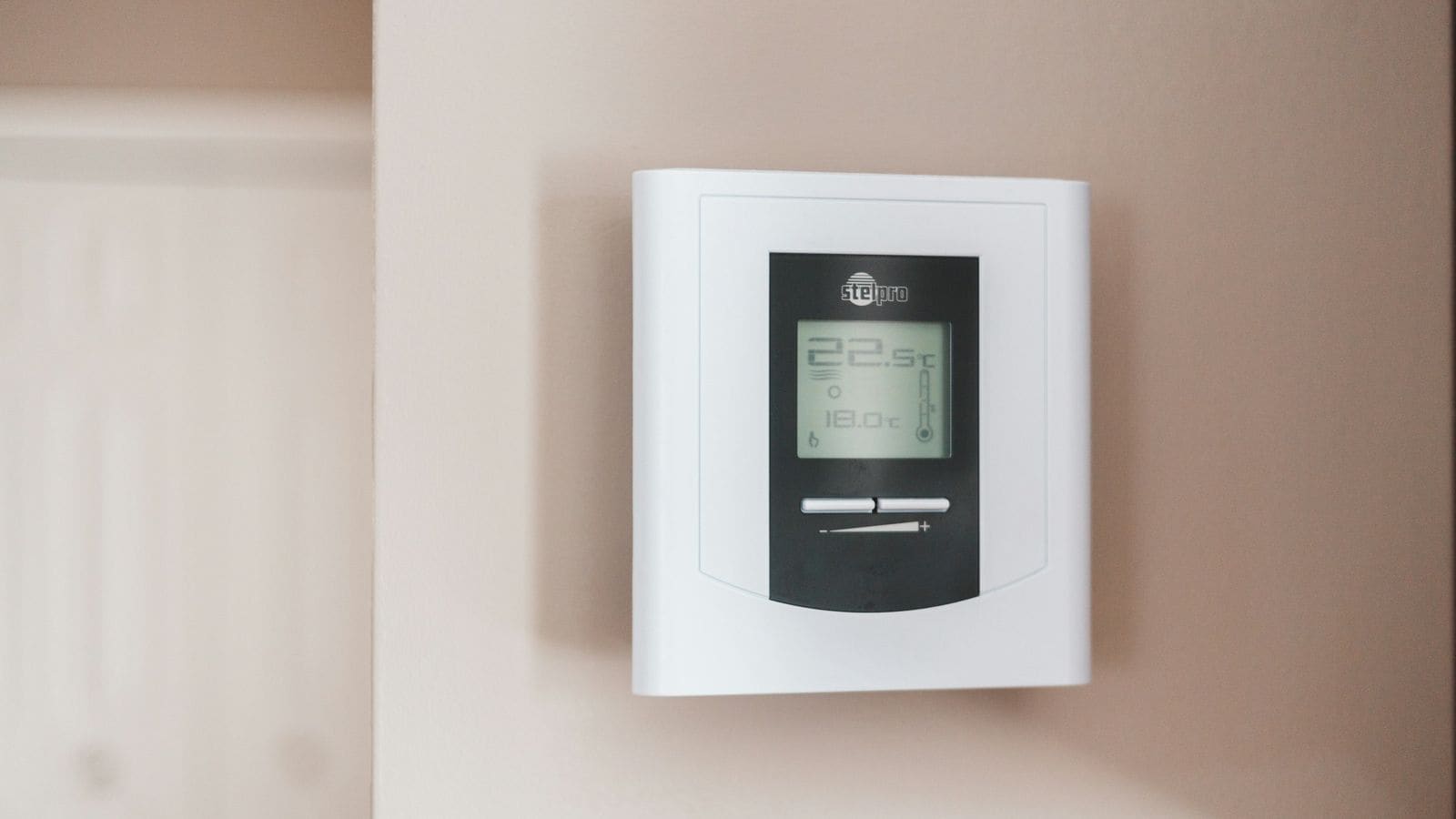
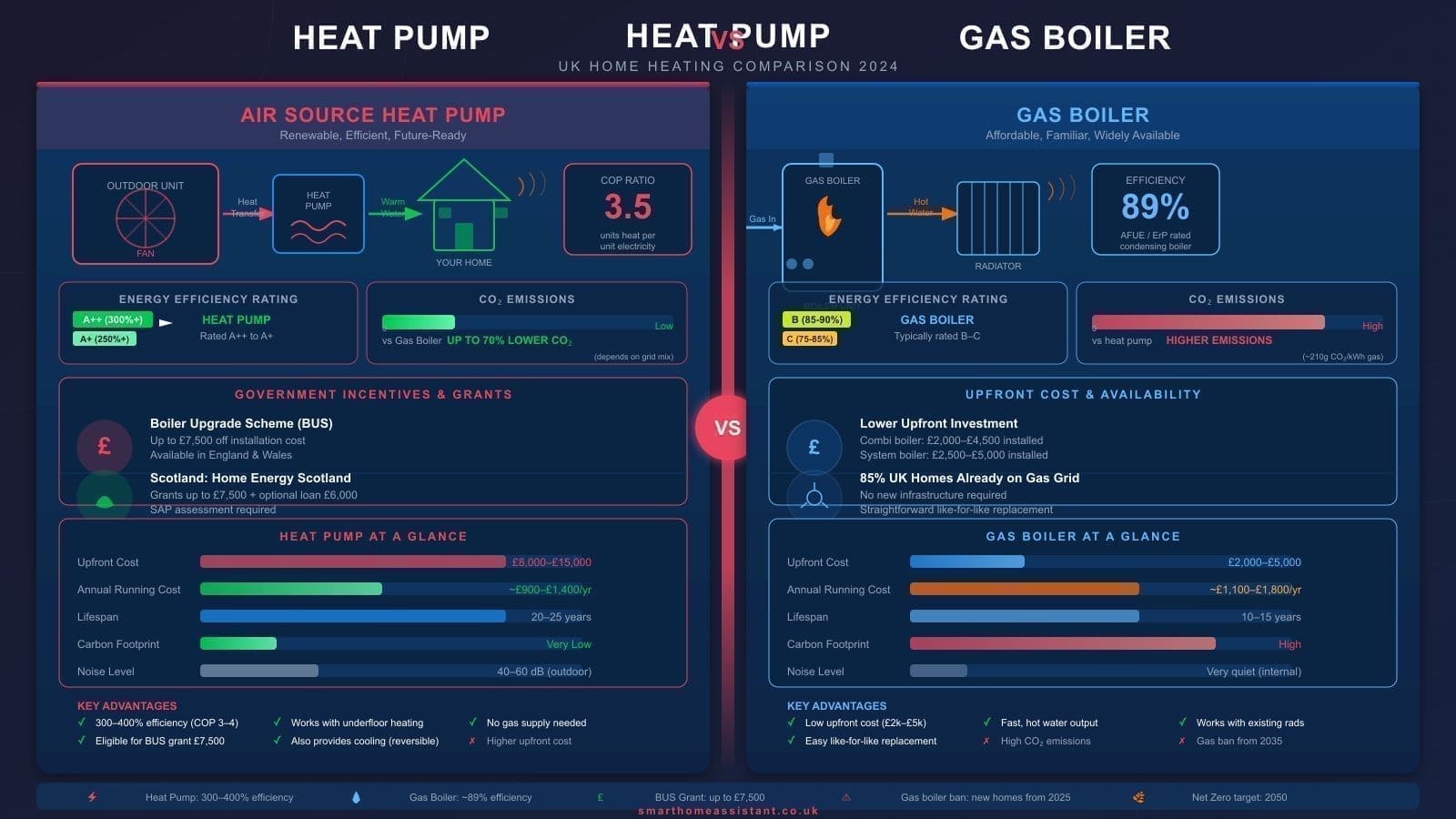
A conventional on/off thermostat tells your heating system one thing: heat on, heat off. That works reasonably well for a gas boiler, which can ramp up and down quickly. A heat pump is different. It operates most efficiently when it runs continuously at a steady, low output — typically targeting a flow temperature between 35 °C and 45 °C for a well-insulated UK home — rather than cycling repeatedly between full power and standby.
The key technologies that allow a thermostat to work with a heat pump rather than against it are:
- OpenTherm modulation: A two-way communication protocol that lets the thermostat instruct the heat pump to run at a specific output level rather than simply switching it on or off. Most modern air source heat pumps from Daikin, Vaillant, and Panasonic support OpenTherm or a proprietary equivalent.
- Weather compensation: The thermostat (or the heat pump's own controller) adjusts the target flow temperature based on the outdoor temperature. On a mild day the system runs at 35 °C; on a cold day it rises to 45 °C or more. This keeps the compressor running at maximum coefficient of performance (COP).
- Low-temperature scheduling: Rather than dropping to 16 °C overnight, heat pump schedules typically reduce the setpoint by just 1–2 °C. Deep setbacks force the pump to work hard to recover temperature, wiping out the efficiency gain.
If your thermostat can only do simple on/off switching, the heat pump will still work — but you will pay more to run it than you need to.
If you have a Vaillant heat pump, note that the manufacturer's older vSMART control is now discontinued — see our Vaillant vSMART review for what Vaillant recommends fitting instead.
Best Smart Thermostats for Heat Pumps in the UK
The UK market has narrowed considerably. Hive does not currently support heat pumps (the company has not completed compatibility testing for heat pump installations), so the realistic shortlist comes down to four options.
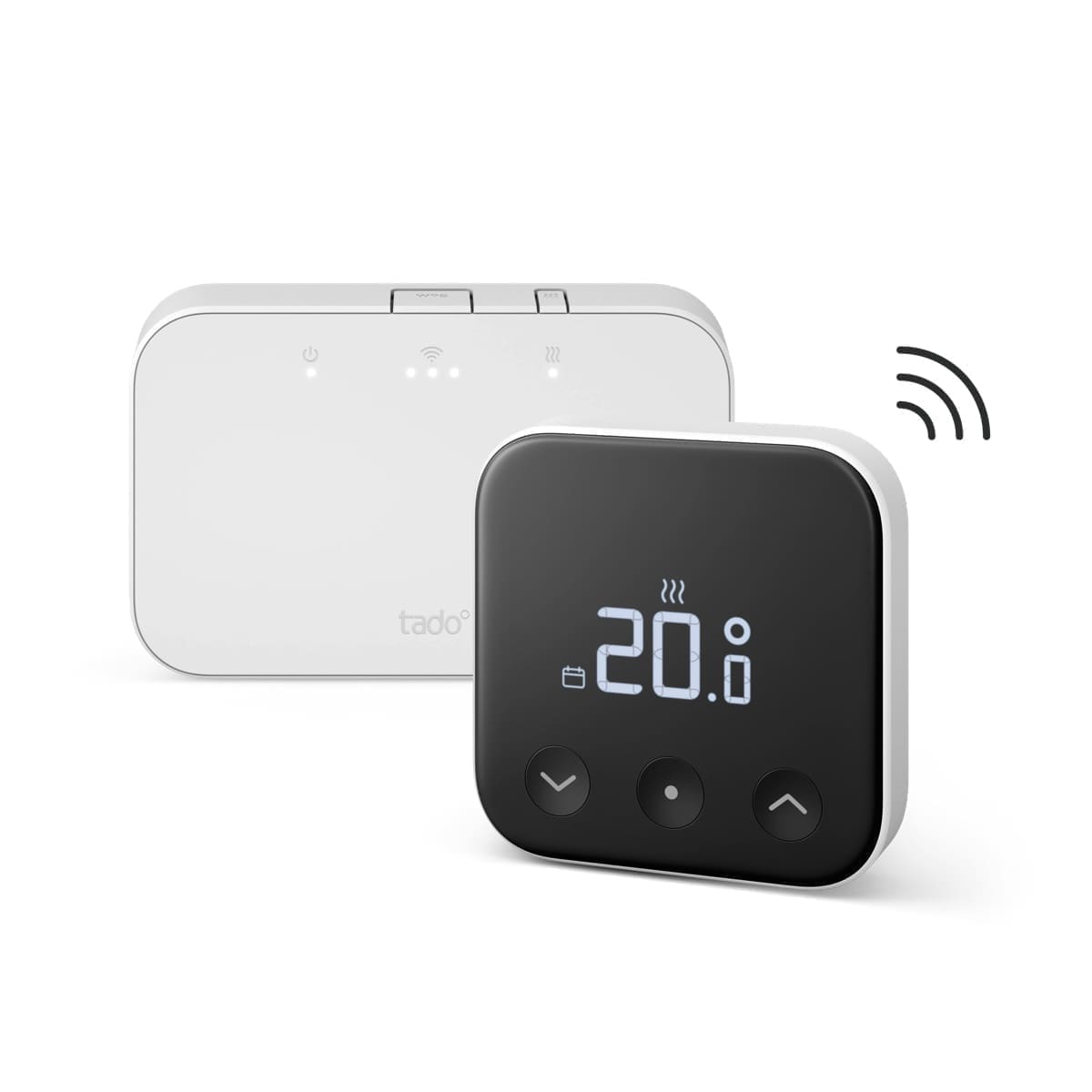
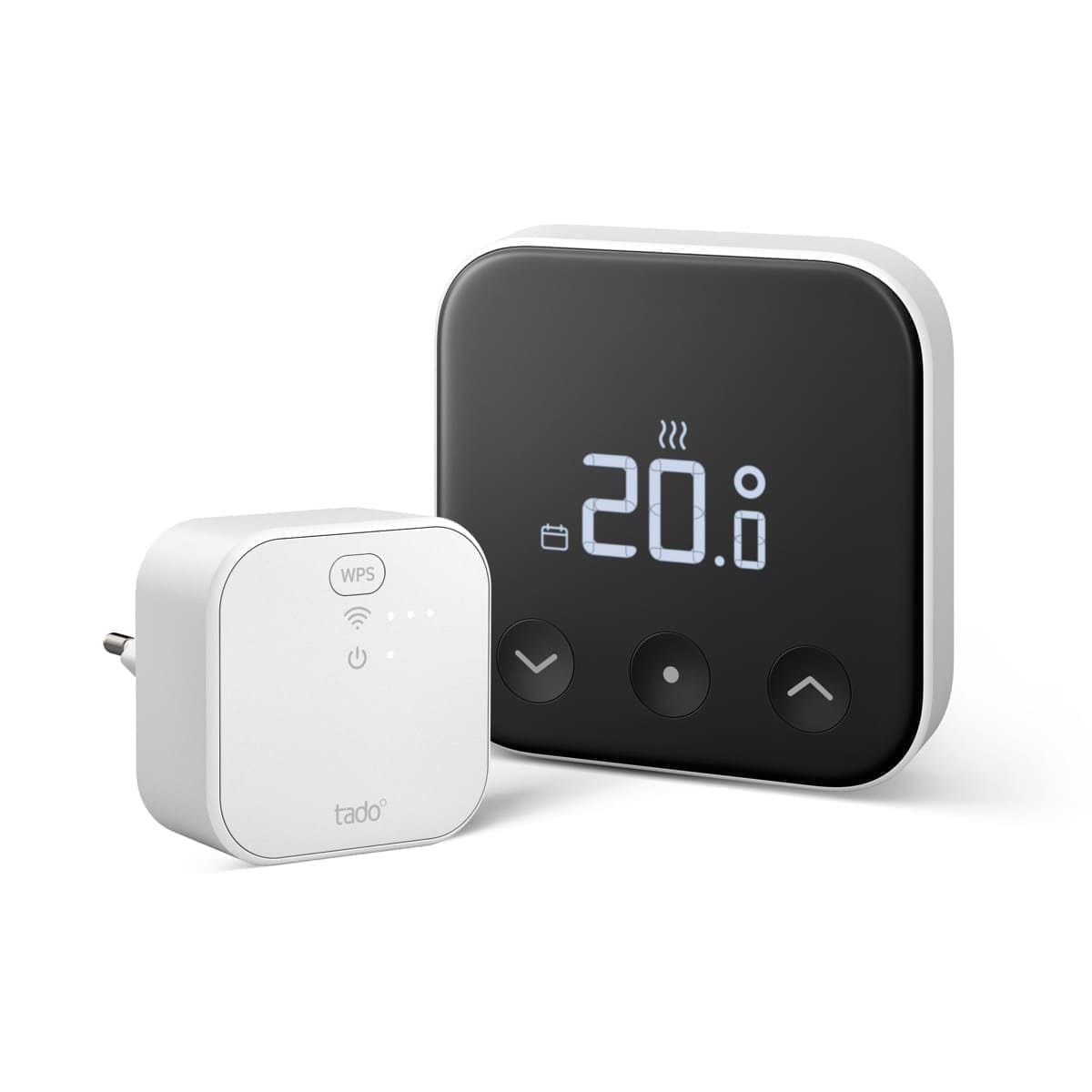
tado° Smart Thermostat X — Best All-Round Choice
The tado° X is the most future-facing smart thermostat available in the UK for heat pump owners. It supports the Matter and Thread smart home standards, works with all major voice assistants (Alexa, Google Home, Apple HomeKit), and communicates with hydronic heat pumps from Panasonic, Daikin, Vaillant, Atlantic, Fujitsu, and others via relay switching or OpenTherm.
The standout addition for heat pump owners is the Heat Pump Optimizer X, a separate tado° accessory that mounts at the heat pump itself and enables the Balance feature — an algorithm that continuously adjusts the heating curve to maximise efficiency based on outdoor temperature and indoor conditions. The Balance subscription costs £49.99 per year (or £5.99 per month), with three months included on purchase. Prices vary by retailer; check tado°'s own shop and Amazon UK for current figures.
Note that tado° X and the older V3+ range are not cross-compatible. If you already have V3+ devices, expand within that ecosystem rather than mixing hardware generations.
Drayton Wiser ASHP Kit — Best for No Monthly Fees
Drayton (part of Schneider Electric) offers a Wiser ASHP (Air Source Heat Pump) Kit designed specifically for air-to-water heat pumps. Like the broader Wiser range, it carries no subscription fees — you pay once and control via the Wiser Home app indefinitely. The starter kit for a combi boiler typically costs between £120 and £160 at retailers such as Screwfix, Plumbase, and Amazon UK; the ASHP-specific kit may be priced slightly higher, so check current listings.
The Wiser system supports up to 16 independent zones and up to 63 devices per hub, making it a strong choice if you want room-by-room control alongside your heat pump. Installation uses a standard wallplate and typically requires no new wiring.
Google Nest Learning Thermostat — Wide Recognition, Check Compatibility First
The Nest Learning Thermostat is compatible with air source and ground source heat pumps in the UK, provided your system uses standard relay wiring. Its signature auto-schedule feature learns your household's patterns within the first week and builds a programme around them. Geofencing via the Google Home app drops the setpoint automatically when the last person leaves home.
The important caveat: Nest operates as an on/off thermostat when connected to most UK heat pumps — it does not use OpenTherm modulation. That means it controls the heat pump by switching a relay rather than communicating a target flow temperature. For many installations this is perfectly adequate, but it is not ideal for systems where weather compensation and modulation are central to efficiency.
If you are comparing Nest against tado° specifically for heat pump use, see our detailed tado° vs Nest UK comparison, which covers boiler and heat pump scenarios side by side.
Honeywell Home T6R — Reliable and No Subscription
The T6R is a wireless smart thermostat that connects to a 230 V receiver wired into the heat pump or wiring centre. It supports on/off and OpenTherm appliances running 24–230 V, offers 7-day scheduling with six setpoints per day, and integrates with Alexa, Google Home, and Apple HomeKit. Like Wiser, there is no ongoing subscription cost. It is available from specialist heating merchants and Amazon UK; prices vary, so compare listings before buying.
The T6R is a pragmatic choice for homeowners who want app control and a reliable schedule without the complexity of multi-zone systems or advanced algorithms. It is not the most feature-rich option, but it is straightforward to install and widely stocked by UK plumbing suppliers.
Key Buying Considerations for UK Heat Pump Owners
Check Compatibility Before You Buy
Heat pump compatibility is not guaranteed. Use the manufacturer's official compatibility checker — tado° and Nest both offer these on their websites — and cross-reference your heat pump make and model before purchasing. If you are in any doubt, ask your MCS-certified installer; incorrect thermostat wiring can void a heat pump warranty.
The Boiler Upgrade Scheme and Smart Controls
The UK's Boiler Upgrade Scheme (BUS) provides a grant of £7,500 towards the cost of an air source or ground source heat pump (extended to 2030 under April 2026 amendments). The scheme does not mandate a specific smart thermostat, but installing one that supports weather compensation will help you extract the full efficiency benefit from the heat pump investment. Your installer may also recommend or supply a compatible control as part of the commissioning package.
Running Cost Savings
A heat pump typically adds between 3,000 and 5,000 kWh to a household's annual electricity consumption. At the Ofgem price cap rate of approximately 24.5p per kWh (Q1 2026), that represents £735 to £1,225 per year in heating electricity costs. Smart thermostats with scheduling and geofencing can reduce that figure by 10–25% through avoided waste — roughly £75 to £300 depending on your home and usage patterns. Switching to a dedicated heat pump electricity tariff (some offering off-peak rates as low as 7–10p per kWh) compounds those savings further.
For a broader view of how smart heating controls compare across different system types, our best smart thermostats UK guide covers boiler-compatible options alongside heat pump choices.
Installation and Setup Tips
Avoid deep setbacks. Programme your heat pump thermostat to drop the setpoint by no more than 1–2 °C at night or when away. Larger drops force the heat pump to run at high output to recover temperature — exactly the operating mode it is least efficient in.
Enable weather compensation if available. If your heat pump has a built-in weather compensation sensor, activate it. Many heat pump manufacturers recommend using the built-in controller for weather compensation and only adding a smart thermostat for scheduling and remote access, rather than allowing the thermostat to manage the heating curve directly.
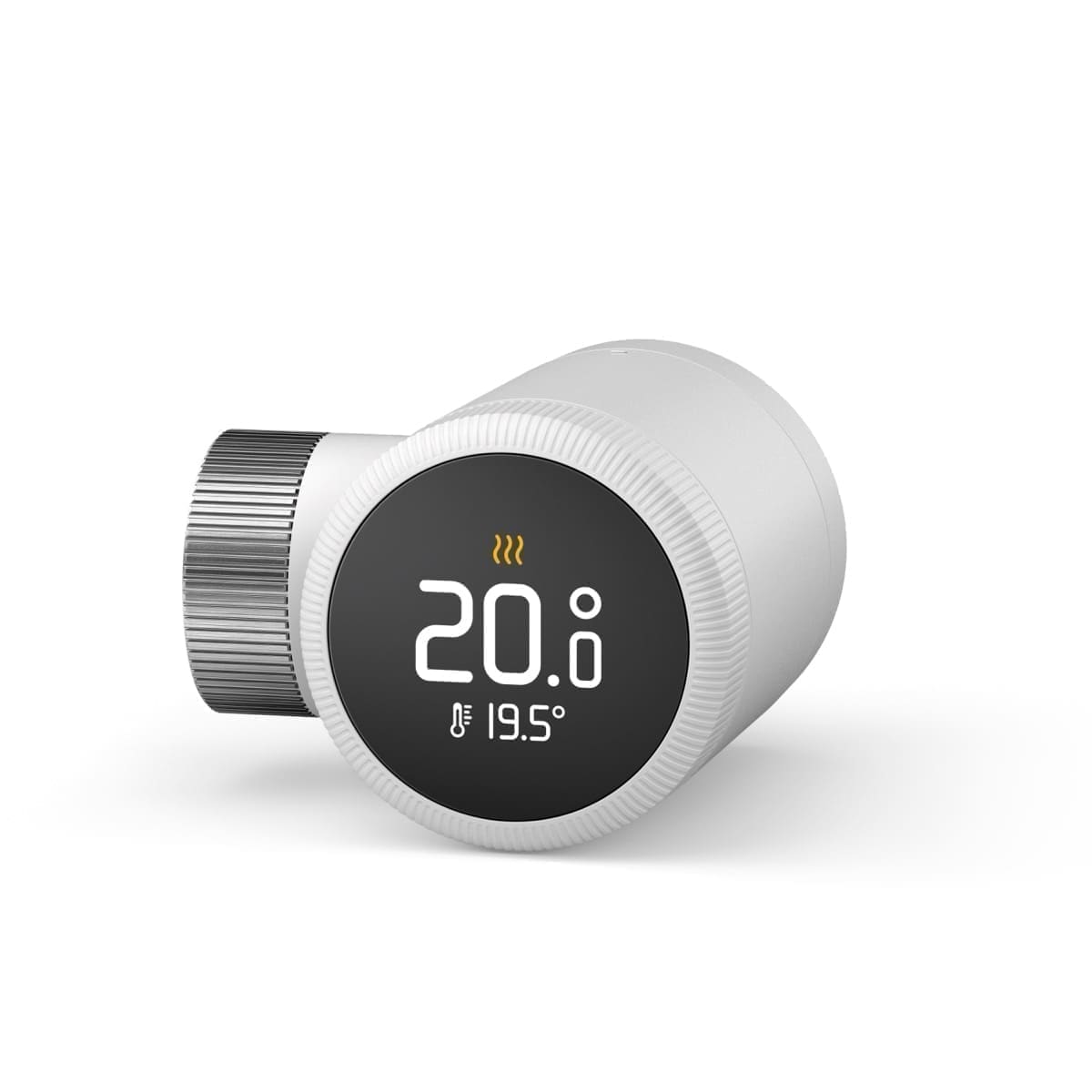
Consider smart radiator valves. If you want room-by-room control, pair your thermostat with smart radiator valves (tado° and Wiser both offer these). They allow you to lower temperatures in unused rooms without forcing the heat pump to cycle on and off — instead, the system continues running at low output and simply diverts less heat to closed zones.
Get it commissioned properly. A poorly commissioned heat pump — wrong flow temperature, incorrect heating curve — will waste energy regardless of the thermostat. If you are installing a new system under the BUS, insist that your MCS-certified installer sets up and explains the heating curve before they leave.