What Should You Look for in a Smart Bulb?
Fitting: UK homes use E27 (large Edison screw), B22 (bayonet cap) and E14 (small screw) fittings. Always confirm the fitting before buying — most premium bulbs come in both E27 and B22 variants, but check the product listing to be sure.
Protocol: Wi-Fi bulbs (Tapo, LIFX, WiZ, Govee) connect directly to your router and need no hub. Zigbee bulbs (Philips Hue, IKEA TRÅDFRI, Innr) offer lower latency and more reliable mesh networking but require a compatible hub or coordinator. In 2026, Matter support means many bulbs now bridge both worlds — a Matter bulb works with any Matter-compatible controller, including Home Assistant running on a UK network. See our Matter devices UK guide for a full rundown of which bulbs carry the certification today.
Colour vs white-only: Full-colour (RGBW) bulbs let you dial in any hue. White Ambiance bulbs cover warm-to-cool white (typically 2,200 K–6,500 K) and are enough for most living rooms and bedrooms. Plain white dimmable bulbs are the most affordable tier and work well in hallways and utility spaces.
Energy consumption: A typical smart LED draws 6–9 W versus a 60 W equivalent incandescent. At the Ofgem Q2 2026 unit rate of approximately 24p per kWh, running a 9 W smart bulb for four hours a day costs around 1p — compared with roughly 5.8p for the old incandescent. Multiply across several rooms and the savings are meaningful, especially if you add schedules and occupancy automations.
What Are the Best Smart Bulbs UK in 2026?
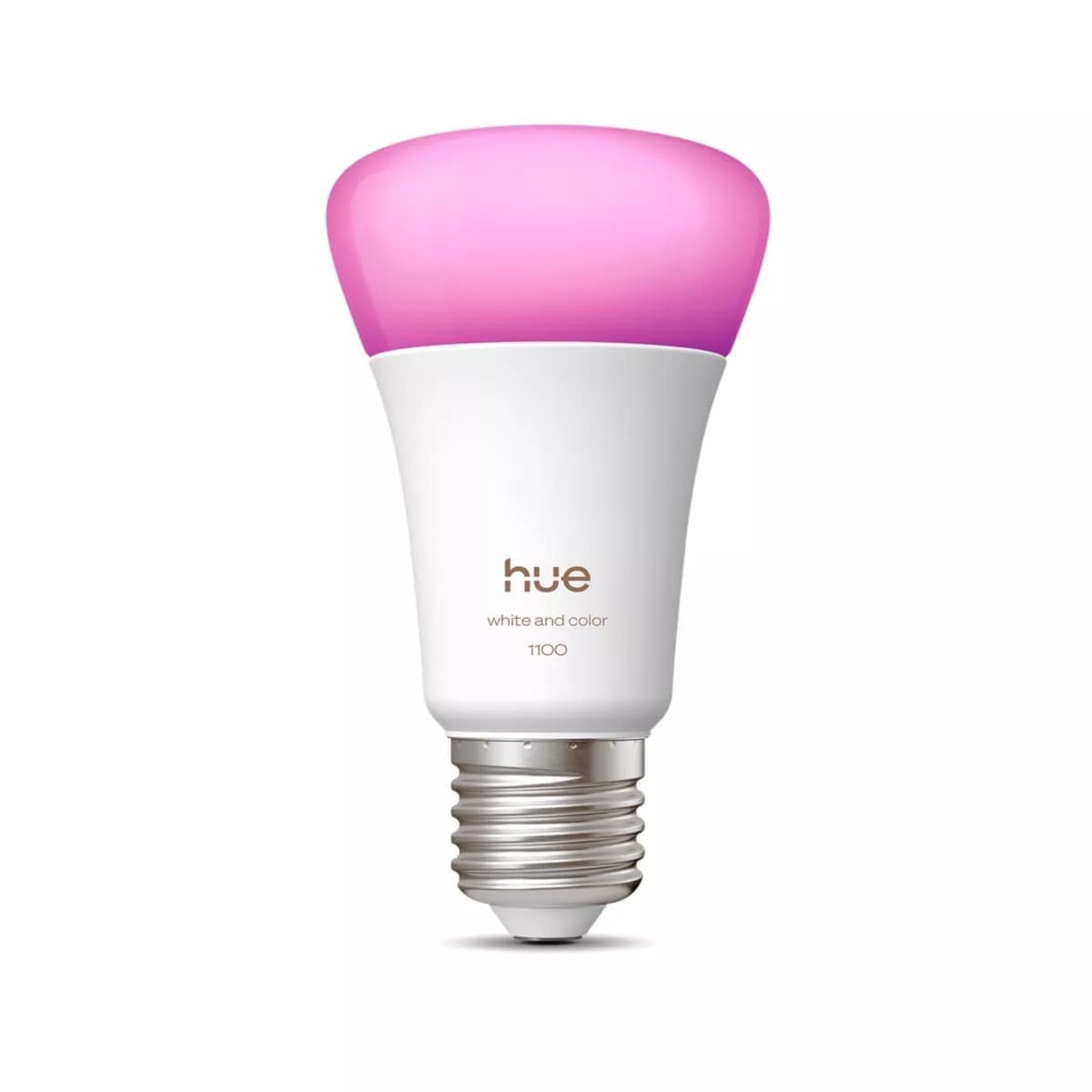
1. Philips Hue White and Colour Ambiance (E27/B22) — Best Overall
Why it wins: Philips Hue remains the gold standard for smart lighting in the UK. The White and Colour Ambiance A60 produces 800 lumens at 6.5 W, while the larger A67 hits 1,600 lumens at 13.5 W — both available in E27 and B22. The Hue ecosystem supports Zigbee, Bluetooth, and Matter, so it integrates natively with Alexa, Google Home, Apple HomeKit, and Home Assistant without compromise. The Hue Bridge Pro, launched in 2025, also removed the old 50-bulb ceiling on a single bridge — worth knowing if you plan to fit out a whole house.
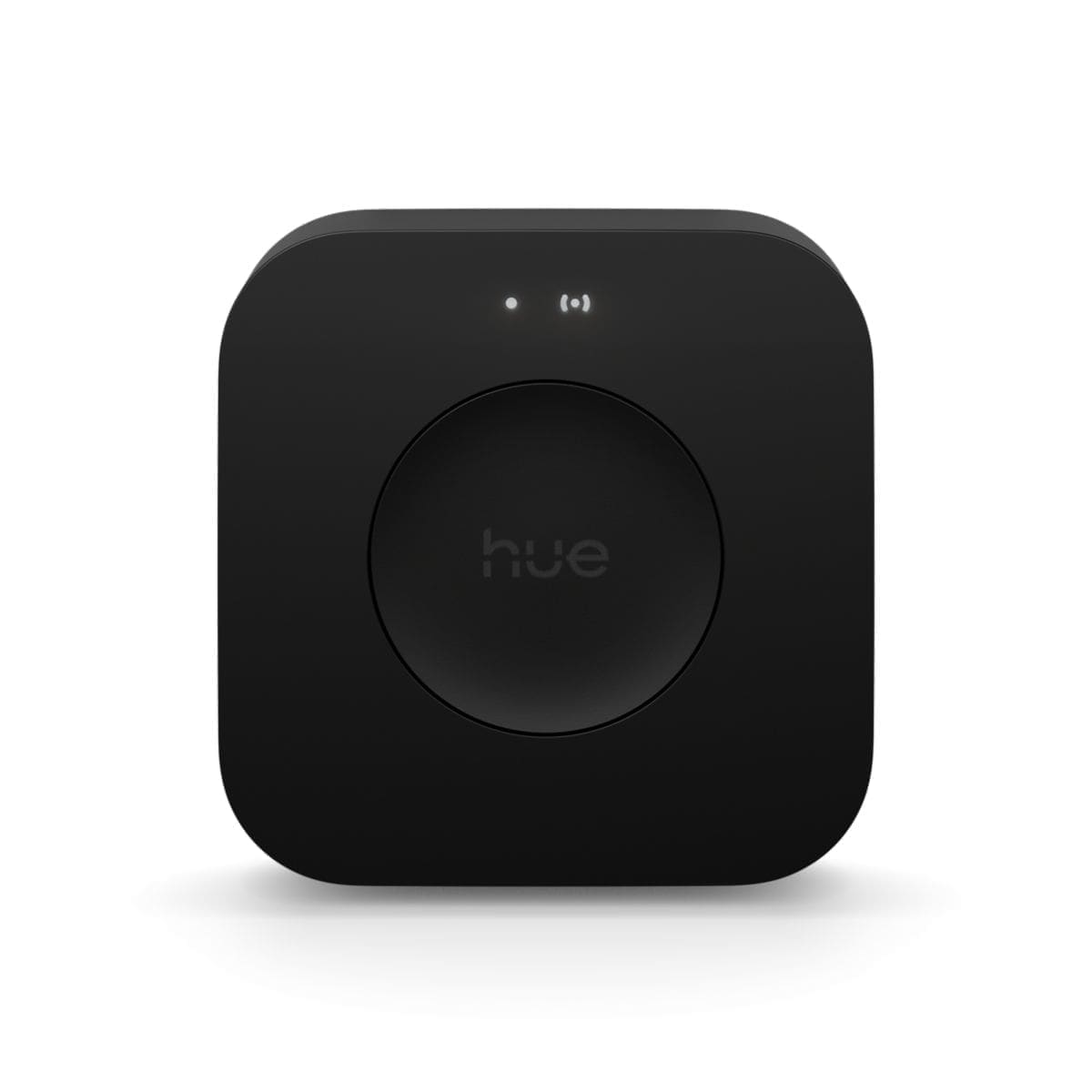
The Hue Bridge (sold separately at around £49.99) unlocks the full feature set: out-of-home control, routines synced to sunrise and sunset, and multi-room group scenes. If you already have a Zigbee coordinator running in Home Assistant, you can add Hue bulbs directly without the Bridge at all. For a full breakdown of which kit to buy first, see our Philips Hue starter kit review.
Price range: Individual bulbs typically range from £20 to £45 depending on model and retailer; prices vary by retailer and change frequently.
Best for: Anyone who wants a mature, reliable ecosystem with the widest accessory range in the UK market.
2. TP-Link Tapo L535E (E27) — Best Value Matter Bulb
Why it wins: The Tapo L535E is Matter-certified, multicolour, and draws just 8.6 W while producing 1,055 lumens — brighter than the standard Hue A60. It connects directly to Wi-Fi (no hub required), supports 16 million colours, and includes energy monitoring in the Tapo app. Matter certification means it pairs with Apple Home, Google Home, Alexa, and Home Assistant out of the box.
The Tapo app provides scheduling, away mode, and sunrise/sunset timers. For UK buyers who do not want to invest in a separate hub, the L535E delivers near-premium capability at a budget price.
Price range: Single bulbs are typically available for under £15; twin-packs offer better value. Prices vary by retailer.
Best for: Budget-conscious buyers who want Matter compatibility and no hub.
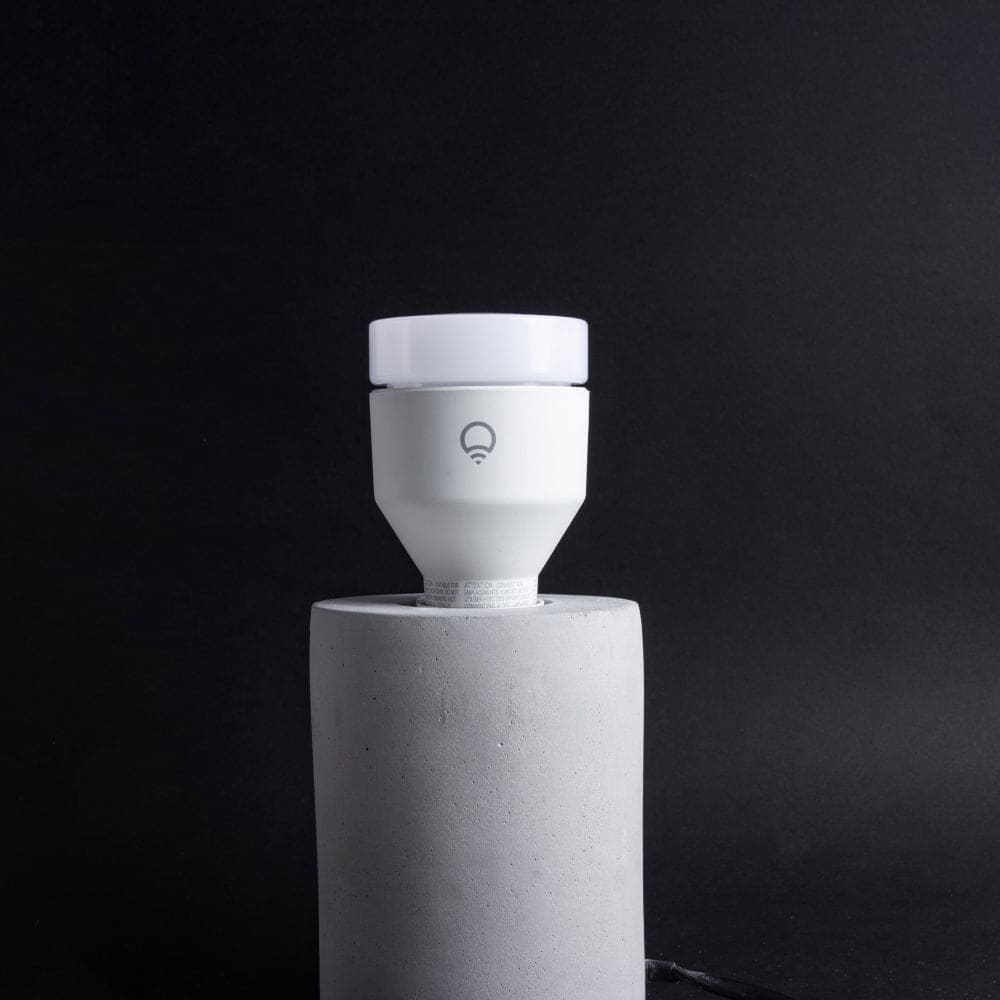
3. LIFX Colour (E27/B22) — Best for Brightness
Why it wins: LIFX bulbs connect directly to your Wi-Fi router and produce up to 1,100 lumens — a 37% brightness advantage over the standard Hue A60. Colour temperature spans 1,500 K to 9,000 K, an unusually wide range that makes LIFX particularly popular for bias lighting and creative home setups. No hub is needed; setup takes under two minutes via the LIFX app.
LIFX integrates with Alexa, Google Home, Apple HomeKit, and Home Assistant (via the official LIFX integration or local LAN control). B22 models are stocked at UK retailers including Currys.
Price range: Colour bulbs typically start around £25–£30 each; prices vary by retailer.
Best for: Users who prioritise raw brightness and want no-hub Wi-Fi simplicity. For a head-to-head breakdown, read our detailed Philips Hue vs LIFX comparison, or see how WiZ stacks up against both in our Philips Hue vs WiZ vs LIFX guide.
4. IKEA TRÅDFRI (E27/B22) — Best Entry-Level
Why it wins: IKEA relaunched its TRÅDFRI range with Matter support in late 2025, and by 2026 the updated bulbs are available across UK stores at prices that consistently undercut competing brands. White spectrum E27 models produce up to 1,055 lumens; colour models cover the full RGB range. Both E27 and B22 fittings are available in UK IKEA stores and online.
TRÅDFRI bulbs work as Zigbee devices on the older protocol or as Matter devices on the new firmware — useful if you have a mixed smart home. They pair easily with the IKEA Dirigera hub or directly with a Zigbee coordinator in Home Assistant.
Price range: Basic dimmable bulbs start around £5–£8; colour models are typically £12 or less. Prices vary by retailer and model.
Note: IKEA UK now sells this line under the KAJPLATS name — TRÅDFRI has been discontinued in the UK.
Best for: First-time smart home buyers who want low-risk, easily returnable bulbs from a familiar high-street retailer.
5. Govee RGBWW Smart Bulb (B22/E27) — Best Budget Colour Bulb
Why it wins: Govee has become one of the most visible budget lighting brands on UK shelves, and its RGBWW smart bulb undercuts both Tapo and WiZ on price while still delivering full-colour output and tunable white. It connects over Wi-Fi and Bluetooth, pairs through the Govee Home app, and supports Alexa and Google Home voice control along with music-sync effects that the Hue and Tapo apps do not offer natively.
Home Assistant support depends on the model: most Govee bulbs rely on Govee's cloud API through the official integration, though a growing number of newer SKUs expose a local LAN API. Check the specific model's Home Assistant compatibility before buying if local-only control matters to you — our Govee smart lights UK review covers the current lineup in detail.
Price range: Single bulbs typically cost £10–£15; multipacks bring the per-bulb price down further.
Best for: Buyers who want full-colour lighting and app effects on the tightest possible budget.
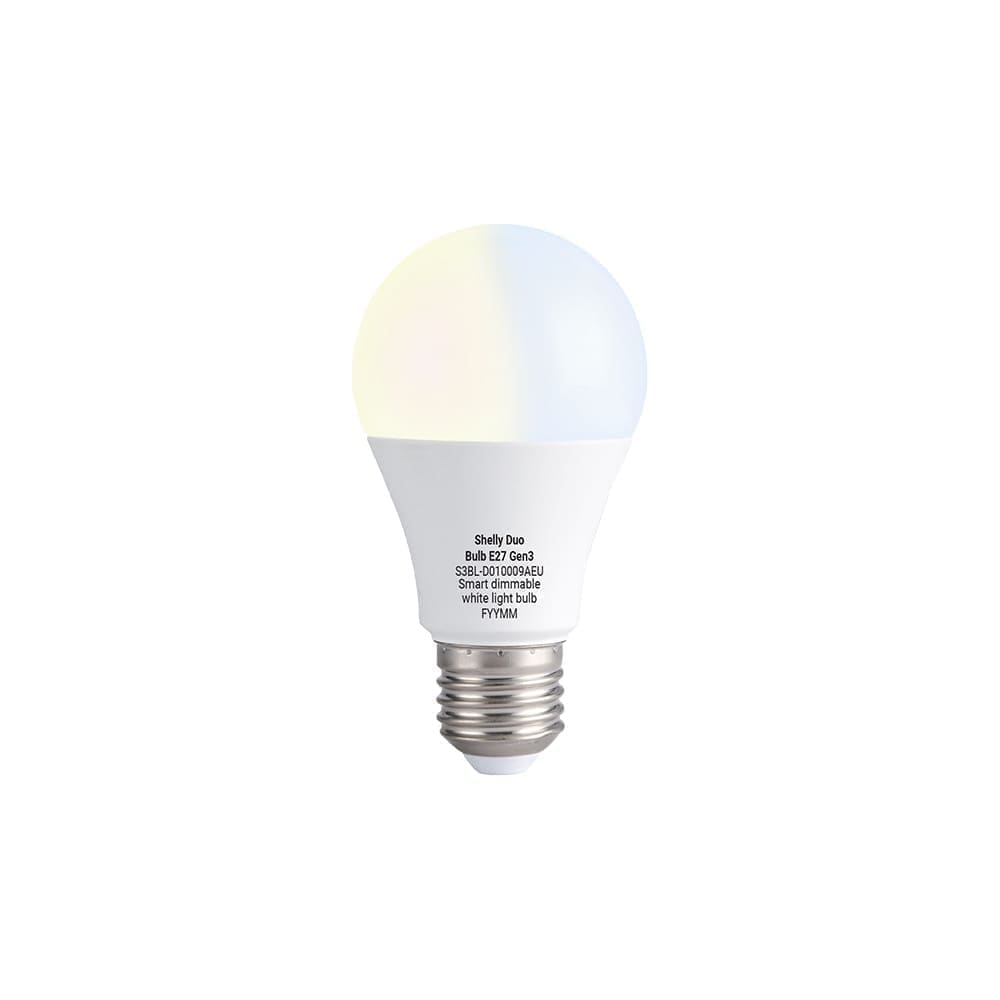
6. Shelly Multicolor Bulb E27 Gen3 — Best for Zero-Cloud Home Assistant Setups
Why it wins: Shelly's third-generation multicolour bulb is one of the newer arrivals in the UK smart bulb market, and it is built with local control as the headline feature rather than an afterthought. It connects over Wi-Fi with Matter support, but — crucially for Home Assistant users — it also exposes a fully local HTTP and CoAP API, so dimming, colour changes, and automations keep working even if your internet connection drops. Shelly's Home Assistant integration talks to the bulb directly on the local network, with no cloud round-trip required.
Output is comparable to the Tapo L535E and Govee RGBWW at around 1,000 lumens, and the bulb supports the same tunable white and full-colour range. It is a newer, smaller catalogue than Hue or Tapo, so accessory support (motion sensors, dimmer switches) is more limited.
Price range: Typically £9–£12 per bulb.
Best for: Home Assistant users who want to minimise cloud dependency without sacrificing colour and brightness.
UK Fitting Guide: E27 vs B22 vs E14
UK homes are split roughly evenly between E27 (screw) and B22 (bayonet) fittings. Before ordering online, unscrew your existing bulb and check the base: a round pin-and-twist base is B22; a threaded screw base is E27. E14 (small screw) is common in decorative fittings, bedside lamps, and chandeliers — fewer smart options exist at this size, though Philips Hue and TP-Link both offer E14 variants.
Smart Bulbs and Home Assistant
All six bulbs recommended above integrate with Home Assistant, the open-source smart home platform. Philips Hue and IKEA TRÅDFRI join via the built-in Zigbee integration (using a USB Zigbee stick such as the Sonoff Zigbee 3.0 USB Dongle Plus) or via the official Hue integration. Tapo L535E joins via the Tapo integration or natively as a Matter device. LIFX joins via the built-in LIFX integration using LAN control. Shelly's Gen3 bulb joins via Shelly's own local-first integration, and Govee joins via the official cloud integration (with local control on selected newer models).
Once in Home Assistant, you can write automations that dim lights at sunset, flash red when a doorbell rings, or switch off every bulb in the house with a single button press. If you are new to the platform, start with our guide to setting up Home Assistant in the UK before pairing your first smart bulb. If you prefer to control your lighting from the wall rather than replacing every bulb, take a look at our guide to the best smart light switches in the UK. If you are not sure which Zigbee USB coordinator to use with your Philips Hue or IKEA bulbs, our Zigbee stick UK buyer's guide covers all the best options. For a dedicated deep-dive into Zigbee-specific lighting, see our roundup of the best Zigbee smart bulbs UK — covering Philips Hue, IKEA TRÅDFRI, Innr and Samotech across all UK fittings. Pairing a smart lighting system with a smart thermostat lets you build whole-home automations that save both energy and money.
Energy Savings: What the Numbers Look Like
Under the Ofgem price cap in effect from April 2026, the typical electricity unit rate is around 24p per kWh. A 9 W smart LED running for four hours a day consumes 0.036 kWh — roughly 0.86p per day, or about £3.15 per year. An equivalent 60 W incandescent would consume 0.24 kWh in the same period, costing around 5.8p per day or £21.17 per year. Switching ten bulbs in a typical UK home could therefore save over £180 per year — before adding the further savings from schedules and occupancy sensors that turn lights off automatically.
Which Smart Bulb Should You Buy?
If budget is not a concern, start with Philips Hue — the ecosystem depth, reliability, and UK retailer support are unmatched. For a hub-free, Matter-ready setup on a tight budget, the Tapo L535E is the standout value pick. If raw brightness matters most, choose LIFX. If you want the cheapest possible route into full-colour lighting, Govee undercuts almost everything else on this list. And if you are building a Home Assistant setup and want to keep control fully local, the Shelly Multicolor Gen3 is worth the small premium over the very cheapest options. If you just want to try smart lighting without committing much money, a couple of IKEA TRÅDFRI bulbs from your nearest IKEA store is an excellent starting point — read our IKEA TRADFRI review UK for a full breakdown of the 2026 range. For a deeper look at Philips' own Wi-Fi budget brand, see our WiZ smart lights UK review.