What's in a Philips Hue Starter Kit?
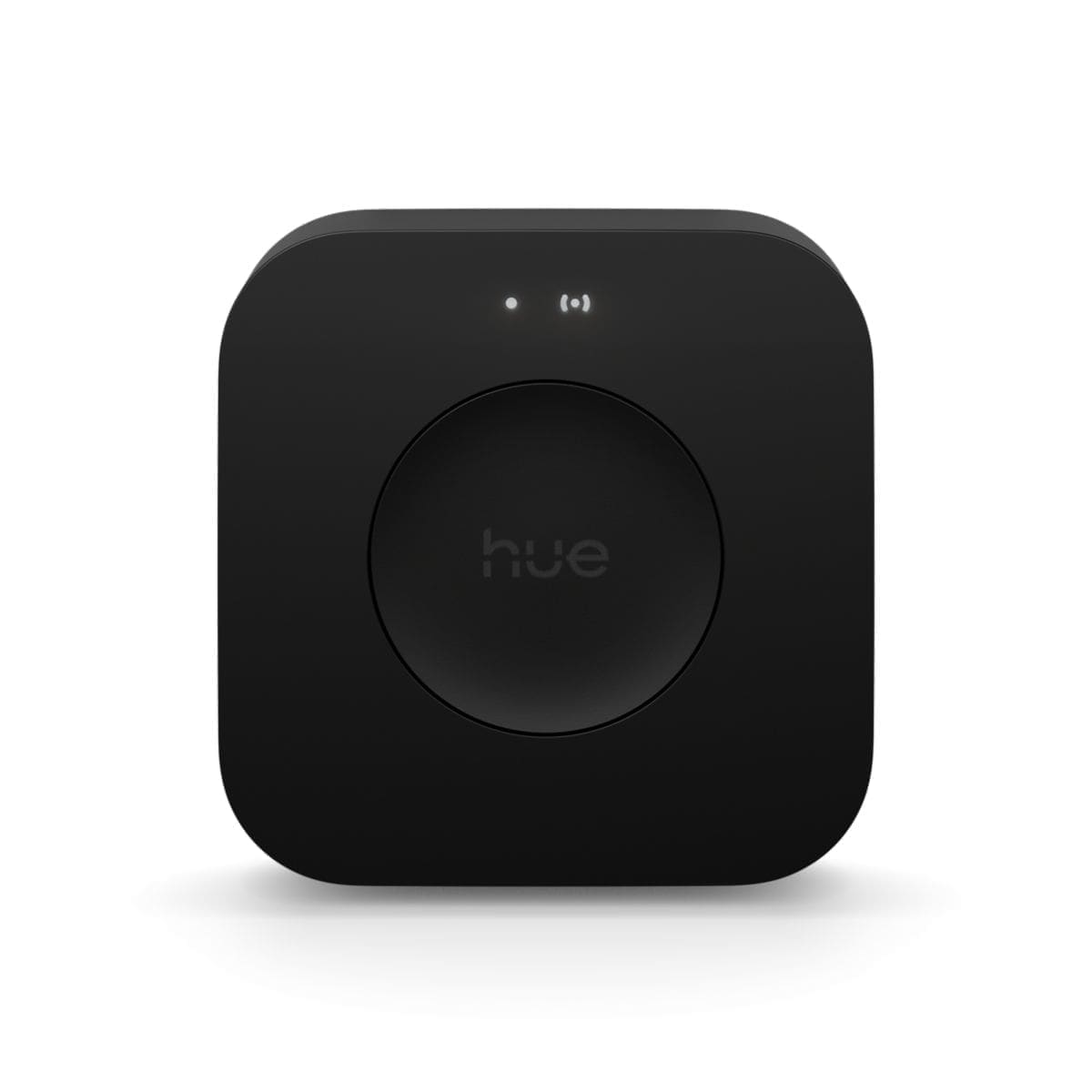
Every Hue starter kit includes at minimum a Hue Bridge and at least two smart bulbs. The Bridge is the heart of the system: a small hub that connects to your router via Ethernet and talks to the bulbs over Zigbee 3.0, a low-power mesh protocol designed for smart-home devices. Once the Bridge is live, you can control every bulb through the Hue app, via voice (Amazon Alexa, Google Assistant, or Apple Siri), or through third-party integrations including Home Assistant.
The core kit range available in the UK in 2026 breaks down as follows:
- White Ambiance starter kit — Two or three E27 (bayonet B22 versions also available) bulbs that produce tunable white light from warm (2,200 K) to cool daylight (6,500 K), plus a Hue Bridge and dimmer switch in the three-bulb variant. Bulbs draw around 9.5 W and output up to 1,100 lumens — equivalent to a 75 W incandescent.
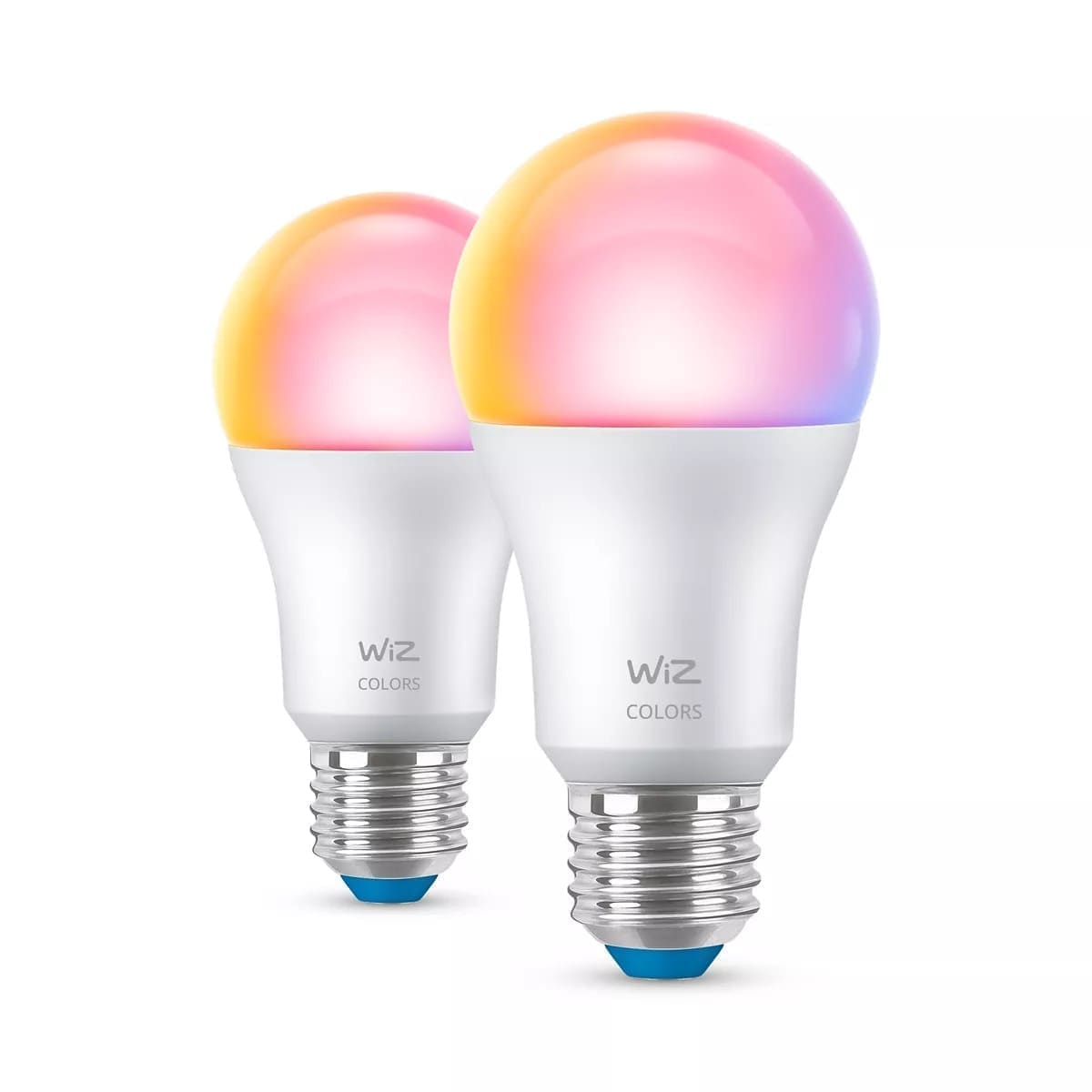
- White and Colour Ambiance starter kit — The flagship option. Two E27 bulbs capable of 16 million colours plus every white tone, paired with a Hue Bridge. Colour bulbs draw around 9 W and output up to 800 lumens at 4,000 K. GU10 and B22 versions are also sold as starter kits for different fitting types.
- White and Colour Ambiance Pro starter kit — Three GU10 spotlight bulbs (4.2 W each), a dimmer switch, and a Hue Bridge. Designed for ceilings and downlighters common in UK kitchens and hallways.
Prices vary by retailer and promotional period, but the White and Colour Ambiance two-bulb kit has been found at John Lewis for around £77–£130 depending on whether a sale is active. Always check Amazon UK and philips-hue.com alongside John Lewis before purchasing, as promotional bundles can cut meaningful sums off the standard price.
UK Bulb Fitting Compatibility
One of the first questions UK buyers ask is whether Hue bulbs fit their light sockets. Philips Hue sells its starter kits in three fitting types relevant to UK homes:
- E27 (Edison screw, large) — standard for table lamps and pendant shades.
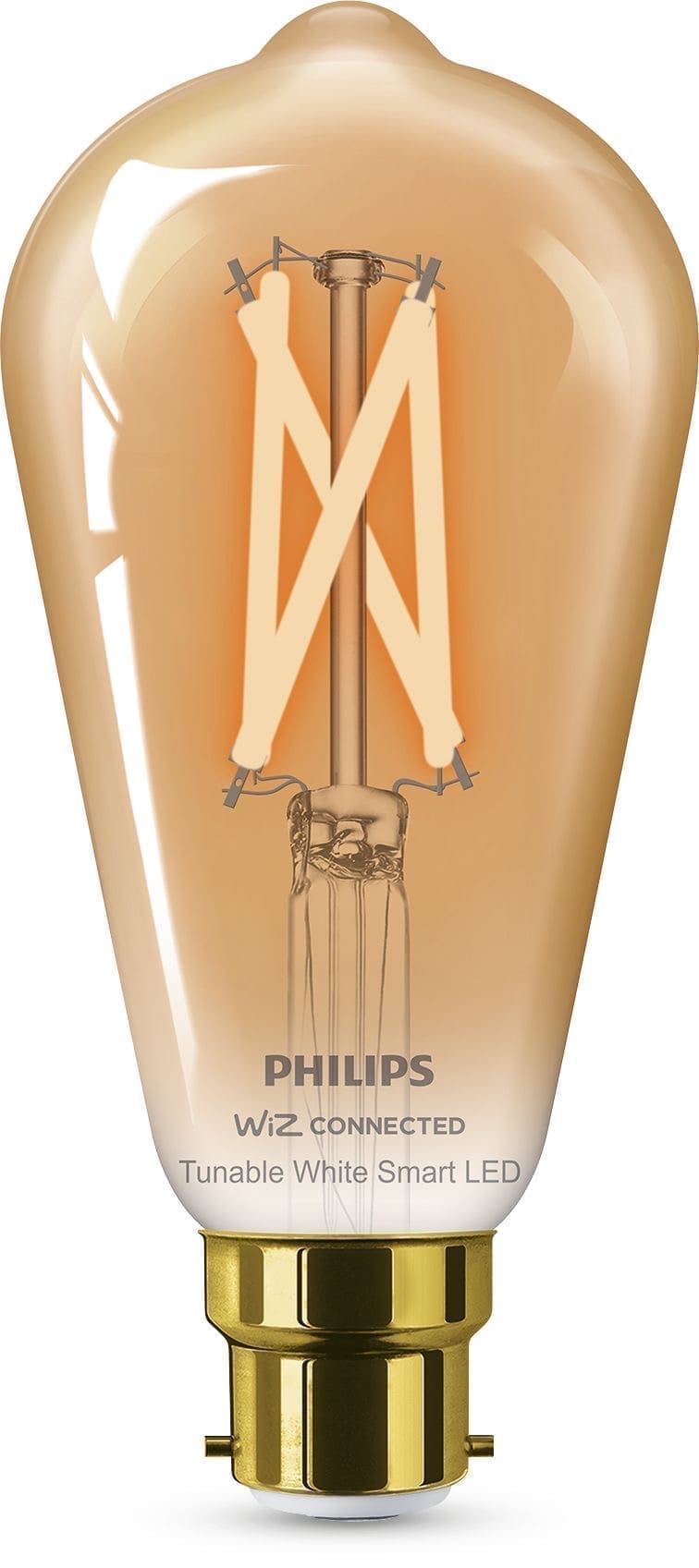
- B22 (bayonet cap) — the legacy UK fitting still found in many ceiling roses and older lamp bases.
- GU10 — the push-and-twist fitting used in most UK recessed downlighters.
Make sure you choose the correct starter kit for your fitting before ordering. The E27 and B22 kits are interchangeable in terms of features, but the GU10 Pro kit uses lower-wattage spotlight bulbs (4.2 W) that are not interchangeable with E27 or B22 sockets.
Energy Costs at Current Ofgem Rates
Smart lighting is only worthwhile if it's genuinely more efficient than what you're replacing. Philips Hue bulbs draw approximately 85% less wattage than the incandescent bulbs they replace. To put that in pound-and-pence terms for UK households:
A single 60 W incandescent bulb running for four hours a day uses 0.24 kWh daily. At the Q2 2026 Ofgem price cap unit rate of 24.67p/kWh, that costs roughly 5.9p per day, or around £21.50 per year, per bulb. A Philips Hue White and Colour Ambiance E27 drawing 9 W over the same four hours uses just 0.036 kWh — roughly 0.9p per day, or about £3.25 per year. The saving per bulb is approximately £18 annually, meaning two bulbs in a starter kit could recover a significant portion of their cost through energy savings within two to three years, even at current higher electricity prices.
The Hue Bridge itself consumes a modest amount of standby power, and each bulb draws around 0.5 W on standby even when switched off via the app (because the bulb must stay connected to the Zigbee mesh to receive commands). This is a minor consideration but worth noting if you're managing a large installation.
App, Voice Control, and Smart Features
The Philips Hue app (iOS and Android) is one of the most polished smart lighting apps available. You can:
- Group lights into rooms and zones
- Set schedules and wake-up routines
- Programme lighting scenes (Concentrate, Relax, Energise, Read)
- Sync with TV entertainment content via the Hue Sync app on a PC or Mac
- Control lights remotely when away from home (Bridge required — Bluetooth-only mode does not support remote access)
Voice control works natively with Amazon Alexa, Google Home, and Apple HomeKit. Saying "Alexa, dim the living room to 30%" or "Hey Siri, set the bedroom to Relax" works reliably without any additional configuration once the Hue skill is enabled.
Home Assistant Integration
For UK smart-home enthusiasts already running Home Assistant, Philips Hue is one of the best-supported platforms available. Home Assistant connects to the Hue Bridge over your local network, meaning all commands happen locally without any cloud round-trip — responses are fast, and your lights continue to work even if Philips' servers go offline. The Home Assistant 2025.12 update brought a revamped Hue integration that creates light entities for Hue rooms and zones by default, imports scenes automatically, and supports grouped light commands for smooth transitions.
Alternatively, you can bypass the Bridge entirely and pair Hue bulbs directly to Home Assistant through a Zigbee coordinator such as the Sonoff Zigbee 3.0 Dongle Plus or a SkyConnect USB stick. This saves the cost of the Bridge, though you lose the Hue app ecosystem and some advanced features like Entertainment areas. If you're not sure which Zigbee stick to choose for this approach, our guide to the best Zigbee sticks for Home Assistant UK covers the current options in detail.
Who Should Buy a Philips Hue Starter Kit?
Philips Hue occupies a specific niche: it's premium-priced but it earns that premium through build quality, reliability, ecosystem breadth, and long-term support. If you want plug-and-play smart lighting that works well with Alexa, Google Home, and HomeKit out of the box, and you plan to grow your system over time, a Hue starter kit is the sensible starting point. If you want the cheapest possible smart bulbs and don't need colour, there are more affordable alternatives — but they rarely match Hue's polish or integration depth.
The choice between the White Ambiance and Colour Ambiance kits comes down to whether colour matters to you. Colour sets a higher initial cost, but if you ever want to change the mood of a room or use entertainment sync features, the full-colour kit is the one to choose. For most living rooms and bedrooms, the colour capability pays dividends over time.
Verdict
Philips Hue starter kits remain the benchmark for UK smart lighting in 2026. The combination of a robust Zigbee mesh, an excellent mobile app, broad voice assistant compatibility, and deep Home Assistant integration makes the system future-proof in a way that cheaper alternatives rarely are. Running costs are low — a pair of Colour Ambiance E27s costs around £6.50 a year to run at current Ofgem rates — and the build quality is noticeably superior to budget alternatives. The upfront price is real, but for buyers who want smart lighting that simply works and keeps working, Philips Hue is hard to beat.