
Why Use Home Assistant for Heating?
Most UK smart thermostats — tado, Hive, Nest — work perfectly well as standalone products, and the same is broadly true of underfloor heating controls; see our best underfloor heating thermostats UK guide for which UFH models actually integrate with Home Assistant. So why bring them into Home Assistant? The short answer is automation depth and integration breadth. If you haven't picked a thermostat yet, our best smart thermostats UK roundup compares tado, Hive, Wiser, Honeywell and more on price, OpenTherm support and Home Assistant compatibility before you buy.
With a native app you can set a schedule and perhaps use geofencing. With Home Assistant you can combine all of the following in a single automation:
- Presence detection from multiple people's phones, meaning the house starts warming up when the first family member leaves work, not when they reach the front door.
- Room-by-room temperature control by pairing smart radiator valves with the scheduler card or the Versatile Thermostat custom component.
- Tariff-aware scheduling — if you're on Octopus Agile or a time-of-use tariff, automations can pre-heat your home during cheap overnight windows and let the house coast through peak hours.
- Cross-device triggers, such as lowering the heating when a window sensor reports open, or boosting a room when a motion sensor detects someone sitting in it.
The Energy Saving Trust estimates that fitting a programmer, thermostat and thermostatic radiator valves can save around £110 a year on a typical UK gas bill. Home Assistant's automations let you extract similar or greater savings from hardware you may already own.
Integration Options: Which Approach Is Right for You?
There is no single best way to add home assistant heating control to a UK home — the right choice depends on your boiler type, technical comfort level and budget. Below are the four main routes.
1. tado (Official Integration)
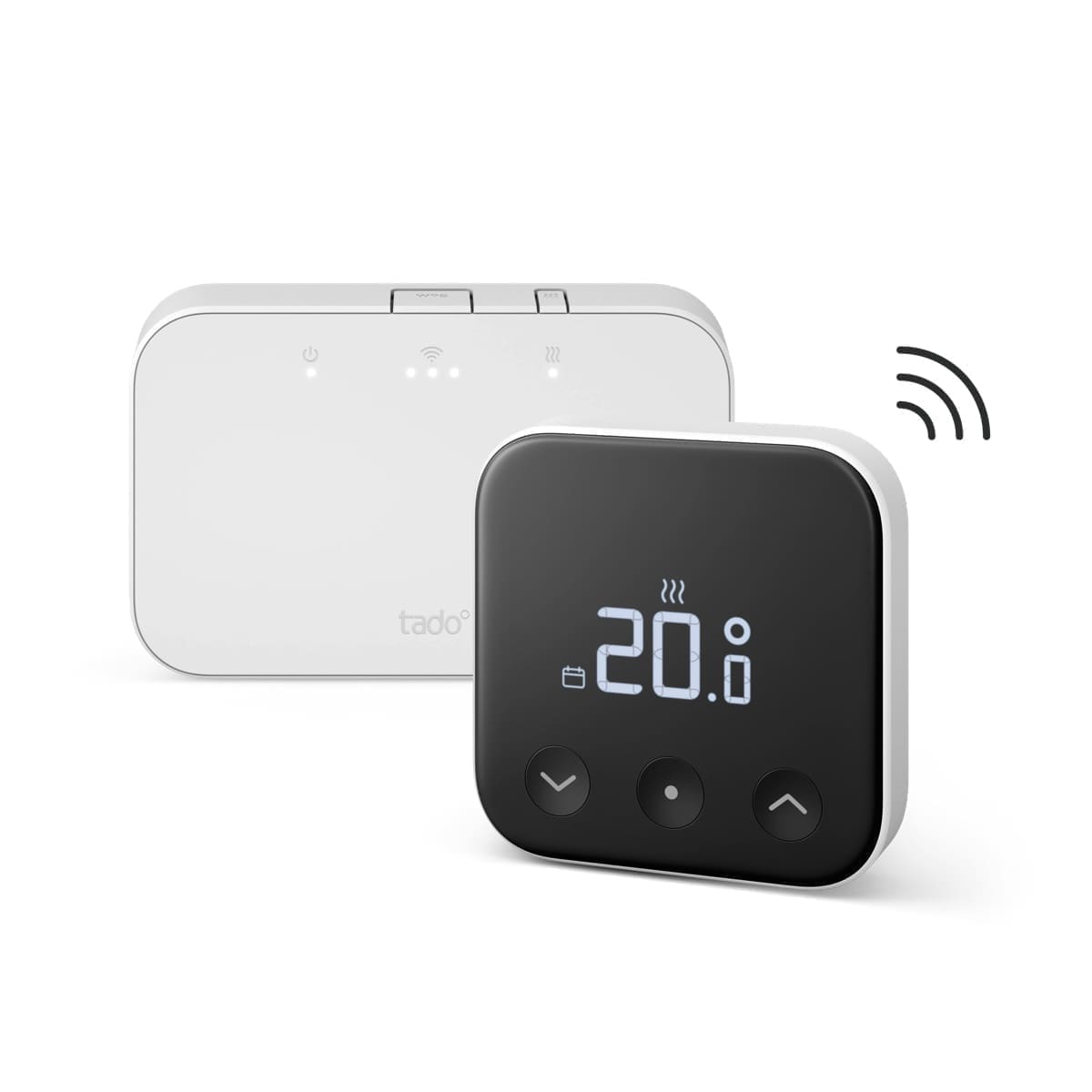
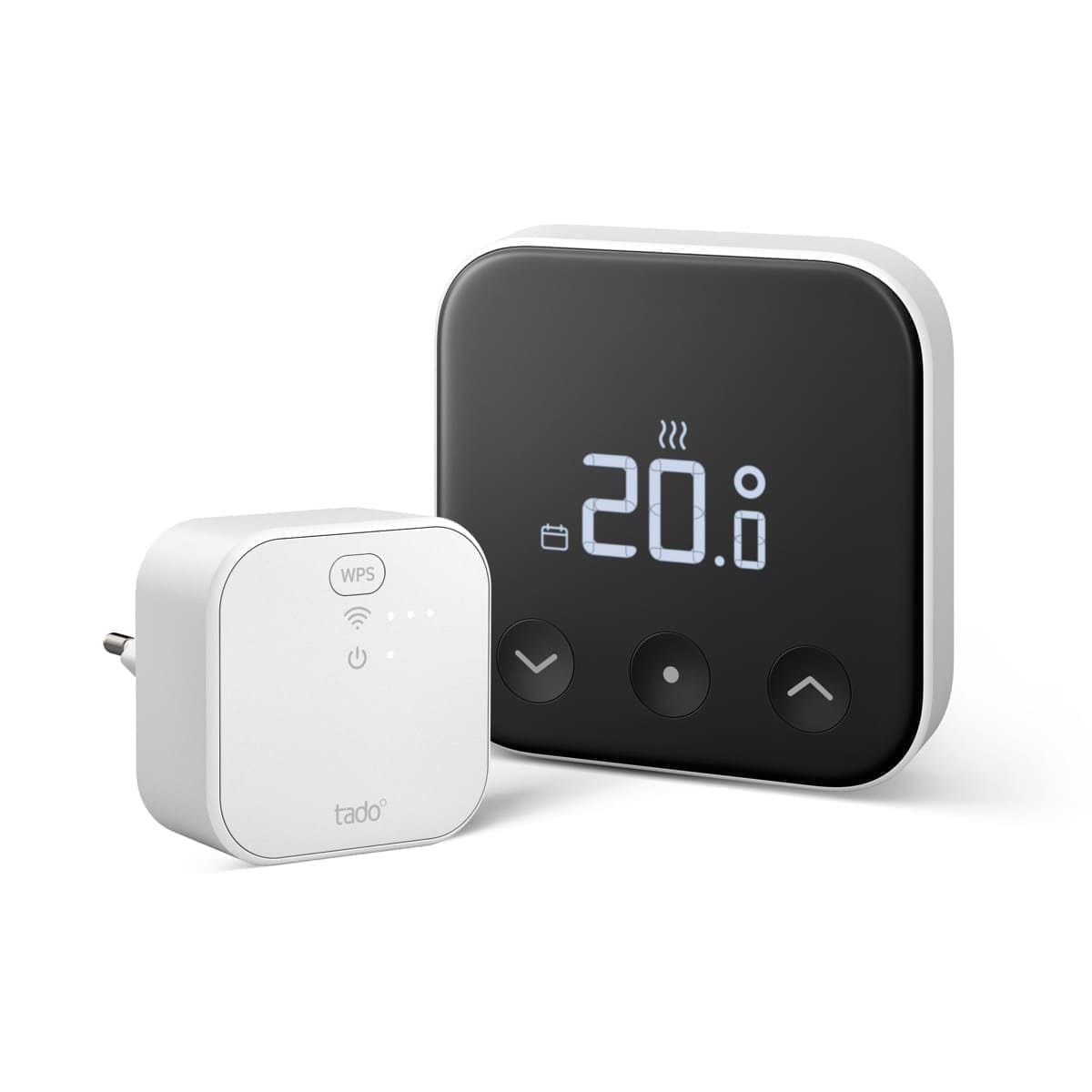
tado is among the most popular smart heating brands in the UK. The official Home Assistant integration authenticates via tado's cloud API and exposes each zone as a climate entity. You can set target temperatures, switch between Smart Schedule and Manual mode, and read current temperature and humidity from each tado device.
2026 caveat: From January 2026, tado introduced strict API rate limiting — typically 100 calls per day on the free tier. The official integration may fall behind once that quota is exhausted, showing stale readings. The community-maintained Tado CE custom integration (available via HACS) works around this by pairing the tado Internet Bridge V3+ via HomeKit for local polling, delivering near-instant updates without touching the API quota.
The tado Starter Kit (wireless smart thermostat) is widely available from Amazon UK, Screwfix and B&Q; prices vary by retailer and bundle size. It fits most UK combi boilers and requires no professional installation.
2. Hive Active Heating (Official Integration)
The Hive integration has been part of Home Assistant core since 2017. It supports multi-zone heating, hot water control, Hive smart plugs and Hive lights through a single login. Two-factor authentication must be enabled on your Hive account before the integration will connect, and you must use the account owner's credentials rather than a shared user account.
Hive Active Heating 2 is sold and installed by British Gas, making it familiar to many UK households. The integration surfaces a climate entity for each zone and a water_heater entity for hot water cylinders, both of which Home Assistant automations can target directly.
If you already have a Hive system, adding it to Home Assistant costs nothing beyond the time to configure the integration — there is no additional hardware to buy.
3. OpenTherm Gateway (Local, No Cloud)
OpenTherm is a standard digital protocol supported by most Worcester Bosch, Baxi, Ideal and Vaillant boilers sold in the UK. Instead of a simple on/off relay, OpenTherm lets the thermostat communicate target flow temperatures to the boiler, enabling modulation — the boiler runs at lower output for longer rather than cycling on and off at full power. This typically improves efficiency and reduces wear.
The Home Assistant OpenTherm Gateway integration (built-in, no HACS required) connects to a dedicated gateway device — such as the OTGW firmware flashed to an ESP8266, or commercial options like the OTGateway board — and provides a climate entity plus sensors for boiler water temperature, return temperature, CH pressure and fault codes. Because it runs entirely on your local network, it works without an internet connection and without any subscription.
Not every UK boiler supports OpenTherm: older non-condensing boilers and some combi units only offer volt-free contact switching (on/off). Check your boiler manual or the OpenTherm Association's compatibility list before purchasing a gateway.
4. Generic Thermostat + Relay Switch (DIY)
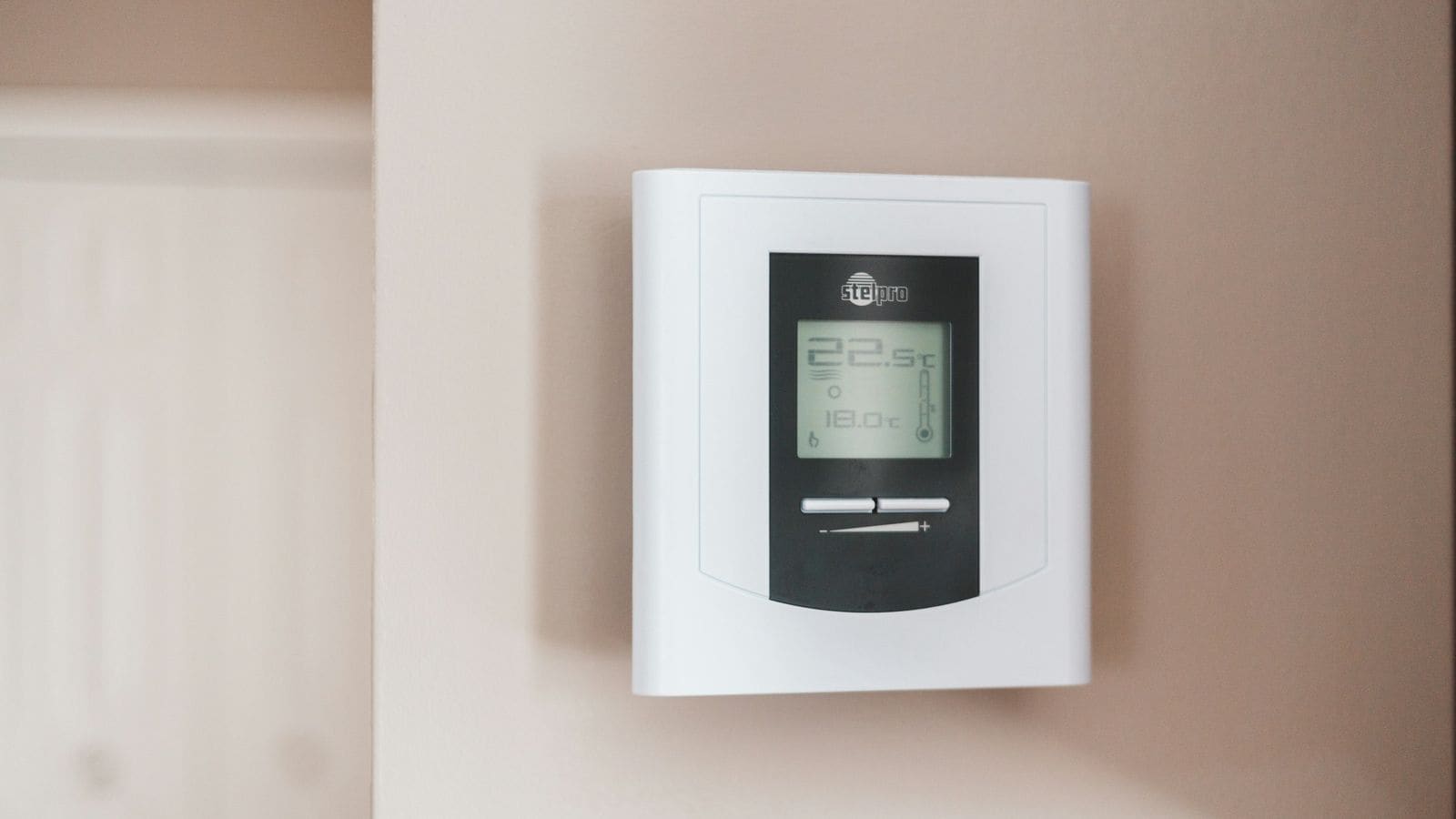
For boilers that only support on/off switching, Home Assistant's built-in Generic Thermostat integration offers a no-cost software thermostat. You pair it with a temperature sensor (a Zigbee or Z-Wave room sensor, or a cheap ESP32/DHT22 running ESPHome) and a smart switch or relay that breaks the boiler's call-for-heat circuit.
UK combi boilers use a simple switched live circuit for the programmer output — a 5 A relay module or a compatible smart switch (such as a Shelly 1) wired in place of the standard programmer can control the boiler from Home Assistant. The Generic Thermostat then acts as a PID-style controller, turning the switch on when the temperature falls below the target and off when it overshoots, with a configurable min_cycle_duration to prevent short-cycling.
This is the most affordable approach — a Shelly 1 relay costs around £10–£15 and a Zigbee temperature sensor around £10 — but it requires confidence with low-voltage wiring and should only be attempted if you are comfortable working with the boiler's external controls. If in doubt, consult a Gas Safe registered engineer.
How Do You Add Room-by-Room Control with Smart Radiator Valves?
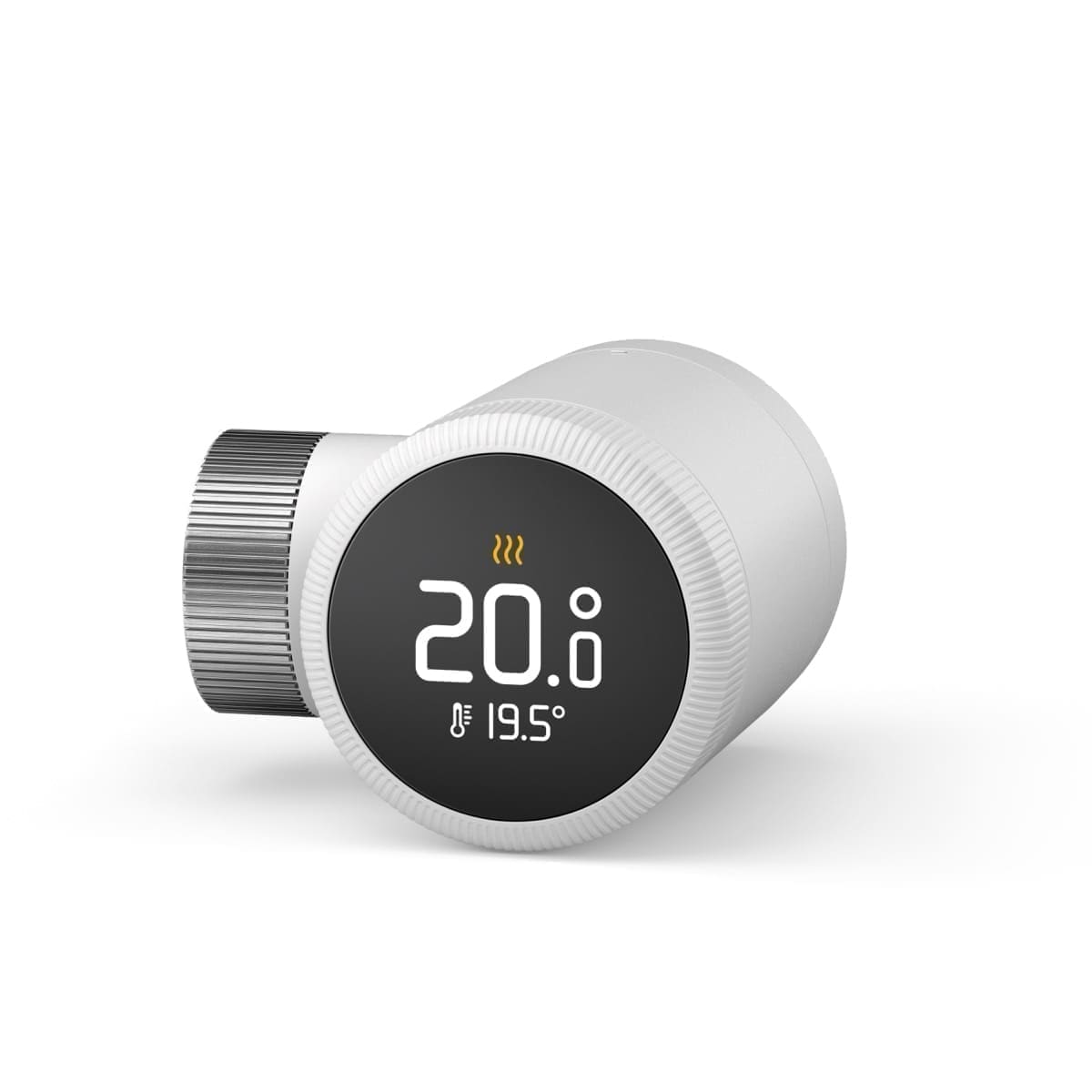
Whichever integration you choose for the boiler, pairing it with smart radiator valves (TRVs) gives you per-room heating control without installing multiple heating zones. Home Assistant supports TRVs from tado, Hive, SONOFF (Zigbee), Eurotronic and several other brands via the same climate entity interface.
A practical setup assigns each TRV its own climate entity and uses the Generic Thermostat (or Versatile Thermostat from HACS) to coordinate a virtual zone: when any room calls for heat, an automation opens the boiler's demand switch; when all rooms are satisfied, the boiler demand is dropped. This prevents the common problem of TRVs trying to heat rooms while the boiler sits idle.
For more on choosing the right radiator valves for this kind of setup, see our guide to the best smart radiator valves UK.
Scheduling and Presence-Based Automations
Home Assistant's automation engine unlocks heating behaviours that no single-brand app can match. A few patterns that work well in UK homes:
- Commute-aware pre-heating: Use the
device_trackerintegration (Home Assistant Companion app on Android or iOS) to detect when the first household member leaves their workplace. Trigger a heating boost 30 minutes before their estimated arrival time using theinput_datetimehelper or the Google Travel Time integration. - Window-open detection: Pair a cheap Zigbee door/window sensor with an automation that sets the TRV to frost-protection mode while the window is open and restores the previous setpoint when it closes. This prevents money escaping through open windows on mild days.
- Cheap tariff pre-heat: On Octopus Agile or similar time-of-use tariffs, use a
sensor.octopus_agile_current_ratesensor to trigger extra heating during negative or sub-1p/kWh electricity windows — useful if you have electric panel heaters supplementing a gas system or are using an air source heat pump. - Away mode: The Home Assistant Zones feature sets a home/away boolean when all tracked residents leave the geofence. A single automation drops every climate entity to a frost-protection temperature of 7°C, eliminating wasted heat in empty properties.
Monitoring Energy Use Alongside Heating
Heating control becomes even more powerful when combined with energy monitoring. Home Assistant's Energy dashboard can accept gas consumption data from a smart meter (via the DCC/Hildebrand Glow integration or a P1 reader for SMETS2 meters), letting you correlate your heating schedule directly with gas usage in kWh. Over several weeks you can identify which automations deliver real savings and which add complexity without measurable benefit.
If you haven't set up energy monitoring yet, our guide to Home Assistant energy monitoring UK walks through linking your smart meter and electricity sensors to the dashboard.
Installation Tips for UK Homes
Wiring standards: UK boiler control wiring uses standard terminals labelled COM (common), NO (normally open) and sometimes NC (normally closed). Most UK programmers are volt-free switching devices operating at extra-low voltage (SELV). Confirm this with a multimeter before adding a relay or smart switch.
Gas Safe compliance: Home Assistant controls the electrical demand signal to the boiler — it does not touch the gas circuit. No Gas Safe certificate is required to swap a programmer for a smart relay, but any work on the boiler itself (replacing the gas valve, fitting a flue, etc.) must be carried out by a Gas Safe registered engineer.
Boiler Plus regulations: Since April 2018, all new gas boiler installations in England must comply with Boiler Plus, which mandates a minimum ErP thermostat class. If you're replacing an old dumb thermostat with a smart relay and Generic Thermostat setup, your local authority building control may consider this a new thermostat installation subject to Boiler Plus requirements. tado, Hive and Nest products all meet the ErP thermostat requirements; a DIY relay setup may not. Check with your installer or local authority if in doubt.
Getting Started
If you are new to Home Assistant, the first step is to get the platform running on a dedicated device — a Raspberry Pi 4 or a purpose-built Home Assistant Green are popular choices. Our Home Assistant UK setup guide covers installation, network configuration and first-run setup in detail before you tackle any heating integrations.
Once Home Assistant is running, navigate to Settings → Devices & Services → Add Integration and search for your thermostat brand. Most major UK heating brands appear in the official integration catalogue; for tado CE and Versatile Thermostat you will need to install HACS first and then add the custom repository.
Home assistant heating control rewards patience during initial setup, but the result — a heating system that responds to your life rather than a fixed timetable — is one of the most tangible quality-of-life improvements a smart home can deliver.