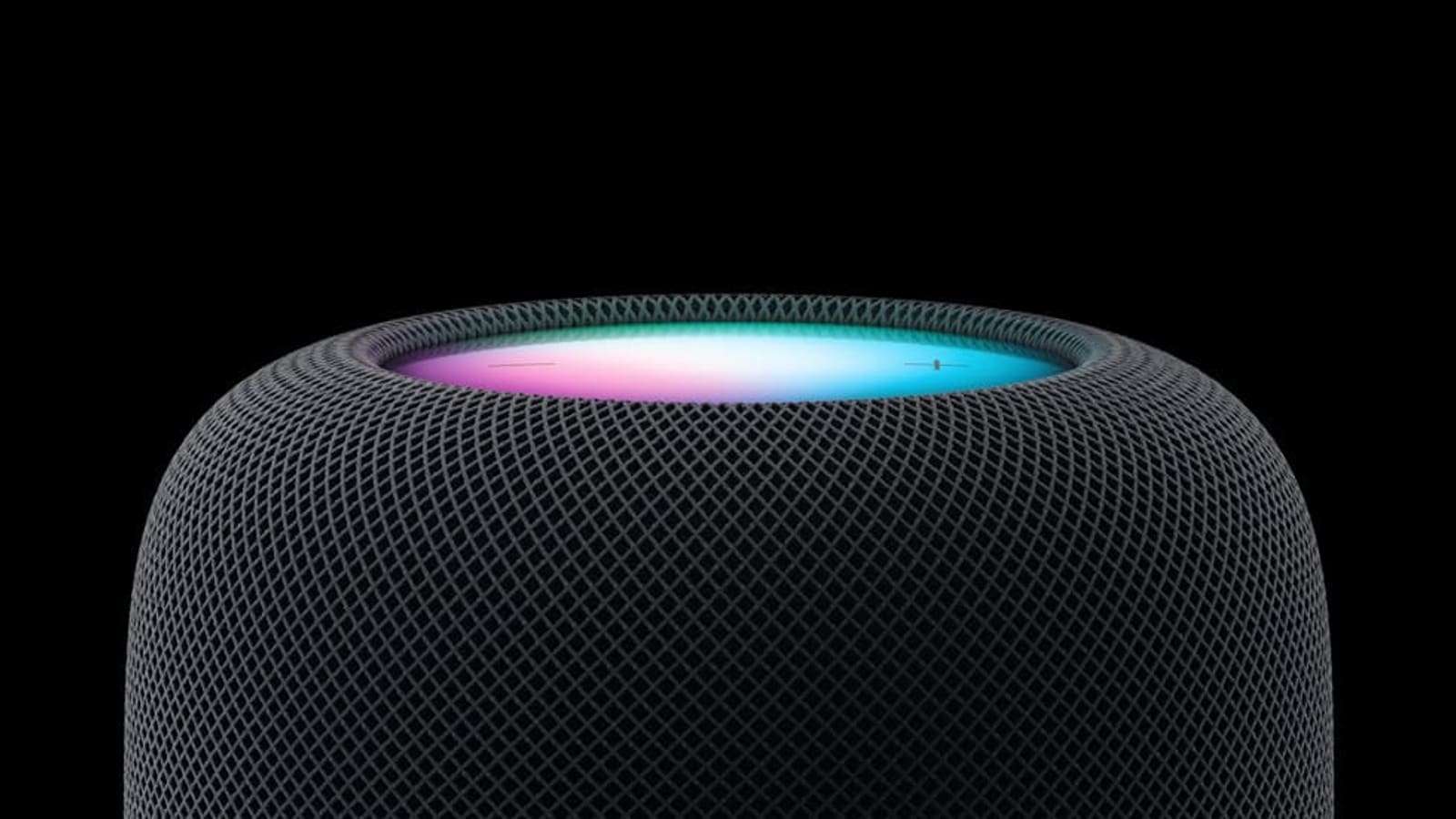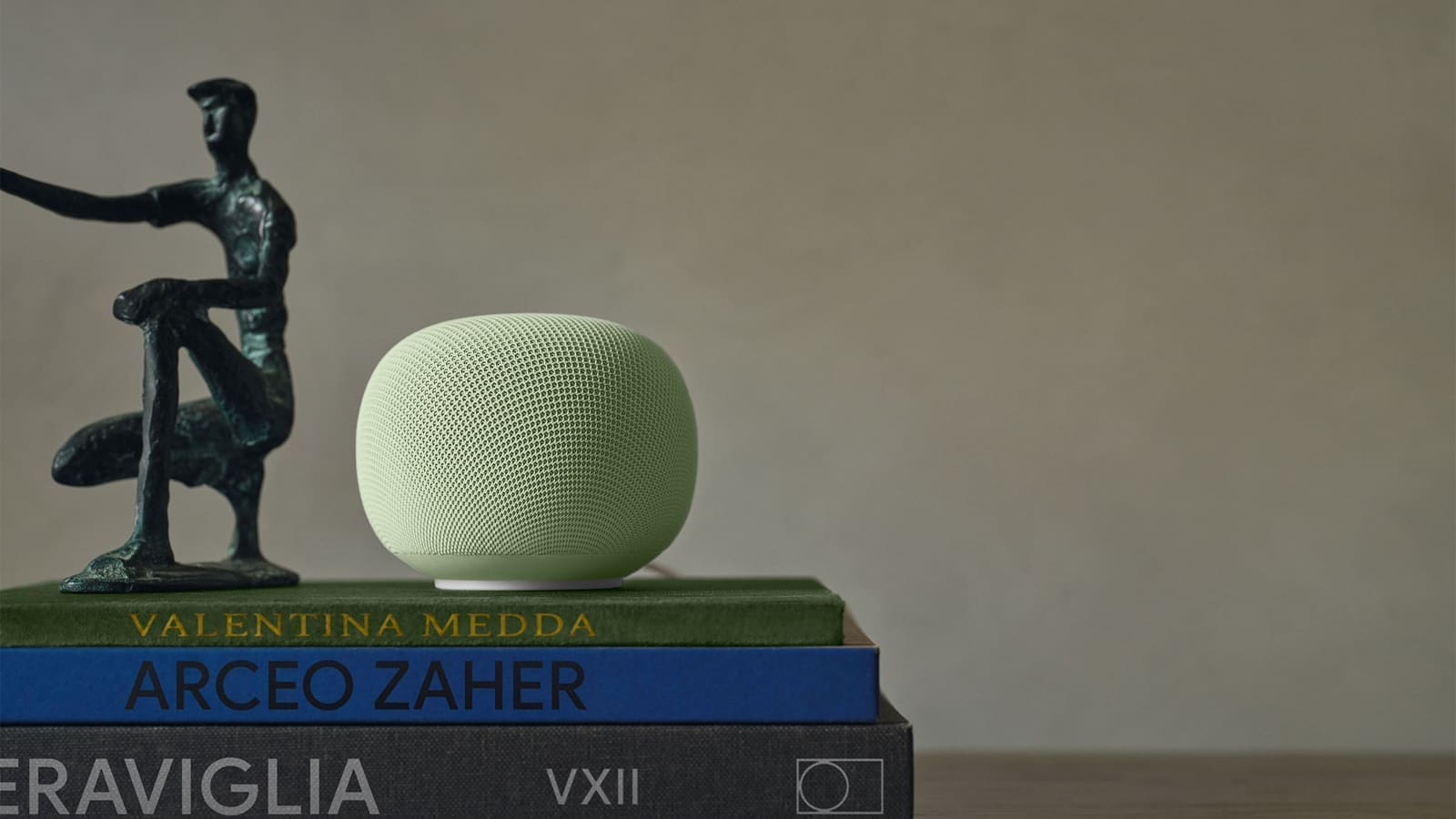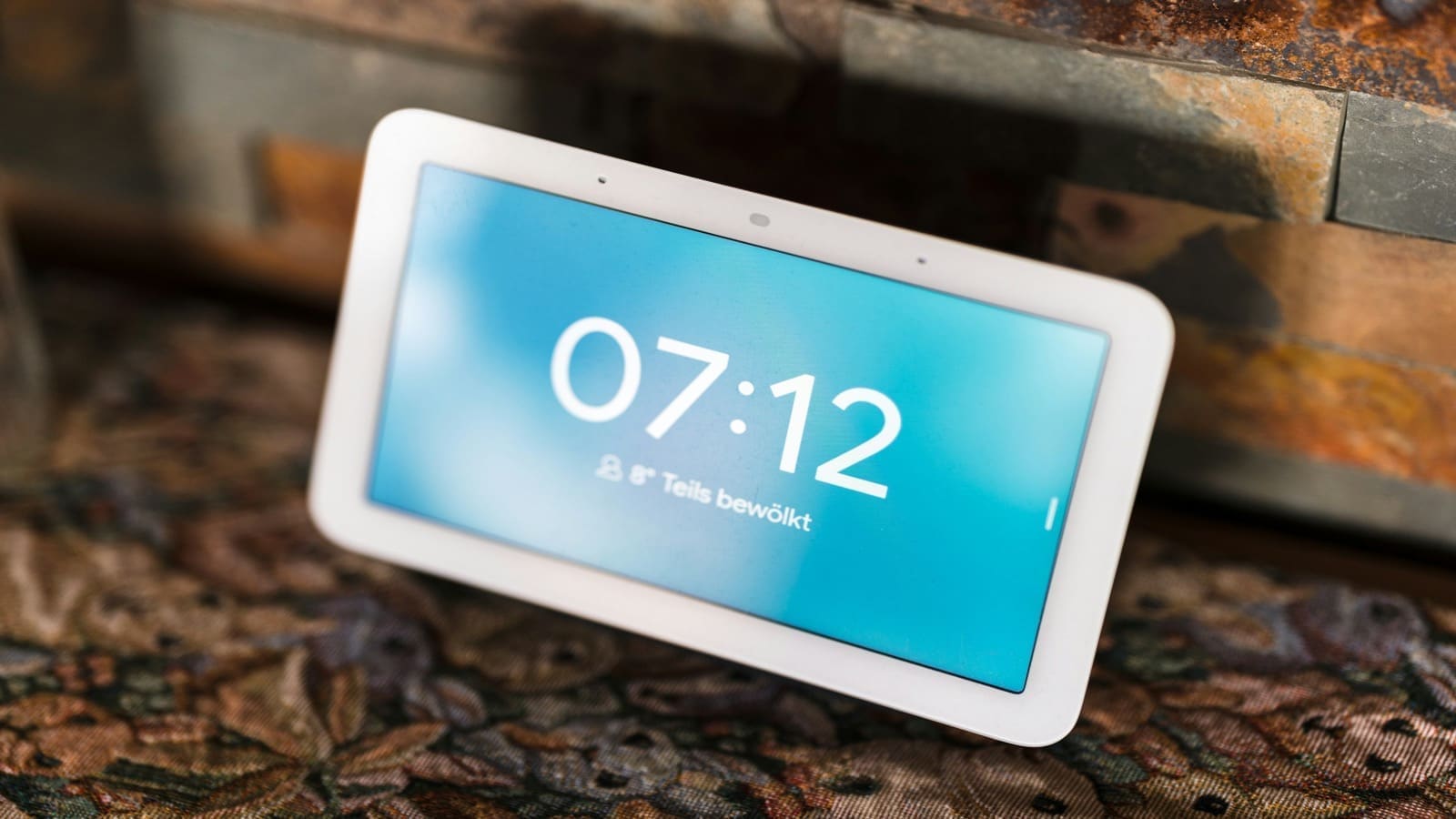
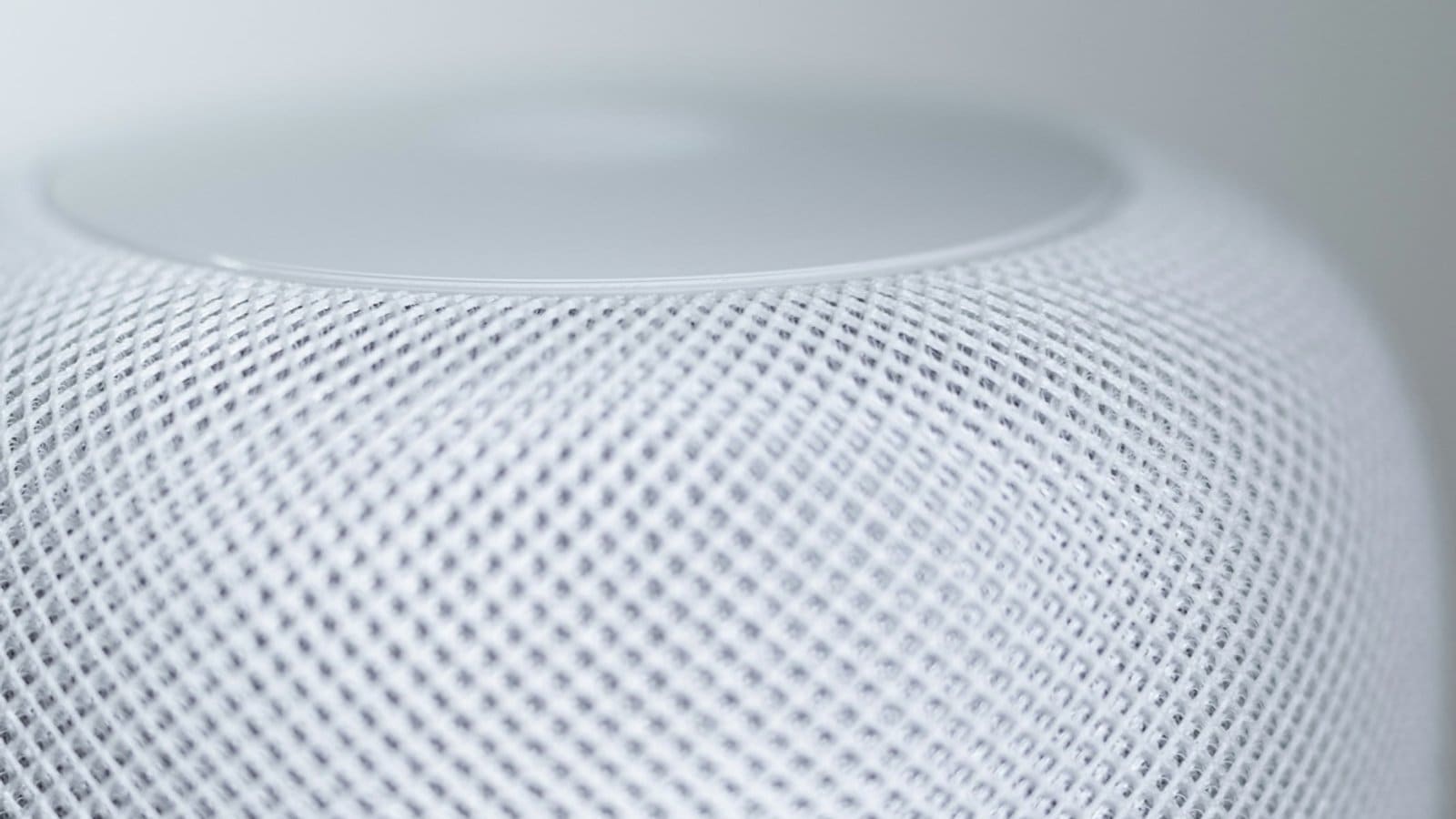
Specifications at a Glance
Processor. The HomePod mini is powered by Apple's S5 chip — the same silicon used in the Apple Watch Series 4 and Watch SE — which handles real-time audio processing, Siri requests, and smart home automation logic locally on the device.
Audio system. Despite standing just 84.3 mm tall and 97.9 mm wide, the HomePod mini delivers 360° sound via a full-range driver and two force-cancelling passive radiators. A custom acoustic waveguide distributes audio evenly around the room, so placement against a wall or on a shelf makes little difference to perceived volume distribution.
Microphones. Four microphones with beamforming technology pick up Siri commands even when music is playing, and the array can distinguish your voice from background noise reliably from across a standard UK living room.
Connectivity. The HomePod mini uses 802.11n Wi-Fi, Bluetooth 5.0, a Thread radio, and an Ultra Wideband (U1) chip. It requires a wired 20 W power supply — there is no battery option.
Colours. Available in White, Midnight, Yellow, Orange, and Blue — with Space Grey having been quietly discontinued.
Apple Ecosystem Integration
Apple Music is the headline use case. Subscribers get lossless audio up to 24-bit/192 kHz streamed natively — a quality tier that Spotify and Amazon Music do not match through the HomePod mini's built-in playback. You can ask Siri for a song, an artist, a playlist, or a radio station, and it responds accurately and quickly.
AirPlay 2 extends playback to any app on iPhone, iPad, or Mac — including Spotify, BBC Sounds, and YouTube Music. Audio plays through your iOS app and is sent to the HomePod mini over the local network. This works well in practice, though it requires an iOS device to initiate.
Intercom lets you broadcast voice messages to other HomePod minis (or HomePod 2nd-generation speakers) around the home, and to iPhones, iPads, and Apple Watches — useful in larger UK homes with multiple floors.
Personal Requests with Handoff. When your iPhone is near the HomePod mini, iOS hands off context so Siri can access your calendar, reminders, messages, and contacts. Walk away and those personalised functions are no longer available, which limits Siri's usefulness as a standalone assistant.
What Can the HomePod Mini Do as a HomeKit Hub?
Every HomePod mini automatically becomes a HomeKit hub once signed in with an Apple ID. As a hub, it allows you to:
- Control HomeKit devices remotely, even when away from home
- Run location-based and time-based automations without an iPhone present
- Receive notifications from smart home sensors (smoke alarms, motion detectors)
- Share home access with family members and guests
Automations run locally on the HomePod mini's S5 chip — they do not depend on iCloud, so response latency is low and they continue working during internet outages. This is a genuine advantage over cloud-dependent hubs.
Thread Border Router
The HomePod mini was one of the first consumer devices to ship with a built-in Thread Border Router. Thread is a low-power, self-healing mesh networking protocol designed for smart home devices — the same radio technology that underpins Matter. Devices like smart bulbs, sensors, and plugs that use Thread can communicate with far lower latency and higher reliability than Zigbee or Z-Wave alternatives, and without the single-point-of-failure problem of hub-based protocols.
In practice, placing one or two HomePod minis around a larger home creates a robust Thread mesh that Matter-compatible devices join automatically. If you are building a new smart home with Matter devices, a HomePod mini provides the border router function at no extra cost over its price as a speaker.
What Does Ultra Wideband Do on the HomePod Mini?
The U1 chip inside both the HomePod mini and recent iPhones (iPhone 11 onwards) enables spatial awareness — the iPhone knows when it is physically close to a specific HomePod mini. Walk into the kitchen with your iPhone and NowPlaying controls appear on screen, ready to transfer audio to that room's speaker with a tap. It is a small feature, but it is one of those genuinely useful conveniences that becomes habit quickly.
Temperature and Humidity Sensor
A software update in early 2023 activated a HDC2010 temperature and humidity sensor that had been present in the hardware since launch. The HomePod mini can now report ambient conditions to HomeKit and trigger automations — for example, turning on a fan when the temperature rises above 25 °C, or activating a dehumidifier when humidity exceeds 65%.
Accuracy is reasonable for a free sensor: it is optimised for the 15–30 °C and 30–70% relative humidity range typical of UK homes. Values can drift slightly when audio is playing at high volume for extended periods, as the driver generates heat.
What Are Siri's Strengths and Limitations on the HomePod Mini?
Music and podcast control is excellent. Siri understands natural-language requests like "play the latest episode of In Our Time" or "shuffle my Running playlist" reliably. Smart home commands — "turn off the kitchen lights", "lock the front door", "set the heating to 20 degrees" — execute quickly via HomeKit.
General knowledge queries are a weak point. Compared to Google Assistant on the Amazon Echo vs Google Nest platform, Siri gives thinner answers to factual questions, news briefings, and conversational follow-ups. If general-purpose voice assistant capability is a priority, Google Nest or Amazon Echo has an edge.
Non-Apple Users: Proceed with Caution
The HomePod mini works almost exclusively within Apple's ecosystem. Key limitations for Android or Windows users:
- No Android app — setup requires an iPhone or iPad
- Spotify and other third-party services only work via AirPlay from an Apple device, not natively
- Personal Requests (calendar, messages, reminders) require an Apple ID and compatible Apple device nearby
- HomeKit accessory management requires the Home app on iOS or macOS
For households that do not own an iPhone, the Echo Dot 5th-generation or Google Nest Mini offer far better cross-platform flexibility at a similar price point.
Home Assistant Integration
The HomePod mini integrates with Home Assistant via the HomeKit integration (not HomeKit Controller). This allows Home Assistant to expose its entities — switches, sensors, lights, climate controls — to Apple's Home app and Siri, bridging non-HomeKit devices into the Apple ecosystem. The integration runs entirely over the local network with no cloud dependency, making it reliable and privacy-friendly.
Common setups include using Home Assistant automations to trigger based on HomePod mini's temperature sensor readings, or exposing Zigbee lights (managed by Home Assistant) to Siri for voice control. See the best multiroom speakers UK guide for how HomePod minis pair in a multi-room setup alongside non-Apple speakers.
HomePod Mini vs Echo Dot 5 vs Nest Mini
Audio quality: The HomePod mini produces noticeably richer bass and better stereo imaging than the Echo Dot 5 or Nest Mini at comparable price. Its dual passive radiators give it physical acoustic advantages the competition lacks at this price point.
Ecosystem lock-in: The Echo Dot is the better choice for Amazon/Android households; the Nest Mini for Google/Android. The HomePod mini is the right choice only if your household is predominantly on iPhone and Apple services.
Smart home hub: All three act as Alexa, Google, or HomeKit hubs respectively. Only the HomePod mini includes Thread Border Router support, which matters if you plan to buy Matter-over-Thread devices.
UK Price, Availability, and Verdict
The HomePod mini retails at £99 from Apple directly and from authorised UK retailers. Prices vary by retailer and availability. Buy via Apple's official HomePod mini store page for convenient delivery.
For Apple households, the HomePod mini is an easy recommendation. At £99 you get a genuinely capable smart speaker, a HomeKit hub, a Thread Border Router, and a temperature sensor — features that would cost considerably more if bought separately. The audio quality outperforms rivals at this price. Siri's general-knowledge limitations are real but unlikely to frustrate users who primarily want music control and smart home voice commands.
For anyone not committed to Apple devices, the value proposition dissolves quickly. Pick an Echo or Nest Mini instead.
Worth knowing before you buy: reports point to a refreshed HomePod mini with a Siri AI-ready chip arriving this autumn as part of a wider Apple smart home hardware push. If you can wait a few months, it may be worth holding off on the current model.