The Sonos Roam is the brand's answer to a question many smart home enthusiasts have asked: can you take your multiroom audio system into the garden, to the park, or on holiday? At roughly £179, it is Sonos's most affordable portable speaker and sits firmly in the premium portable category alongside rivals from Bose, Bang & Olufsen, and JBL. This review covers both the original Roam (2021) and the refreshed Roam 2 (2023), which kept the same price and chassis but refined the audio tuning and battery life.
Design and Build Quality
Compact and ruggedised. The Roam measures roughly 168 × 62 × 60 mm and weighs around 430 g — genuinely pocketable in a jacket or sliding neatly into a bag side pocket. Sonos achieved IP67 waterproofing, meaning it can be submerged in up to one metre of water for 30 minutes. That makes it more than capable of surviving rain, poolside splashes, or an accidental drop in the sink.
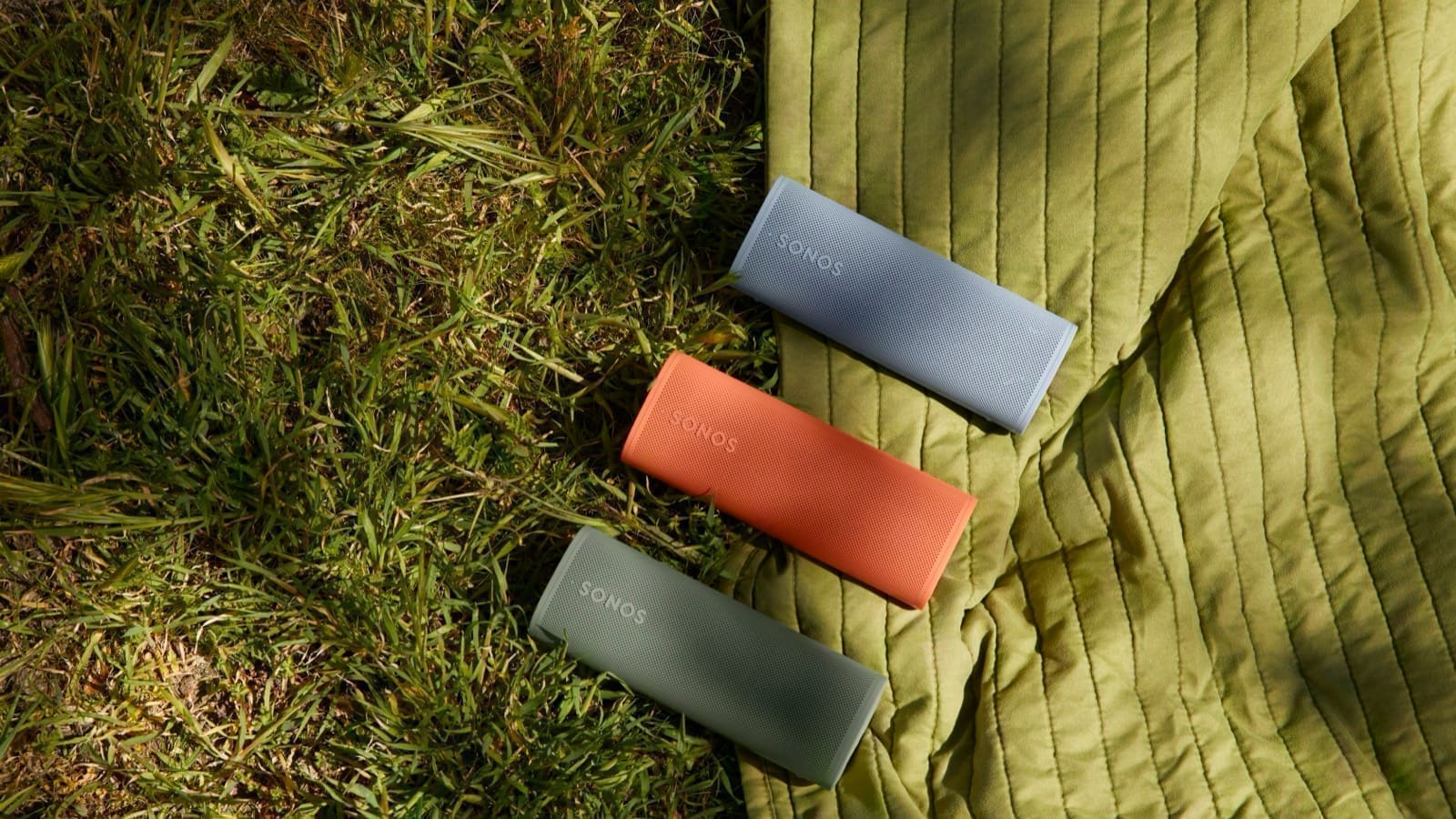
The triangular cross-section keeps the speaker stable on flat surfaces and lets sound project cleanly when it is standing upright. Build quality feels robust for the size: the rubberised end caps absorb knocks, and the soft-touch plastic body resists scratching. Colour options available in the UK include Lunar White, Midnight (black), and Olive — all understated enough to suit most interiors.
Sound Quality
Better than its size suggests. Sonos packs a custom-designed racetrack woofer and tweeter into the Roam, both Class-D amplifiers driving them. In practice, the speaker delivers a surprisingly full sound for its dimensions. Bass is present and defined rather than boomy, and mid-range clarity is excellent for speech and vocals.
At moderate volumes in a kitchen or bedroom, the Roam holds its own against rivals costing more. Outdoors, the sound opens up further — a function of auto Trueplay, Sonos's automatic acoustic calibration feature that adjusts equalisation based on what the speaker's microphones detect about the surrounding environment. The Roam 2 refined this tuning further, with slightly improved bass extension compared to the original.
Where the Roam shows its limits is at high volumes in large outdoor spaces: it cannot fill a garden party the way a full-size portable like the Sonos Move 2 can. At 80–100% volume, the low end compresses noticeably. For casual outdoor use — a patio, balcony, or picnic — it is more than adequate.
WiFi and Bluetooth: The Dual-Mode Advantage
Seamless switching between home and away. The Roam's standout feature is its ability to operate on both WiFi (when at home) and Bluetooth (when out). On your home network, it integrates fully into the Sonos ecosystem: you can group it with other Sonos speakers, control it from the Sonos app, and stream from any Sonos-compatible service. When you leave, it automatically hands over to Bluetooth — no fiddling with settings required.
On Bluetooth, you lose the Sonos app control and multiroom grouping, but gain full compatibility with any Bluetooth source. Because Bluetooth works on cellular data via your phone, there is no need for a separate WiFi connection to keep music playing away from home. Range is solid at around 9 metres in open space.
One practical limitation: the Roam only supports SBC and AAC Bluetooth codecs. It does not support aptX or LDAC, so audiophiles using high-resolution Bluetooth sources will not benefit from those codecs.
Battery Life
Ten hours is realistic. Sonos rates the original Roam at 10 hours of battery life at moderate volume. The Roam 2 improved this slightly, with Sonos citing around 24 hours of standby and improved efficiency at typical listening levels. Real-world use at moderate volumes — stream radio while cooking, take it to the park for an afternoon — comfortably meets the stated figure. Turning off WiFi and using pure Bluetooth extends runtime further.
Charging is via USB-C, which means you can top it up from any laptop charger or power bank. The Roam also supports Qi wireless charging — useful if you have a wireless pad already on a bedside table, though Sonos sells its own dedicated wireless charger separately.
Smart Home and Sonos Ecosystem Integration
Full Sonos ecosystem citizen. On WiFi, the Roam behaves exactly like any other Sonos speaker. You can group it with a Sonos Era 100, a Sonos One, a Beam, or any other Sonos device for synchronised multiroom playback. The Sonos app controls volume, source, and grouping across all rooms simultaneously.
Crucially, the Roam supports stereo pairing: two Roams can be linked together in the Sonos app to function as a stereo pair, though this doubles the cost and the pairing only works over WiFi, not Bluetooth.
For smart home integration, the Roam works with Amazon Alexa and Google Assistant built in (via Sonos's voice control) and via the Sonos S2 app for Apple AirPlay 2. Home Assistant users can control Sonos speakers including the Roam via the official Sonos integration, enabling automations such as playing a notification chime when a doorbell rings or starting a morning playlist at a set time.
Sonos Roam vs Roam 2: What Changed?
The Roam 2 (2023) was a quiet rather than dramatic refresh. Sonos kept the same chassis, price point (around £179), and IP67 rating. The key changes were improved battery performance, refined audio tuning with better Trueplay calibration, and removal of the physical button layout in favour of a touch-sensitive top panel. The Roam 2 also dropped the built-in microphone mute button that the original had, which divided opinion.
For most buyers the Roam 2 is the better choice if buying new. The original Roam is worth seeking out second-hand if available at a meaningful discount.
Verdict: Who Should Buy the Sonos Roam?
The Sonos Roam is the right speaker for anyone who is already invested in the Sonos ecosystem and wants a small, rugged companion that travels with them. The WiFi-to-Bluetooth handoff is genuinely seamless, build quality is excellent, and sound quality punches above its weight for indoor use. Battery life is solid for a full day out.
Its weaknesses are real: it cannot match larger portables for outdoor volume, Bluetooth codec support is basic, and at £179 it is expensive compared to non-Sonos portable alternatives with similar audio performance. But if ecosystem continuity and smart home integration matter to you, the Roam is difficult to beat at this size.
If you want a larger portable with better outdoor performance, consider the Sonos Move 2, which offers all-day battery and fuller sound at a higher price. If you primarily want an indoor Sonos speaker at a lower price point, the Sonos One remains a strong option.
Related: Sonos Move 2 review, best multiroom speaker systems UK, and best streaming services for Sonos.