The Contenders at a Glance
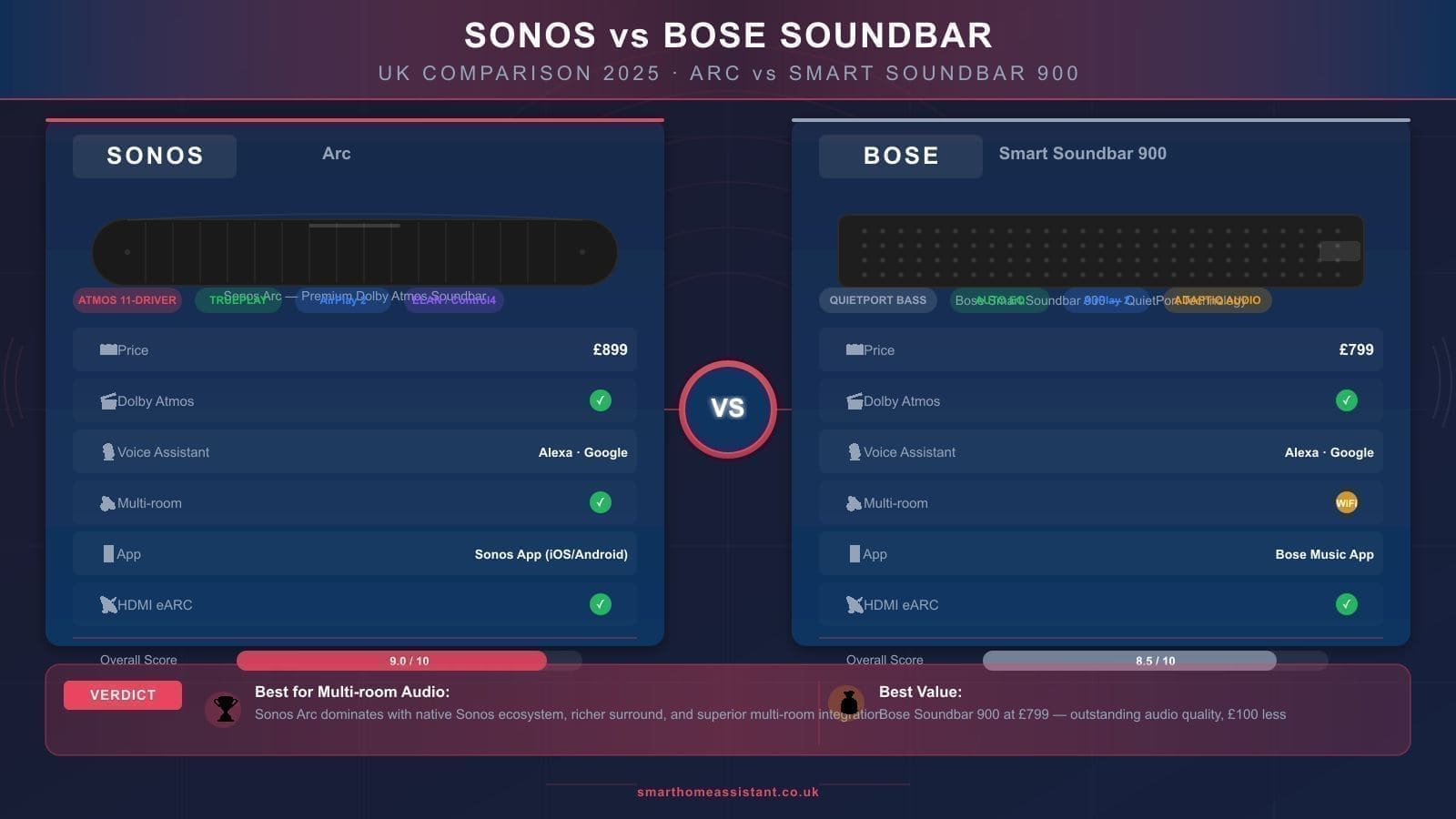
| Feature | Sonos Beam Gen 2 | Bose Smart Soundbar 600 | Bose Smart Soundbar 900 |
|---|---|---|---|
| Price (UK) | ~£499 | ~£499.95 | ~£899 |
| HDMI connection | ARC | eARC | eARC |
| Dolby Atmos | Yes (compressed) | Yes (lossless TrueHD via eARC) | Yes (lossless TrueHD via eARC) |
| Bluetooth | No (Wi-Fi only) | Yes | Yes |
| Voice assistants | Alexa, Google Assistant, Sonos Voice Control | Alexa only | Alexa only |
| Room calibration | TruePlay (iOS only for full auto) | ADAPTiQ (iOS and Android) | ADAPTiQ (iOS and Android) |
| Multiroom ecosystem | Sonos (large, established) | Bose Music | Bose Music |
| Best for | Sonos multiroom households, Google Assistant users | eARC TVs, Bluetooth flexibility | Premium spatial audio |
Sonos Beam Gen 2 — around £499. The second-generation Beam is a compact, TV-width bar packing five drivers and Dolby Atmos decoding over HDMI ARC. It supports Sonos Voice Control alongside Alexa and Google Assistant, and slots naturally into any existing Sonos multiroom setup. TruePlay automatic room calibration (iOS only for full tuning) adjusts the sound profile to your room's acoustics.
Bose Smart Soundbar 600 — around £599. Bose's mid-range bar adds HDMI eARC (a step up from ARC, allowing higher-bandwidth audio formats), Bluetooth alongside Wi-Fi, and the brand's ADAPTiQ room calibration system. It uses the Bose Music app for setup and control, and has Alexa built in. The pricier Bose Smart Soundbar 900 (around £899) adds a phased array of angled drivers for more convincing spatial audio, though for most living rooms the 600 is the more sensible buy.
Audio Quality
Dolby Atmos performance. Both bars decode Dolby Atmos, though neither can match the immersive effect of a full surround-sound system with dedicated overhead speakers. The Beam Gen 2 uses upward-firing drivers and Sonos's spatial processing to create height cues; the result is impressive for a bar of its size. The Bose 600 takes a similar approach and benefits from eARC's higher bandwidth, meaning it can receive lossless Atmos streams from compatible TVs rather than only the compressed version transmitted over standard ARC.
Room calibration. Sonos TruePlay (full version on iOS) analyses your room using the phone's microphone and adjusts EQ accordingly. Bose ADAPTiQ is a more involved process — you move a microphone stand to five positions around the room — but it works on any device and the results are typically very consistent. Reviewers at Trusted Reviews found ADAPTiQ particularly effective in irregular room layouts.
Overall sound character. The Sonos Beam Gen 2 has a balanced, detailed presentation with a wide soundstage for its dimensions. The Bose Smart Soundbar 600 tends toward a slightly fuller low-midrange and more assertive bass for its size. Neither requires a separate subwoofer for TV watching, though both brands offer optional wireless subs that substantially improve bass extension.
Smart Features and Voice Control
Sonos. The Sonos Beam Gen 2 supports three voice assistants — Alexa, Google Assistant, and Sonos Voice Control. Sonos Voice Control is processed on-device (no cloud dependency for basic commands) and works well for music playback across grouped speakers. You manage everything through the Sonos app, which is one of the most polished in the category.
Bose. The Bose Smart Soundbar 600 has Alexa built in but does not support Google Assistant natively. Bose Music app handles setup, EQ, and multiroom grouping with other Bose speakers. The app is functional but has historically lagged behind Sonos for stability and features, though Bose has made significant updates in recent years.
Both soundbars support Spotify Connect, meaning you can hand off playback from your phone to the soundbar without the audio travelling through your device's Bluetooth connection — a genuinely better experience for daily listening.
Connectivity
HDMI ARC vs eARC. The Sonos Beam Gen 2 uses HDMI ARC, which supports Dolby Atmos in its compressed (Dolby Digital Plus) form. The Bose Smart Soundbar 600 has HDMI eARC, enabling lossless Dolby TrueHD Atmos and DTS-X streams from compatible Blu-ray players or streaming boxes. If your TV also has eARC — which most sets released after 2020 do — the Bose 600 can receive better quality audio data. In practice, the difference is audible mainly on high-quality source material.
Bluetooth. The Bose Smart Soundbar 600 adds Bluetooth as a secondary connection method, useful for guests or for playing audio from a device that is not on your Wi-Fi network. The Sonos Beam Gen 2 is Wi-Fi only; Sonos removed Bluetooth from its bar lineup to keep the focus on network audio quality.
Ecosystem Fit
Sonos multiroom. If you already own or plan to build a Sonos system, the Beam Gen 2 is the obvious choice. It groups seamlessly with Sonos Era speakers, the Roam, or older Play-series devices, and you can synchronise audio across every room from a single app. The ability to extend to Sonos rear surrounds and a Sonos Sub turns the Beam into the anchor of a proper home cinema setup. Our guide to the best multiroom speakers explores Sonos's broader ecosystem in more depth.
Bose ecosystem. Bose's multiroom story is built around the Bose Music platform, which groups compatible Bose speakers. The range is smaller than Sonos's, but the Soundbar 600 works well with Bose's Surround Speakers 700 and Bass Module 500 for a complete living room setup. If you are starting from scratch and are not invested in either brand, both ecosystems are capable — the Sonos one is simply larger and more established.
Setup and App Experience
The Sonos app has had a turbulent period following a 2024 redesign, though Sonos has since released numerous updates addressing stability complaints. Initial setup for the Beam Gen 2 takes around ten minutes. The Bose Music app setup is similarly quick and the ADAPTiQ calibration routine adds another five to ten minutes. Both are well within expectations for products at this price point.
Price and Value
The Sonos Beam Gen 2 is available in the UK for around £499, while the Bose Smart Soundbar 600 typically costs around £599 — a £100 premium. Both prices vary between retailers and during promotional periods. For the extra £100, the Bose gives you eARC, Bluetooth, and arguably stronger room calibration. For the Sonos price, you get superior multiroom integration and, for many buyers, a more refined app experience.
If budget is a factor, the Sonos Beam Gen 2 represents excellent value in its segment. If you want the most technically complete single bar without immediately needing to expand to a full system, the Bose Smart Soundbar 600 earns its higher price.
You can find the Sonos Beam Gen 2 on Amazon UK and the Bose Smart Soundbar 600 on Amazon UK.
Which Should You Buy?
Choose the Sonos Beam Gen 2 if you already own other Sonos speakers, you value a large multiroom ecosystem, or the app experience and Sonos Voice Control matter to you. It is the more versatile long-term platform for whole-home audio.
Choose the Bose Smart Soundbar 600 if your TV has eARC and you want the best possible lossless Atmos stream, you want Bluetooth as a backup connection, or you prefer Bose's sound signature. Its ADAPTiQ calibration is also easier to run on any device, not just iOS.
For more context on how these soundbars compare to the wider category, see our best smart soundbars roundup. If you are weighing up the Beam specifically, our dedicated Sonos Beam Gen 2 review goes into more detail on real-world listening tests. And for those considering Bose's speaker range beyond soundbars, our Bose smart speaker review covers the brand's portable and home options.
Looking at more than just these two brands? Our best smart TV speakers UK guide compares five compact options, including budget and premium picks from Yamaha and KEF.