Why Zigbee instead of Wi-Fi?
Wi-Fi switches are simple to set up but add devices to a congested 2.4 GHz network. Zigbee operates on its own 2.4 GHz sub-channels and, crucially, mains-powered Zigbee devices act as mesh routers — each switch you install strengthens the network for sensors further away. A Zigbee coordinator such as a Sonoff Zigbee 3.0 USB dongle paired with Home Assistant gives you fully local control with no cloud dependency. For a deeper comparison of protocols, see our guide on Matter vs Zigbee vs Z-Wave.
The neutral wire problem in UK homes
Traditional UK wiring runs the neutral only to the light fitting, not to the switch back box. Modern smart switches designed for this scenario either draw a tiny bleed current (typically 0.1–0.4 W) through the bulb to power their radio, or use a capacitor to buffer energy. This usually works fine with LED bulbs rated above about 3 W, but can cause flicker with certain dimmable LEDs. Always check compatibility with your specific bulb model before committing to a no-neutral switch. For a broader look at switch types and protocols before you buy, see our smart switch guide.
Best Zigbee light switches for UK homes
| Switch | Best for | Price (approx.) | Wiring | Rating | Home Assistant |
|---|---|---|---|---|---|
| Sonoff ZBMINIL2 | Best budget in-wall module | from £12 | No-neutral (min. 3W load) | 6 A | Native ZHA/Zigbee2MQTT |
| Aqara H1 EU Wall Switch | Best all-round wall switch | from £29.99 | No-neutral or with-neutral | 8 A (no-neutral) | Native ZHA/Zigbee2MQTT |
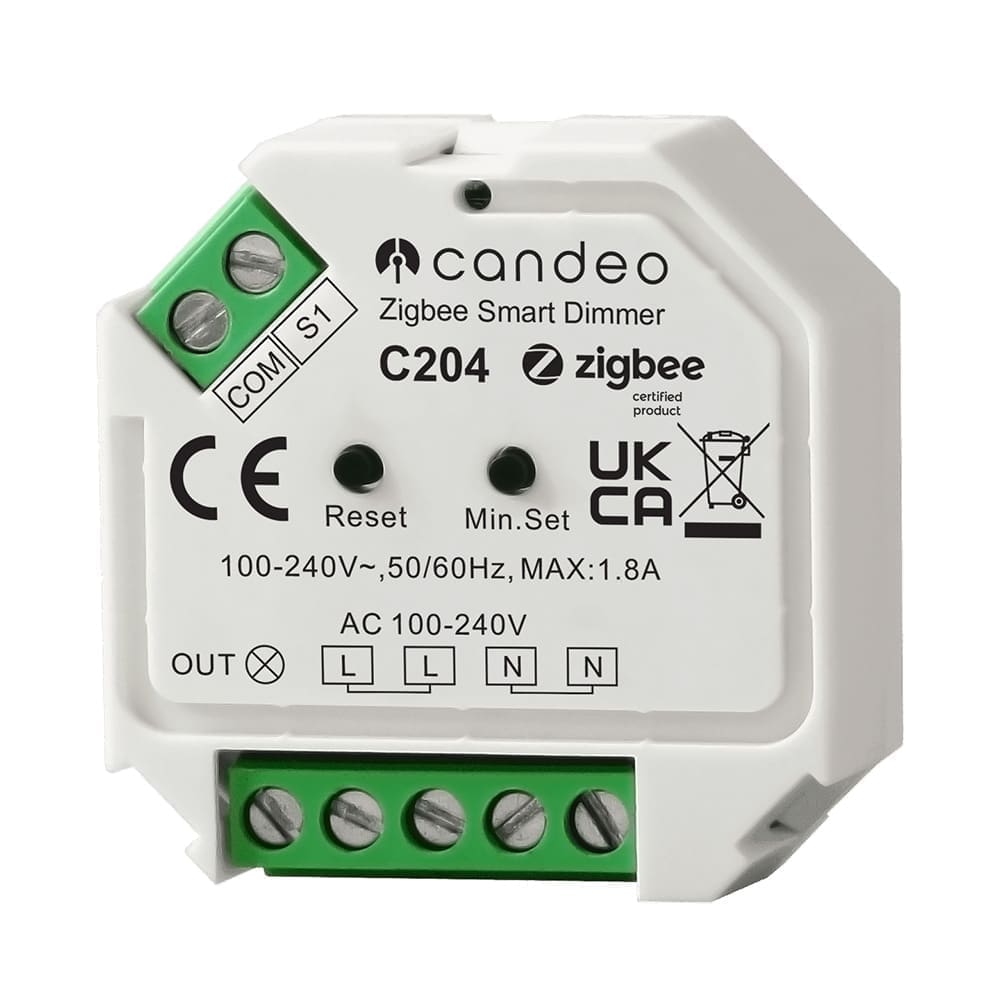
| Candeo Zigbee Smart Dimmer | Best for dimmable LED circuits | from £40 | No-neutral | Up to 250 W dimmable | ZHA (community-confirmed) |
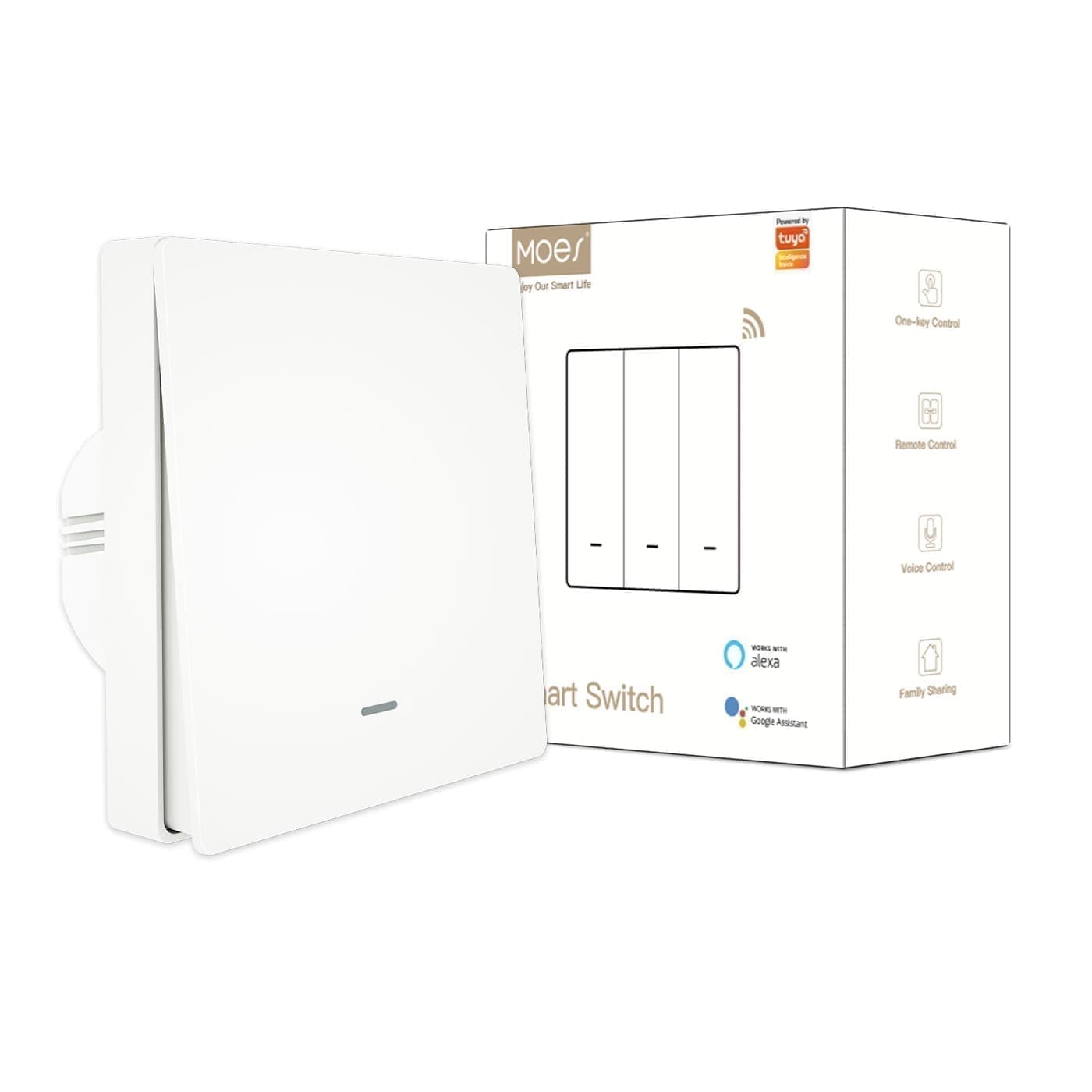
| MOES Zigbee Wall Switch | Best for multi-gang budget installs | from £24 | No-neutral option, 1–3 gang | Touch panel | Zigbee2MQTT (ZHA varies by firmware) |
1. Sonoff ZBMINIL2 — best budget in-wall module
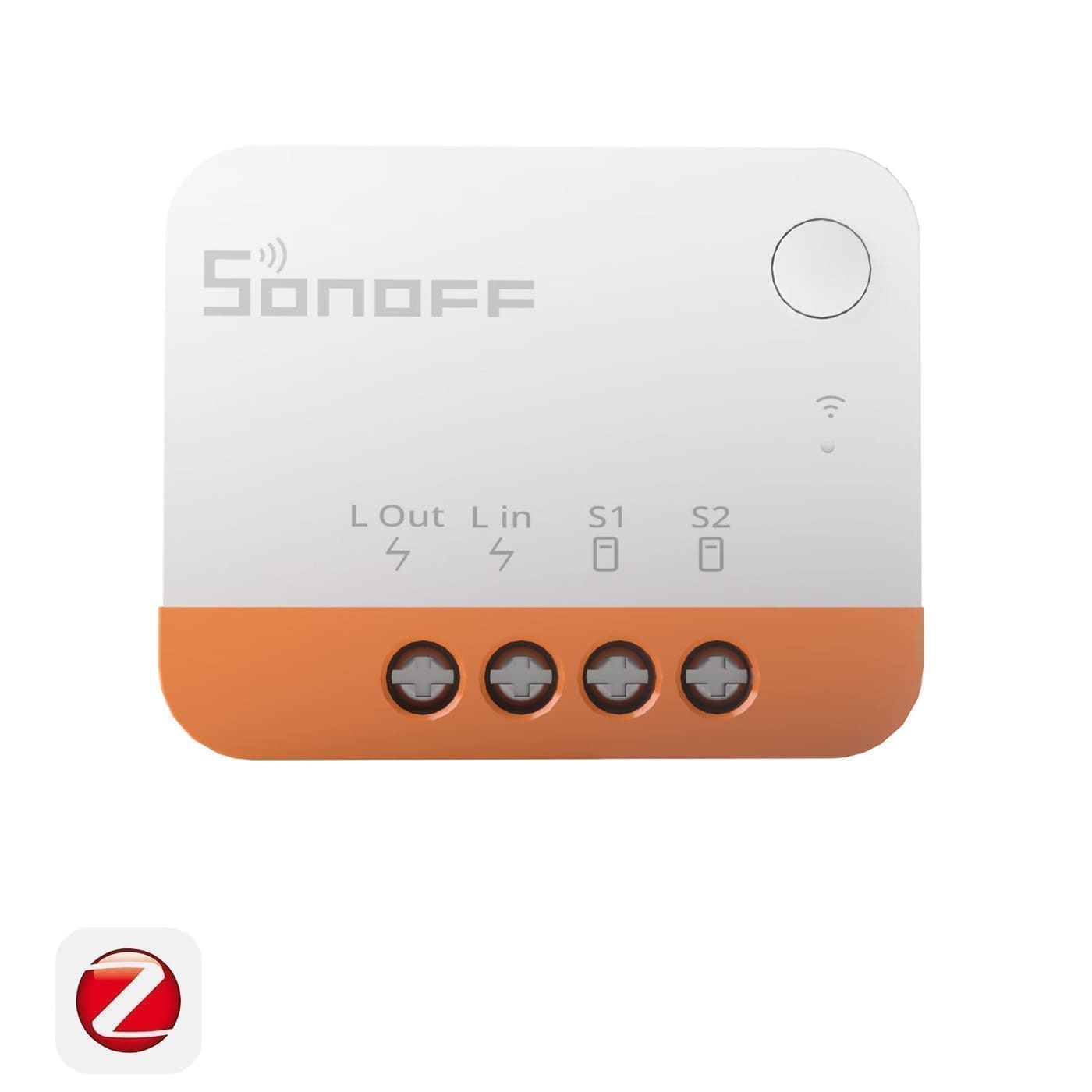
Price: from around £12, prices vary by retailer. The ZBMINIL2 is a compact relay module that tucks behind your existing switch plate rather than replacing it. It is rated at 6 A, supports two-way wiring, and requires no neutral wire — a minimum connected load of 3 W is recommended. Zigbee 3.0 means it pairs directly with Home Assistant via ZHA or Zigbee2MQTT and also works with SmartThings, Alexa, and Google Home. At roughly the size of a matchbox, it fits most UK 35 mm deep back boxes. The trade-off: you keep your existing (dumb) switch face, which suits anyone who prefers standard aesthetics. It does not function as a Zigbee mesh router in no-neutral mode.
2. Aqara H1 EU Wall Switch — best all-round wall switch
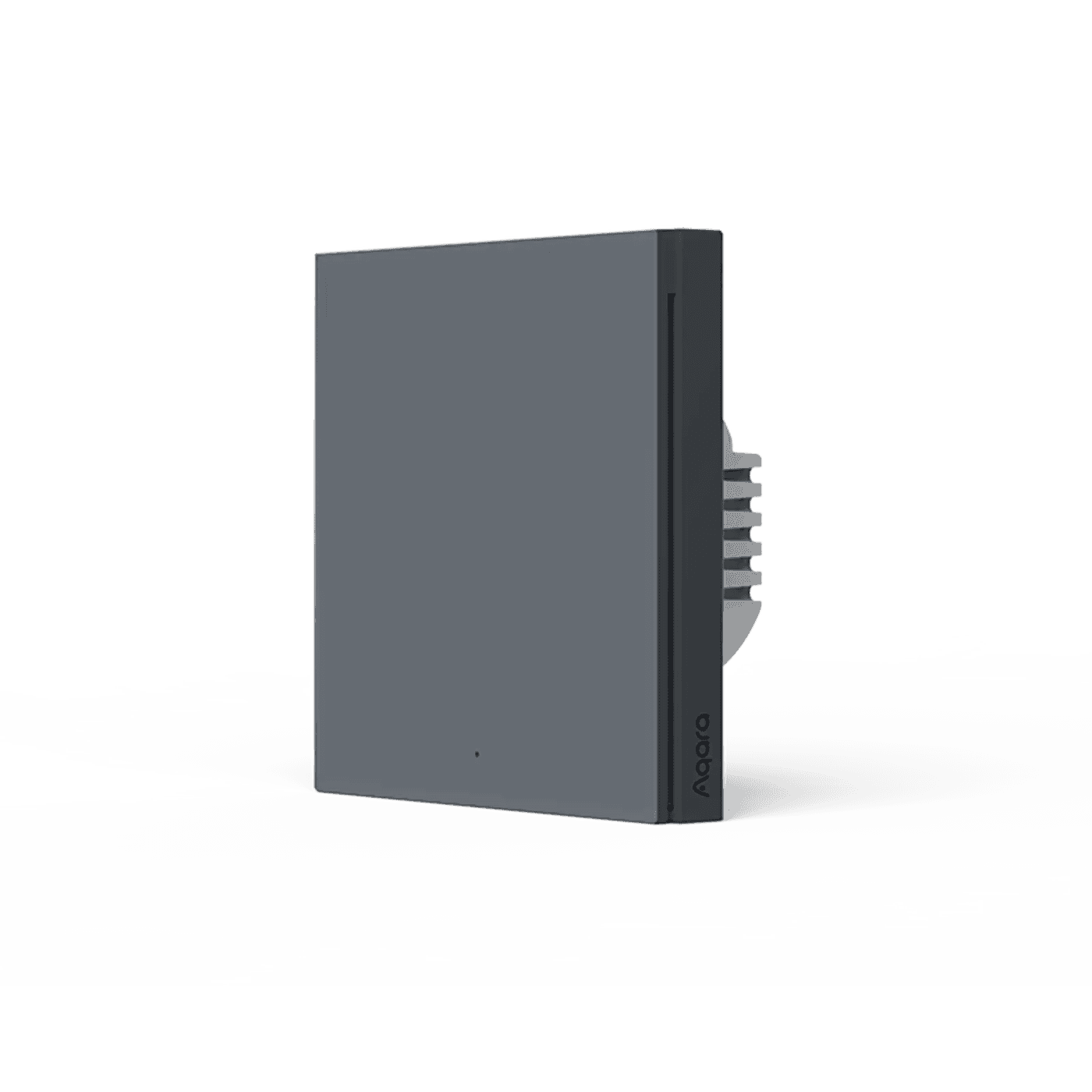
Price: from £29.99 for the no-neutral single-rocker, prices vary by retailer. The Aqara H1 (model WS-EUK01 for no-neutral; WS-EUK03 for with-neutral) is a full replacement wall switch with a clean white finish. It uses Zigbee 3.0, works with Apple HomeKit, Alexa, Google Assistant, and Home Assistant (both ZHA and Zigbee2MQTT support it). The no-neutral single-rocker variant is rated 100–250 V AC, max 8 A resistive load. Double-rocker and with-neutral variants are also available. The with-neutral version acts as a full Zigbee router, strengthening your mesh. The switch suits 85.8 × 86 mm plates; UK-standard 86 × 86 mm back boxes fit, but check your existing plate before ordering.
3. Candeo Zigbee Smart Dimmer Switch — best for dimmable LED circuits
Price: from around £40, prices vary by retailer. Candeo is a UK-based brand specifically targeting British wiring. Its Zigbee dimmer works without a neutral wire, is rated for dimmable LED and incandescent loads up to 250 W, and is UKCA certified. Flicker-free operation is a stated design goal, and an adjustable minimum-brightness trim helps compatibility with fussy LEDs. It works with Home Assistant via ZHA (pairing confirmed by the community), SmartThings, and Philips Hue hubs, and supports two-way circuits using standard retractive (momentary) switches. This is the switch to choose if you have dimmable LED downlights and want to avoid ghost switching.
4. MOES Zigbee Wall Switch — best for multi-gang budget installs
Price: from around £24, prices vary by retailer. MOES produces Tuya-based Zigbee 3.0 wall switches in one-, two-, and three-gang configurations with a no-neutral option. They fit UK-standard 86 × 86 mm back boxes and have a touch-panel face. Compatibility with Home Assistant via Zigbee2MQTT is well documented in the community; ZHA support is more variable by firmware version, so check the Zigbee2MQTT device list before buying. MOES is a practical choice for multi-room rollouts where cost per gang matters.
Key things to check before buying
- Neutral availability. If you have a neutral in the back box (newer builds, or ring-main wiring), the with-neutral version of any switch will be more reliable and will act as a Zigbee router.
- Minimum load. No-neutral switches need a minimum connected wattage — typically 3–10 W — to power themselves. If you have a single LED bulb on the circuit, check the spec sheet carefully.
- Back box depth. In-wall modules like the ZBMINIL2 need at least 35 mm depth. Many older UK single-gang boxes are shallower; a conversion box may be needed.
- Hub requirement. All the switches listed here are Zigbee devices and require a Zigbee coordinator. A Sonoff Zigbee 3.0 USB Dongle Plus running Zigbee2MQTT on Home Assistant is the most flexible option. See our best Zigbee hub UK guide for coordinator options.
- Dimming. Only the Candeo and some MOES variants support dimming. The Aqara H1 and Sonoff ZBMINIL2 are on/off only.
Setting up a Zigbee switch with Home Assistant
Once the switch is wired and powered, put your Zigbee coordinator into pairing mode from the Zigbee2MQTT or ZHA interface in Home Assistant. The switch then appears as a device with on/off (and dimmer level, if applicable) entities ready for use in automations. Zigbee2MQTT auto-discovers entities and pushes them to Home Assistant over MQTT — no manual YAML is required for basic operation. For a full walkthrough of the integration, see our Home Assistant ZHA guide.