
Nanoleaf Product Range UK
Nanoleaf currently sells three product families in the UK, each aimed at a different use case and budget:
- Shapes — modular RGBW panels (Hexagons, Triangles, Mini Triangles) that mount on walls and connect together in any layout. The Hexagons are the most popular model and the focus of this review.
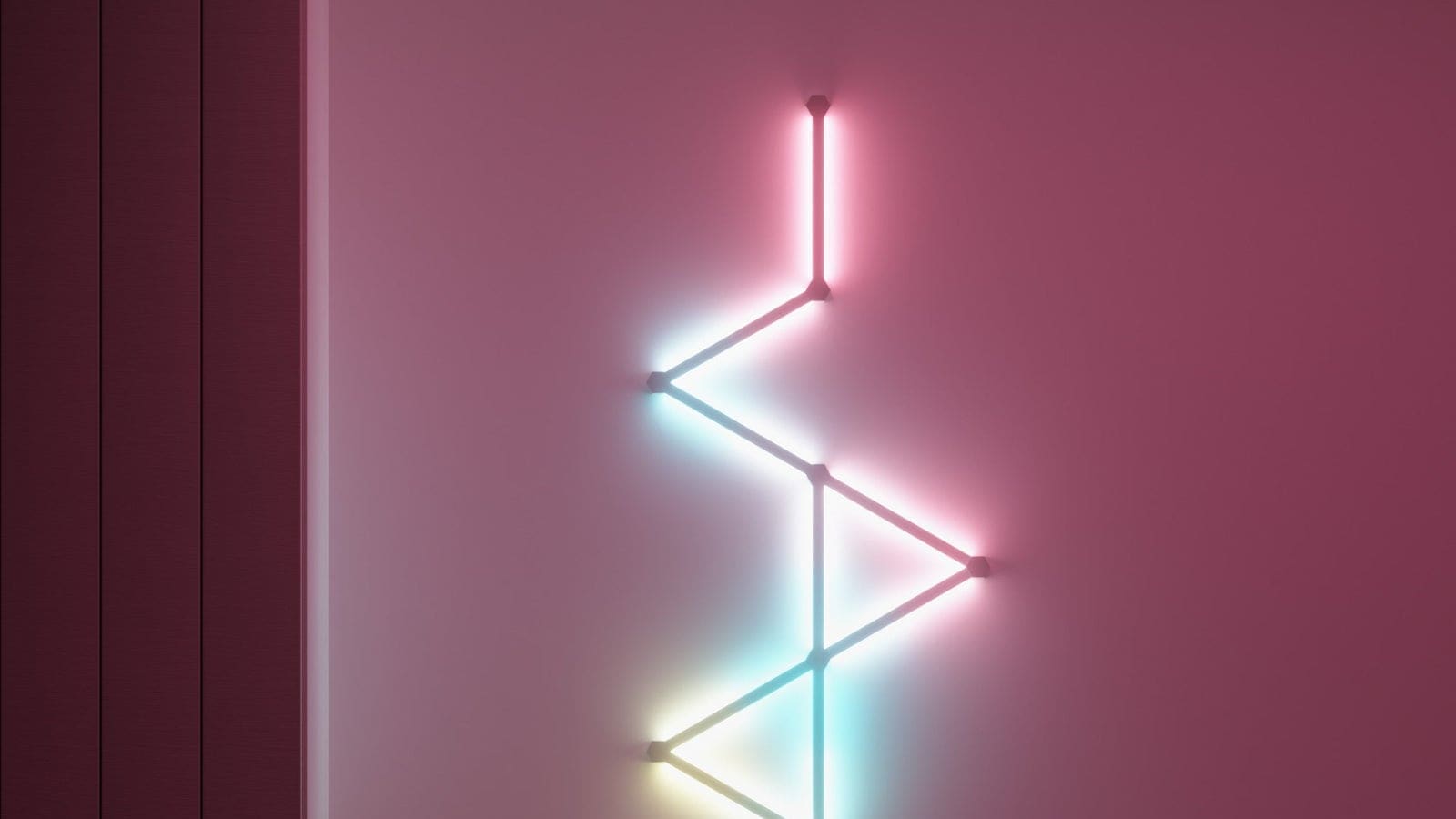
- Lines — 59 cm linear light bars that connect at 60-degree angles to create geometric wall installations. A good choice if you prefer a sleeker, more architectural look over the bold panel aesthetic.
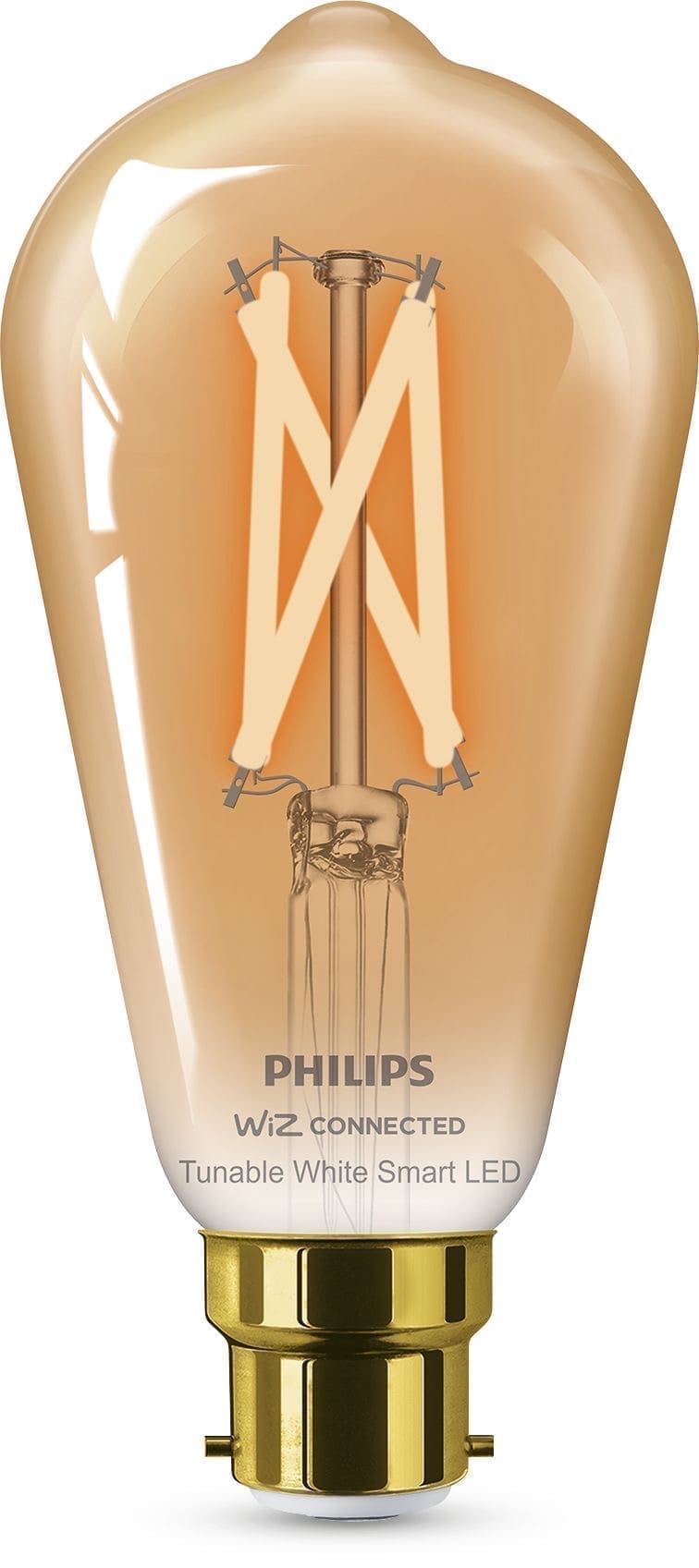
- Essentials — standard A60 (E27) and GU10 smart bulbs. These are the affordable entry point into the Nanoleaf ecosystem and the only products in the range with full Matter over Thread certification.
All three families work with Alexa, Google Assistant, and Apple HomeKit. Shapes and Lines use 2.4 GHz Wi-Fi as their primary connection; Essentials use Thread and Bluetooth. For a broader look at the smart bulb market, see our guide to the best smart bulbs UK.
Nanoleaf Shapes Hexagons: What to Expect
Build quality. The Hexagons starter kit ships with nine panels, a controller, a power supply, and a full set of mounting tape strips and linkers. The panels themselves are made from rigid white plastic with a satin-finish diffuser — they feel sturdy rather than premium, but they are well-made enough to justify the price. Each hexagon measures approximately 12 × 13.5 cm. The magnetic linkers that connect panels are satisfying to click together and hold firmly even after repeated rearrangement.
Setup. Mounting takes patience. You need to plan your layout on a flat surface first, snap the panels together, then transfer the whole arrangement to the wall using the adhesive strips. The strips are strong — strong enough that removing panels later risks paint damage, so treat this as a semi-permanent installation. The Nanoleaf app guides you through the process clearly, and first-time setup is commonly reported to take around 40 minutes.
Light output. Each panel in the Shapes range delivers up to 100 lumens, so a nine-panel starter kit produces around 900 lumens at full brightness. That is ample for ambient or accent lighting but insufficient to replace a ceiling fixture in a medium-to-large room. The RGBW system (red, green, blue, and a dedicated white channel) produces rich, saturated colours and a clean, accurate white — significantly better than the washed-out whites you get from pure RGB panels.
The Nanoleaf App
Overall quality. The Nanoleaf app (iOS and Android) is one of the better smart lighting apps on the market. It is reasonably fast, rarely crashes, and exposes the full feature set without burying settings in obscure menus.
Scenes. The app ships with dozens of preset scenes — Campfire, Northern Lights, Nemo, and so on — and lets you create custom scenes using a per-panel colour picker. The rhythm module (sold separately) and the built-in microphone-based mode lets panels pulse in time with music.
Screen Mirror. This is one of Nanoleaf's standout features: the desktop app can analyse what is on your monitor in real time and reflect the dominant colours onto your panels. It works particularly well during gaming and film watching, extending the on-screen palette onto your wall. The feature requires the Nanoleaf desktop app and works on Windows and macOS.
Automations. Schedule, sunrise/sunset triggers, and scenes tied to other smart home events are all configurable within the app. Integration with Apple Home and Google Home lets you add panel automations into broader whole-home routines.
Matter and Thread Support
This is an area where Nanoleaf has invested heavily. Nanoleaf Shapes and Lines panels act as Thread Border Routers, meaning each controller module extends the Thread mesh network in your home. This makes them valuable infrastructure devices, not just lights — every Shapes or Lines controller you add improves the range and resilience of your Thread network.
The Essentials range goes further: the A60 and GU10 bulbs are Matter over Thread certified, meaning they communicate via the Thread protocol and are controllable by any Matter-certified controller — including Home Assistant, Apple Home, Google Home, and Amazon Alexa — simultaneously. You can add an Essentials bulb to Home Assistant without it leaving Apple HomeKit: Matter's multi-admin feature allows a single device to belong to multiple controllers at once.
For Home Assistant users, the dedicated Home Assistant Matter setup is worth reading before commissioning your first Nanoleaf device. The native Nanoleaf integration (Local Push, no cloud dependency) controls Shapes and Lines directly over Wi-Fi, supporting brightness, colour, and scene selection. Essentials bulbs pair via the Matter integration instead. Both integrations are stable and well-maintained as of mid-2026.
UK Pricing and Value
Nanoleaf is unambiguously at the premium end of the smart lighting market. UK prices as of June 2026:
- Shapes Hexagons Starter Kit (9 panels): around £109–£160 depending on retailer, with the official Nanoleaf UK shop listing at £159.99. ASIN B08BYBP6LX on Amazon UK. Buy on Amazon
- Lines Starter Kit (9 lines): typically £130–£180. ASIN B09MS3B5L7 on Amazon UK. Buy on Amazon
- Essentials GU10 bulb (single): around £10–£20 depending on retailer and promotions. Available from the Nanoleaf UK shop and Amazon UK.
Prices vary by retailer and promotional period; check Amazon UK and the official Nanoleaf shop for the latest figures.
Versus Philips Hue. The Philips Hue Play gradient lightstrip or Hue Gradient Signe floor lamp covers similar ambient lighting territory at comparable prices, but neither produces the dramatic geometric visual effect that Nanoleaf Shapes delivers. Hue has a more mature ecosystem and a wider accessory range; Nanoleaf wins on visual impact and Thread infrastructure value. If you already run a Hue system and want to add accent panels, Nanoleaf integrates cleanly alongside it via Matter or Home Assistant.
Verdict
Who should buy. Nanoleaf Shapes Hexagons are ideal for gaming setups, streaming rooms, home studios, or any space where the lighting is a deliberate design element rather than a functional afterthought. They are also a sensible buy for anyone building a Thread mesh network — each controller doubles as border router infrastructure. The Essentials bulbs are the best-value entry point: under £20 per bulb, Matter-certified, and a genuine upgrade over cheaper smart bulbs.
Who should skip. If you need lighting that replaces overhead fixtures, Nanoleaf panels will disappoint — 900 lumens across nine panels is accent lighting, not room lighting. If budget is the primary concern, Zigbee bulbs from IKEA or Sengled offer smart colour lighting for a fraction of the price without the visual theatre.
If you're trying to decide between Shapes, Lines and Canvas rather than the range as a whole, our Nanoleaf Shapes vs Lines vs Canvas comparison breaks down which one suits your wall and budget best.Rating: 4 out of 5. Nanoleaf delivers on its core promise — genuinely beautiful, highly customisable ambient lighting with solid smart home integration. The premium price and the commitment required for installation hold it back from a perfect score, but for the right use case, there is nothing quite like it in the UK market.
Nanoleaf and Philips Hue announced a rare cross-brand integration at IFA Berlin 2026: a small Wall Light Module that lets compatible Shapes panels join Hue scenes and switches. Full details in our Philips Hue IFA 2026 lineup roundup.