Sonos Arc at a Glance (2026)
| Spec | Sonos Arc |
|---|---|
| UK RRP | £899 |
| Typical street price | £650–£750 (regularly discounted outside RRP) |
| Drivers | 11 (8 elliptical woofers, 3 tweeters) |
| Dolby Atmos | Yes — height channels via upward-firing drivers |
| HDMI | eARC (ARC adapter included for older TVs) |
| Bluetooth | No — Wi-Fi only |
| Voice assistants | Amazon Alexa, Google Assistant, Sonos Voice Control |
| Width | 1,141 mm |
| Direct successor | Sonos Arc Ultra, from £999 |
Design and Build Quality
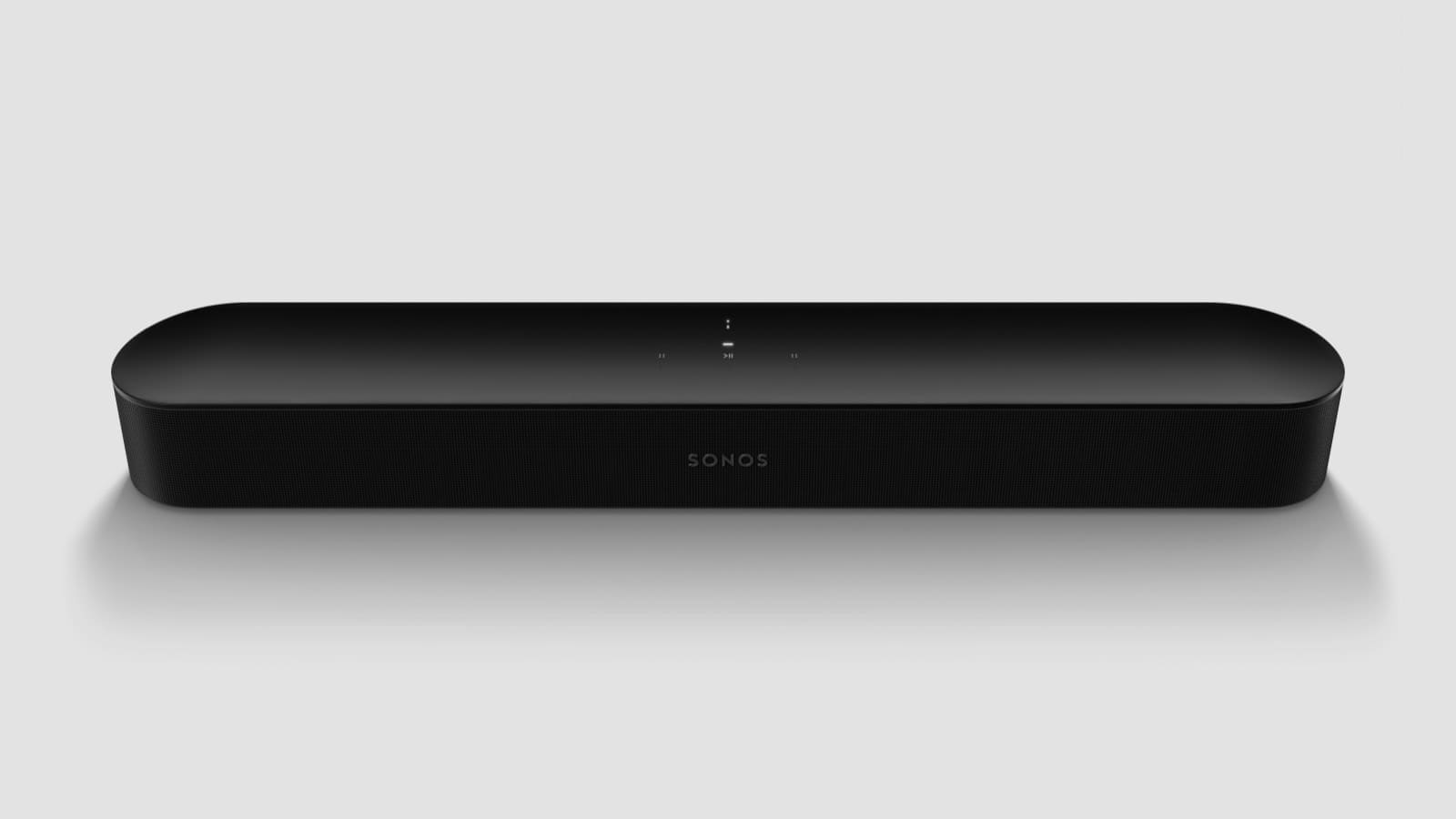
The Arc is striking in its restraint. A curved, perforated grille stretches 1,141 mm across — wide enough to fill the space below most 55-inch TVs and many 65-inch screens. Available in matte black or white, the bar blends into a living room rather than dominating it. Build quality is excellent; the chassis feels solid and there are no rattles or flex at any point. A single HDMI eARC port and a power socket live on the rear, which keeps cable runs tidy. Sonos includes an adapter for standard HDMI ARC ports, so older TVs are catered for.
Sound Performance
Eleven custom drivers — eight elliptical woofers and three tweeters — deliver a soundstage that is wide, layered, and consistently clear. Dialogue intelligibility is a particular strength; voices cut through even during busy action sequences without needing a dedicated centre-channel tweak. Dolby Atmos content via HDMI eARC sounds genuinely three-dimensional, with overhead effects placed convincingly above and around the listening position when the room suits it. Dolby TrueHD passthrough is also supported, which matters for Blu-ray players fed through an AV receiver or a compatible TV.
Bass extension is good for a single bar but not thunderous — Sonos recommends adding a Sub or Sub Mini for dedicated low-frequency performance. Mid-range texture is where the Arc really shines: piano, acoustic guitar, and vocals have a warmth and presence that cheaper bars simply cannot match. At reference volume the Arc stays composed and distortion-free.
TruePlay Room Calibration
TruePlay is Sonos's automatic room correction system, and it makes a measurable difference. After connecting the Arc, open the Sonos app on an iOS device and follow the calibration prompt — you wave the phone around the room while the bar emits test tones. The process takes around two minutes. The app analyses reflections from walls, furniture, and soft furnishings, then applies an equalisation profile tailored to that specific space. Android users get a simplified version that relies on fixed measurements rather than a room sweep. Either way, the result is a noticeably more balanced sound compared to out-of-the-box settings.
Setup and Connectivity
Setup takes about ten minutes if your TV supports eARC. Plug the HDMI cable into the eARC port on your TV, power on the Arc, and let the Sonos app guide you through the rest. The app is available for iOS and Android and is generally well-regarded for clarity. Wi-Fi is the primary connection — there is no Bluetooth, which Sonos omits intentionally to prioritise stable, high-quality audio streaming. A dedicated Sonos Wi-Fi network (SonosNet) can be formed if you connect a Sonos product via Ethernet, improving stability in crowded wireless environments.
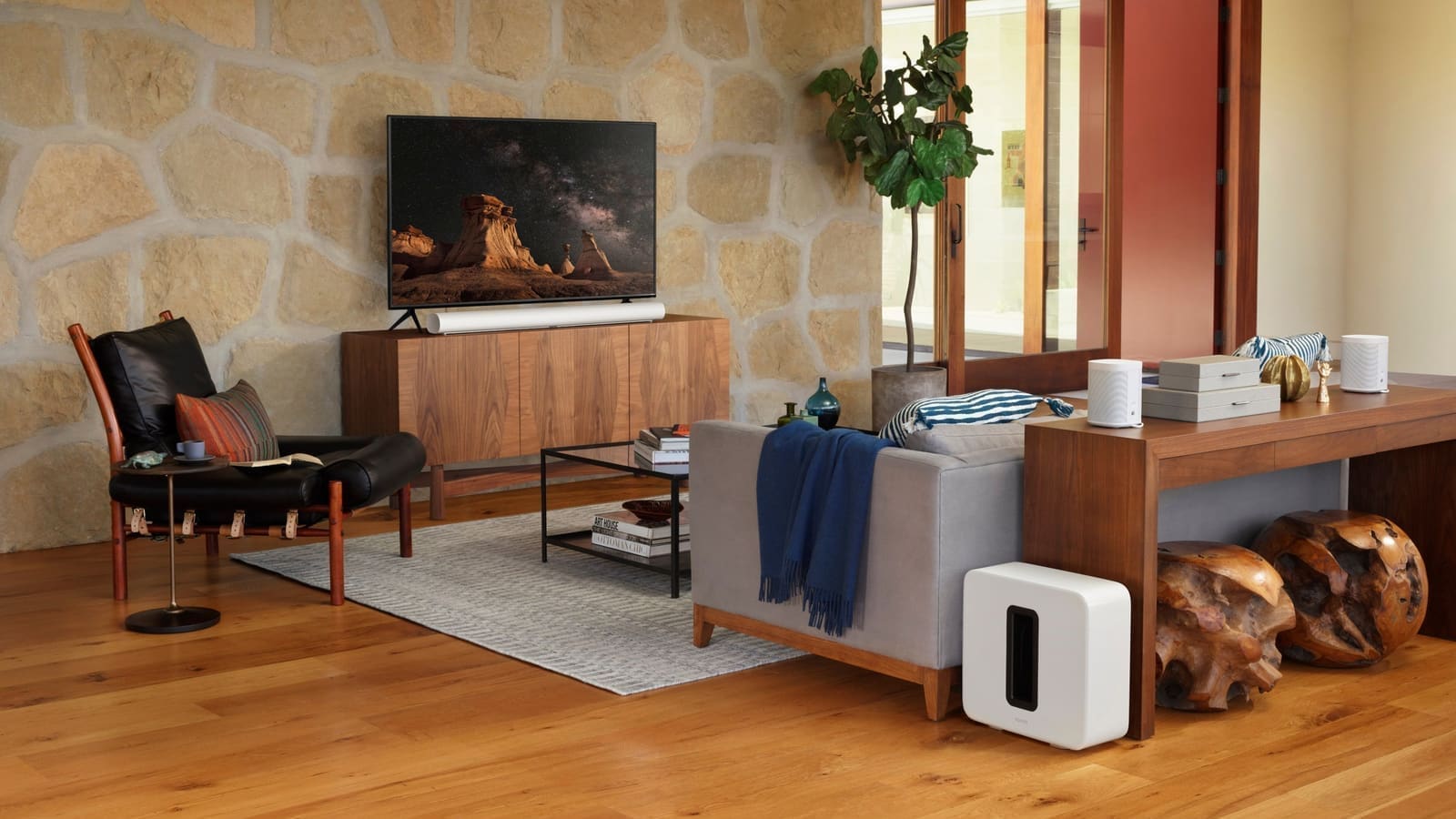
For a full surround setup, the Arc pairs wirelessly with two Sonos Era 100 or Sonos One speakers acting as rear channels, plus the Sonos Sub for bass. Sonos calls this a home cinema system and it requires no HDMI matrix or AV receiver — everything communicates over Wi-Fi.
Smart Home and Voice Control
The Arc supports Amazon Alexa, Google Assistant, and Sonos Voice Control natively. You can switch between assistants in the app or enable multiple at once. Alexa and Google respond to wake words and handle music playback, home control commands, and information queries. Sonos Voice Control is designed specifically for music requests and works without a cloud connection, which some users prefer for privacy reasons. Apple AirPlay 2 is also built in, so iPhone and iPad users can stream from any AirPlay-compatible app directly to the Arc without opening the Sonos app.
For Home Assistant users, the Sonos integration provides media player entities for every room, meaning the Arc can be part of automations — for example, pausing playback when the doorbell rings or setting evening volume scenes. See the best smart soundbars guide for a wider comparison of how Sonos stacks up against Bose, Samsung, and Sonos rivals on home-automation compatibility.
Multiroom Audio
The Sonos ecosystem is the Arc's biggest differentiator for anyone already invested in the platform. Group the Arc with speakers in other rooms — kitchen, bedroom, garden — and everything plays in near-perfect sync. Music libraries, Spotify, Apple Music, Tidal, and dozens of other services are available directly through the Sonos app without needing a separate streaming device. If you are building a whole-home audio setup from scratch, the Arc pairs naturally with the Sonos Era 100 in other rooms for consistent audio quality throughout the house. For a deeper look at multiroom options beyond Sonos, the best multiroom speakers guide covers alternatives from Denon HEOS, Yamaha MusicCast, and others, and our Sonos vs Denon HEOS comparison goes head-to-head on app, pricing, and Home Assistant support.
For a full price breakdown across the whole current range, see our Sonos soundbar UK price guide, which compares the Ray, Beam Gen 2, Arc and Arc Ultra side by side.
Alternatives to Consider in 2026
In late 2024 Sonos launched the Arc Ultra at around £999, adding a Sound Motion driver for deeper, room-filling bass. The Ultra is the better buy for those starting fresh who want the absolute best Sonos can offer in a soundbar. However, the original Arc remains available and often appears at a discount — at £150 to £250 less than the Ultra at current street prices, it is still an outstanding performer and a sensible buy if you plan to add the Sonos Sub for bass duties anyway.
Outside the Sonos range, the closest 2026 rivals at this price tier are the Bose Smart Soundbar 900 (stronger dedicated height channels, weaker multiroom ecosystem) and the Sony HT-A7000 (better suited to a full Sony/Bravia home cinema setup). Neither matches the Arc's app polish or multiroom integration if you already own other Sonos speakers. Buyers on a tighter budget who still want the Sonos ecosystem should look at the Sonos Beam Gen 2, which drops the height-channel drivers but keeps the same app, voice control, and multiroom grouping for roughly half the price.
| Model | RRP | Best for |
|---|---|---|
| Sonos Arc | £899 | Best all-round Sonos soundbar for existing households |
| Sonos Arc Ultra | £999 | Buyers who want the deepest bass without an added Sub |
| Sonos Beam Gen 2 | £449 | Smaller rooms and tighter budgets, same ecosystem |
| Bose Smart Soundbar 900 | £899 | Strongest non-Sonos height-channel Atmos at this price |
| Sony HT-A7000 | £999 | Sony/Bravia TV households wanting tighter integration |
Verdict
The Sonos Arc is one of the best single-bar Dolby Atmos soundbars available in the UK. It rewards those who are already in the Sonos ecosystem and newcomers alike, with genuinely three-dimensional sound, a clean setup process, and class-leading smart-home integration. The £899 price is significant, but the hardware quality, software polish, and long-term platform support justify it for anyone who treats audio seriously. If bass depth is a priority, budget for the Sonos Sub alongside it — or consider the Arc Ultra if you prefer an all-in-one solution at a modest premium.