TP-Link
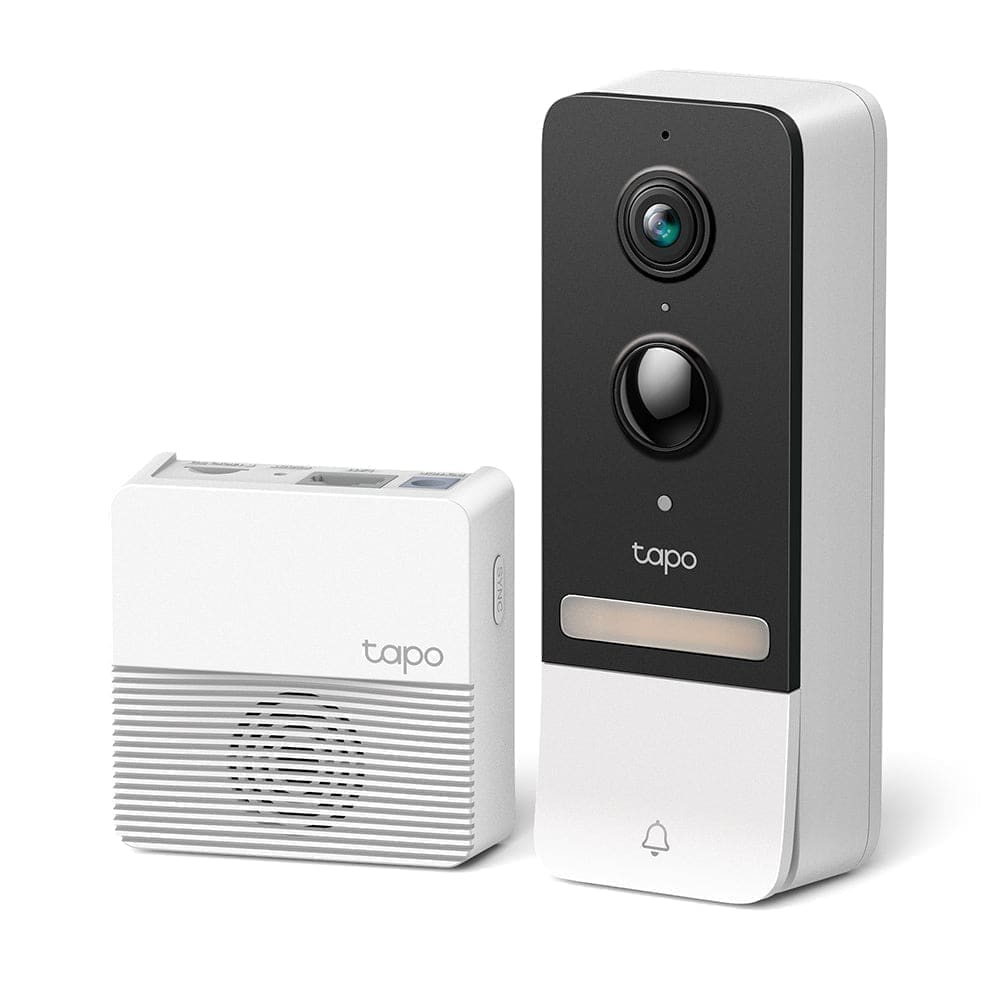
TP-Link Tapo D230S1
- HACS component
- Local control
- Wi-Fi
Prices verified September 2026
See more video doorbells picks on our Amazon storefront →Our verdict
The strongest local-control story among the battery Tapo doorbells: the community HomeAssistant-Tapo-Control HACS integration talks to it over local RTSP/ONVIF and even picks up doorbell-press events via UDP broadcast, all without a subscription. It's unofficial and reverse-engineered rather than TP-Link-sanctioned, so treat it as local-but-best-effort, not certified — unlike the Reolink Video Doorbell WiFi's Platinum Works with Home Assistant badge elsewhere in this list. What you get for that trade-off: a 166° diagonal field of view, 850nm IR plus spotlight colour night vision out to about 7.6m, and a battery doorbell that's genuinely more capable than most at this price.
What can Home Assistant control on the TP-Link Tapo D230S1?
| Control | Type | What it does |
|---|---|---|
| Doorbell press | Binary sensor | Fires from a local UDP broadcast packet the doorbell sends on button press — no cloud round-trip, but it's an unacknowledged broadcast rather than a confirmed event. |
| Motion | Binary sensor | Depends on the ONVIF motion stream the integration uses for wired cameras; the D230S1's battery power means it doesn't consistently expose that interface, so this entity is unreliable here. |
| Battery | Sensor (%) | Refreshed on each integration poll; HA polling can accelerate drain versus app-only use, so a longer poll interval matters more for this device than mains-powered cameras. |
| Camera | Camera | Local RTSP/ONVIF feed that has to wake the battery unit before frames flow — pulling a snapshot at the doorbell-press moment is far more reliable than snapshotting off a motion trigger. |
The bundled H200 is purely a physical charging dock and local chime for this pairing — it never shows up as its own device under this HACS integration; everything HA sees comes from the doorbell unit itself, which the integration reaches over a local UDP broadcast for the hub-connected doorbell variant, a different code path from standalone Tapo doorbells. Being battery-powered, the D230S1 doesn't reliably expose the ONVIF interface the same integration leans on for motion events on the wired Tapo cameras already covered, so its motion binary sensor is flaky — the doorbell-press sensor is the one worth automating on since it arrives locally and near-instantly. Worth flagging separately: reports note HA's polling can noticeably accelerate battery drain versus app-only use, with drain spikes clustering overnight, so the poll interval is worth lengthening specifically on this device.
Specs
| power | battery (6700mAh removable, ~6 months), bundled with H200 hub/chime |
|---|---|
| storage | local microSD up to 512GB, no subscription required |
| ip rating | IP64 |
| streaming | local RTSP (TCP/554) and ONVIF (TCP/2020) via unofficial pytapo-based HACS integration; doorbell press over UDP broadcast |
| dimensions | 146 x 54.5 x 35.5mm |
| resolution | 2K / 5MP, 1/2.7" CMOS sensor, F2.1 aperture |
| night vision | 850nm IR LED to ~7.6m (25ft), plus built-in spotlight for colour night vision |
| subscription | none required; Tapo Care cloud is an optional paid add-on |
| field of view | 166° diagonal (135° horizontal x 102.8° vertical) |
| two way audio | built-in mic + speaker with noise cancellation |
How does the TP-Link Tapo D230S1 compare?
| Product | From | Protocol | Local control | Integration |
|---|---|---|---|---|
| TP-Link Tapo D230S1 (this product) | £89.99 | Wi-Fi | Yes | HACS |
| Aqara Doorbell Camera Hub G410 | £109.99 | Wi-Fi, Thread, Matter | Yes | Native |
| Arlo Essential Video Doorbell | £134.08 | Wi-Fi | Cloud | HACS |
| Blink Video Doorbell | £23 | Wi-Fi | Cloud | Cloud |
Frequently asked questions
- Does the TP-Link Tapo D230S1 work with Home Assistant locally?
- Yes. The TP-Link Tapo D230S1 is controlled locally in Home Assistant through a community integration installed through HACS (tapo-control), so it keeps working if your internet connection or the TP-Link cloud goes down. Control and state updates stay on your own network.
- Which protocol does the TP-Link Tapo D230S1 use, and do I need a hub?
- The TP-Link Tapo D230S1 uses Wi-Fi. To pair it with Home Assistant you need no hub — it joins your Wi-Fi network directly. TP-Link's own hub is not required when you integrate through a community integration installed through HACS (tapo-control).
- How much does the TP-Link Tapo D230S1 cost in the UK?
- The lowest price we have listed for the TP-Link Tapo D230S1 is £89.99 at TP-Link UK Store, with other UK retailers at up to £89.99. Prices were last checked in September 2026 and change often, so confirm on the retailer's page before buying.