Dyson CameraJet UK: £419.99 Price, Availability and Should You Buy?
By Sepehr· 1 September 2026· Updated 9 October 2026· 4 min read
✓ Independent — no paid placements✓ UK-tested in real homes✓ Cited sources
On this page[tap to expand]
Short answer: the Dyson CameraJet costs £419.99 in the UK, but it is not on sale. Dyson pulled it on 13 September 2026 after reports of water ingress, overheating and charging faults. It says this is not a formal recall. Read our sales suspension report for the latest; we would wait before buying.
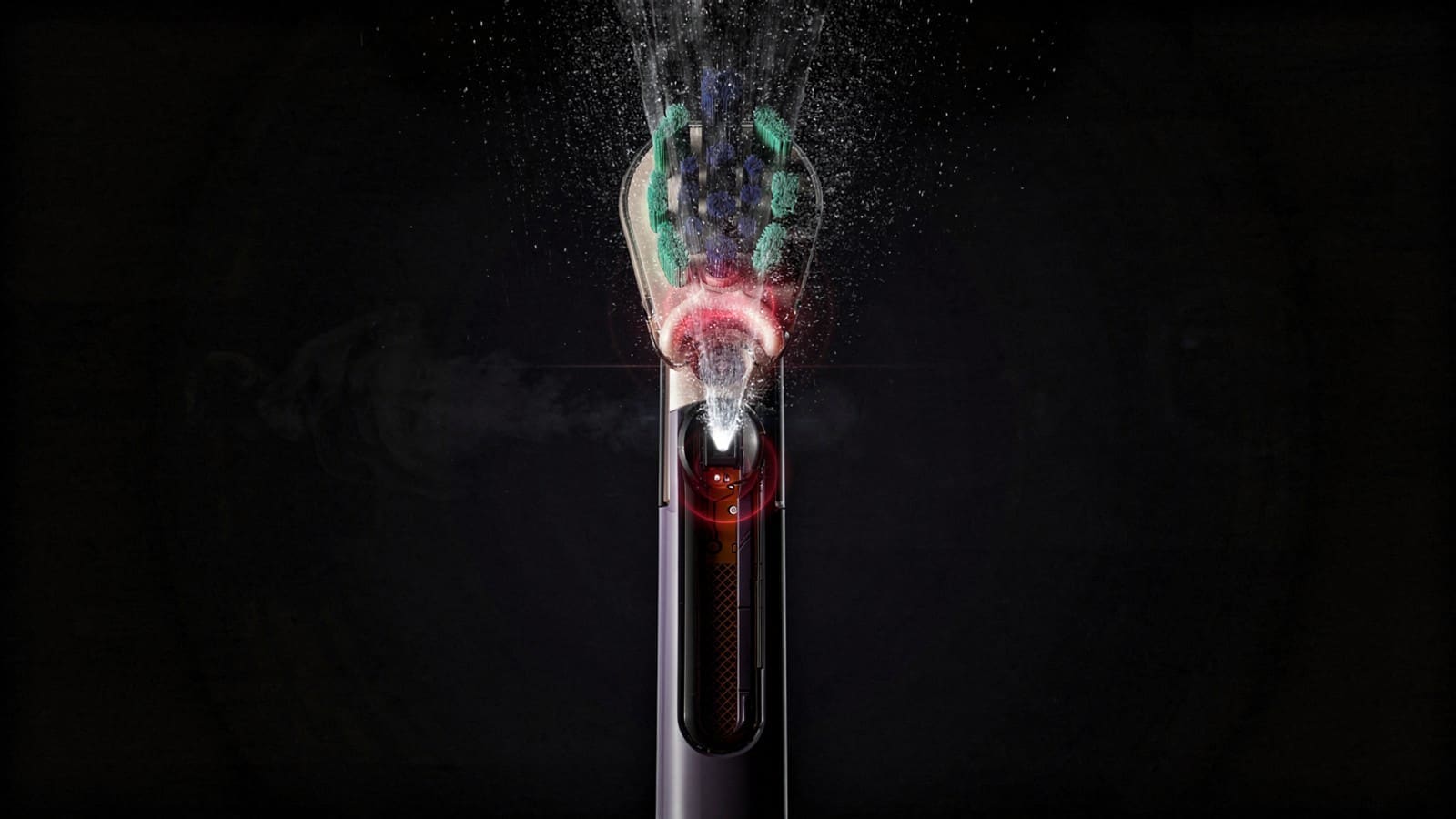
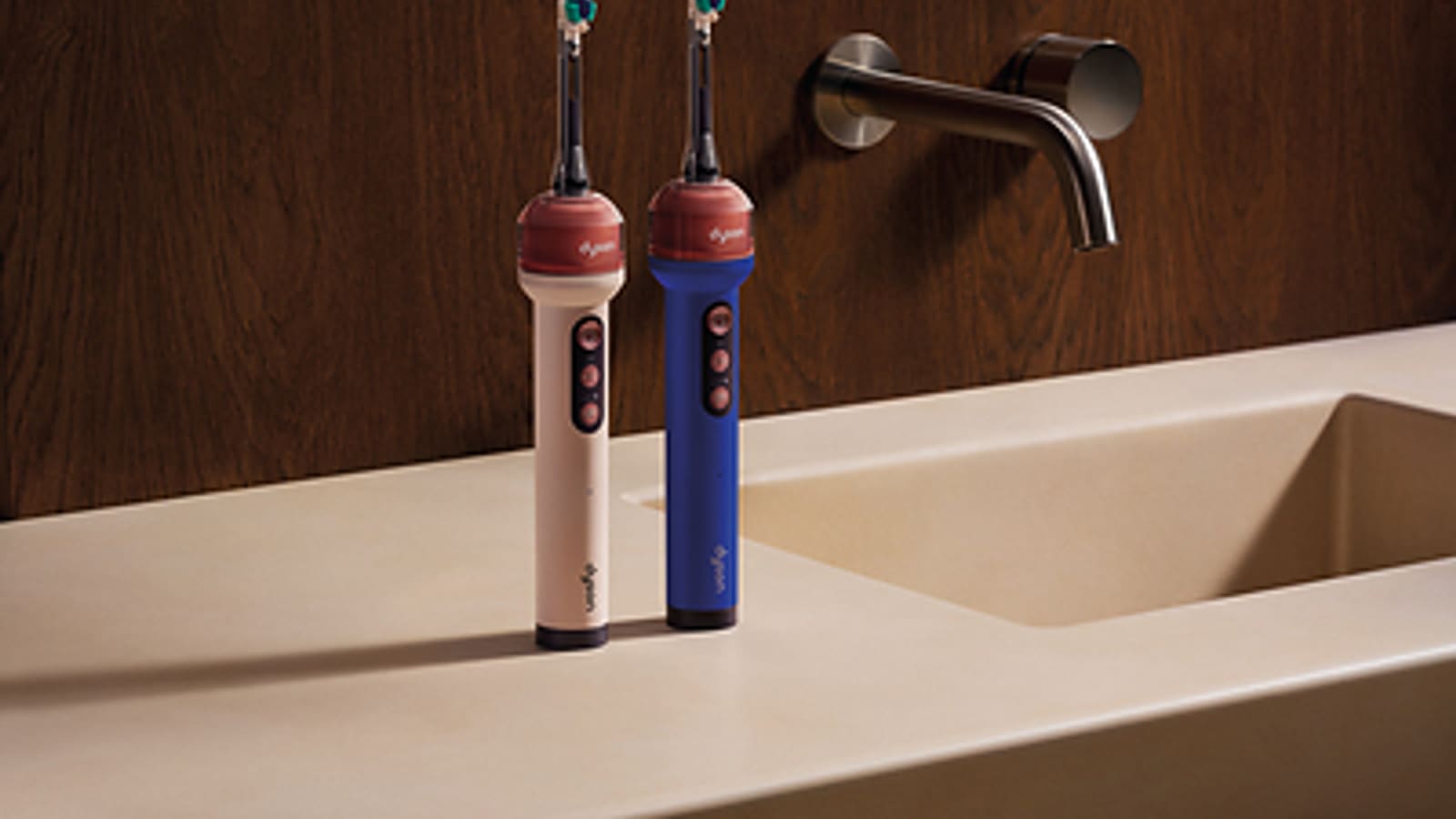
The CameraJet is an electric toothbrush with an in-brush camera that spots gaps between teeth and fires a precision jet of mouthrinse at each one, in effect automating flossing. It launched on 1 September 2026 in Ceramic Ultra Blue or Ceramic Pink. The idea is genuinely novel and the price is genuinely high. This article is based on Dyson's official announcement, launch video and a small number of independent hands-on reviews published on launch day. We haven't tested the CameraJet ourselves.
Update, 13 September 2026: Dyson has pulled the CameraJet from sale in the UK, US and France, and the UK product page has been removed. Dyson has said some early batches "may have experienced a component issue" but has not published affected batches or a refund route. The sales suspension report is kept up to date as Dyson responds.
How Does the Dyson CameraJet Actually Work?
The brush head carries a 100,000-pixel macro-lens camera that tracks your teeth as you brush and identifies the gaps where plaque tends to form and harden first. When it spots one, the handle triggers a precision jet burst of mouthrinse aimed directly at that gap — Dyson's pitch is that this replaces the awkward, easily-skipped step of manual flossing rather than sitting alongside it. Because foam from ordinary toothpaste would blind the camera, Dyson has also engineered a proprietary non-foaming toothpaste (formulated without the foaming agent SLS) and a low-foaming mouthrinse specifically to keep the lens clear. According to Dyson, the gap-detection model behind Gap Optical Targeting was trained on a dataset of 470,000 images, and the whole system is the result of six years of internal R&D.
What's in Dyson's Official CameraJet Launch Video?
Dyson published this launch video on its own YouTube channel to introduce the CameraJet. It's promotional material from Dyson, not independent footage or a review — worth keeping in mind while watching.
Is the Dyson CameraJet Worth £419.99?
At £419.99, the CameraJet costs roughly four to eight times what a good premium electric toothbrush does, so it's worth seeing where it actually differs from the alternatives most UK buyers already consider.
Toothbrush
UK price
Camera / gap detection
Built-in flossing
Dyson CameraJet
£419.99
Yes — 100,000-pixel macro camera, 28fps
Yes — automated precision jet
Oral-B iO Series 10
~£280–£330
No
No — separate water flosser needed
Philips Sonicare 9900 Prestige
~£300–£350
No (app-based sensor tracking only)
No — separate water flosser needed
None of the established premium brushes combine a camera with an automated flosser in the handle, so on paper the CameraJet is doing something genuinely different rather than just adding features. Whether that's worth roughly £100–£140 more than a top-end Oral-B or Sonicare plus a separate water flosser will come down to how well the gap detection performs day to day — which is exactly what independent, hands-on reviews need to establish before we'd recommend it. If you're weighing up a broader set of smart-home-adjacent gadget purchases this year, our best smart home gifts UK guide covers where big-ticket buys like this tend to be worth it.
Has Anyone Actually Tested the Dyson CameraJet Yet?
A handful of outlets published hands-on impressions on launch day rather than long-term reviews — TechRadar ran a piece describing a week with the CameraJet, for instance. Those early reports are the closest thing to independent testing that exists right now, and they're worth reading if you're close to buying, but a week is not long enough to say how the camera performs on genuinely awkward gaps, whether the non-foaming toothpaste is a real behaviour change for daily use, or how the brush heads and jet mechanism hold up over months. We haven't put a unit through its own paces yet, so treat everything above as Dyson's own account of what the CameraJet does, cross-checked against the reporting that exists — not a verdict. This is the same pattern we've seen with other AI-driven launches; our Apple smart home roadmap piece covers a similar gap between an official announcement and what independent testing later confirms.
Can You Buy the Dyson CameraJet in the UK Right Now?
No. The CameraJet launched at £419.99 direct from Dyson in the UK, and the UK product page has since been removed entirely rather than marked out of stock. Each set included the handle, a charging dock and two brush heads, with Dyson's non-foaming toothpaste and low-foaming mouthrinse sold as companion products. Dyson has given no return-to-sale date. If you see a unit listed by a third-party seller, you can't tell whether it comes from an affected early batch.
If you already bought one, contact Dyson customer care. Card payments over £100 may give you Section 75 protection or a chargeback route. Stop charging any unit that gets hot or has water near the contacts.
Should You Buy the Dyson CameraJet?
Not yet. Even before the suspension, the case at £419.99 rested on launch-day reviews only. Now there is also no way to buy one from Dyson, no confirmed fix and no word on which batches are affected. If you want automated flossing now, a premium Oral-B or Sonicare brush plus a separate water flosser costs less and is available today. If you still want the CameraJet, wait for Dyson to confirm a fix and a return-to-sale date, and for longer-term independent reviews. We'll update this page when that happens.
Not at the moment. The CameraJet launched at £419.99 on dyson.co.uk on 1 September 2026, but Dyson pulled it from sale in the UK, US and France on 13 September 2026 after reports of water ingress, overheating and charging faults, and the UK product page has been removed. Dyson has told dental practices this is not a formal recall, and has given no return-to-sale date, refund route or list of affected batches. We would wait for Dyson to confirm a fix before buying, including from third-party sellers, where you cannot tell which batch you are getting. See our report on the sales suspension for updates.
How much does the Dyson CameraJet cost in the UK?
The Dyson CameraJet costs £419.99 in the UK, available directly from Dyson in two colourways: Ceramic Ultra Blue and Ceramic Pink. That price includes the handle, a charging dock, and two brush heads. It's significantly more expensive than premium electric toothbrushes from Oral-B or Philips Sonicare, which typically sit between roughly £280 and £350, though none of those combine a camera-based gap detector with an automated flossing jet in one handle. Dyson also sells companion non-foaming toothpaste and low-foaming mouthrinse separately, designed to keep the CameraJet's camera lens clear of foam while brushing. The premium price reflects the underlying engineering: Dyson says the gap-detection system behind its Gap Optical Targeting technology was trained on 470,000 images over six years of R&D, and the brush head uses a 100,000-pixel macro-lens camera capturing 28 images a second. Note that Dyson pulled the CameraJet from sale in the UK, US and France on 13 September 2026 following reports of water ingress, overheating and charging faults in some early units.
Has the Dyson CameraJet been independently reviewed yet?
Only a small number of launch-day hands-on impressions exist so far, including a roughly week-long trial published by TechRadar — there isn't yet a long-term, fully independent review verifying how well the camera-guided flossing performs over months of daily use. We haven't tested a Dyson CameraJet ourselves; this article is based on Dyson's official announcement, its launch video, and the early press coverage that followed, not first-hand testing. Treat any specific performance claims as Dyson's own account until more independent, longer-term reviews are published. Since then, Dyson pulled the CameraJet from sale in the UK, US and France on 13 September 2026 after reports of water ingress, overheating and charging faults in some early units — a development that only reinforces the case for waiting on more independent testing before buying.
How does the Dyson CameraJet's Gap Optical Targeting work?
A 100,000-pixel macro-lens camera built into the brush head captures 28 images per second while you brush, using an AI model (which Dyson says was trained on 470,000 images) to identify gaps between teeth where plaque commonly forms. When it detects a gap, the handle fires a precision jet burst of mouthrinse directly at it, aiming to replace manual flossing rather than sit alongside it. Because ordinary toothpaste foam would obscure the camera's view, Dyson also sells a proprietary non-foaming toothpaste and a low-foaming mouthrinse designed specifically to keep the lens clear during use.
Claims in this article are checked against primary sources — manufacturer specifications, official documentation, Which? research, Ofgem guidance, or gov.uk — rather than forum threads or video reviews. Where the author has direct hands-on experience with a product (most Home Assistant, Zigbee, and home-networking gear is running in his own homelab), that is stated explicitly in the text.
For categories outside that personal setup — such as boilers, heat pumps, and other areas that are traditionally a heating engineer's domain — verdicts are built from cross-referenced manufacturer data, published lab results, and vetted expert and owner reviews rather than a claim of personal hands-on testing. See the editorial policy for the full methodology.
10+ years hands-on with Home Assistant & networking · Research-backed elsewhere · No brand deals
Smart home specialist with 10+ years running a self-hosted Home Assistant setup — Zigbee2MQTT, Frigate NVR, and local-first automations. Independent coverage for UK homes, no brand deals.