Last updated 25 October 2026. Is the Dyson toothbrush recalled? No formal recall has been announced. Dyson blames one batch of faulty jet tubes for water seepage and says production has resumed, but the CameraJet was still unavailable in the UK in the latest reports, with no return date or refund route.
Dyson pulled its £419.99 CameraJet toothbrush from sale in the UK, US and France roughly two weeks after its 1 September 2026 launch, following widespread reports of water ingress, overheating and charging failures.
Related: for how the CameraJet works, its UK price and how it compares with Oral-B and Sonicare, read our Dyson CameraJet overview.
What has happened to the Dyson CameraJet toothbrush?
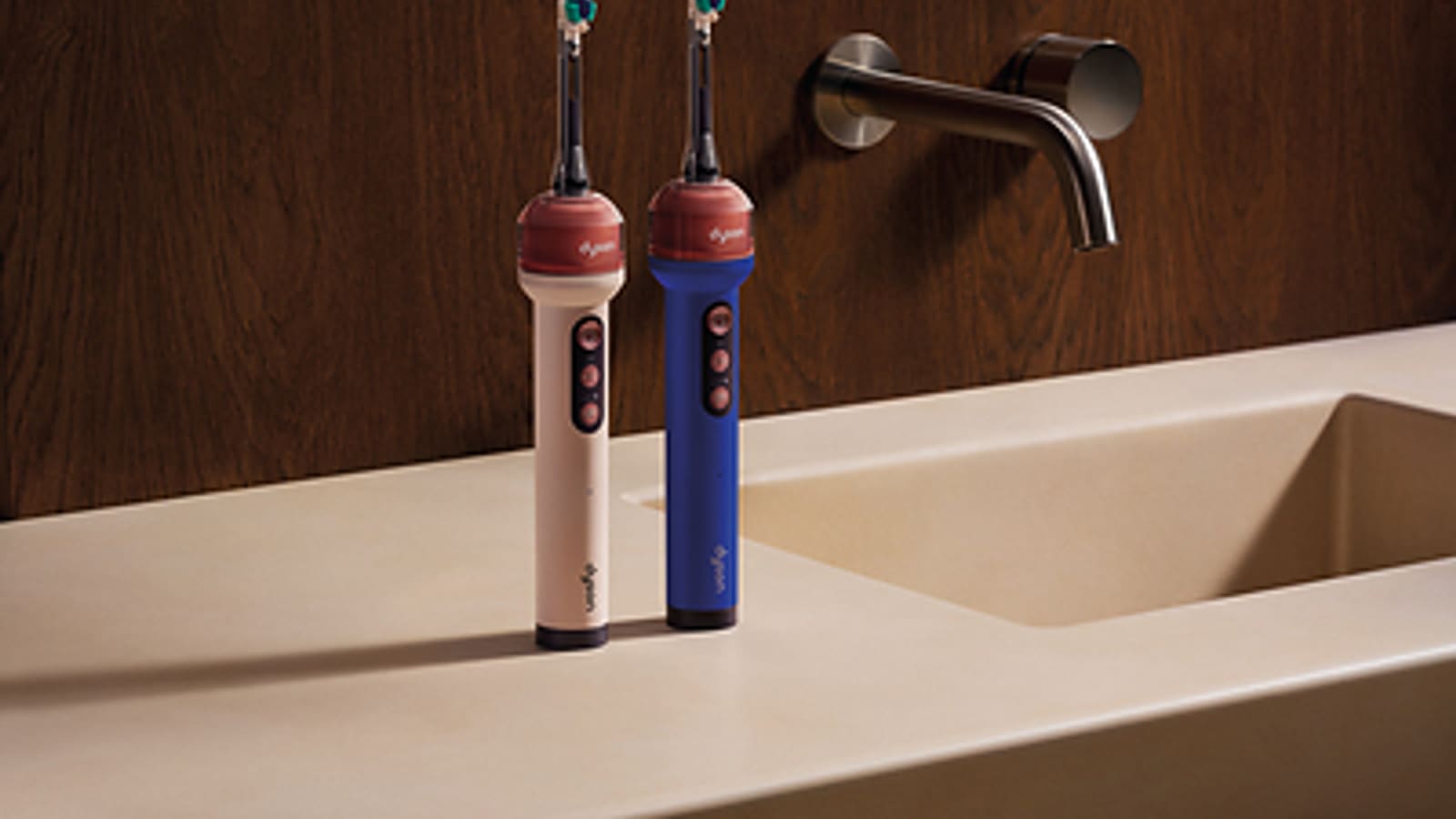
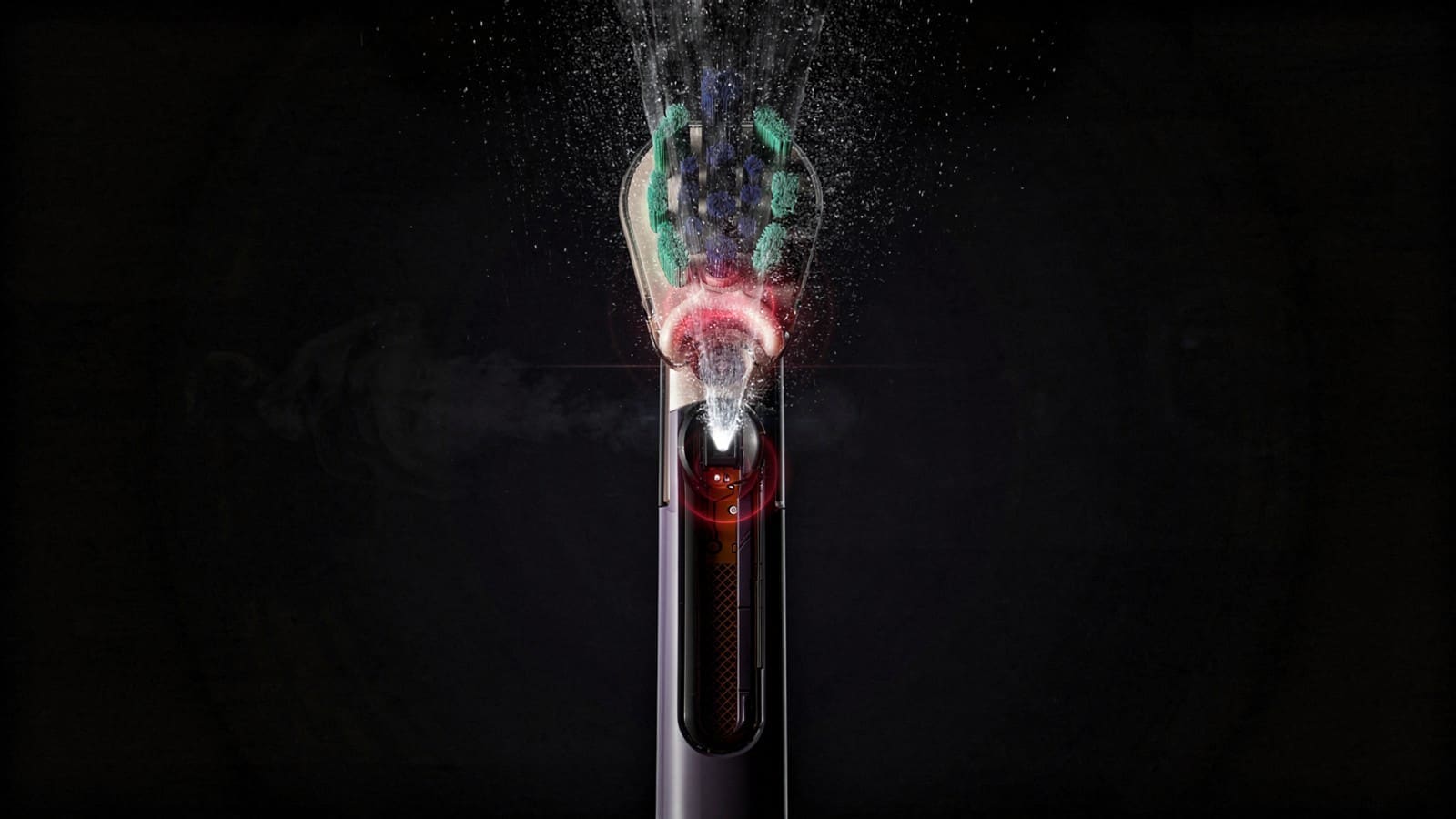
The CameraJet is Dyson's first electric toothbrush, combining a 28-frames-per-second optical sensor in the brush head with a targeted water jet that Dyson calls Gap Optical Targeting. It launched globally on 1 September 2026 at £419.99 (Ceramic Ultra Blue or Ceramic Pink), and we covered the launch in our full CameraJet overview at the time.
Within roughly two weeks, early buyers began reporting significant hardware problems: water leaking into the battery compartment, units overheating during charging, visible oxidation on internal components, and some brushes becoming completely unresponsive after only a handful of uses. Dyson subsequently removed the CameraJet from sale on its UK, US and French websites and in its retail stores, but has told dental practices this is "not a formal recall" (we have found no official recall notice from Dyson, the UK OPSS or the US CPSC). Dyson has said some early batches "may have experienced a component issue" and that it is working to isolate it, while separately telling press that the removal from sale reflects high demand and production scaling rather than the fault reports — two explanations that sit in some tension with each other, and which we haven't seen independently reconciled.
Why does this matter for Home Assistant users?
The CameraJet has no Home Assistant or Matter integration — it's a standalone oral-care device, not a connected smart home accessory — so this story matters less for automation and more for what it signals about Dyson's quality control on its newest connected/smart-adjacent product lines, arriving in the same September 2026 window as Dyson's Nurovi robot vacuums and HushJet air purifiers, which we covered separately in our IFA 2026 Dyson lineup roundup. Anyone considering those products alongside the CameraJet should treat this as a reason to wait for confirmed fixes and longer-term reliability reports before buying a first-batch Dyson device, connected or not.
What is the UK availability and price of the Dyson CameraJet?
Before the suspension, the CameraJet was listed on dyson.co.uk and in Dyson Demo Stores at £419.99 in Ceramic Ultra Blue or Ceramic Pink, with a Dyson-branded travel case bundle also available. As of this article's fact-check date, the product page has been pulled from the UK site entirely rather than simply marked out of stock, which is consistent with the wider three-market suspension rather than an isolated UK issue.
Should you buy the Dyson CameraJet now or wait?
Wait. Dyson hasn't published a refund route for the CameraJet; if you bought one, contact Dyson customer care directly, and if you paid by card you may have extra protection under Section 75 (purchases over £100) or a chargeback. With sales suspended in three major markets and Dyson yet to confirm which batches are affected or give a UK return-to-sale date, there's no way to know whether a newly bought unit today would be a pre- or post-fix batch. If you already own one and notice water pooling near the charging contacts, unusual heat during charging, or the brush stopping mid-use, stop using it and contact Dyson support directly rather than continuing to charge it. For the UK price, how the CameraJet compares with Oral-B and Sonicare, and what to do if you want one, see our Dyson CameraJet UK price and availability guide. We'll update it once Dyson confirms a UK return-to-sale date.
Dyson toothbrush leak, charging and waterproof problems: what owners report
Reported faults include water inside the battery compartment, units that stop charging, overheating on the dock and oxidation on internal parts. Dyson has cited an IPX7 water-resistance rating (submersion to 1 metre for 30 minutes), yet several owners report water damage despite that, so the rating hasn't held up in the reports we've seen. Dyson hasn't published guidance for existing owners. Stop charging any unit that gets hot or has water near the contacts and contact Dyson support.
Frequently asked questions
- Is the Dyson toothbrush recalled?
- Not formally. Dyson removed the CameraJet from sale in the UK, US and France in September 2026 and has not announced a formal recall. In a 30 September statement it said one production batch of jet tubes had a process issue that created the potential for water seepage, and that it isolated affected stock. We have found no official recall notice, no published batch list and no announced refund route, and the CameraJet was still unavailable in the UK in the latest reports we found. Contact Dyson support if you own one. Our latest fact-check was on 25 October 2026.
- Why does my Dyson toothbrush leak?
- Owners of the CameraJet report water getting into the battery compartment, with oxidation on internal parts in some cases, sometimes within days of first use. Dyson says one production batch of jet tubes had a process issue that created the potential for water seepage. If water pools near the charging contacts, stop using and charging the brush, dry the dock and contact Dyson support with your serial number. Because Dyson hasn't said which batches are affected, it's worth checking with support even if your unit still seems to work normally. Keep your proof of purchase in case Dyson opens a refund or replacement route.
- Is the Dyson toothbrush not waterproof?
- Dyson cites an IPX7 rating for the CameraJet, which should mean it survives submersion to 1 metre for 30 minutes, so it is designed to be waterproof. Even so, multiple owners report water damage, which suggests the seal is failing on some units, most likely the early batches Dyson has referred to. Dyson hasn't confirmed which batches are affected or whether a design change is coming. If yours has been exposed to water and has stopped working, contact Dyson support rather than trying to dry it out and keep using it. Card payments over £100 may also give you Section 75 protection.
- Why is my Dyson toothbrush not charging?
- Charging failures and overheating on the dock are among the faults reported by CameraJet owners, and they may be linked to the water ingress problem. Dyson hasn't published a fix. If your brush won't charge, stop charging it straight away if it gets hot or the contacts look wet, dry the dock, and contact Dyson support with your serial number rather than repeating charge cycles. Don't leave a faulty unit charging overnight, and don't buy a replacement until Dyson confirms which batches are affected. Keep your proof of purchase in case Dyson opens a refund route. Dyson has not said whether replacements will ship.
- Why was the Dyson CameraJet toothbrush pulled from sale?
- Dyson pulled the CameraJet from sale in the UK, US and France roughly two weeks after its 1 September 2026 launch, following reports of water leaking into the battery compartment, overheating and charging failures. Dyson says one production batch of jet tubes had a process issue that could let water in, and that it isolated affected stock, leaving the product out of stock. It has not called this a formal recall. Production has resumed, but no UK return-to-sale date has been announced. Until Dyson publishes affected batches or serial numbers, treat any listing you find with caution and check with Dyson support before buying a unit from third-party sellers, since stock sold before the suspension may come from the affected batch.
- Is it safe to keep using a Dyson CameraJet toothbrush I already bought?
- If your CameraJet is charging and operating normally with no signs of water pooling near the charging contacts, unusual heat, or unexpected shutdowns, Dyson hasn't told existing owners to stop using their units outright. However, given the reported faults involve water ingress and overheating around the battery, stop using and charging the device immediately if you notice any of those symptoms, and contact Dyson support to check whether your unit falls within an affected batch. Since Dyson hasn't published clear batch or serial number guidance yet, err on the side of caution with any device showing early warning signs rather than continuing to charge it overnight.
›How we researched this
Claims in this article are checked against primary sources — manufacturer specifications, official documentation, Which? research, Ofgem guidance, or gov.uk — rather than forum threads or video reviews. Where the author has direct hands-on experience with a product (most Home Assistant, Zigbee, and home-networking gear is running in his own homelab), that is stated explicitly in the text.
For categories outside that personal setup — such as boilers, heat pumps, and other areas that are traditionally a heating engineer's domain — verdicts are built from cross-referenced manufacturer data, published lab results, and vetted expert and owner reviews rather than a claim of personal hands-on testing. See the editorial policy for the full methodology.
Citing this page? Please use a dofollow link back to the original article — it helps us keep the data on this page accurate and up to date.