What does the OmniGrip arm actually do?
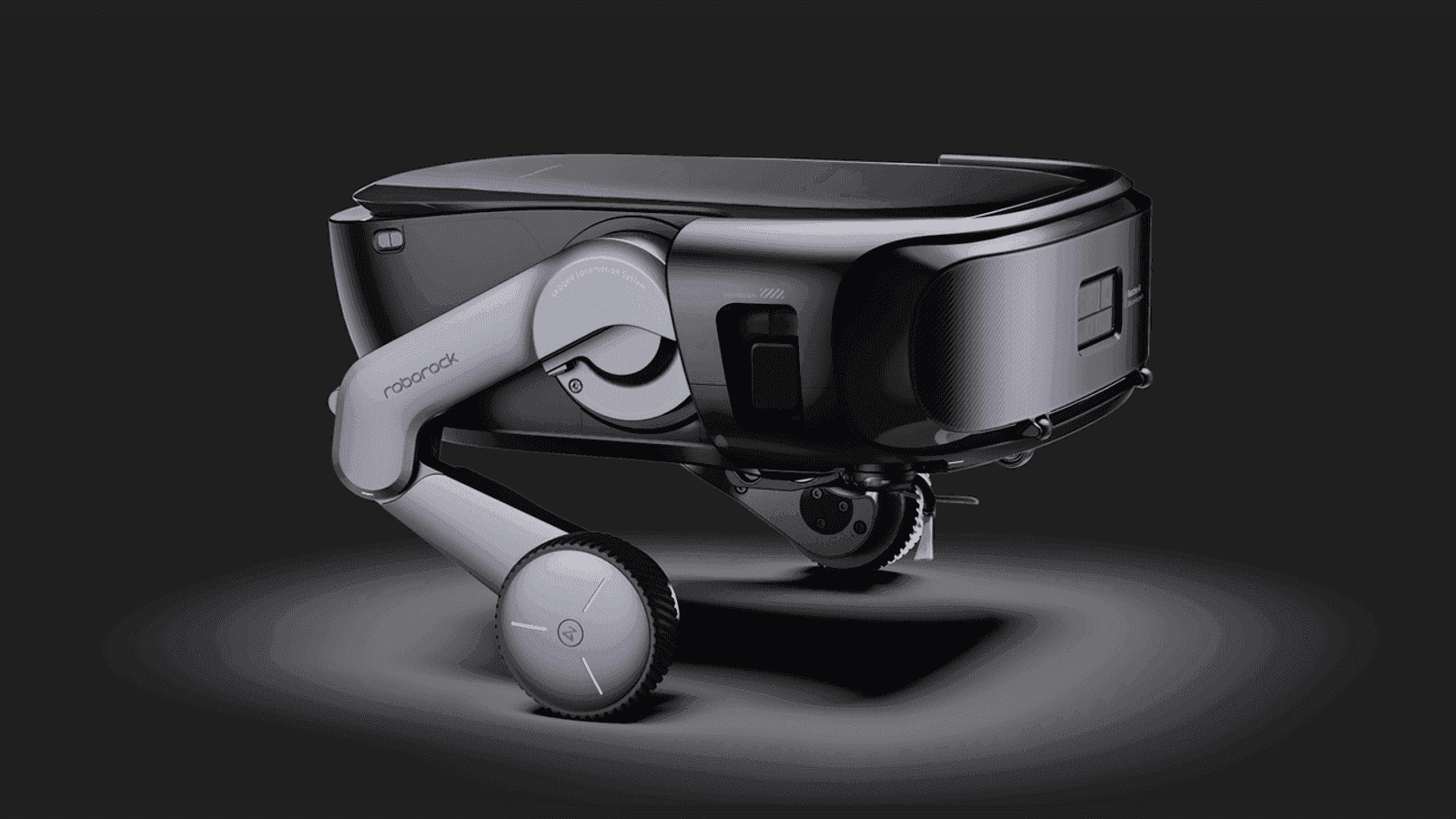
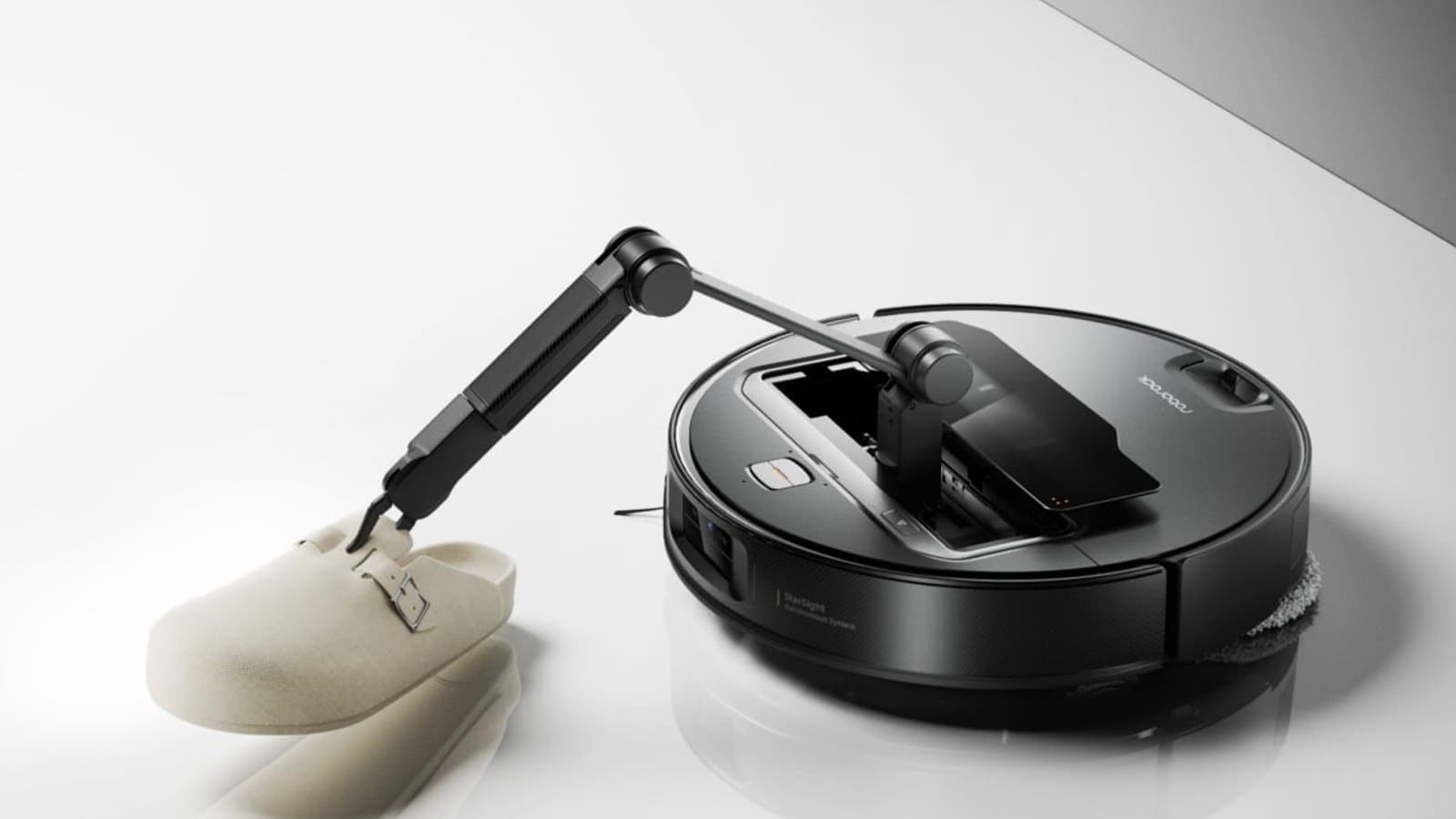
The OmniGrip arm identifies small objects with an onboard camera and LED, then unfolds to lift and relocate items weighing under roughly 300g — things like socks, tissues, small towels and sandals — clearing them out of the vacuum's path before a cleaning run. Roborock announced it as the first mass-produced foldable five-axis robotic arm on a robot vacuum, unveiled at CES 2025 and rolled out to UK buyers through the first half of that year. In independent testing, reviewers found the arm thoughtfully engineered and easy to set up, but limited in what it reliably achieves without supervision — it doesn't always spot or successfully grip clutter, and its usefulness depends heavily on how tidy a floor already is before a run starts.
How well does the Saros Z70 actually clean?
Strip away the arm and the Saros Z70 is one of Roborock's strongest all-round cleaners. It runs 22,000Pa of suction alongside dual spinning mop pads that lift automatically on carpet, and its AdaptiLift chassis raises the robot's body to cross thresholds and small steps up to roughly 40mm — useful in older UK homes with raised door strips between rooms. At just 79.8mm tall, it's noticeably lower-profile than most flagship rivals, which helps it fit under furniture other robots can't reach. The dock handles the maintenance side: auto-emptying the bin, washing the mop pads in hot water, warm-air drying them to stop mould smells building up, and automatically refilling its own water tank. One recurring weak point flagged by reviewers is the anti-tangle brush roller, which several testers found still matted with hair faster than its marketing suggests.
Is the Roborock Saros Z70 worth the money in the UK?
Not unless the arm specifically appeals to you. UK pricing sits around £1,499–£1,799 depending on retailer and promotions, which is a significant premium over Roborock's own Saros 20 — a model with no arm but stronger 36,000Pa suction, a similarly capable self-washing dock, and a typical UK price nearer £999. If you just want the best all-round cleaning and mopping Roborock currently sells, the Saros 20 is the better buy. The Z70 only earns its price if the idea of a robot that tidies loose objects off your floor before vacuuming is worth paying a four-figure premium for on top of an already expensive category — and reviewers are split on how reliably it delivers that in daily use. Always check current pricing directly with retailers, since robot vacuum prices move frequently around UK sales events.
| Spec | Saros Z70 | Saros 20 |
|---|---|---|
| Robotic arm | Yes — OmniGrip, 5-axis, lifts items under ~300g | No |
| Suction power | 22,000Pa | 36,000Pa |
| Threshold crossing | ~40mm (AdaptiLift) | ~88mm (adaptive lift chassis) |
| Height | 79.8mm | 79.8mm |
| Dock | Auto-empty, hot-water mop wash, warm-air dry, auto water refill | Auto-empty (up to 65 days), hot-water mop wash + dock self-clean, warm-air dry, auto-detergent dispense |
| Typical UK price | ~£1,499–£1,799 | ~£999 |
Does the Saros Z70 work with Home Assistant?
Yes — it uses Home Assistant's native roborock integration, the same one that covers the rest of Roborock's Saros, S, QV and Qrevo ranges. Once linked through your Roborock account, it exposes a vacuum entity with start, pause, stop and dock-return controls, fan-speed and mop-intensity selects, a live map, battery and cleaning-progress sensors, and consumable-replacement tracking. Like other Roborock models, this runs on a hybrid model: Home Assistant polls and sends commands locally most of the time, but setup and some fallback control still depend on Roborock's cloud account — there's no fully local, account-free option. Crucially, the OmniGrip arm itself isn't exposed as any Home Assistant entity or service, so it can't be triggered by an automation; it only runs inside Roborock's own app-controlled cleaning routine. If comparing robot vacuums for a Home Assistant setup more broadly, our Dreame vs Roborock comparison covers how the two brands' integrations differ beyond this one model, and the robot vacuum finder lists verified entity support across the wider market.
Roborock Saros Z70 verdict
The Saros Z70 is a genuinely impressive vacuum wrapped around a still-unproven headline feature. As a cleaner, it's near the top of what Roborock currently sells: strong suction, thorough mopping, a low profile that reaches further under furniture, and a dock that needs minimal manual upkeep. The OmniGrip arm is a real engineering achievement — the first of its kind to reach mass production — but it's inconsistent enough in day-to-day use that it shouldn't be the deciding factor unless you specifically want a robot that can pick socks and tissues off the floor. For most UK buyers who just want Roborock's best cleaning performance for less money, the arm-free Saros 20 is the more sensible purchase.
Roborock isn't alone in pushing floor care automation forward: at IFA Berlin 2026, Tineco unveiled a 230°C steam mop lineup and a self-sealing vacuum dock under its "The Future Cleans Itself" theme, though UK pricing and Home Assistant support remain unconfirmed for both brands' newest hardware.
For a wider shortlist of vacuums that integrate well, see our best robot vacuum for Home Assistant UK guide, which includes the Saros 20 alongside cheaper picks.