Design and Build Quality
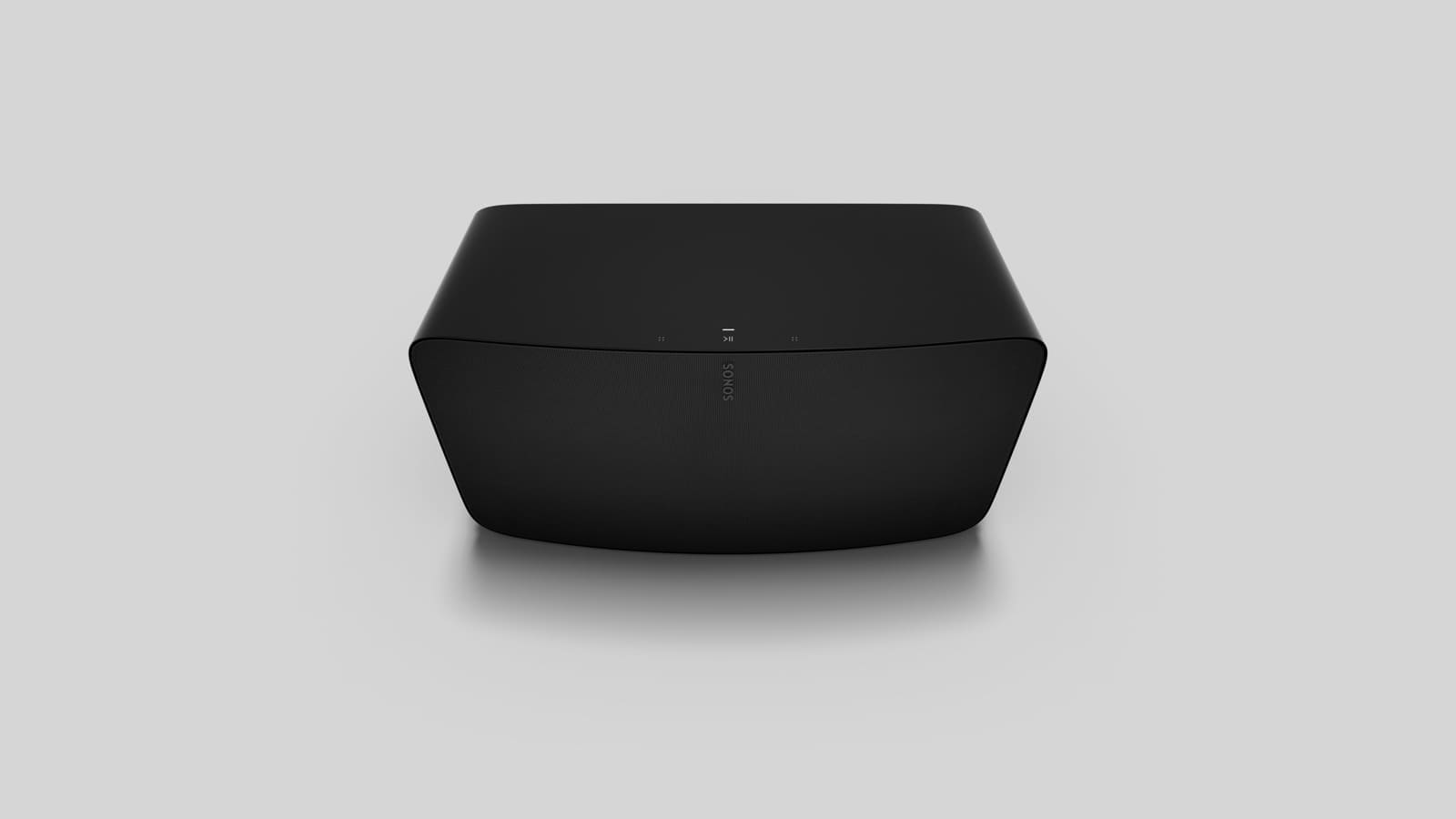
At 6.4 kg and measuring 364mm wide, 203mm tall and 154mm deep, the Five is a substantial piece of furniture rather than a discreet gadget. It is designed to sit permanently in one spot — on a sideboard, bookshelf or dedicated stand — rather than be moved between rooms. The build quality is excellent, with a perforated metal grille wrapping the full width of the cabinet and a matte plastic top housing the touch-sensitive playback controls. It is available in black or white finishes, and Sonos supplies a matching grille colour on the white model, a small but deliberate cosmetic change introduced with the 2020 refresh.
Unlike most of the current Sonos range, the Five has no built-in microphone and offers no voice assistant support. That is a deliberate design decision aimed at buyers who want a pure listening device without an always-on mic in the room, but it does mean the Five cannot be used as an Alexa or Google Assistant endpoint on its own.
Sound Quality
The Five's headline feature is its driver array: three tweeters and three mid-woofers arranged in a phased configuration, driven by six dedicated Class-D amplifiers. Two side tweeters angle outward to widen the stereo image, while a centre tweeter is tuned specifically for vocal clarity. The result is genuinely room-filling sound — the Five plays louder and with more low-end weight than any other single Sonos unit, and stereo separation from a single enclosure is unusually convincing.
What Hi-Fi's UK review of the Five described it as delivering "bold, expansive sound and great multi-room potential," while noting the low end can run a little heavy-handed at higher volumes and the treble rolls off slightly compared with dedicated hi-fi speakers. That trade-off is common at this end of the wireless speaker market: the Five prioritises scale and bass extension over the last word in tonal neutrality.
Trueplay room-tuning is supported, using a connected iPhone or iPad's microphone to measure the room and adjust the EQ automatically (Android users get a simplified, non-microphone version). It makes a noticeable difference in rooms with hard, reflective surfaces, pulling back boomy bass that would otherwise build up near walls or in corners.
Connectivity
The Five connects over Wi-Fi and supports Apple AirPlay 2 for direct streaming from iPhone, iPad and Mac. It has no built-in Bluetooth, which is worth noting if you want an occasional wireless connection without joining it to your home network — every other input runs through Wi-Fi or the wired options. Those wired options are genuinely useful: an Ethernet port for a rock-solid network connection, and a 3.5mm line-in that lets you connect a turntable, CD player or any analogue source and stream it to other Sonos speakers around the house — see our best turntable for Sonos guide if you're shopping for a deck to pair with it.
For most UK buyers deciding between wireless speaker ecosystems, our guide to the best multiroom speakers in the UK compares the Five against rivals from Bose and Denon, while our head-to-head on Sonos vs Bose is a useful read if you are weighing up a soundbar instead of a standalone speaker.
Stereo Pairing and Multiroom
Two Five units can be wirelessly paired for true stereo separation — a proper left and right channel rather than the single-cabinet phased array doing the work alone. It is an expensive way to build a system, at roughly £1,100 for the pair, but the resulting sound is closer to a dedicated hi-fi setup than anything else in the Sonos range short of adding an Arc and Sub. Within a wider multiroom system, the Five groups with any other Sonos speaker through the app, and streaming services including Spotify, Apple Music, Amazon Music and Tidal connect directly without needing a phone in the room once set up.
For music sources specifically, our guide to the best streaming service for Sonos compares the major platforms on sound quality and Sonos app integration, which matters more on a speaker built to show off detail like the Five.
Value and Verdict
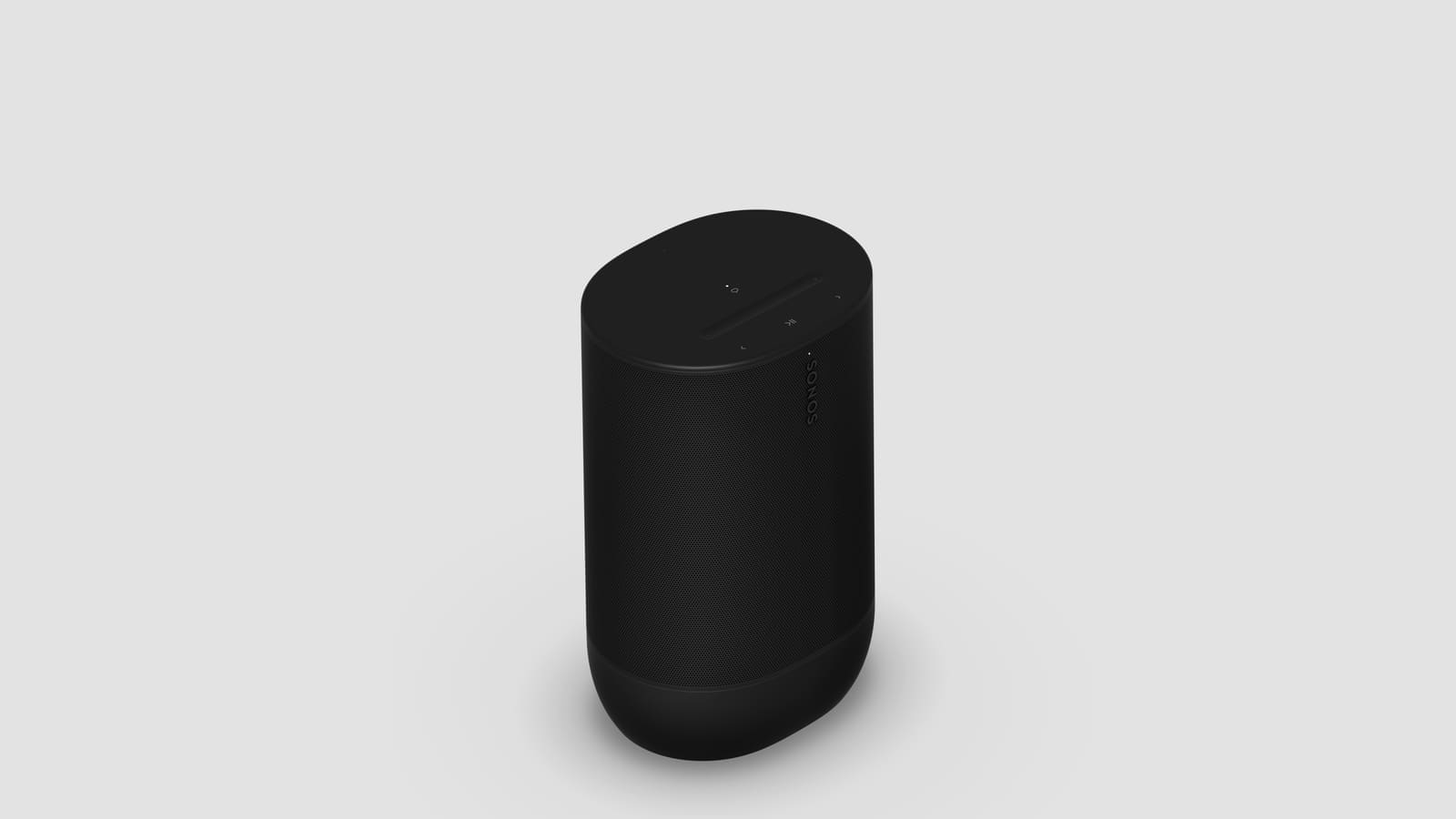
At around £549, the Sonos Five is the most expensive standalone speaker Sonos sells, and it needs to be judged against that price point rather than against cheaper multiroom units. Some retailers discount it to around £439–£479, which improves the value case considerably. If your priority is a single speaker that can fill a large room with genuine scale and bass weight, and you value the flexibility of a line-in for a turntable or a wired Ethernet connection, the Five remains the strongest option in the current range. Buyers who want a more compact, cheaper speaker with voice assistant support are better served by the Era 100; those who want to move a speaker between the house and the garden should look at the Move 2 instead.
For those still deciding between Sonos speakers more broadly, our Sonos Arc review covers the soundbar side of the range if home cinema is the priority rather than music.
For how the Five stacks up against non-Sonos rivals purely on sound quality for music, see our best smart speaker for music UK guide, which compares it against the Apple HomePod 2, Amazon Echo Studio and Google Nest Audio.
Specifications at a Glance
Price: Around £549 RRP (prices vary by retailer). Weight: 6.4 kg. Dimensions: 364mm (W) x 203mm (H) x 154mm (D). Drivers: Three tweeters, three mid-woofers, six Class-D amplifiers. Connectivity: Wi-Fi, Ethernet, AirPlay 2, 3.5mm line-in. Bluetooth: No. Voice assistant: None built in. Stereo pairing: Yes (two Five units). Colours: Black, white.If spatial audio matters more than raw stereo power, read our Sonos Era 300 review for the Dolby Atmos alternative.
>