What the energy savings data actually shows
The most frequently cited figure comes from the Energy Saving Trust, which estimates that a smart thermostat used properly can save a typical UK household around £75 per year on heating bills. That figure assumes the household previously had a basic programmer — or no controls at all — and reflects average UK gas consumption.
Independent research by BEAMA and Salford University found that upgrading to a smart thermostat can cut annual heating costs by up to 12%, equating to roughly £105 a year at current Ofgem tariff levels. The difference between these figures reflects how efficiently a home was being heated before. A household that was running heating on a fixed schedule and rarely adjusted it will see larger gains; one that was already manually tweaking schedules carefully will see less.
Savings come from three mechanisms working in combination:
- Geofencing — the thermostat detects when everyone has left the house and automatically turns the heating down, eliminating the wasted energy of heating an empty home.
- OpenTherm modulation — compatible thermostats communicate directly with the boiler and run it at a lower, steadier temperature rather than cycling on and off at full power. This is where the biggest efficiency gains come from in modern condensing boilers.
- Smarter scheduling — apps with weather compensation and occupancy learning gradually trim heating to match real-world patterns rather than a fixed timetable set once and forgotten. See our guide to building an effective heating schedule for how to set this up properly.
Not every thermostat delivers all three. Budget models may only offer app-controlled scheduling. For the full savings stack, look for a device that explicitly supports OpenTherm and geofencing — our roundup of the best smart thermostats in the UK covers which models tick all three boxes.
Payback period: the honest maths
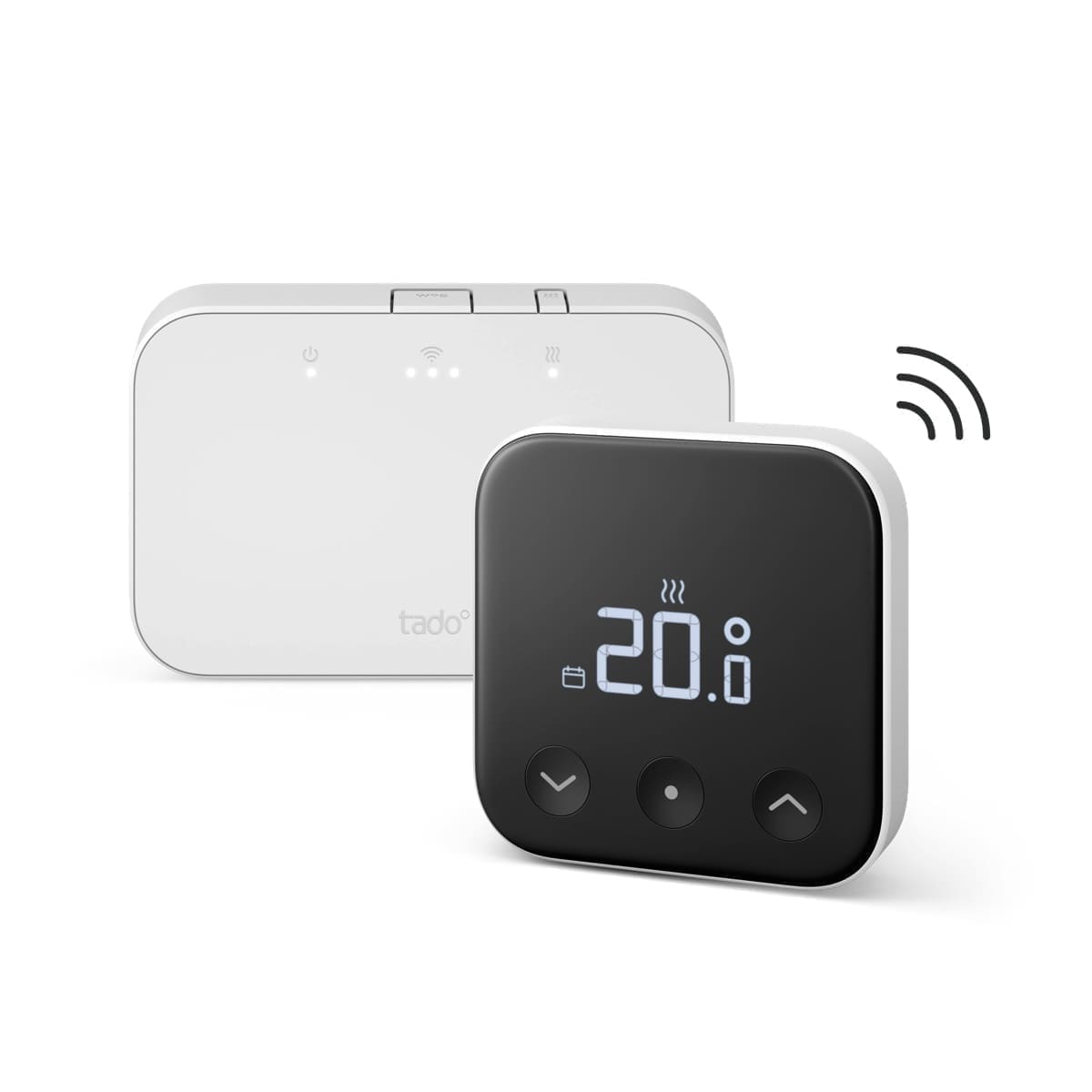
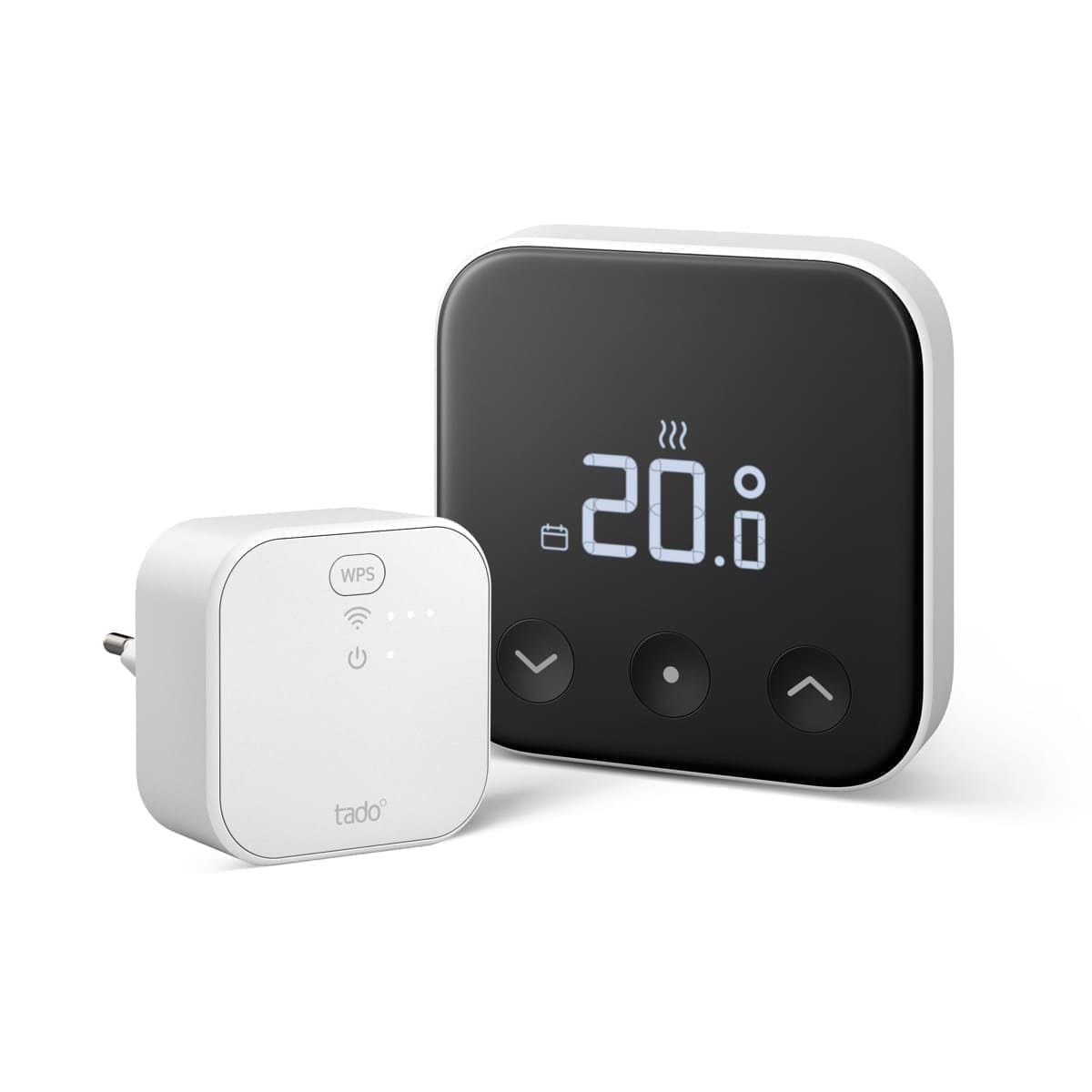
A mid-range smart thermostat — tado° X, Hive, or Honeywell Home T6R — costs £150–£200 for the hardware, plus around £50–£100 for professional installation if you do not fit it yourself. Call the all-in cost £200–£300 for most households.
At £75 savings per year (Energy Saving Trust lower estimate), payback takes roughly 2.7–4 years. At £105 per year (BEAMA upper estimate), you are looking at 2–3 years. With energy prices rising through 2026, the payback period is shortening: every increase in the Ofgem price cap means a larger absolute saving from the same percentage reduction in consumption.
After payback, the device is essentially generating a return. A smart thermostat bought today has a realistic useful life of 8–12 years, meaning net cumulative savings well into four figures over its lifetime at current energy prices.
The case for smart TRVs
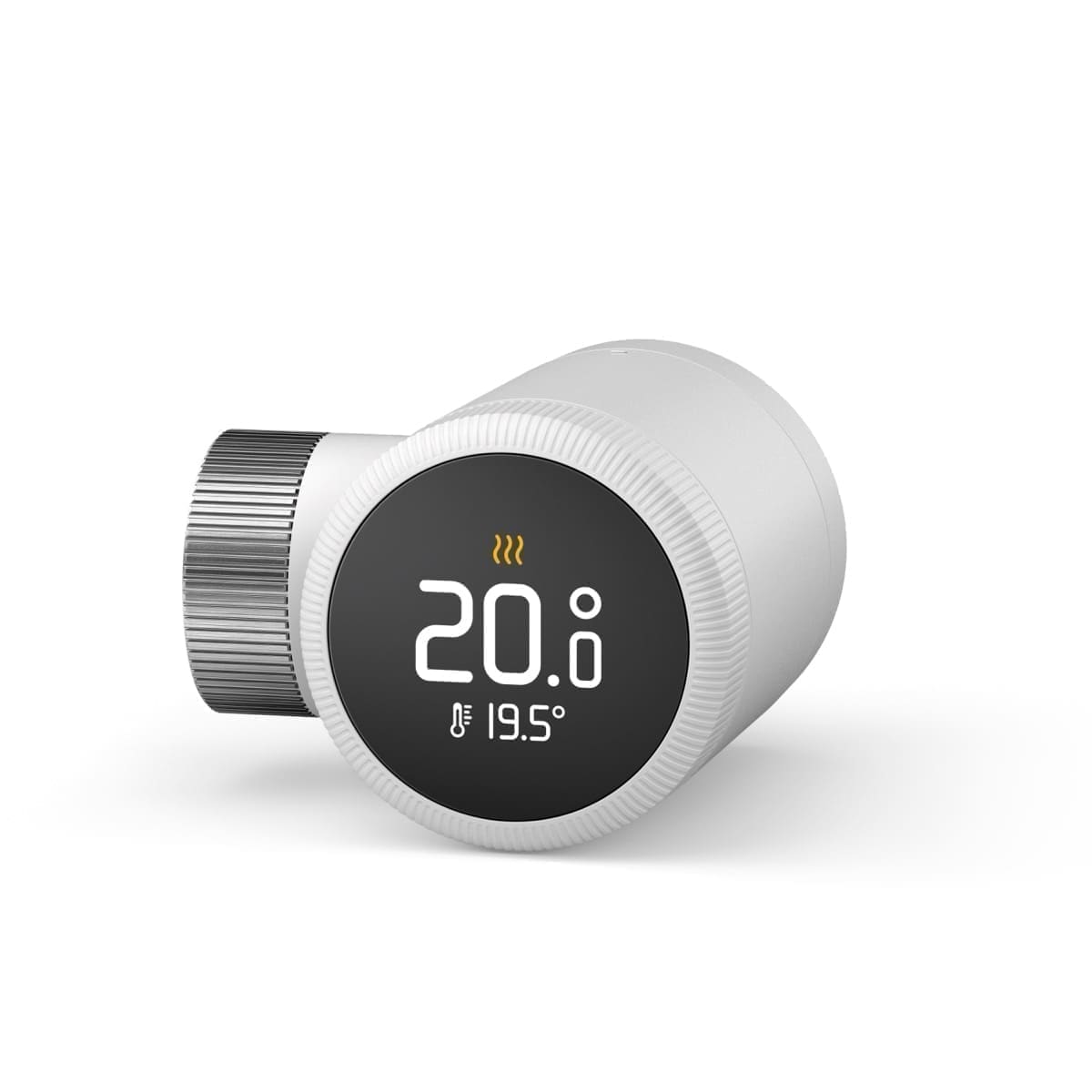
A single smart thermostat controls your whole home as one zone — it turns the boiler on and off, but every radiator gets hot regardless of whether the room is occupied. Smart thermostatic radiator valves (TRVs) add room-by-room control on top, letting you set individual temperature targets for each space.
The savings logic is straightforward: a three-bedroom semi where two bedrooms are unoccupied during the day has no reason to heat those rooms to the same temperature as the living room. Smart TRVs on those radiators can be scheduled to stay at a frost-protection 12–14 °C during working hours, cutting the volume of gas consumed in each heating cycle.
The Energy Saving Trust estimates adding TRVs to a system that already has a programmer and thermostat saves around £35–£40 per year extra. A set of six smart TRVs from Drayton Wiser or tado° costs £200–£400, giving a payback of 5–10 years for the TRVs alone — longer than for the thermostat itself. The case for TRVs is strongest in larger homes with several rooms that are regularly unoccupied, and weakest in small flats or open-plan properties where every radiator is in a space that is heated anyway.
For a detailed comparison of smart TRV options, see our guide to the best smart thermostats UK, which covers integrated TRV ecosystems from tado°, Drayton Wiser, and Hive.
The case against: when smart heating may not be worth it
Smart heating is not a universal win. There are several scenarios where the payback period stretches uncomfortably or the benefits are limited:
Older homes with poor insulation. If your home loses heat rapidly through single-glazed windows, uninsulated cavity walls, or a poorly insulated loft, a smart thermostat cannot fix the underlying problem. You will still save on the heating you do use, but the percentage saving on a large bill may be smaller in cash terms than for a better-insulated home. Insulation improvements deliver faster payback in badly leaking homes.
Rented properties. Tenants typically cannot replace thermostats without landlord permission, and there is no financial incentive for landlords to invest in smart heating when tenants pay the energy bills. The Minimum Energy Efficiency Standards (MEES) regulations are pushing landlords toward efficiency improvements, but smart thermostats are not yet a mandated upgrade.
Ageing boiler systems. OpenTherm modulation — the most impactful efficiency feature — only works with compatible boilers. Most combi boilers manufactured after 2015 support it, but older systems may not. Fitting a smart thermostat to an old, inefficient boiler that is nearing the end of its life can be false economy if the boiler needs replacing within a few years anyway; it may be better to wait and upgrade both at once.
Already-efficient households. If you are already meticulous about heating schedules, keep a programmable thermostat well set, and your home is well insulated, you will see a smaller uplift from switching to smart. The biggest gains go to households that currently heat on a broad, wasteful schedule.
Which households benefit most
The strongest candidates for smart heating are:
- Owner-occupiers in detached or semi-detached houses — larger homes with more rooms, higher bills, and full control over installations.
- Households with irregular occupancy patterns — shift workers, households with mixed work-from-home and office days, or those who travel frequently. Geofencing pays off most when you cannot predict when you will be home.
- Homes with a modern combi or system boiler (post-2015) — these will support OpenTherm modulation and deliver the deepest savings.
- Those paying higher unit rates — the more expensive your gas, the larger the absolute saving from any percentage reduction in consumption. With the Ofgem cap rising to £1,862 in July 2026, the maths keeps improving.
The weakest candidates are tenants, households in very small properties where every room is always occupied, and those with pre-2000 boiler systems that lack OpenTherm support.
Head-to-head: tado° vs Hive for payback
tado° X (around £160 hardware) and Hive (around £120 hardware) are the two dominant smart thermostat brands in the UK. Both support OpenTherm and geofencing, and both qualify for the Energy Saving Trust estimated savings range. The main practical difference is that tado° X supports Matter — the cross-platform smart home standard — while Hive does not. For pure payback calculation, the cheaper Hive outperforms on time-to-payback; for long-term smart home integration and deeper modulation control, tado° edges ahead. Our full Hive vs tado UK comparison works through the trade-offs in detail.
Verdict: is smart heating worth it?
For most UK owner-occupiers with a modern gas boiler, the answer is yes. A smart thermostat pays for itself in 2–4 years, continues generating savings for a decade, and becomes more valuable as energy prices rise. The Energy Saving Trust's £75/year figure is a conservative baseline — households with irregular patterns or previously poor controls will save more.
Smart TRVs are a worthwhile addition for larger homes with regularly unused rooms, but the payback is slower; prioritise the thermostat first. Skip the upgrade if you are renting without landlord consent, if your boiler pre-dates 2010 and is likely to fail soon, or if insulation is the more pressing problem.
The quickest route to quantifying your own savings: look at your annual gas consumption in kWh from a recent bill, multiply by the current unit rate (approximately 5.5–6p/kWh at Q2 2026 Ofgem rates), and calculate 10–12% of that figure. That is a reasonable estimate of what a well-configured smart thermostat with OpenTherm and geofencing will deliver in year one.