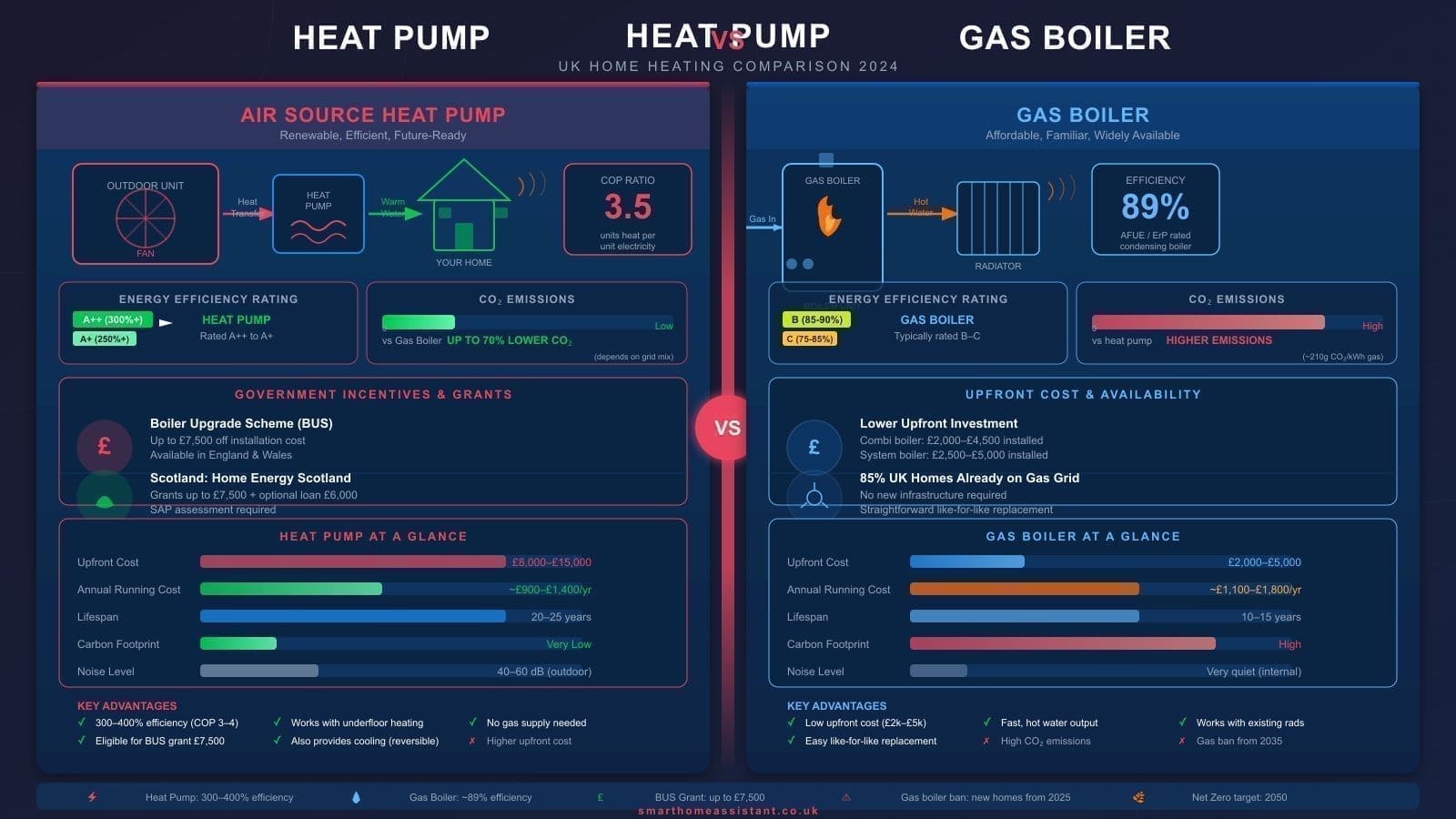
How Each System Works
Gas boilers burn natural gas to heat water, which then circulates through radiators or underfloor heating. Modern condensing boilers achieve around 90% efficiency — meaning roughly 90p of every £1 spent on gas becomes useful heat.
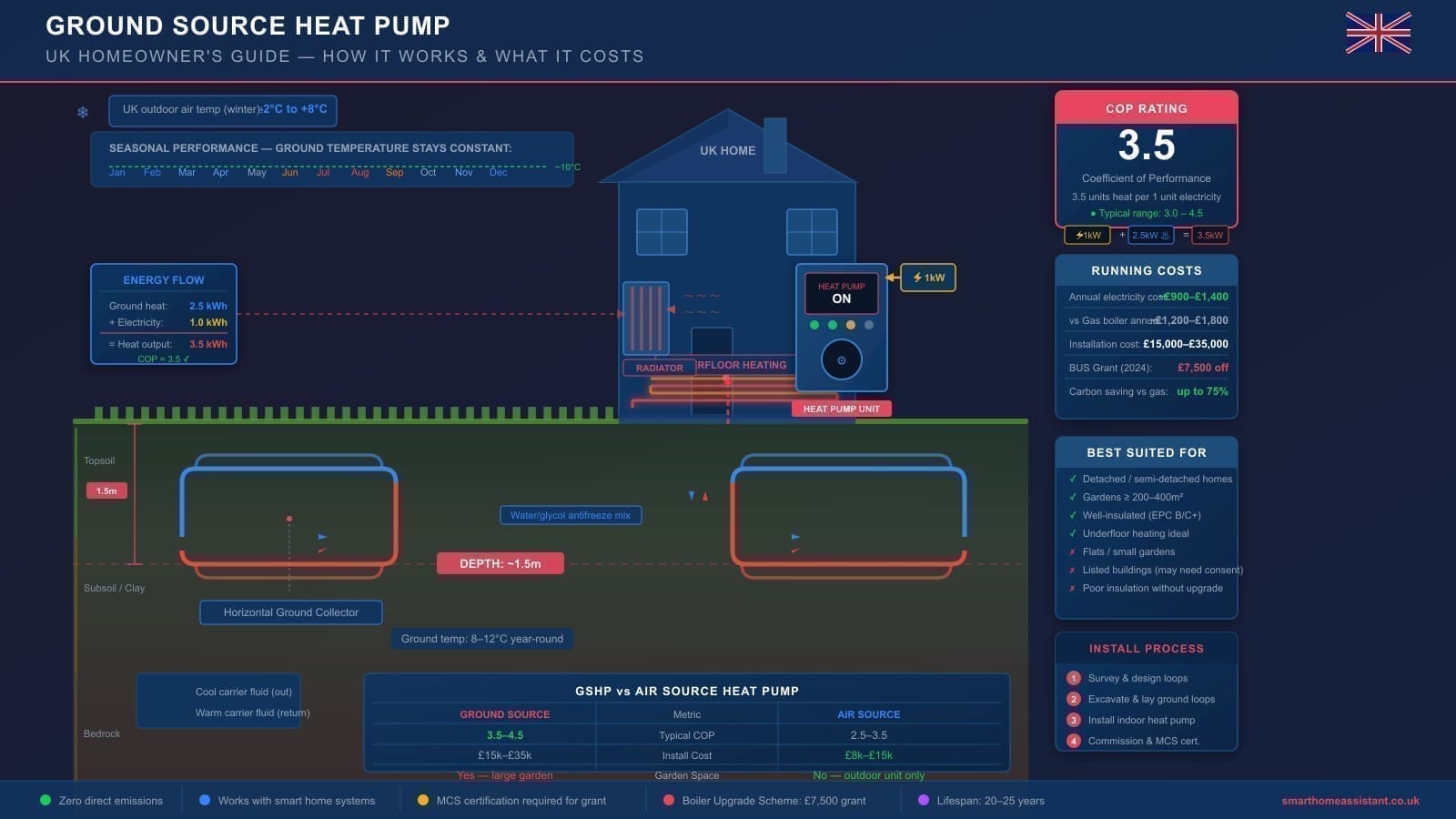
Air source heat pumps work differently. Rather than generating heat by combustion, they extract thermal energy from outdoor air and compress it to raise the temperature, much like a refrigerator running in reverse. This process is described by the Coefficient of Performance (COP): a COP of 3.0 means the pump delivers 3 kWh of heat for every 1 kWh of electricity consumed. Real-world COP for well-installed systems ranges from 2.5 to 4.0; Vaillant's aroTHERM Plus is rated at COP 5.0 under laboratory conditions (A7/W35).
Running Cost Comparison
This is where the comparison gets nuanced. Heat pumps run on electricity, which costs around 24–28p per kWh in the UK (Ofgem, 2024). Gas costs roughly 6–7p per kWh over the same period. At face value, gas looks far cheaper — but the efficiency multiplier changes the picture.
Effective heat cost from a gas boiler: at 6.3p/kWh gas and 90% efficiency, you pay approximately 7p per kWh of useful heat.
Effective heat cost from a heat pump: at 26p/kWh electricity and a COP of 3.0, you pay approximately 8.7p per kWh of useful heat. Achieve a COP of 3.5 and that falls to around 7.4p — close to parity with gas.
The key variable is your heat pump's real-world COP, which depends on the flow temperature you run the system at and how well your home is insulated. A poorly designed installation running at 65°C to keep old radiators warm will drag COP down to 2.0 or lower, making heat pumps significantly more expensive to run than gas. A well-designed system running at 35–45°C — typical for underfloor heating or oversized radiators — can consistently achieve COP 3.0–4.0.
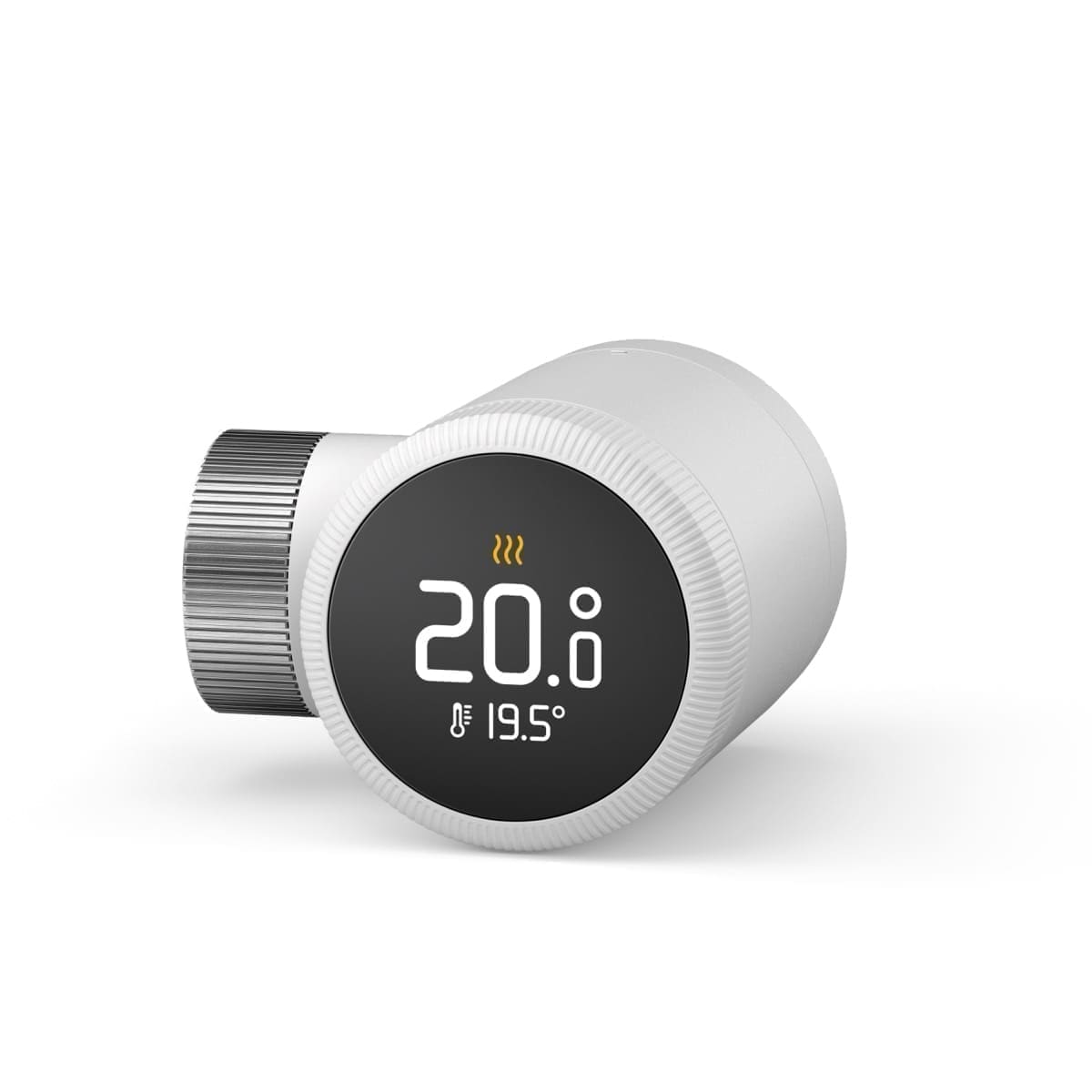
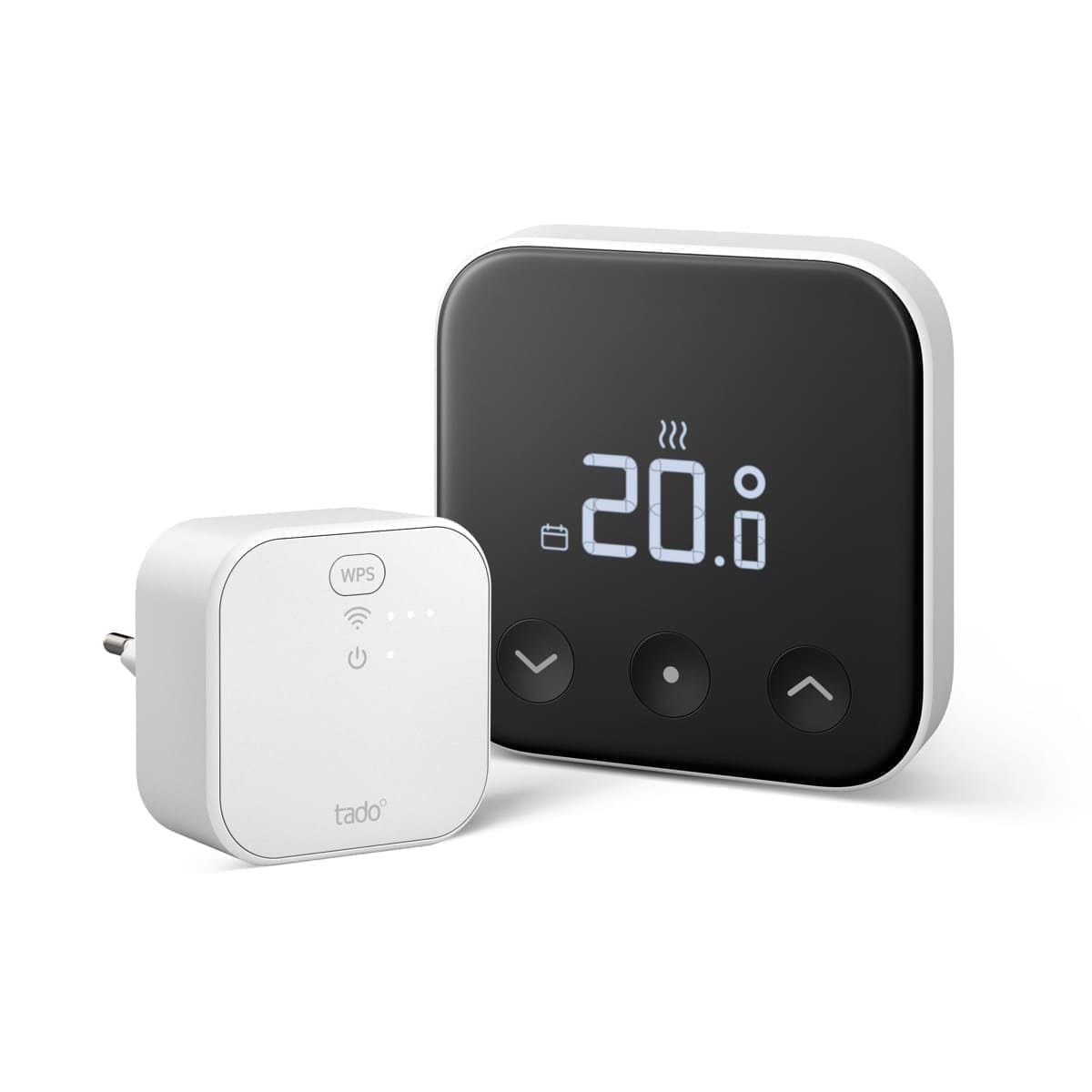
Pairing your heat pump with a compatible smart thermostat is one of the most cost-effective ways to optimise COP, because steady, low-temperature operation is far more efficient than cycling on and off to chase a high setpoint. You can also read our broader guide to whether smart heating is worth it in the UK for context on the payback period.
Upfront Installation Costs
Gas boiler replacement: a new combi boiler installed typically costs £1,500–£3,500 including labour, depending on brand and complexity.
Air source heat pump: full installation (pump unit, hot water cylinder, any pipework changes, and commissioning) typically ranges from £8,000 to £15,000 before any grant. The Boiler Upgrade Scheme (BUS) offers £7,500 off the installed cost of an air source heat pump in England and Wales — bringing a mid-range installation down to the £3,000–£7,500 range. The installer must be MCS-certified for the grant to apply.
Ground source heat pumps attract a higher grant of £7,500 as well but have higher installation costs (£15,000–£30,000) due to ground loop excavation.
Which Homes Suit a Heat Pump?
Heat pumps work best in homes that can run at low flow temperatures:
- Underfloor heating — the ideal pairing. UFH typically runs at 35–45°C flow temperature, exactly the range where heat pumps achieve their highest COP. See our guide to the best underfloor heating thermostats for controls that work with heat pump systems.
- Well-insulated homes — EPC C or above reduces the total heat demand so a smaller, cheaper pump unit can cope.
- Homes with larger radiators — oversized radiators (or radiators replaced to a larger spec) can deliver adequate output at 50–55°C, which is still efficient territory for a heat pump.
Heat pumps are a harder fit in older, draughty properties with standard-size radiators and no insulation upgrade planned. In those cases, the system may need to run at higher flow temperatures that erode efficiency gains.
Which Homes Are Better Suited to Gas (For Now)?
Gas boilers remain a practical choice if:
- Your property is hard to insulate (listed building, solid walls, no cavity).
- You are renting and cannot make structural changes.
- You need to replace a boiler urgently and cannot wait for a heat pump installation.
- You are outside England and Wales (BUS does not apply in Scotland or Northern Ireland, though separate schemes exist).
That said, gas boiler installations in new-build homes are banned from 2025 under the Future Homes Standard. Existing homes face no firm phase-out date — the government has delayed setting one — but the direction of travel is clear.
Smart Controls: Making Either System Work Harder
Regardless of which system you choose, the right controls have a significant impact on bills. For a gas boiler, a smart thermostat with weather compensation or load compensation — such as the best smart boiler controls or the Drayton Wiser — can cut gas consumption by 10–15% versus a standard programmable thermostat. The Hive Active Heating system is another popular option for combi boiler homes.
For heat pump systems, weather-compensated controls are even more critical because they hold flow temperatures at the lowest effective level — protecting COP throughout the day. Many heat pump manufacturers bundle proprietary controls; look for models compatible with OpenTherm or that integrate with your smart home platform.
Environmental Impact
Heat pumps produce zero direct carbon emissions at the point of use. Their whole-life carbon footprint depends on the grid's electricity mix: as the UK grid decarbonises (renewables accounted for around 40% of generation in 2023), heat pumps become progressively cleaner. A heat pump running today already produces significantly less CO₂ per unit of heat than a gas boiler, according to the Energy Saving Trust. Gas boilers emit CO₂ every time they fire — there is no pathway to zero for gas short of switching to hydrogen, which remains unproven at domestic scale.
Heat Pump vs Gas Boiler: Quick Comparison
| Factor | Air Source Heat Pump | Gas Boiler |
|---|---|---|
| Efficiency | COP 2.5–4.0 (250–400%) | ~90% (condensing boiler) |
| Running cost per kWh of heat | ~6.4–9.3p (at COP 2.5–3.6, 23.18p/kWh electricity) | ~6.7p (at 6.04p/kWh gas, 90% efficiency) |
| Typical annual heating bill | ~£840/year (3-bed semi, Q1 2026 rates) | ~£835/year (3-bed semi, Q1 2026 rates) |
| Installation cost | £9,000–£15,000 (before grant) | £1,700–£3,500 |
| BUS grant (England & Wales) | −£7,500 (net: £1,500–£7,500) | Not applicable |
| Direct carbon emissions | Zero (electric) | CO₂ every use |
| Best pairing | Underfloor heating or oversized radiators | Standard radiator systems |
| New builds from 2025 | Required (gas boilers banned) | Banned in new builds |