What to look for in a smart garage door controller
Wired vs wireless sensor. Most retrofit controllers include a tilt sensor or magnetic contact sensor that attaches to your door to report open/closed state. A wired sensor (running a two-core cable to the controller) is more reliable than a battery-powered wireless one — you eliminate the risk of dead batteries leaving you with no status feedback.
Dry-contact or pulse wiring. UK garage door openers almost universally use a dry-contact (volt-free) push-button circuit to trigger open/close. Controllers with a relay output that mimics a button press — typically a 1–2 second pulse — will work with nearly any opener. Check your motor's manual or look for screw terminals labelled "button", "push to open", or similar.
Ecosystem compatibility. If you use Apple HomeKit, look for native HomeKit support — Siri and the Home app offer tighter integration than IFTTT workarounds. Google Home and Alexa users have more options. Home Assistant users should prioritise controllers with a local API or native HA integration to avoid cloud dependency.
UK compatibility. All controllers below have been verified to work with the most common UK garage door motors including Hörmann Supramatic, Sommer, and Chamberlain. The Meross MSG100 and iSmartGate both have dedicated compatibility guides for Hörmann Supramatic models. For Sommer motors, use the standard dry-contact wiring method described in the Sommer installation manual.
Best smart garage door openers for UK homes
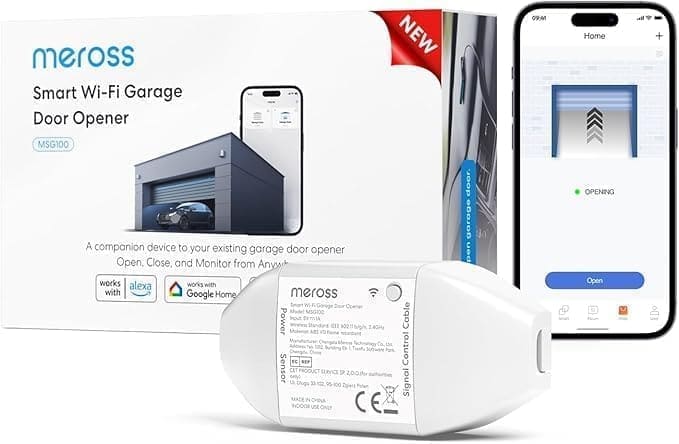
1. Meross MSG100HK — best overall
Best for: HomeKit users who want a no-fuss, affordable retrofit controller.
The Meross MSG100HK is widely regarded as the best-value smart garage door controller available in the UK. It works with Apple HomeKit, Siri, CarPlay, Amazon Alexa, Google Assistant, and SmartThings — all natively, with no hub required and no subscription fee. Setup involves connecting two wires to your opener's push-button terminals and mounting the included tilt sensor to the door itself.
The HK suffix denotes the HomeKit-enabled variant — make sure to buy the MSG100HK-UK specifically, which is the UK-plug version. A UK-specific SKU (MSG100HK-UK) is sold through specialist retailers including 101 Multimedia.
In the Home app, the garage door appears as a standard garage cover entity. You can check status, open and close remotely, and build automations such as closing the door automatically when you leave home. Notifications arrive when the door is opened or left open for a set period.
Ecosystem: HomeKit, Alexa, Google Home, SmartThings — all native
Home Assistant: Supported via the Meross integration (cloud-polling)
UK motor compatibility: Hörmann Supramatic, Sommer, Chamberlain, and most motors with dry-contact terminals
Price: Around £30–£45 depending on retailer
Subscription: None
2. Tailwind iQ3 — best for Home Assistant and local control
Best for: Home Assistant users and those who want local-only operation with no cloud dependency.
The Tailwind iQ3 is the strongest choice if your priority is local control and deep Home Assistant integration. It communicates entirely over your local Wi-Fi network — the Home Assistant integration polls the device every five seconds locally, meaning automations continue to function even if Tailwind's servers go offline.
The Home Assistant integration (rated Platinum quality) creates a cover entity for each connected door, plus binary sensors for door lock-out states and a button to identify the device. Setup requires the device's local IP address and a six-digit Local Control Key from the Tailwind web portal — a one-time step after initial setup.
The iQ3 supports up to three garage doors from a single unit, which makes it cost-effective for homes with double or triple garages. Its geofencing auto-open feature uses both GPS and Bluetooth to reduce false triggers when a phone passes nearby on the street.
One notable gap: the Tailwind iQ3 does not support Apple HomeKit natively. HomeKit users should pick the Meross or iSmartGate instead.
Ecosystem: Alexa, Google Home, SmartThings, IFTTT — no native HomeKit
Home Assistant: Native integration, local polling, Platinum quality rating
UK motor compatibility: Any opener with dry-contact push-button terminals
Price: Around £70–£90
Subscription: None
3. iSmartGate Pro — best for HomeKit with multiple doors
Best for: Apple HomeKit users with two or three garage doors, or those who want an optional camera integration.
The iSmartGate Pro supports up to three garage doors from a single controller and offers native HomeKit support alongside Alexa, Google Assistant, and SmartThings. An optional camera module (purchased separately) allows a live video feed of your garage interior to appear directly in the Home app — a feature no other controller on this list offers.
iSmartGate publish detailed compatibility guides for Hörmann Supramatic models (including the Supramatic E and Supramatic 3), making it a confident choice for UK homes with Hörmann sectional doors. Installation involves wiring the controller to your opener's push-button terminals and attaching a magnetic sensor to the door track.
At around £110–£130, the iSmartGate Pro is significantly pricier than the Meross. For single-door homes, the cost is hard to justify unless you want the camera integration. For two or three doors, the per-door cost becomes more competitive.
Ecosystem: HomeKit, Alexa, Google Home, SmartThings — all native
Home Assistant: Via community integration
UK motor compatibility: Hörmann Supramatic (dedicated guides), Sommer, Chamberlain, and most dry-contact openers
Price: Around £110–£130
Subscription: None
4. Garadget — best for MQTT and open protocols
Best for: Tinkerers and Home Assistant users who want MQTT control and a fully documented REST API.
Garadget uses a laser sensor rather than a tilt or magnetic switch — a reflective tab mounts on the door and the controller's laser detects whether it is in the beam's path. This approach is battery-free and eliminates the wiring run down your garage wall to a floor-level sensor, though direct bright sunlight on the sensor can occasionally cause false readings.
It supports MQTT natively, meaning Home Assistant users can integrate it without any cloud dependency by pointing it at a local MQTT broker (such as Mosquitto). A documented REST API makes it suitable for custom dashboards and automations. It does not support Apple HomeKit natively, but can be bridged via Homebridge.
UK availability is more limited than the Meross or Tailwind — expect to import from a specialist retailer or Amazon US. Prices vary but typically sit between £40–£65 once landed in the UK.
Ecosystem: Alexa, Google Home, IFTTT, MQTT — no native HomeKit
Home Assistant: Via MQTT broker (local, no cloud)
UK motor compatibility: Any opener with dry-contact terminals
Price: Around £40–£65 (import)
Subscription: None
Avoiding common pitfalls
Check your opener's contact type first. A small number of older UK openers use a constant-contact circuit (hold to run) rather than a pulse-to-trigger circuit. Retrofit controllers are designed for pulse-trigger systems and will not work correctly with hold-to-run motors. Consult your opener's manual or test the existing wall button.
Avoid Chamberlain myQ in 2026. Chamberlain removed myQ from the Alexa skill store and Google Home in October 2023, and has blocked third-party API access including popular Homebridge and Home Assistant plugins. The only remaining integration is Amazon Key in-garage delivery — poor value for a standalone smart home product.
Position the sensor carefully. Tilt sensors need to be mounted on a flat panel of the door, not on the bottom edge section that may flex. Magnetic contact sensors need to be aligned so the magnet and reed switch are within 10–15mm of each other when the door is fully closed.
Power the controller from a mains USB adapter. All controllers on this list are powered via a micro-USB or USB-C cable. Route a USB power adapter to a convenient socket in the garage rather than relying on a portable power bank.
How smart garage door openers fit into a wider security setup
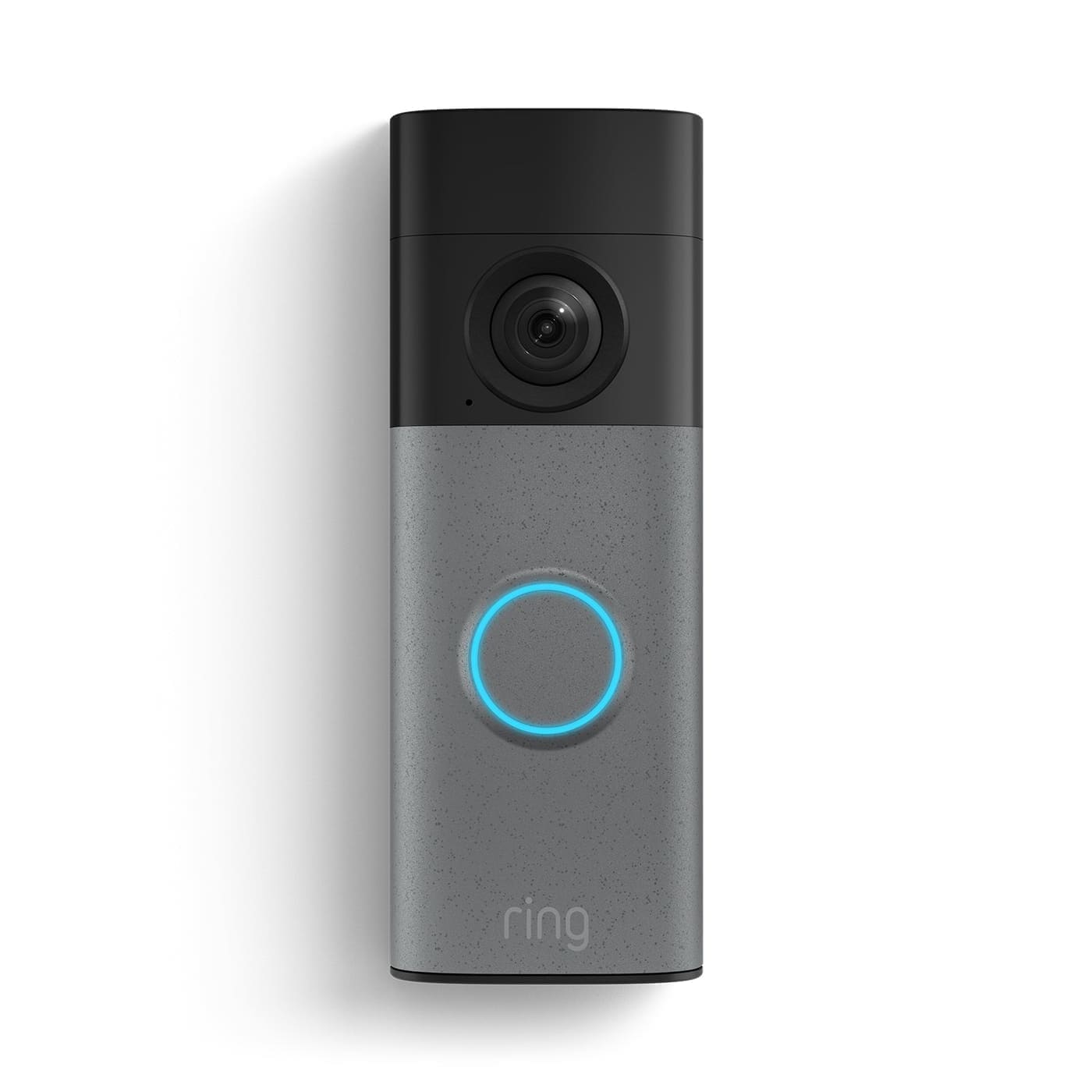
A smart garage door opener works best as part of a layered security approach. Pair it with one of our recommended best smart locks UK on your internal access door to ensure the entry from garage to house is also secured. Adding a best video doorbell UK to your front entrance completes the picture for most households.
For Home Assistant users who want to go deeper — setting up presence-based automations, combining the garage door with a Zigbee contact sensor, or integrating into a security panel — our detailed Home Assistant garage door guide covers the full setup process including the cover entity, automations, and Lovelace dashboard card.
If you want to extend your garage monitoring with outdoor cameras, our round-up of the best home security cameras UK includes weatherproof options suited to driveway and garage positions.
Worth watching: Abode launched a dedicated Garage Tilt Sensor and Outdoor Contact Sensor for Apple Home, Alexa and Google Assistant in August 2026 — though at launch it is US-only, with no confirmed UK release date.
Which smart garage door opener should you buy?
For most UK buyers, the Meross MSG100HK is the clear starting point. It costs around £30–£45, works with every major ecosystem including HomeKit, requires no subscription, and is straightforward to install on any Hörmann, Sommer, or Chamberlain motor with dry-contact terminals.
If you run Home Assistant and want a fully local setup, the Tailwind iQ3 is the better choice — its native HA integration is rated Platinum and needs no cloud connection after initial setup.
If you have two or three garage doors and want HomeKit plus an optional camera feed, the iSmartGate Pro justifies its higher price. And if you are building a custom automation stack around MQTT, Garadget gives you the most open protocol access.