
How we chose these valves
Every pick had to shut off the water supply itself, not just meter it — that ruled out flow monitors with no valve, and it ruled out irrigation-only timers that aren't rated to sit on a mains line under constant pressure. We prioritised a documented Home Assistant path (native integration, Zigbee2MQTT, or ZHA quirk) over app-only control, checked the pipe sizes each valve actually fits (UK stopcocks are usually 15mm/DN15 or 22mm/DN20, not the US-standard sizes some listings quote), and noted whether a hub is required, since that's an extra £30–£50 for anyone not already on Zigbee. We excluded Moen's Flo by Moen smart shutoff — popular in the US, but it isn't sold in the UK and has no local API, only a cloud app.
Does a smart water shutoff valve need a Zigbee hub?
Only some do. The Aqara Valve Controller T1 needs an Aqara Zigbee hub (or a Zigbee2MQTT/ZHA coordinator, since Aqara devices generally pair with any Zigbee 3.0 network) to talk to Home Assistant. The SONOFF SWV-BSP is the same — it's a Zigbee 3.0 device and needs a coordinator, though Zigbee2MQTT recognises it out of the box with no custom quirk required. The FrankEver valve sold by Shelly connects over WiFi and Bluetooth directly, with no hub at all, which is the simpler option if you don't already have a Zigbee network running.
Best smart water shutoff valves for UK homes in 2026
1. Aqara Valve Controller T1 — best overall
Who it's for: anyone with an existing lever or butterfly-handle stopcock who wants to automate it without cutting into the pipework.
The T1 clamps a motorised arm over your current valve handle and turns it 90 degrees on command, rather than replacing the valve itself — that makes it the least invasive of the three, and the reason it's the overall pick. It runs on four AA batteries rated for roughly two years, produces 3.6 N·m of torque (enough for most stiff old stopcocks), and covers DN15, DN20 and DN25 pipe diameters, which covers the vast majority of UK domestic supplies. The catch: it only turns one way, so it has to be fitted the right way round on install, and it isn't itself waterproof, so it needs a dry mounting position. Pair it with a Zigbee leak sensor in Home Assistant and an automation can close it within 5–20 seconds of a leak being detected.
2. SONOFF SWV-BSP — best budget
Who it's for: Zigbee2MQTT users who want a cheap, self-contained valve rather than a clamp-on retrofit.
Unlike the Aqara T1, the SWV-BSP is a complete valve-and-meter unit that you plumb inline on a 3/4in BSP thread — the standard UK/European fitting, not the US National Hose thread some listings default to, so double-check you're ordering the BSP variant. At around £22 it's the cheapest device here by a wide margin, and it adds a flow meter Aqara's clamp-on doesn't have, reporting instantaneous flow rate in Home Assistant so you can catch a running tap or a slow leak from a usage spike, not just a puddle. It's rated to 8 bar and 2–3.9 L/min flow, and runs on four AA batteries. Zigbee2MQTT identifies it natively as a SONOFF SWV device; ZHA needs a custom quirk, which is a minor extra step if that's your setup.
3. FrankEver Smart Water Valve (powered by Shelly) — best for whole-home mains control without a hub
Who it's for: anyone who wants the valve on the incoming mains line itself, connects over WiFi with no Zigbee hub, and wants official Shelly-to-Home-Assistant support.
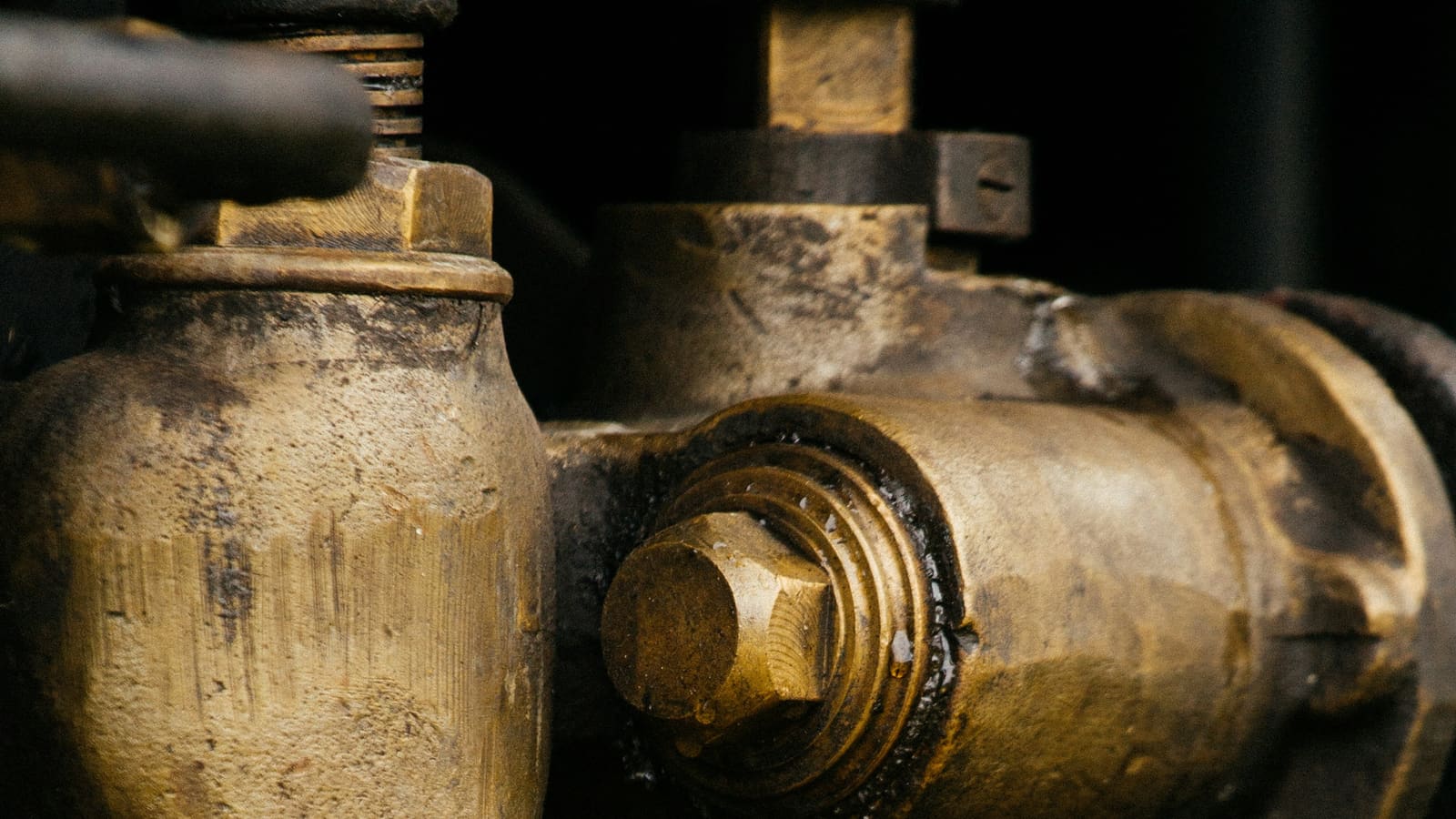
This is a full brass ball valve with a built-in electric actuator, sold in DN15, DN20 and DN25 sizes, and it's NSF-certified for drinking water — a step up in build quality from the two clamp-on/inline options above, reflected in the roughly £105–£115 UK price. It runs on 5V USB power with a small backup reserve so it can still complete an open or close cycle during a power cut, and it exposes 0–100% valve position (not just open/closed) through the Shelly app and Home Assistant's Shelly integration. Its main advantage for a whole-home setup is that Shelly's own documentation covers pairing it directly with a Shelly Flood sensor for an automated shutoff that doesn't even need Home Assistant running — useful as a fallback if your server is down when a pipe bursts.
Do you need a shutoff valve if you already have a leak sensor?
Not always — a leak sensor alone can be enough if someone is usually home to react to the phone alert. A leak sensor only detects and notifies; it can't act on its own. If you've read our guide to the best smart water leak sensors and already have one installed, adding a shutoff valve turns that alert into an automatic action — the water cuts off within seconds instead of waiting for you to notice a push notification, which matters most for homes that are empty for long stretches (holiday lets, second homes, anyone who travels for work) where a slow leak can run for days unnoticed. If the property is occupied most of the time, a leak sensor plus a phone alert is a reasonable and much cheaper starting point; a valve is the upgrade once you want the response to be automatic rather than manual.
Setting up the automation in Home Assistant
Once both devices are paired — see our Zigbee2MQTT setup guide if you're adding the Zigbee-based Aqara or SONOFF valves through a coordinator rather than a proprietary hub — the automation itself is simple: a trigger on the leak sensor's `binary_sensor.moisture` (or equivalent) entity turning on, an action that calls the valve entity's close service, and ideally a mobile notification alongside it so you know it happened. Test the full chain with the valve isolated from the mains (or with the water supply already off) before relying on it for real, since a valve that silently fails to close on the first automated trigger is worse than no automation at all — you'll assume it's covered when it isn't.