What to look for in a smart window sensor
Protocol matters more than brand. The wireless protocol your sensor uses determines which hub it needs, how reliable it is, and how deeply it integrates with platforms like Home Assistant. The four main options in 2026 are:
- Zigbee — the most popular choice for Home Assistant users. Mesh network, long battery life (often 1–5 years), very low cost, and wide device support via ZHA or Zigbee2MQTT. Requires a Zigbee USB coordinator (such as the SONOFF ZBDongle-E) or a hub with Zigbee built in. For a full setup walkthrough, see our Home Assistant Zigbee2MQTT guide.
- Z-Wave — a dedicated mesh protocol on a separate 868 MHz frequency (in the UK), meaning less interference from Wi-Fi and Zigbee. Generally more expensive than Zigbee, but highly reliable for security applications. Requires a Z-Wave controller such as a Fibaro Home Center or Aeotec Z-Stick.
- Thread / Matter — the newest standard. Thread sensors form their own IPv6 mesh and connect directly to any Matter-compatible hub (Apple HomePod mini, Google Nest Hub 2nd gen, Amazon Echo 4th gen). Future-proof, but requires a Thread Border Router and is still a smaller device ecosystem in 2026.
- Bluetooth — suitable for close-range use with a HomePod mini or Raspberry Pi acting as a bridge. No hub needed for basic HomeKit use, but range is limited compared to mesh protocols.
Battery life is the other key factor. You do not want to be climbing up to replace a battery every few months. Good sensors offer at least 12 months; the best stretch to 2–5 years on a single cell.
Alarm integration vs automation triggers are different use cases. Some sensors pair with dedicated alarm systems (Ring, Ajax, SimpliSafe) and can call an alarm panel when tripped. Others work purely as automation triggers — opening a window turns on a fan, for instance. Many sensors do both.
Best smart window sensors UK 2026
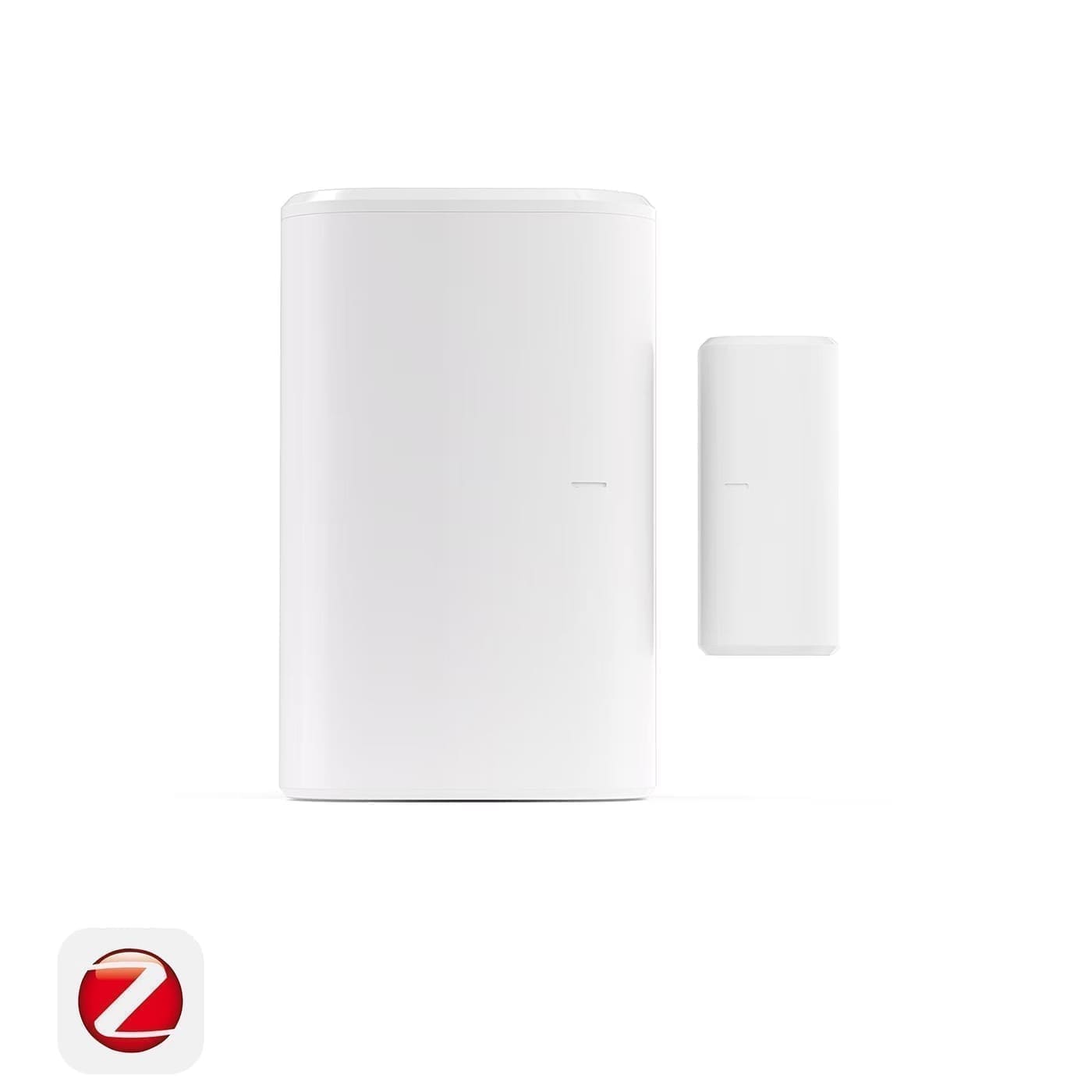
1. Sonoff SNZB-04P — best budget Zigbee sensor
Price: around £8–£10 | Protocol: Zigbee 3.0 | Battery: CR2477 (5+ year life)
The Sonoff SNZB-04P is the go-to recommendation for Home Assistant users on a budget. It uses Zigbee 3.0, integrates immediately with ZHA and Zigbee2MQTT, and its large CR2477 battery is rated for over five years of typical use — one of the longest battery lives at this price. The sensor body is compact (32 × 51 × 22 mm) with a maximum gap distance of 20 mm between sensor and magnet, which suits most standard UK window frames. Tamper detection is included: the app sends an alert if anyone removes the device from its mounting surface. Available from Amazon UK and specialist smart home retailers.
2. Aqara Door and Window Sensor P2 — best Matter / Thread sensor
Price: around £28–£35 | Protocol: Thread / Matter | Battery: CR123A (up to 3 years)
The Aqara P2 is the most future-proof sensor on this list. It uses Matter over Thread, meaning it connects natively to Apple Home, Google Home, Amazon Alexa, and Samsung SmartThings without any brand-specific hub or cloud account — provided you have a Thread Border Router already in your home (such as an Apple HomePod mini or Google Nest Hub 2nd gen). Thread's mesh topology means the signal hops between devices, giving much better range than Bluetooth. The CR123A battery is rated for up to three years. Dimensions are 77 × 22 × 22 mm for the main body, making it one of the more discreet options. It does not currently support the legacy Aqara hub range.
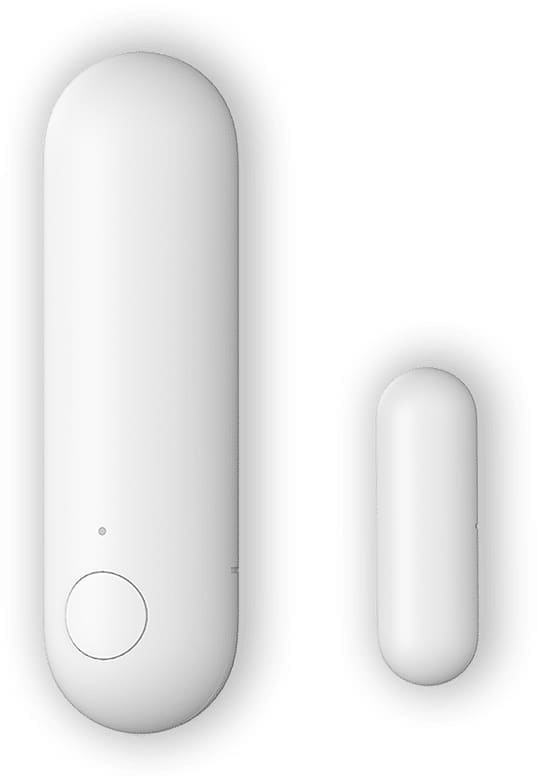
3. Eve Door & Window — best for Apple HomeKit users
Price: around £35 | Protocol: Bluetooth + Thread | Battery: ½ AA ER14250 (up to 2 years)
Eve's contact sensor is purpose-built for Apple HomeKit users and supports both Bluetooth (direct connection, no hub) and Thread (for extended mesh range when a Thread Border Router is present). It was one of the earliest Thread-enabled sensors on the market and gained Matter support via a firmware update, making it compatible with a wider range of platforms. Eve's iOS app surfaces a detailed open/close history log — useful for knowing how often a particular window or door is accessed. Battery life is rated up to two years on a ½ AA lithium cell. Available from Apple stores and major UK retailers. Non-HomeKit users are better served by the Aqara P2 or a Zigbee option.
4. Philips Hue Secure Contact Sensor — best for Hue ecosystems
Price: £34.99 | Protocol: Zigbee (Hue Bridge required) | Battery: CR2 (up to 2 years)
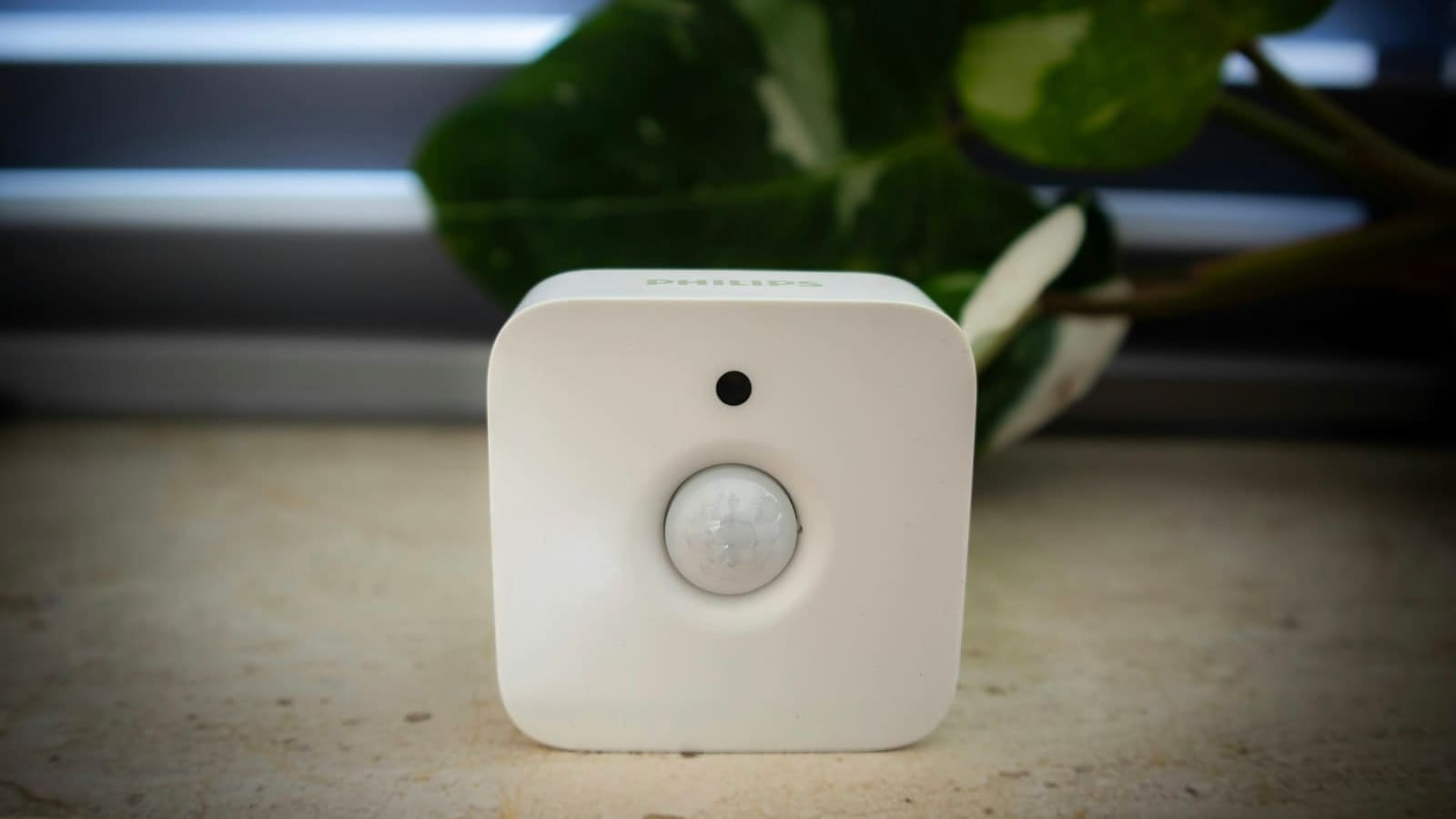
If you already have a Philips Hue Bridge and a house full of Hue lights, the Hue Secure Contact Sensor is the natural choice. Opening a window can immediately trigger any Hue scene, routine, or alert — no third-party hub or configuration file required. The sensor connects via Zigbee to the Hue Bridge (Bluetooth is not supported on this model), so the Bridge is mandatory. Battery life is up to two years on a CR2 cell, and the sensor comes in both black and white finishes to suit different window frames. One limitation: you cannot directly use it outside the Hue/SmartThings ecosystem without a workaround. For a full smart home alarm approach, see our best home alarm systems UK guide.
5. Fibaro Door/Window Sensor 2 — best Z-Wave sensor
Price: around £34–£45 | Protocol: Z-Wave Plus | Battery: ½ AA ER14250
The Fibaro FGDW-002 is the premium pick for Z-Wave setups. Unlike Wi-Fi and even some Zigbee sensors, Z-Wave operates on the dedicated 868.42 MHz frequency in the UK — well away from the congested 2.4 GHz band used by Wi-Fi, Bluetooth, and most Zigbee devices. The result is consistent reliability even in homes with dozens of other wireless devices. The sensor includes a built-in temperature sensor (±0.5 °C accuracy), double tamper protection (case opening and physical removal), and is available in seven colours. It is compatible with any Z-Wave or Z-Wave Plus controller, including the Fibaro Home Center and Home Assistant's Z-Wave JS integration. Range is up to 40 m indoors. The main trade-off is cost: Z-Wave sensors carry a premium over Zigbee equivalents, and you need a Z-Wave controller to use them. Available from UK specialists including Vesternet.
Comparison table
| Sensor | Protocol | Approx. UK price | Battery life | Hub needed |
|---|---|---|---|---|
| Sonoff SNZB-04P | Zigbee 3.0 | £8–£10 | 5+ years | Zigbee hub / coordinator |
| Aqara P2 | Thread / Matter | £28–£35 | ~3 years | Thread Border Router |
| Eve Door & Window | Bluetooth + Thread | ~£35 | ~2 years | None (BT) / HomePod (Thread) |
| Philips Hue Secure | Zigbee | £34.99 | ~2 years | Hue Bridge |
| Fibaro FGDW-002 | Z-Wave Plus | £34–£45 | ~2 years | Z-Wave controller |
Using window sensors with Home Assistant
Home Assistant supports all four protocols via dedicated integrations. Zigbee devices pair through either the ZHA (Zigbee Home Automation) integration or Zigbee2MQTT. Both the Sonoff SNZB-04P and the Philips Hue Secure sensor (via ZHA or a deConz/Phoscon stick) work immediately. The Aqara P2 appears in Home Assistant as a Matter device once added through the Matter integration. For Z-Wave, the Fibaro sensor integrates through the Z-Wave JS integration with an Aeotec or HUSBZB-1 stick.
A useful automation for any window sensor in Home Assistant: create a trigger on the sensor entity's state changing from off to on (closed to open) and set an action to send a mobile notification via the Home Assistant companion app. You can also chain this with a PIR motion sensor to distinguish between genuine intrusion and a resident opening a window.
Installation tips
All the sensors on this list use adhesive mounting — no drilling required. The key installation rule is the gap distance: the sensor body and magnet must be within the stated maximum distance (usually 15–25 mm) when the window is closed. If your window frame has a large gap when shut, you may need to use a small spacer or choose a sensor with a longer rated range. For casement and tilt-and-turn windows common in UK homes, mount the sensor on the fixed frame and the magnet on the opening sash, near the hinge side rather than the handle side, to keep the gap as small as possible when closed.
For a broader look at building a layered home security setup, our guide to the best smart home security systems UK covers how window sensors slot into a complete alarm strategy alongside cameras, doorbells, and monitoring.