

Quick comparison: Ring vs Eufy at a glance
| Feature | Ring Battery Doorbell Plus | Eufy Video Doorbell E340 |
|---|---|---|
| Price | From £129.99 | £169.99 |
| Resolution | 1536p HD (front camera) | 2K / 2048×1536 (front) + 1080p (downward) |
| Field of view | Head-to-toe wide view | Dual-camera: face + package detection |
| Night vision | Colour night vision | Colour night vision (dual-light, up to 5 m) |
| Local storage | None (cloud only) | 8 GB eMMC built-in (~90 days at 30 clips/day) |
| Cloud subscription | Ring Home Basic: £49.99/yr per device | None required |
| Battery life | Removable quick-release battery | Up to 6 months per charge |
| Wi-Fi | 2.4 GHz only | 2.4 GHz only |
| Weather rating | Weather-resistant | IP65 |
| Home Assistant | Native integration (cloud) | HACS custom integration (cloud) |
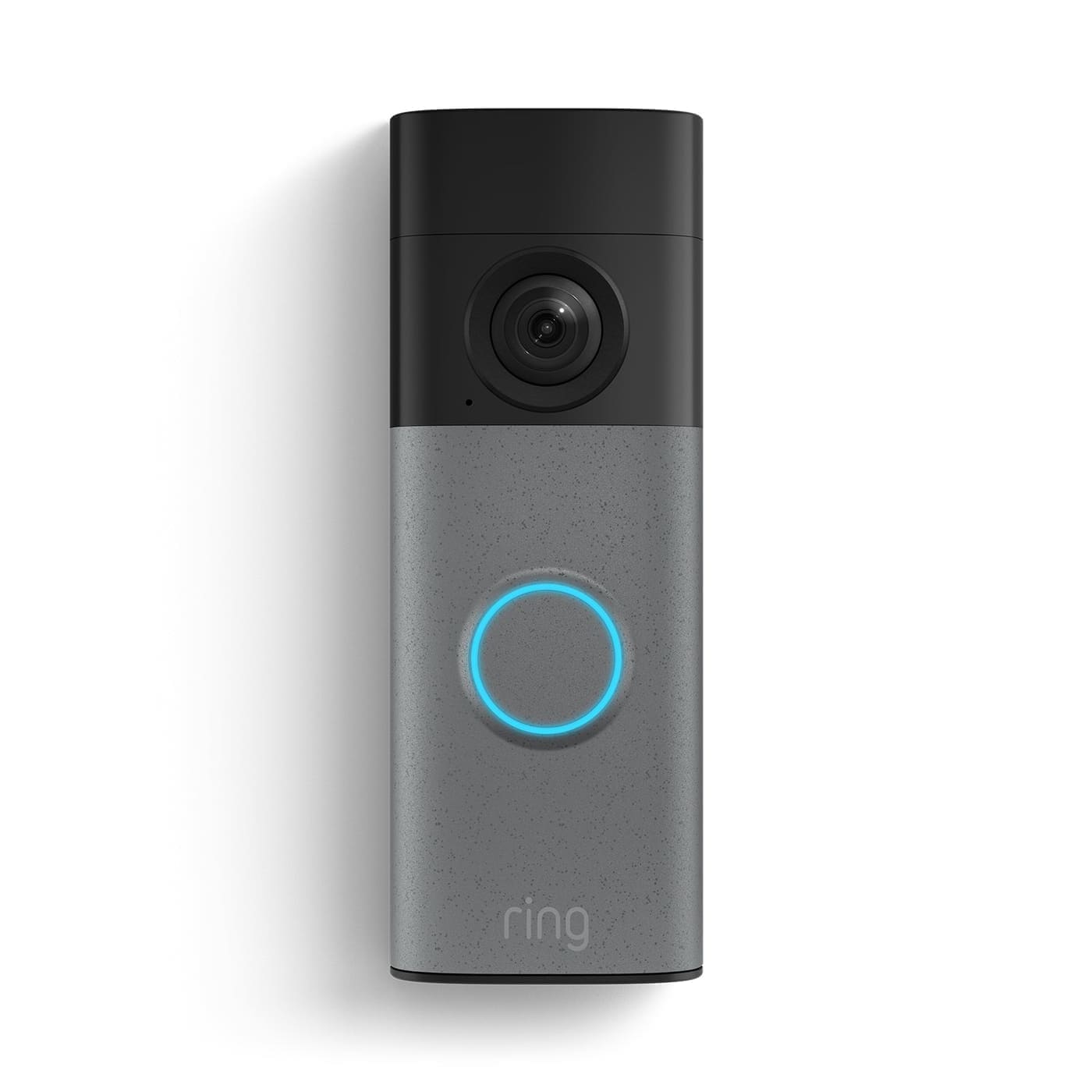
Ring Battery Video Doorbell Plus: review
The Ring Battery Video Doorbell Plus is Ring's current battery-powered flagship in the UK, replacing the older Video Doorbell 4. It records at 1536p HD — slightly sharper than 1080p — with a wide head-to-toe view that captures packages left on the doorstep, not just faces. Colour night vision is standard, and owner and reviewer reports consistently describe two-way talk with noise cancellation as responsive.
Setup takes around five minutes and requires no existing wiring, which is a genuine advantage for renters or anyone who does not want to run cables. The quick-release battery pack can be removed and charged indoors — a welcome feature given the UK's wet climate.
The major caveat is cost of ownership. Without a Ring Home subscription, you can watch a live feed and get motion alerts, but no video is saved — so if a package is stolen or you miss a visitor, there is no recording to review. The Ring Home Basic plan costs £49.99 per year (per device) or £4.99 per month, following Ring's 2024 price increase. If you have two Ring devices, you will need Ring Home Standard at £80/year to cover both. Over five years, subscription costs alone could add more than £250 on top of the hardware price.
Ring integrates deeply with Amazon Alexa — you can announce visitors through Echo speakers and view the camera on Echo Show devices. If you are building an Amazon-centric smart home, that ecosystem depth is valuable. For a broader Ring ecosystem comparison, see our Ring vs Nest doorbell UK comparison.
Ring Battery Doorbell Plus: pros and cons
- Pro: Easy battery installation, no wiring required
- Pro: 1536p resolution with head-to-toe view
- Pro: Excellent Alexa integration and Echo Show live view
- Pro: Wide UK retail availability (Amazon, Currys, Argos)
- Con: No storage without a paid subscription (£49.99/yr per device)
- Con: 2.4 GHz Wi-Fi only
- Con: Subscription price rose 43% in 2024
Eufy Video Doorbell E340: review
The Eufy E340 takes a different philosophy: no ongoing fees. The doorbell has 8 GB of eMMC storage built in, which Eufy says holds approximately 90 days of clips at an average of 30 twenty-second events per day. You own your footage — it never leaves your home unless you choose to share it. There is no subscription tier, no price rise to worry about, and no cloud service to go down.
The dual-camera design is genuinely clever. The front 2K camera (2048×1536) captures faces and upper body detail; the downward-facing 1080p camera watches the doorstep for parcel deliveries. Eufy's AI can distinguish between people and packages, sending you separate alert types — a feature Ring does not offer at this price point. Colour night vision uses a dual-light system that illuminates the scene at up to 5 metres (16 ft).
Battery life is strong at up to six months per charge in battery mode. The E340 can also be wired (8–24V, minimum 10VA) for continuous top-up charging. IP65 weather protection is properly rated, not just "weather-resistant." For a deeper dive into the Eufy ecosystem, see our full Eufy doorbell review UK.
The trade-off is ecosystem. Eufy does not integrate with Alexa or Google Home as smoothly as Ring, and there is no equivalent of the Echo Show live-feed experience. The Eufy Security app is functional and improving, but some users have reported occasional cloud-server connectivity issues even when using local storage — the app still phones home for authentication.
Eufy E340: pros and cons
- Pro: No subscription — 8 GB local storage built in
- Pro: Dual 2K + 1080p cameras for face and package detection
- Pro: IP65 rated, up to 6-month battery life
- Pro: Colour night vision up to 5 m
- Con: App still requires cloud authentication even for local storage
- Con: 2.4 GHz Wi-Fi only
- Con: Higher upfront price (£169.99 vs £129.99)
App comparison
The Ring app is polished and well-maintained, with a clean timeline view, adjustable motion zones, and reliable push notifications. Live View loads quickly on a stable Wi-Fi connection. The downside is that the app becomes significantly less useful without a subscription — the event history is locked behind Ring Home, so free users see alerts with no way to review what triggered them.
The Eufy Security app has improved considerably in recent years. It displays events locally and supports facial recognition (stored on-device, not in the cloud). Motion zone customisation and sensitivity controls are straightforward. However, the app requires an internet connection for initial setup and login, which undermines the privacy-first positioning somewhat. Eufy's parent company Anker faced scrutiny in 2022 over data practices; Eufy subsequently updated its privacy policy and local storage handling.
Home Assistant integration
Both doorbells work with Home Assistant, though neither offers full local control.
Ring has a native integration built into Home Assistant core — no HACS required. It exposes the doorbell as a binary sensor (motion, button press), a camera entity (snapshot), and a siren switch. The integration is cloud-based, relying on Ring's API; it does not stream live video natively, though the ring-mqtt add-on (installed via the HA add-on store, not HACS) provides richer automation capability including real-time event triggers.
Eufy requires the community-maintained eufy_security HACS integration by fuatakgun, which exposes cameras, motion sensors, and doorbell press events. Local RTSP streaming is available for some models, reducing cloud dependency. The integration is well-maintained and actively updated, but it is not an official Eufy product — breaking changes after Eufy firmware updates can temporarily disrupt functionality.
For Home Assistant users who prioritise local control and automation reliability, Eufy's RTSP stream support gives it a slight edge, despite the unofficial integration status.
Verdict: which should you buy?
Choose Ring if you are already in the Amazon/Alexa ecosystem, want a simple setup with strong retail support, and are comfortable paying £49.99/year per device for cloud storage. The Ring Battery Doorbell Plus is easy to install, well-built, and backed by a large support community.
Choose Eufy if subscription costs concern you or privacy matters. The E340 costs more upfront at £169.99, but with zero ongoing fees and 8 GB of built-in local storage, it works out significantly cheaper over two or three years. The dual-camera design with dedicated parcel detection is a genuine differentiator that Ring does not match at this price. For UK buyers who want local storage and no recurring costs, Eufy is the smarter long-term buy.
Our pick: Eufy Video Doorbell E340 — better value over three years, stronger privacy credentials, and dual-camera coverage that Ring cannot match without an expensive wired Pro model.