Geekworm
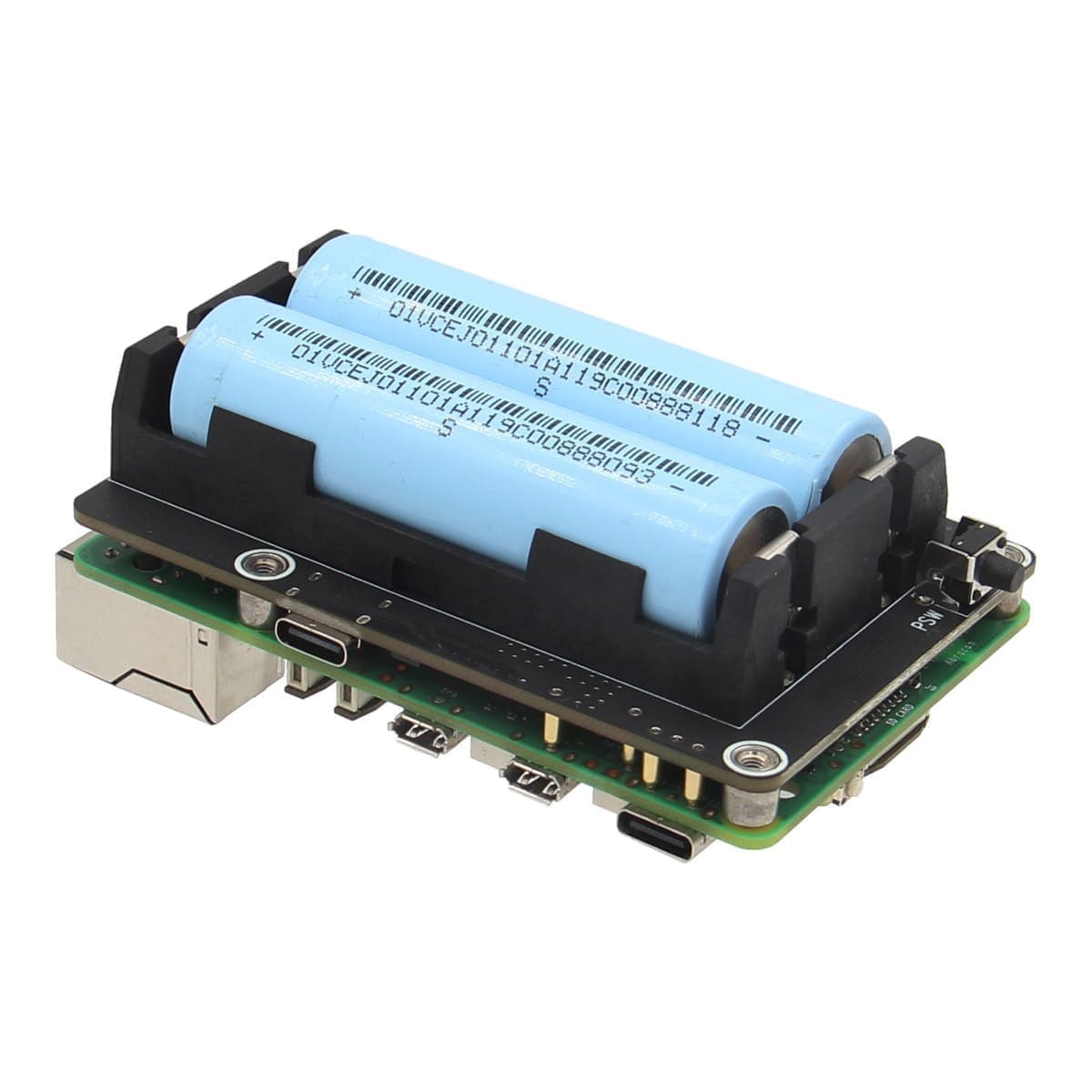
Geekworm X1200 UPS Shield for Raspberry Pi 5
- HACS component
- Local control
- Wi-Fi
Prices verified September 2026
See more hubs & dongles picks on our Amazon storefront →Our verdict
Battery backup for the box running Home Assistant, not a smart-home protocol device — but a power cut taking down your lighting and heating controller too is a real problem. Compact at 85 x 56mm, it bottom-mounts via pogo pins so the Pi 5's GPIO header stays free for other HATs. Bring your own 18650 cells: Geekworm rates up to 6 hours' runtime on two decent cells, though real-world figures depend on load. It's Pi 5-specific — the mount rules out HA Green, a Pi 4, or any other SBC. No native (core) HA integration — a community HACS integration covers the X120x family and exposes battery and power-loss entities without the DIY route below — but either way it just keeps the server alive through a blip and shuts down cleanly if the outage runs long.
What can Home Assistant control on the Geekworm X1200 UPS Shield for Raspberry Pi 5?
| Control | Type | What it does |
|---|---|---|
| Battery voltage | Sensor (HACS or DIY) | Not in HA core — exposed by the community HACS integration (ha_suptronics_ups_x120x), or build your own with a command-line sensor reading the fuel-gauge chip's voltage register over I2C. |
| Battery charge | Sensor (HACS or DIY) | Not in HA core — same HACS integration exposes this, or replicate with a command-line sensor reading the chip's charge-percentage register. |
| Mains status | Binary sensor (HACS or DIY) | Not in HA core — the HACS integration includes a power-loss binary sensor, or poll the board's power-loss-detect GPIO pin yourself with a command-line binary sensor. |
| Low-battery safe shutdown | External daemon | Runs outside HA on the Pi's OS; once enabled, issues a clean OS-level shutdown below a set voltage threshold, independent of any HA automation. |
There's no core/native Home Assistant integration, but a community HACS integration (soukal24/ha_suptronics_ups_x120x) supports the X1200/X1201/X1202 family directly: install it via HACS or by copying it into custom_components, and it exposes battery voltage, battery charge percentage, and a power-loss binary sensor out of the box (it needs I2C enabled plus the smbus2 and gpiod Python packages). If you'd rather not add a custom integration, the same fuel-gauge chip is readable over I2C by hand — Geekworm's own scripts pull battery voltage and charge percentage straight from the chip, and a Home Assistant command-line sensor running that same read exposes both as real entities with no add-on. AC-loss state is just as accessible via a single GPIO line, so a second command-line binary sensor polling that pin gives a genuine mains-vs-battery entity. Worth knowing before relying on this for your HA box specifically: the official low-voltage shutdown script issues a clean OS shutdown that lets HAOS and the Supervisor stop normally, but it ships commented out by default, so it does nothing until you edit and enable it yourself.
Specs
| output | 5.1V/5A max via USB-C |
|---|---|
| features | AC-loss detection, auto power-on, GPIO safe-shutdown daemon |
| batteries | 2x user-supplied 18650 Li-ion (max 65.3mm) |
| dimensions | 85 x 56mm PCB |
| compatibility | Raspberry Pi 5 only (pogo-pin bottom mount, not compatible with Home Assistant Green, Pi 4, or other SBCs) |
| estimated runtime | Up to 6 hours on two well-matched 18650 cells (manufacturer figure; varies with cell capacity and Pi 5 load) |
How does the Geekworm X1200 UPS Shield for Raspberry Pi 5 compare?
| Product | From | Protocol | Local control | Integration |
|---|---|---|---|---|
| Geekworm X1200 UPS Shield for Raspberry Pi 5 (this product) | £35.9 | Wi-Fi | Yes | HACS |
| Aeotec Z-Stick 7 | £46.43 | Z-Wave | Yes | Native |
| Apple TV 4K (Wi-Fi + Ethernet, 128GB) | £249 | Thread, Matter, Wi-Fi, Bluetooth | Yes | Native |
| Aqara Hub M3 | £109.99 | Zigbee, Thread, Matter, Wi-Fi, Bluetooth | Yes | Native |
Frequently asked questions
- Does the Geekworm X1200 UPS Shield for Raspberry Pi 5 work with Home Assistant locally?
- Yes. The Geekworm X1200 UPS Shield for Raspberry Pi 5 is controlled locally in Home Assistant through a community integration installed through HACS (Suptronics UPS X120x (HACS custom integration)), so it keeps working if your internet connection or the Geekworm cloud goes down. Control and state updates stay on your own network.
- Which protocol does the Geekworm X1200 UPS Shield for Raspberry Pi 5 use, and do I need a hub?
- The Geekworm X1200 UPS Shield for Raspberry Pi 5 uses Wi-Fi. To pair it with Home Assistant you need no hub — it joins your Wi-Fi network directly. Geekworm's own hub is not required when you integrate through a community integration installed through HACS (Suptronics UPS X120x (HACS custom integration)).
- How much does the Geekworm X1200 UPS Shield for Raspberry Pi 5 cost in the UK?
- The lowest price we have listed for the Geekworm X1200 UPS Shield for Raspberry Pi 5 is £35.90 at The Pi Hut, with other UK retailers at up to £47.99. Prices were last checked in September 2026 and change often, so confirm on the retailer's page before buying.