Smart Home Assistant

Samsung SmartThings Spatial AI: What It Means for Your Smart Home

SepehrBy Sepehr· 4 September 2026· Updated 6 September 2026· 3 min read
✓ Independent — no paid placements✓ UK-tested in real homes✓ Cited sources
Samsung SmartThings Spatial AI: What It Means for Your Smart Home
On this page[tap to expand]
Buy the picks in this guide

Recommended for Home Automation

See all devices →

Samsung used IFA 2026 in Berlin to preview SmartThings Spatial AI, a feature that aims to make the platform aware of where you physically are in your home, not just which devices are connected to it. Demonstrated at Samsung's "Your Companion to AI Living" exhibition at Humboldt Carré (2–6 September) and its Creator Hub at Messe Berlin (4–8 September), the feature tracks a Galaxy phone moving between rooms using Ultra-Wideband (UWB) and Wi-Fi ranging, rather than relying on manually built automations. Alongside it, Samsung showed new 10kg and 13kg Bespoke AI washing machines and an updated Bespoke AI Family Hub fridge with Google Gemini integration. Spatial AI is a demo, not a shipping feature, and Samsung hasn't given a rollout date — but it signals where SmartThings is heading next.

What is SmartThings Spatial AI?

Spatial AI is Samsung's attempt to give SmartThings a sense of location inside the home, using UWB and Wi-Fi ranging to work out roughly where a paired Galaxy device is from room to room. In its Berlin demo, Samsung showed a phone being tracked as it moved around a mocked-up living space, with the implication that entering a room could eventually trigger lighting, heating, or appliance behaviour automatically instead of needing a manually configured smart home hub routine. Samsung hasn't published a technical spec sheet or committed to a release window, so treat this as a roadmap signal rather than a feature you can buy today.

Does this replace manual SmartThings automations?

Not yet, and Samsung hasn't said it will. What's shown so far is presence detection, not a full automation engine — the useful part is knowing which room a UWB-equipped device is in, which SmartThings could then feed into existing routines. For now, anyone setting up SmartThings still needs to build automations manually, the same as with rival platforms discussed in our Home Assistant vs SmartThings comparison. Spatial AI is best read as Samsung laying groundwork to compete with the kind of ambient, self-configuring routines LG has also been pitching with its ThinQ Claw AI agent at the same show.

New Bespoke AI washing machines: 10kg and 13kg models

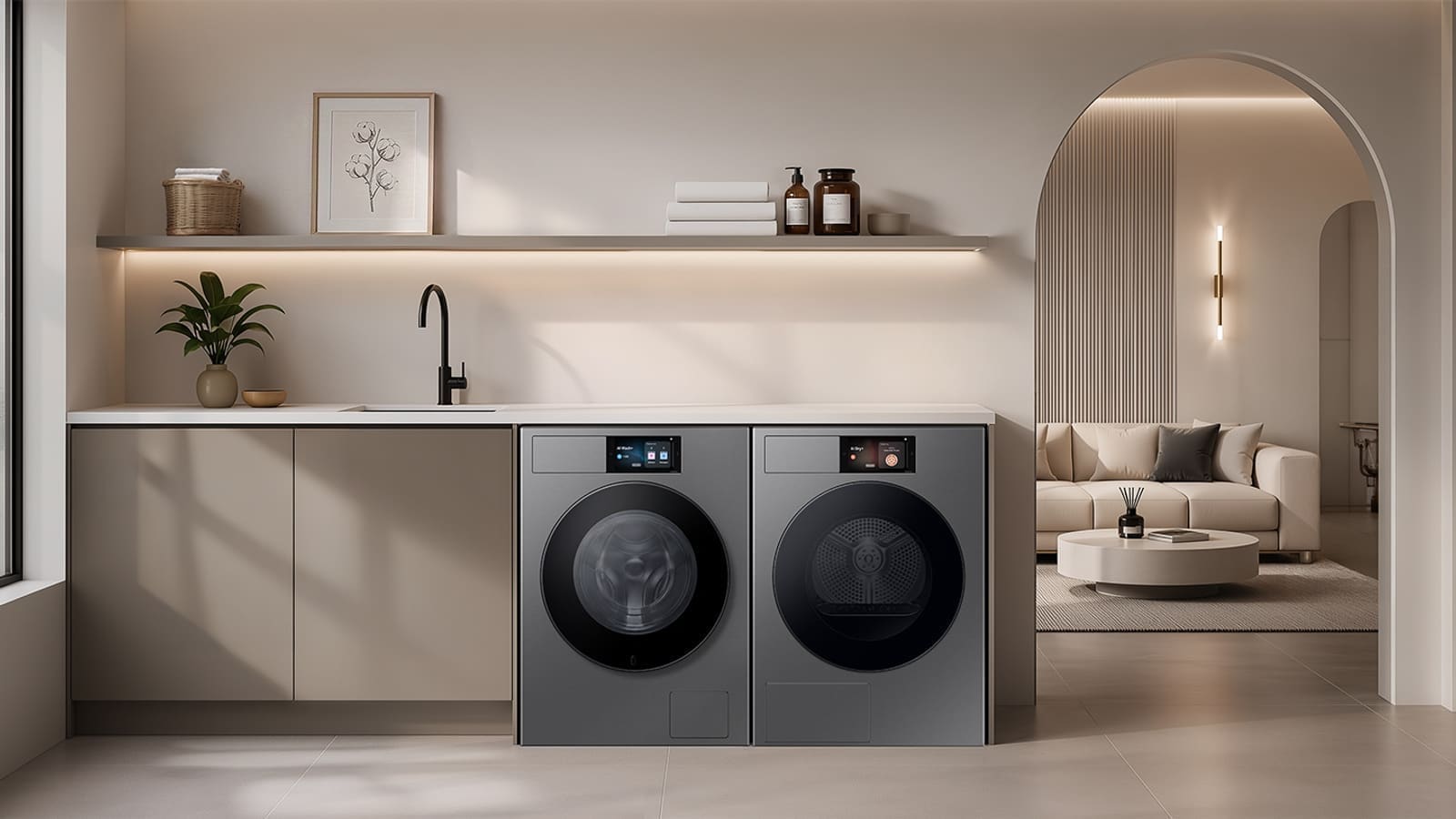
Samsung also announced two new Bespoke AI washer models aimed at the European market. A 13kg model — confirmed for the UK — uses Samsung's SpaceMax technology to fit extra drum capacity into the standard 600mm European appliance depth, so it doesn't need a bigger footprint than a typical washer. A second, higher-capacity-efficiency 10kg model, positioned for other European markets, is rated to use up to 70% less energy than the minimum threshold for a Class A energy rating — an improvement Samsung says builds on A-55% and A-65% efficiency claims made for equivalent models at IFA 2024 and IFA 2025 respectively. Both connect via the SmartThings app for cycle control and monitoring, and both were shown as development-stage units, with full specs and pricing still unconfirmed.

What else did Samsung show at IFA 2026?

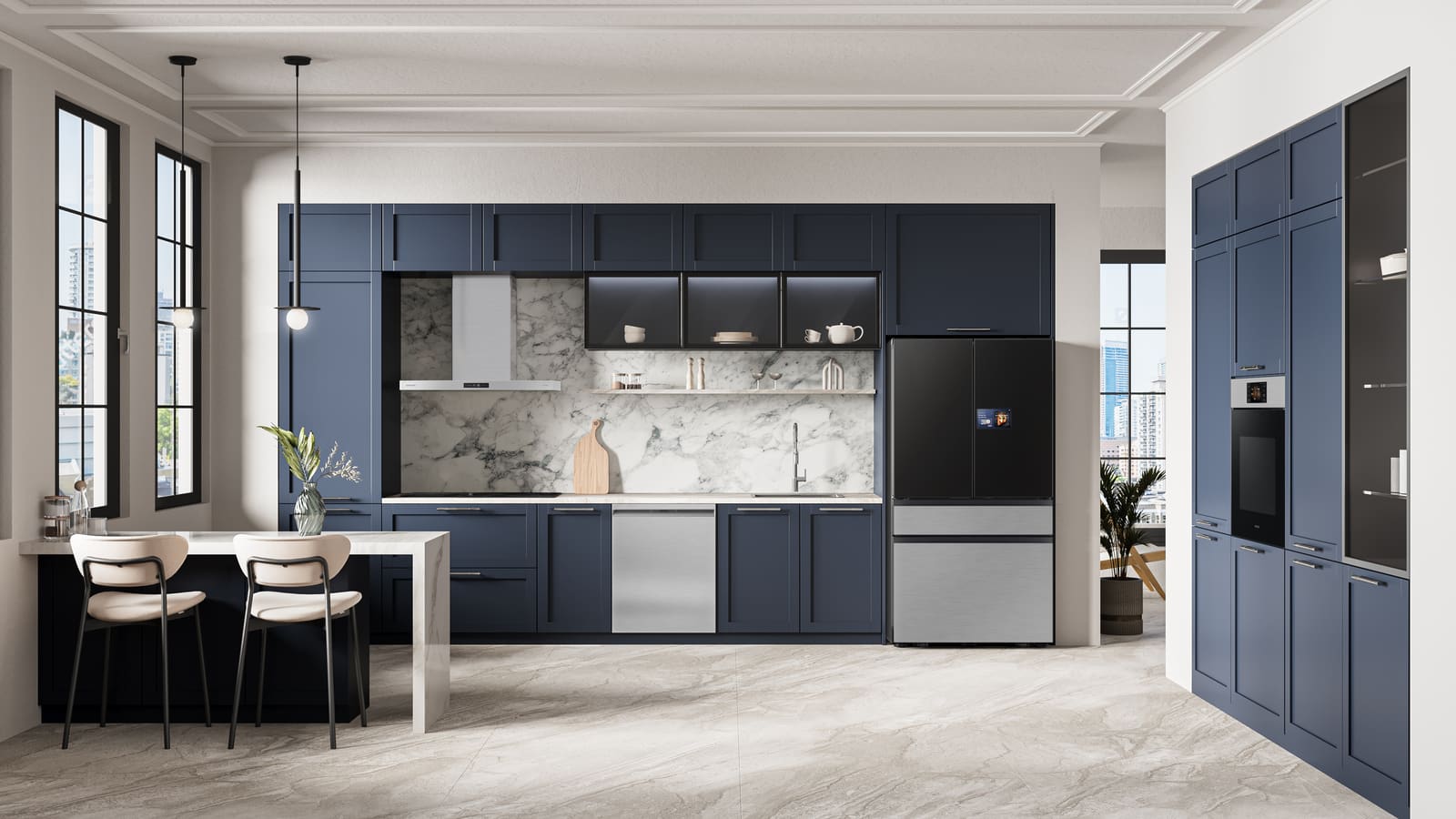
Samsung's Bespoke AI Family Hub refrigerator got an update too, with AI Vision food recognition and — new for this generation — Google Gemini integration built into the fridge's touchscreen, aimed at generating recipe suggestions from what's actually inside. Samsung also used the show to talk up its Micro RGB TV range and a Vision AI Companion feature for 2026 TVs, plus new Odyssey gaming monitors. Benjamin Braun, Samsung Europe's CMO, framed the strategy at the show as prioritising appliances people already own: "AI should deliver tangible benefits that people can see and experience in their everyday lives."

The takeaway for SmartThings users

None of this changes what SmartThings does today. Spatial AI is a proof-of-concept with no release date, and the new washers are pre-production display units without confirmed UK pricing. What it does confirm is Samsung's direction of travel: location-aware automation layered on top of the existing SmartThings app, rather than a new hub or standalone device. If you're deciding between smart home ecosystems now, our Matter devices UK guide covers how Samsung's SmartThings fits alongside Matter-certified kit from other brands. Samsung's rivals made similar AI-home pitches at the same show — see our coverage of Haier's Home of Intelligent Possibilities ecosystem, Hisense's Companion Living platform for another take on ambient home automation, or furniture brand Amada's Smart Comfort Home lineup, a very different app-controlled approach covering beds and sofas rather than appliances.
Frequently asked questions

What is Samsung SmartThings Spatial AI?
SmartThings Spatial AI is a feature Samsung previewed at IFA 2026 in Berlin that aims to make the SmartThings platform aware of where you physically are inside your home, rather than just which devices are online. It uses Ultra-Wideband (UWB) and Wi-Fi ranging to track a paired Galaxy device as it moves between rooms, with the idea that entering a space could eventually trigger connected devices automatically — adjusting lighting or appliance behaviour without a manually built routine. Samsung showed this as a live demo at its Humboldt Carré exhibition, not as a shipping feature, and has not given a release date or said which devices will support it first. Treat it as a roadmap signal about where SmartThings is heading, not something you can set up in the app today.
Are Samsung's new Bespoke AI washing machines available in the UK?
Samsung confirmed a 13kg Bespoke AI washing machine for the UK market, using SpaceMax technology to fit extra drum capacity into a standard 600mm appliance depth. A second model, a 10kg washer rated to use up to 70% less energy than the minimum Class A efficiency threshold, was shown at IFA 2026 for other European markets rather than confirmed for UK release. Both were displayed as development-stage units — Samsung has not published full specifications or UK pricing for either model yet. Anyone shopping now should treat these as an early look rather than a buyable product, and check Samsung's UK site closer to a formal launch for confirmed availability and pricing.
Does Samsung's Bespoke AI fridge use Google Gemini?
Yes — the Bespoke AI Family Hub refrigerator Samsung showed at IFA 2026 integrates Google Gemini alongside its existing AI Vision food-recognition camera system. The idea is that the fridge's touchscreen can suggest recipes based on ingredients its cameras detect inside, rather than requiring the ingredients to be logged manually. This sits alongside the Family Hub's existing role as a kitchen control point for shopping lists, calendars, and SmartThings device control. As with the new washers, Samsung has not confirmed full UK pricing or availability for this generation of Family Hub at the time of the IFA 2026 show.

Sources

Sources verified 2026-09-04

  1. Samsung Newsroom UK — Samsung Redefines Laundry With New 13kg and A-70% Bespoke AI Washers at IFA 2026
  2. Samsung Newsroom UK — Samsung CONNECT Opens at IFA 2026, Bringing the Future of AI-Powered Living to Life
  3. TechRepublic — Samsung Shows Off Its AI Home Strategy
  4. Sammy Fans — Samsung envisions a smarter SmartThings home with spatial AI
  5. The Elec — Samsung Electronics Opens Creator Hub at IFA 2026
How we researched this

Claims in this article are checked against primary sources — manufacturer specifications, official documentation, Which? research, Ofgem guidance, or gov.uk — rather than forum threads or video reviews. Where the author has direct hands-on experience with a product (most Home Assistant, Zigbee, and home-networking gear is running in his own homelab), that is stated explicitly in the text.

For categories outside that personal setup — such as boilers, heat pumps, and other areas that are traditionally a heating engineer's domain — verdicts are built from cross-referenced manufacturer data, published lab results, and vetted expert and owner reviews rather than a claim of personal hands-on testing. See the editorial policy for the full methodology.

Sepehr

Written by

Sepehr

10+ years hands-on with Home Assistant & networking · Research-backed elsewhere · No brand deals

Smart home specialist with 10+ years running a self-hosted Home Assistant setup — Zigbee2MQTT, Frigate NVR, and local-first automations. Independent coverage for UK homes, no brand deals.

LinkedIn →

Citing this page? Please use a dofollow link back to the original article — it helps us keep the data on this page accurate and up to date.

Related reading