Design and build quality
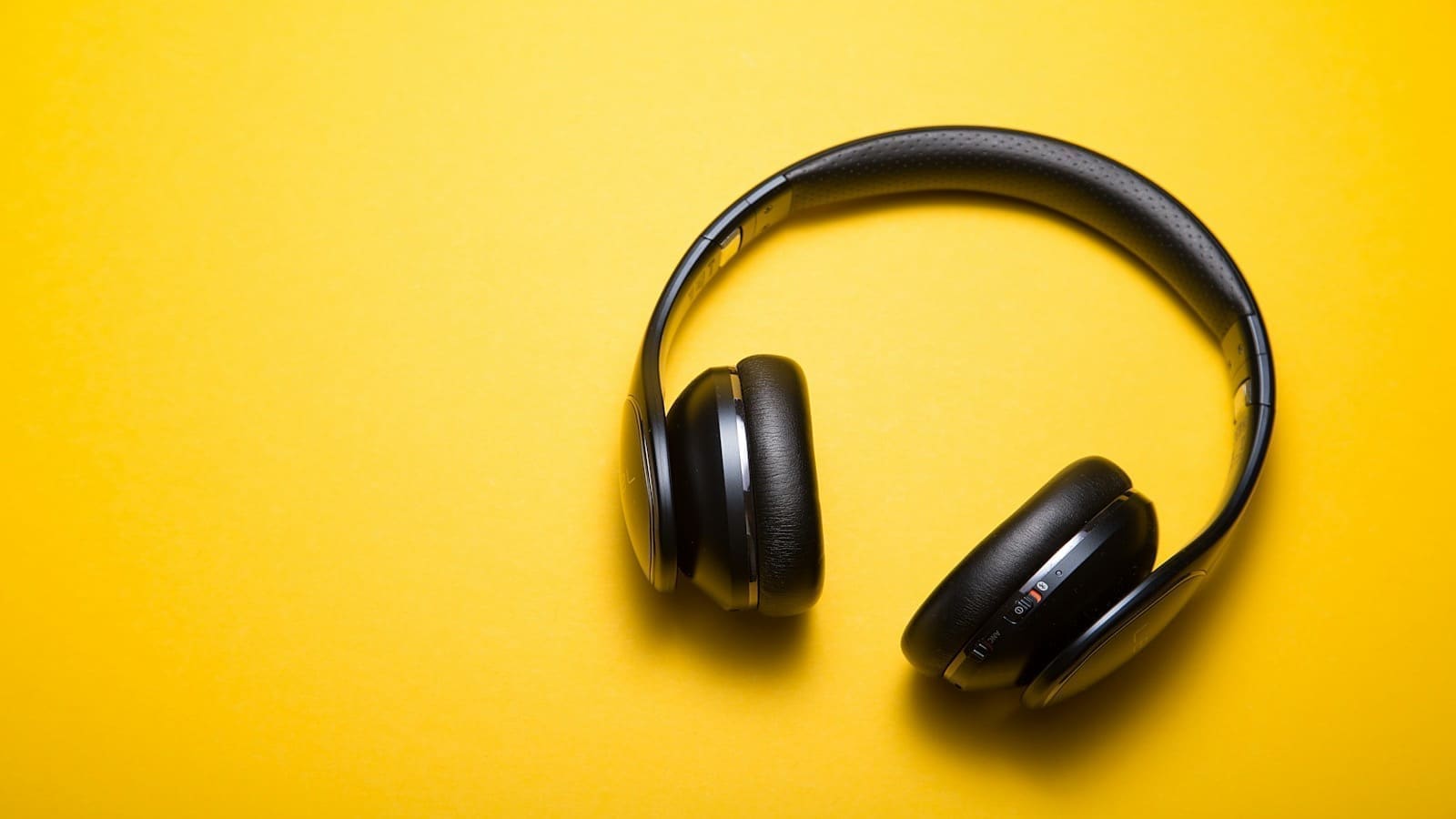
The Ace feel expensive from the moment you lift them out of the box. The earcups are constructed from a combination of aluminium and high-quality plastic, and the headband is wrapped in a soft leather-like material that sits comfortably over a long listening session. A foldable hinge means they pack down flat into the included carry case, making them genuinely practical for commuting or travel.
They are available in two colourways: Black and Soft White. Both finishes feel considered rather than an afterthought. At around 312 g they are noticeably lighter than the AirPods Max (385 g), though still on the heavier side compared with the Bose QuietComfort Ultra. The weight is well distributed and rarely becomes an issue over a two-hour listening session.
Controls are physical buttons and a slider on the left earcup: a noise-control button cycles between ANC, Transparency, and off; volume and playback are handled by a touch-sensitive surface on the right earcup. The layout takes a few minutes to learn but becomes intuitive quickly.
Sound quality
Out of the box the Ace sound remarkably balanced. Bass is present and well-controlled rather than overblown, mids are clear, and treble extends without becoming harsh. Sonos has tuned these firmly for long listening rather than for impressing you in a thirty-second demo — vocals in particular are reproduced with genuine warmth.
The Ace support spatial audio with head tracking for Dolby Atmos content. When watching a compatible film or TV show the soundstage widens noticeably, and the head-tracking means audio stays anchored to the screen rather than rotating with your head. It works best with high-quality Atmos streams; poorly encoded content sounds similar with or without it. This is one area where the AirPods Max still has an edge for Apple TV+ viewers — Apple's tighter OS-level integration makes Spatial Audio slightly more consistent across content, though the Ace is close behind.
A ten-band EQ is available in the Sonos app if the default tuning is not to your taste, and the app also houses the volume, ANC mode, and firmware-update controls.
Active Noise Cancellation and Transparency mode
ANC performance sits comfortably in the upper tier of the market — not quite matching the industry-leading Sony WH-1000XM5, Bose QuietComfort Ultra, or AirPods Max, but notably better than mid-range alternatives. Low-frequency drone (aircraft engines, trains, air conditioning) is reduced well. Higher-frequency sounds such as voices are attenuated rather than eliminated, which is typical of the technology.
Transparency mode pipes outside audio through the microphones in real time, letting you hold a conversation or hear an announcement without removing the headphones. Sonos calls its implementation Aware mode, and it is one of the more natural-sounding examples of the technology — there is minimal metallic distortion on voices.
If you want to compare how the Ace's ANC stacks up against a Bose alternative, our Bose UK review goes into detail on Bose's noise-cancellation approach across their product range.
Sonos Ace vs Bose QuietComfort Ultra vs Apple AirPods Max
At this price point the Ace is up against two of the most established names in premium ANC headphones, and the right choice depends heavily on which ecosystem you already live in.
Bose QuietComfort Ultra remains the ANC benchmark — Bose's noise cancellation is slightly more aggressive across the frequency range than the Ace, and its Immersive Audio mode is a genuine highlight for music listening. It typically sells for a similar price to the Ace and has no soundbar-swap equivalent, so the comparison largely comes down to whether best-in-class ANC or Sonos ecosystem integration matters more to you.
Apple AirPods Max costs more at full price but regularly discounts to a similar level to the Ace. It is heavier (385 g vs 312 g) and its battery life is considerably shorter at around 20 hours versus the Ace's 30. Where AirPods Max wins decisively is Apple ecosystem integration — instant automatic switching between iPhone, iPad and Mac, and tighter Spatial Audio with Apple TV+ content. For anyone outside the Apple ecosystem, that advantage disappears and the Ace's TV Audio Swap and longer battery life become the stronger draw.
The short version: choose AirPods Max if you are deep in Apple's ecosystem, choose Bose QuietComfort Ultra if class-leading ANC is your top priority, and choose the Sonos Ace if you already own or plan to own a compatible Sonos soundbar, want the longest battery life of the three, or simply prefer Sonos's tuning.
TV Audio Swap
TV Audio Swap is the feature that makes the Ace genuinely different from every other premium headphone. If you own a Sonos Arc soundbar — or, following firmware updates since launch, an Arc Ultra, Beam (Gen 1 or Gen 2), or Ray — a single press of the noise-control button on the Ace transfers the TV's audio from the soundbar to the headphones in about two seconds. Press again and it switches back. No Bluetooth pairing, no menu-diving — it just works.
The practical use case is clear: one person wants to watch TV late at night without disturbing a sleeping partner. Until now the only options were Bluetooth headphones with a separate transmitter plugged into the TV, or tolerating tinny phone audio. TV Audio Swap is a far more elegant solution, and it works over Wi-Fi using the Sonos network rather than Bluetooth, which means audio quality is uncompromised.
Compatibility has expanded meaningfully since the Ace's 2024 launch — it now covers Sonos's budget soundbars (Ray, Beam) as well as the flagship Arc and Arc Ultra, so you no longer need the most expensive soundbar in the range to use the feature. Check the Sonos website for the current compatibility list before buying on the strength of this feature alone, as Sonos continues to expand it via firmware.
Battery life and charging
Sonos rates the Ace at up to 30 hours of listening with ANC enabled — an impressive figure that puts them among the longest-lasting headphones in the premium tier, well ahead of the AirPods Max's roughly 20 hours. In everyday use you can realistically expect to charge them once or twice a week with several hours of daily listening.
Charging is via USB-C, and a three-minute quick charge provides up to three hours of playback, which is handy if you forget to charge overnight. The included cable is USB-C to USB-C. There is no wireless charging.
Connectivity
The Ace use Bluetooth 5.4, which offers improved efficiency and connection stability over earlier versions of the standard. They can pair with two devices simultaneously and switch between them, though manual selection is required via the Sonos app — automatic switching is not as seamless as the AirPods Max offers within the Apple ecosystem.
One important caveat: the Ace do not integrate into the Sonos multiroom system. You cannot group them with a Sonos Era 100 or any other Sonos speaker for synchronised playback. They live alongside the Sonos ecosystem rather than within it. If multiroom audio is central to your listening habits, see our guide to the best multiroom speakers in the UK for context on how the wider Sonos range fits together.
There is no 3.5 mm analogue input — wireless only. A 3.5 mm to USB-C cable adapter is available separately from Sonos for wired use on aircraft, but it does not ship in the box.
Sonos app integration
The Ace are controlled via the Sonos app, which underwent a significant redesign in May 2024 — just before the headphones launched. The redesign was controversial with existing Sonos customers at the time, as several features were removed or relocated. That backlash has largely settled since; the app now handles headphone control (EQ, ANC mode, firmware updates) reliably, and most of the functionality customers flagged as missing has been restored via subsequent updates.
For a broader sense of how the Sonos speaker ecosystem works alongside the Ace, our Sonos Era 100 review covers the app experience from a speaker perspective.
Value and verdict
At launch the £449 asking price was a tough sell, but with UK retailers now regularly listing the Ace around £359, the value proposition is considerably stronger. They still face formidable competition: the Sony WH-1000XM5 typically costs less and offers arguably better automatic device switching, while the Bose QuietComfort Ultra sits at a similar price with slightly superior noise cancellation, and the AirPods Max — when discounted — competes closely on price while offering tighter Apple integration at the cost of nearly ten hours of battery life.
What the Ace offer that none of those three can match is TV Audio Swap, now working across Sonos's Ray, Beam, Arc, and Arc Ultra soundbars — and if you own or plan to own any of those, that feature alone may justify the price. The build quality is exceptional, the sound tuning is mature, and 30-hour battery life with ANC remains class-leading among this group.
For listeners outside the Sonos ecosystem, the case is harder to make — there are strong ANC performers at similar or lower prices. But for the Sonos household, and especially anyone with a compatible soundbar in the living room, the Ace remain a thoughtful, well-executed addition to the range, and one that has only got better value since launch. You can buy the Sonos Ace from Amazon UK or direct from the Sonos website.
If you are exploring alternatives in the wireless audio space, our roundup of the best wireless speakers in the UK covers a range of price points and use cases.
Related: Sonos Arc soundbar review, Sonos vs Bose soundbar comparison, and best multiroom speaker systems UK.