What makes a towel rail 'smart'?
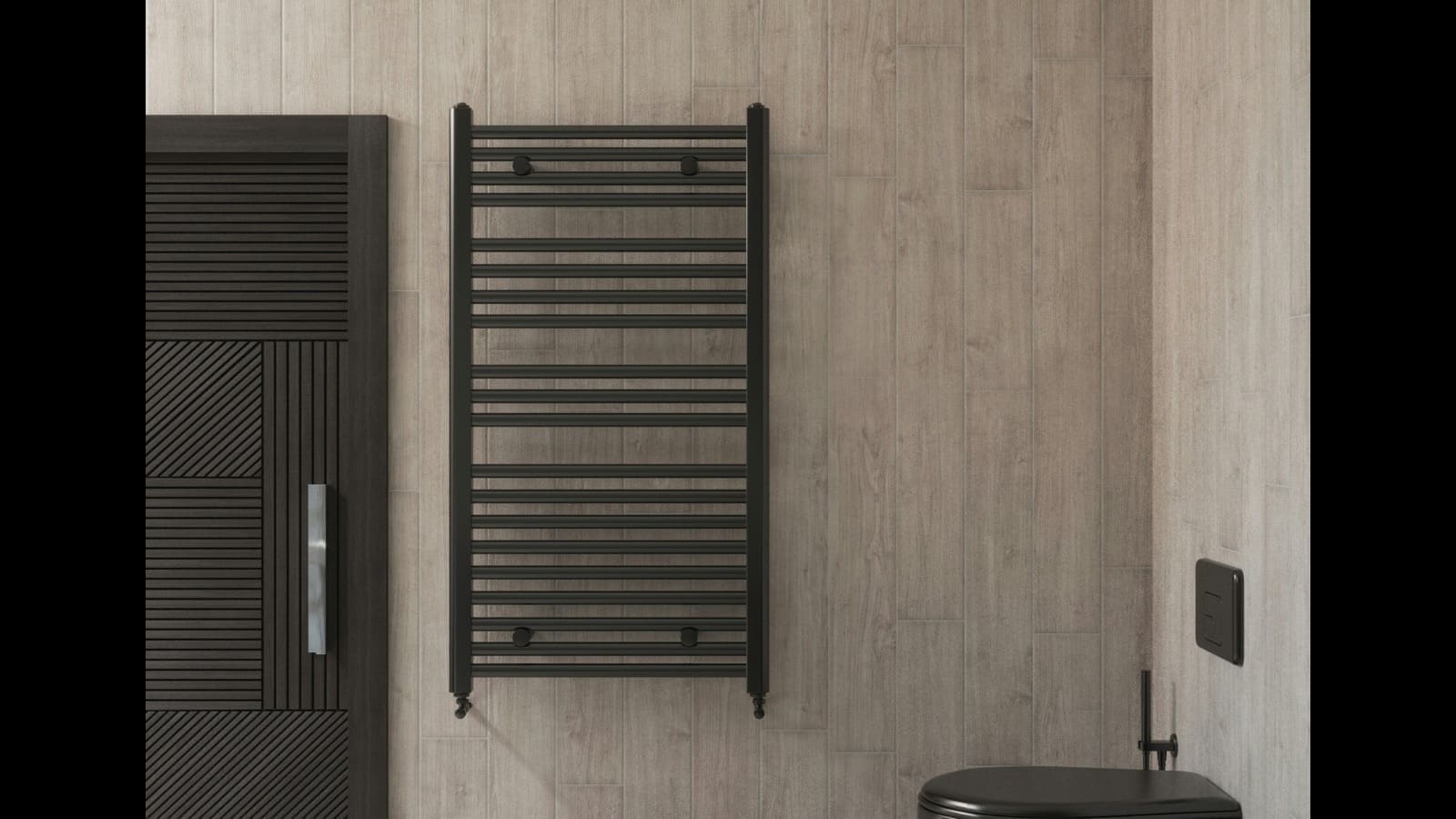
A smart heated towel rail is an electric model fitted with a WiFi heating element. Unlike a plug-in timer, the element connects to your home network and pairs with a smartphone app, giving you remote on/off, temperature adjustment, and weekly scheduling from anywhere. The better models add open-window detection (cuts power when a sudden temperature drop is sensed), energy monitoring, and voice assistant integration via Alexa or Google Assistant.
Electric vs plumbed. Smart towel rails are almost always electric — connecting a plumbed rail to your smart home requires a smart valve and a compatible boiler controller, which adds complexity and cost. Electric rails can be installed anywhere with a mains spur, making them a practical upgrade even in bathrooms on an unvented system or served by a heat pump. If you are also considering other electric heating, our guide to the best electric radiators UK covers the wider product landscape.
What wattage do you need?
Most bathroom towel rails fall between 60 W and 300 W. The right choice depends on bathroom size and how much supplementary heating you need:
- 60–150 W — compact en-suite or cloakroom; purely for drying towels.
- 150–300 W — average family bathroom (4–6 m²); dries towels and provides background warmth.
- 300–600 W — larger bathrooms or rooms with poor insulation where the rail is the primary heat source.
Most smart models sit in the 200–450 W range, which is enough for a standard UK bathroom. Higher-wattage Rointe D Series models run up to 600 W for larger rooms.
Best smart heated towel rails UK (2026)
1. Rointe D Series WiFi Electric Towel Rail
Best overall. The Rointe D Series is the most fully featured smart towel rail you can buy in the UK. It uses thermal fluid technology — the same oil-filled approach used in high-end electric radiators — which means it retains heat after switching off, reducing on-time and energy use. The integrated WiFi module connects directly to your network; no bridge required. You control it through the Rointe Nexa app (iOS and Android), which supports 24/7 scheduling, consumption monitoring, and GPS-based automation so the rail starts heating as you approach home.
Available in 300 W, 450 W, and 600 W variants in chrome, white, or anthracite. The 450 W model suits most UK family bathrooms. Alexa and Google Assistant are not listed as officially supported via the Rointe app, but the rail can be paired with smart plugs via the Smart Life ecosystem if third-party voice control matters to you. Prices typically range from around £350 to £550 depending on wattage and finish; prices vary by retailer.
2. Ecostrad Fina-E iQ WiFi Electric Towel Rail
Best value smart pick. The Ecostrad Fina-E iQ pairs a traditional ladder-style towel rail body with the Ecostrad iQ WiFi element — a retrofit heating element that can also be purchased separately to upgrade a compatible rail later. The Ecostrad Ecosystem app provides 24/7 scheduling, open-window detection, Comfort and Eco modes, and a low surface temperature setting (minimum 30 °C) useful if children use the bathroom.
The 300 W model is priced from around £250 (Inc. VAT) and carries a five-year manufacturer warranty on the rail body and two years on the element. The element is also available as a standalone upgrade for existing Ecostrad rails. IPX4 rated, so suitable for Zone 2 installation. The Smart Life app is supported as an alternative, which gives Alexa and Google Home compatibility.
3. Ecostrad Cube iQ WiFi Electric Towel Rail
Best contemporary design. The Cube iQ shares the same iQ element and app as the Fina-E but wraps it in a square-tubed designer ladder profile available in chrome and anthracite. The 400 W chrome model starts from around £240 (Inc. VAT). Touch-sensitive controls and a flatscreen display sit on the rail itself, so you can adjust settings without picking up your phone. Carries the same IPX4 rating and five-year body warranty as the Fina-E range.
4. Richmond Radiators Bellerby WiFi Thermostatic Electric Towel Rail
Best for Alexa and Google Home integration. The Bellerby WiFi range from Richmond Radiators uses the SolAire app and is LOT 20 compliant (the EU/UK energy efficiency directive for local space heaters). It ships with a thermostatic element and supports full scheduling, a 2–4 hour boost function, and native Alexa and Google Assistant support for voice control. Available in chrome, white, and black finishes and offered in dual-fuel configuration if you want to connect to your central heating system in future. Prices vary; check Richmond Radiators and authorised UK stockists directly.
5. Reina Gia WiFi Electric Designer Towel Rail
Best designer option. Reina's Gia WiFi model is a flat-panel electric towel rail with an integrated WiFi thermostat and a slim, minimalist profile that suits modern bathrooms. It uses the Smart Life app, giving access to Alexa and Google Home voice control. The thermostat senses when the set temperature is reached and cycles the element off automatically, reducing wasted energy compared with simple on/off models. Available in multiple finishes and sizes from UK bathroom and radiator specialists.
Running costs explained
Running costs depend on wattage, usage hours, and the current electricity unit rate. Based on the Ofgem price cap rate of 27.69 p per kWh (January–March 2026 period), a 300 W smart towel rail running for two hours per day costs approximately 17 p per day, or around £5 per month. The same rail left on all day would cost close to £2 per day — underlining why smart scheduling is worth having.
Using a daily schedule to run the rail only during morning and evening routines (roughly two to three hours) keeps monthly costs for a 300 W model well under £10. A 100 W rail run for eight hours a day costs around £6.65 per month at the same rate. Exact figures will vary as the price cap changes quarterly.
Smart rails also make it easier to track consumption. Apps from Rointe and Ecostrad display real-time and historical usage figures, which you can compare against a time-of-use tariff such as the Octopus Energy Agile or Flux tariff — using the rail during cheap overnight hours can cut costs further. See our guide to the Octopus Energy smart tariff for how this works in practice. If you are assessing the economics of smart heating more broadly, our best smart thermostats UK guide covers whole-home control options.
Installation and UK regulations
Electric towel rail installation in bathrooms is subject to BS 7671 (IET Wiring Regulations) and Part P of the Building Regulations. The rules are straightforward but non-negotiable:
- Zone 0 (inside the bath or shower tray): no electric towel rails permitted.
- Zone 1 (directly above the bath/shower to 2.25 m height): no electric towel rails permitted.
- Zone 2 (0.6 m horizontally outside Zone 1, up to 2.25 m high): permitted if IPX4 rated and hardwired via a fused connection unit (FCU).
- Outside zones (beyond 0.6 m from any water source): permitted hardwired via an FCU.
All models in this guide carry at least IPX4 (splash-resistant) ratings, making them suitable for Zone 2 installation. Plug-and-play connections are not permitted in Zone 1 or Zone 2 — the rail must be hardwired. All bathroom circuits also require 30 mA RCD protection.
Part P compliance. Any new circuit from the consumer unit requires notification to your local Building Control authority, or must be carried out by a Part P registered electrician who self-certifies the work. Like-for-like replacements on an existing circuit may not require notification, but you should always confirm with a qualified electrician. Expect to pay roughly £150–£400 for electrical installation, depending on whether a new circuit is needed. A qualified electrician will issue an Electrical Installation Certificate (EIC) on completion.
What to look for when buying
- IP rating: IPX4 as a minimum for Zone 2; IPX5 or higher if the rail will be close to a shower.
- Wattage: 200–300 W for a standard bathroom; up to 450–600 W for a larger room used as the primary heat source.
- App and ecosystem: If voice control matters, confirm Alexa or Google Home support before buying. Ecostrad and Reina models using the Smart Life platform offer the broadest third-party compatibility.
- Scheduling: Look for 24/7 programmable timers with at least daily scheduling; weekly programmes are better.
- Open-window detection: A useful energy-saving feature that cuts power if a sudden temperature drop is detected.
- Warranty: Aim for at least two years on the heating element and five years on the rail body.
- Dual-fuel option: If you have central heating and want the option to connect the rail to your boiler later, look for dual-fuel models such as the Richmond Bellerby range.