
What Does a Traditional Heating System Look Like?
A traditional UK central heating setup typically consists of a gas boiler, a mechanical or digital programmer, and a single room thermostat — usually mounted in the hallway. The programmer lets you set fixed on/off times for heating and hot water. The thermostat cuts the boiler once the hallway reaches the set temperature, regardless of what's happening in the rest of the house.
The core limitations are clear. Fixed schedules take no account of whether you're actually home. A colder-than-average November means the house stays chilly until you manually intervene. There's no remote control, no awareness of the weather forecast, and no way to heat individual rooms differently without manually adjusting every radiator valve. If you forget to turn the heating off before going away for a week, you've wasted money heating an empty house.
What Smart Heating Adds
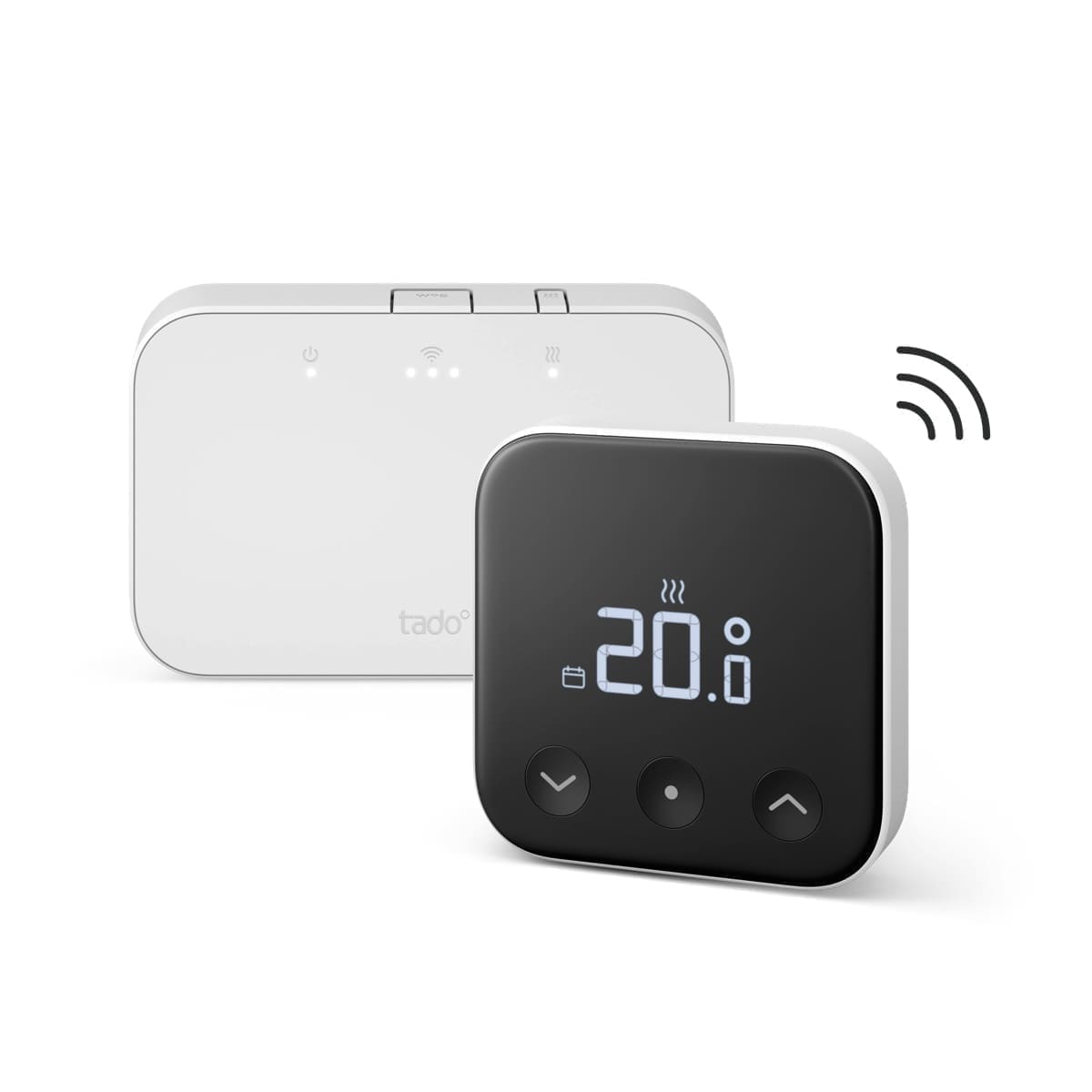
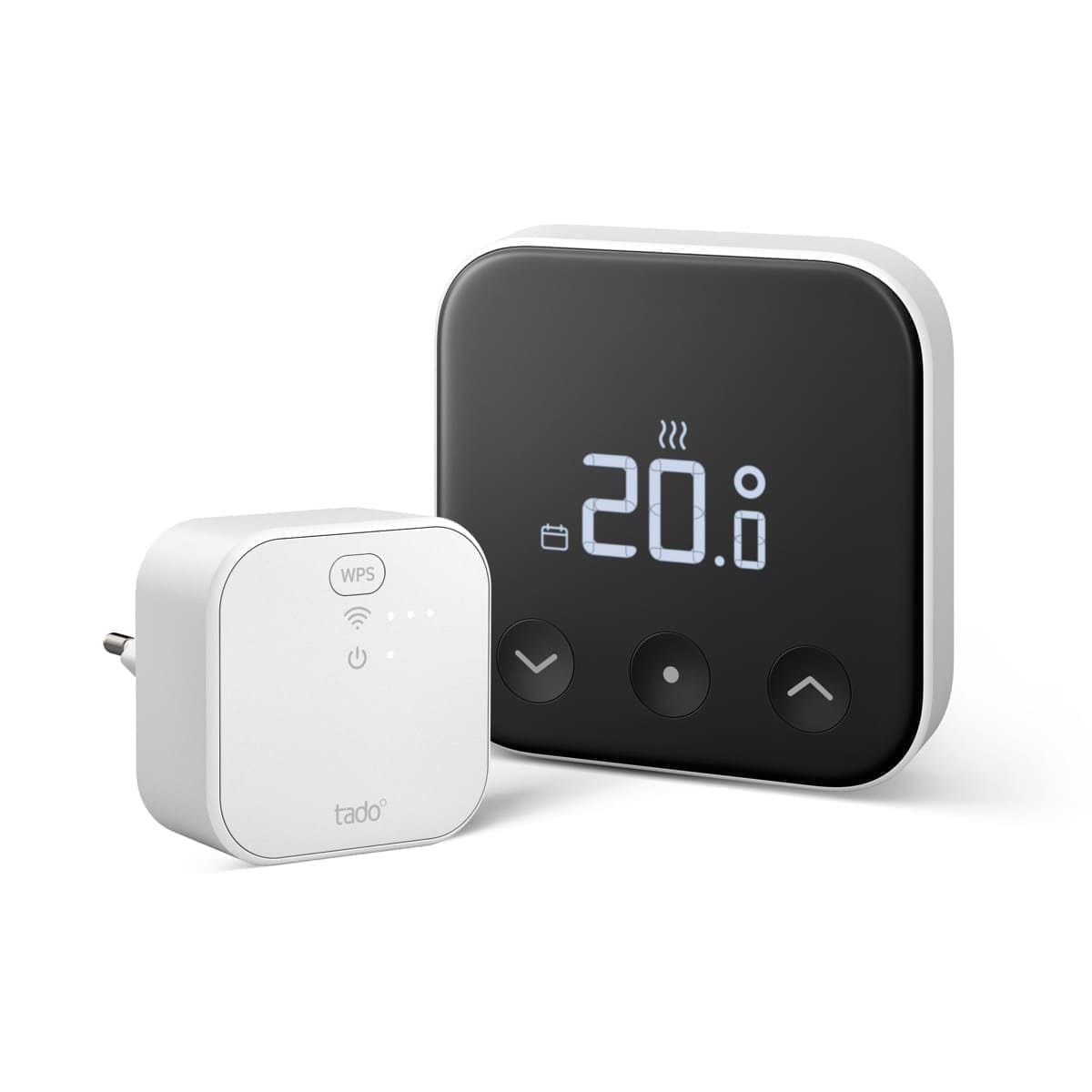
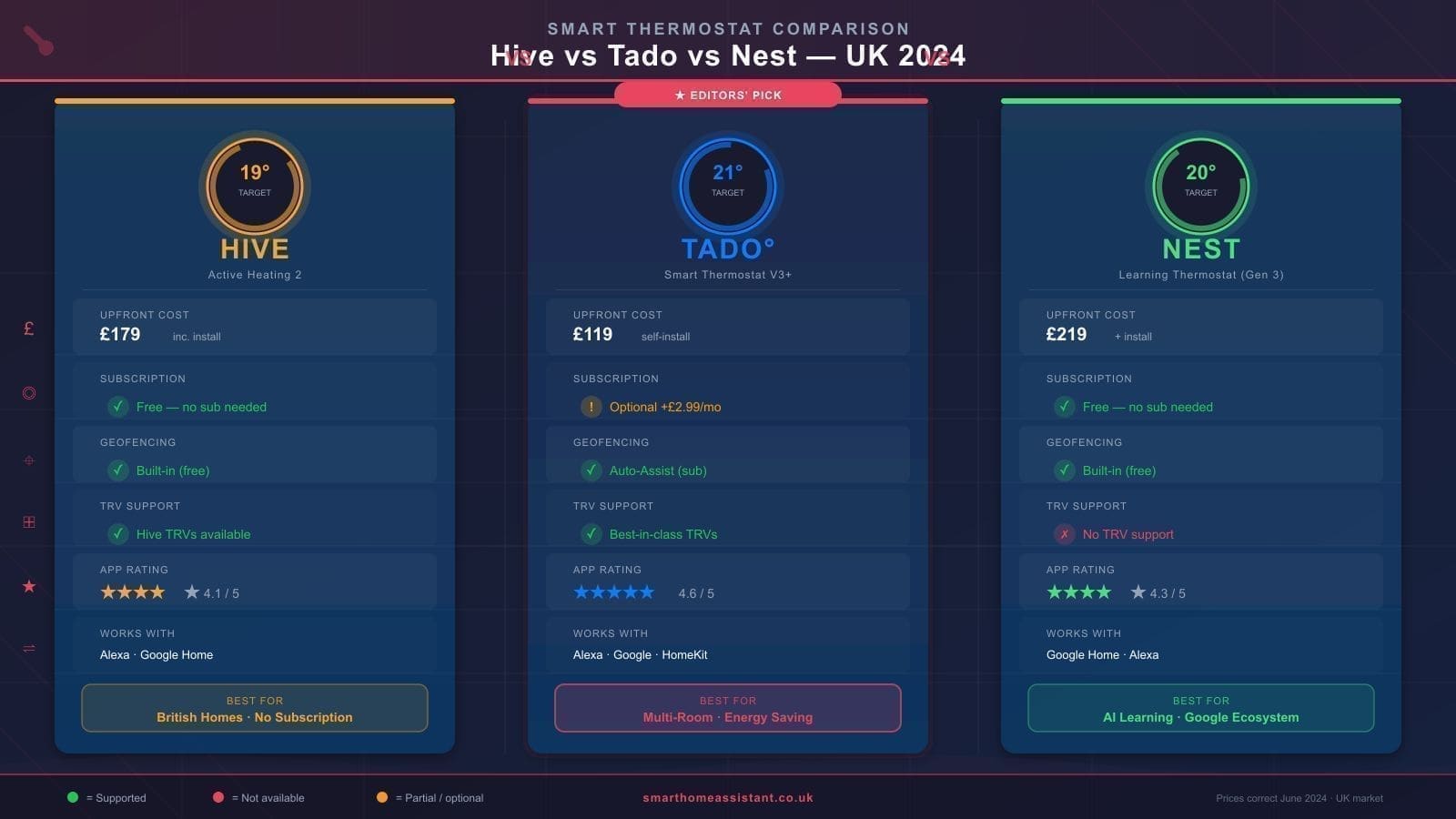
Smart heating systems replace the traditional programmer and thermostat with internet-connected hardware and a companion app. The headline features across the leading UK platforms — tado°, Hive, and Nest — include:
- Remote control: adjust temperature from anywhere via a smartphone app.
- Geofencing: the system detects when everyone has left home and turns heating down automatically, then warms up again as you approach.
- Learning algorithms: some thermostats (notably the Nest Learning Thermostat) build a schedule based on your behaviour over the first week of use.
- Weather compensation: tado° adjusts how hard the boiler works based on the outdoor temperature, reducing overshoot and improving efficiency.
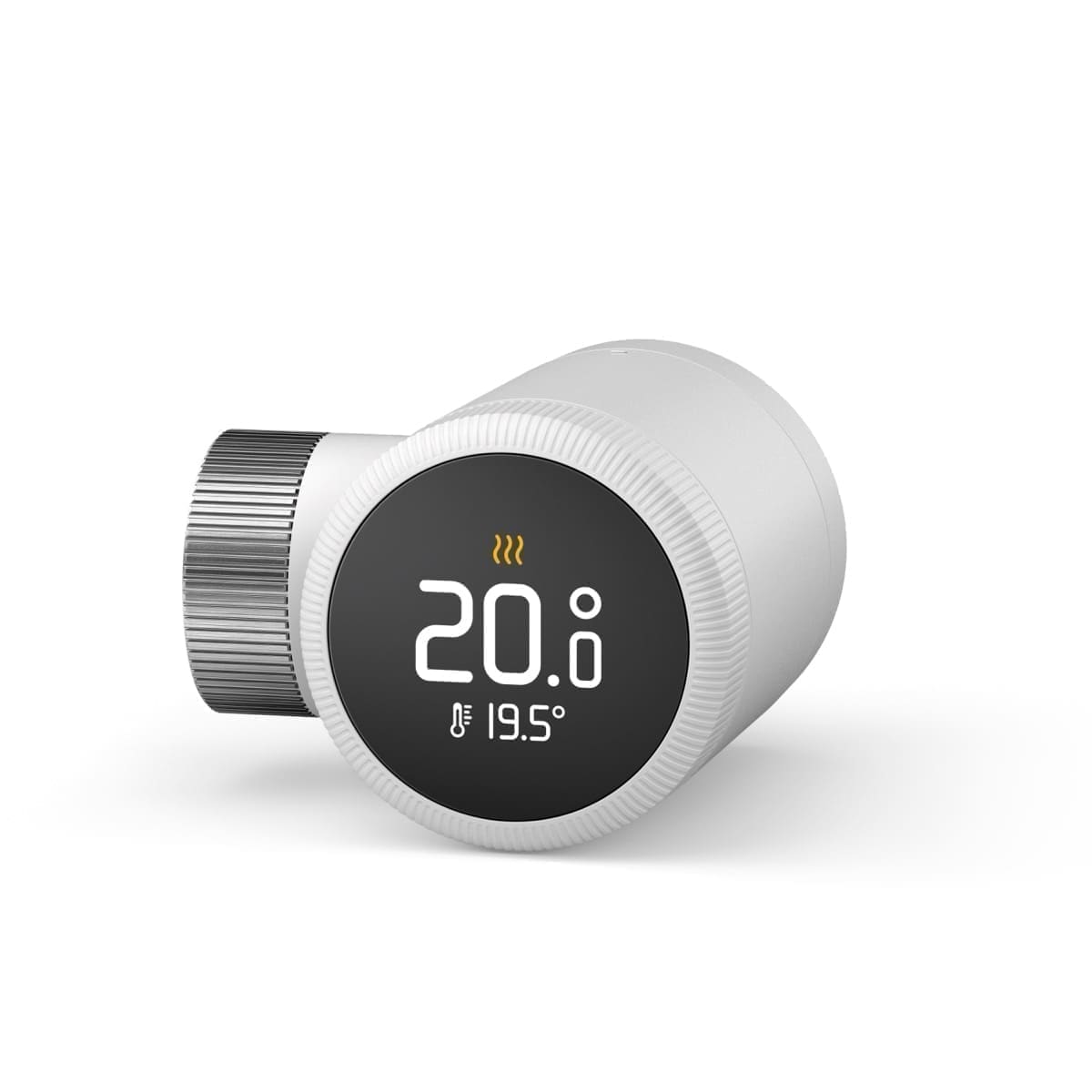
- Room-by-room control: smart radiator valves (TRVs) let you set individual target temperatures in each room, heating only the spaces you're actually using.
- Energy reports: usage breakdowns show which rooms consume the most, helping you identify where to cut back.
For a deep dive into how the main brands compare, see our Hive vs tado° UK comparison.
How Much Can Smart Heating Save?
Savings depend on how inefficiently you currently heat your home. The bigger the gap between your actual usage pattern and your current fixed schedule, the more a smart system can claw back.
tado° publishes data suggesting users can save between 10% and 20% on heating bills by switching to a smart thermostat — savings that come from reducing heat-up times, geofencing, and weather compensation working together. Which? research has corroborated similar ranges for well-configured smart thermostats in UK homes.
The average UK household spends roughly £1,000–£1,500 per year on gas central heating, according to the Energy Saving Trust. At that spend level, a 15% saving equates to £150–£225 annually — enough to cover the cost of a mid-range smart thermostat in one to two years.
Entry-level smart thermostats such as the Hive Active Heating start at around £150 for self-installation, with more advanced options like tado° or the Nest Learning Thermostat ranging up to £250 installed. The typical payback period is two to three years, after which every pound saved is pure gain on top of a more comfortable home.
If you want a detailed breakdown of whether the numbers stack up for your situation, read our dedicated guide: Is smart heating worth it in the UK?
Room-by-Room Control: Smart Radiator Valves
One of the most impactful — and often overlooked — upgrades is fitting smart radiator valves (TRVs) alongside your main smart thermostat. Traditional TRVs are manual: you turn a dial and that radiator opens or closes. Smart TRVs add motor-driven control that the app (or the thermostat's occupancy detection) can drive automatically.
This matters because most UK homes heat every room on the same schedule. Bedrooms that are empty all day, spare rooms used once a fortnight, and home offices that only need warmth during work hours all consume energy for no benefit under a traditional setup. Smart TRVs let you set individual schedules per room — the bedroom warms up 20 minutes before bedtime, the home office cuts off at 5 pm, and the guest room stays at 14°C unless guests are expected.
Critically, you don't need to replace your boiler to benefit. Smart TRVs fit the same connection as standard TRVs and work with almost all UK combi and system boilers. Our guide to the best smart radiator valves in the UK covers the top options in detail.
The Main UK Smart Heating Brands
tado° is the most feature-rich platform for UK users, with robust weather compensation, a polished app, and an extensive range of smart TRVs. It uses a subscription model for some advanced features (Auto-Assist geofencing), though the core functionality is free.
Hive (by British Gas Centrica) is the easiest ecosystem for those who want professional installation and a familiar domestic brand. Hive's smart TRVs are solid, and the platform integrates with Hive's broader smart home products including plugs and lights. No subscription is required for core features.
Nest (now Google Nest) offers the Nest Learning Thermostat — a premium product with a distinctive round design and strong learning capabilities. Google integration works well for households already using Google Home. Nest doesn't currently offer its own TRVs for the UK market, so room-by-room control requires third-party options. See our full Nest Learning Thermostat UK review for a detailed assessment.
Smart Heating vs Traditional: Side-by-Side
Here is a plain comparison of what you get with each approach:
- Scheduling: Traditional — fixed on/off times only. Smart — flexible, app-adjustable, learning-capable.
- Remote control: Traditional — none. Smart — full app control from anywhere.
- Geofencing: Traditional — none. Smart — automatic away/home detection.
- Weather compensation: Traditional — none. Smart — available on tado° and some others.
- Room-by-room control: Traditional — manual TRV adjustment only. Smart — automated per-room scheduling via smart TRVs.
- Installation: Traditional — simple, any engineer. Smart — DIY-friendly (most models) or professional fit available.
- Upfront cost: Traditional — £30–£80 for a standard programmer/thermostat. Smart — £150–£250 for thermostat; add £40–£70 per smart TRV.
- Estimated annual saving: Traditional — baseline. Smart — 10–20% off heating bills.
Is It Worth Switching?
For most UK households, the answer is yes — with caveats. If your home is already well-insulated and you keep very regular hours, the saving from a smart thermostat alone may be modest. But if your schedule varies, you travel regularly, or you heat rooms that go unused for long stretches, the combination of geofencing and smart TRVs can deliver meaningful reductions.
The lowest-risk starting point is a smart thermostat only — no TRVs initially. Install it, use it for a winter, and check the energy reports. If the data shows your existing zones are already efficient, you're done. If certain rooms are consistently over-heated, add TRVs where they'll have the most impact.
For a comprehensive look at the best devices currently available, visit our roundup of the best smart thermostats in the UK.
Related: best smart thermostats UK, smart home energy saving tips, and heat pump vs gas boiler UK.