How Much Does Solar Panel Installation Cost in the UK?
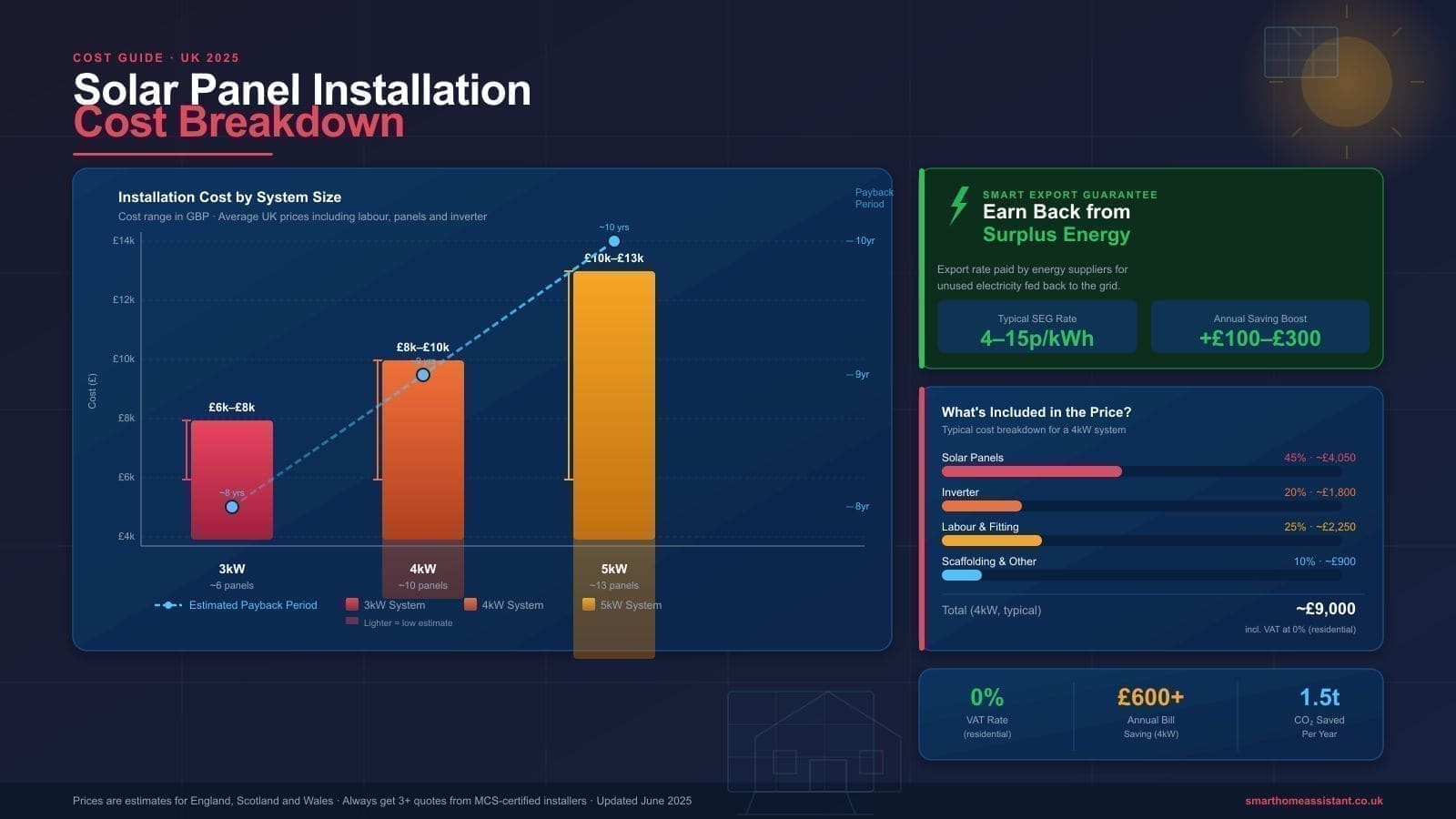
The cost of solar panel installation depends primarily on the size of the system, measured in kilowatt-peak (kWp). Most UK homes fall into the 3–6kWp range. Here are typical installed prices in 2026:
- 4kWp system: £5,000–£7,000 installed
- 6kWp system: £7,000–£9,000 installed
These figures include panels, inverter, mounting hardware, cabling, and installation labour from an MCS-certified installer. Prices vary by region, roof type, and the brand of panels chosen. Since April 2022, solar panels and installation have been zero-rated for VAT, which removed around 5% from the previous cost.
For a fuller breakdown by system size — per-kWp pricing, scaffolding, and what makes quotes vary by region — see Smart Solar Homes’ detailed solar panel cost guide for 2026.
What Does the Price Include?
A full solar installation quote should cover:
- Solar panels — typically monocrystalline for UK conditions
- Inverter — converts DC electricity from panels to AC for your home
- Mounting system — roof brackets and rails
- Cabling and consumer unit upgrades — as required
- Scaffolding — usually included; confirm with your installer
- DNO notification — the installer notifies your local Distribution Network Operator
- MCS certificate — required for the Smart Export Guarantee
Always ask for a fully itemised quote so you can compare like for like across installers.
Adding Battery Storage
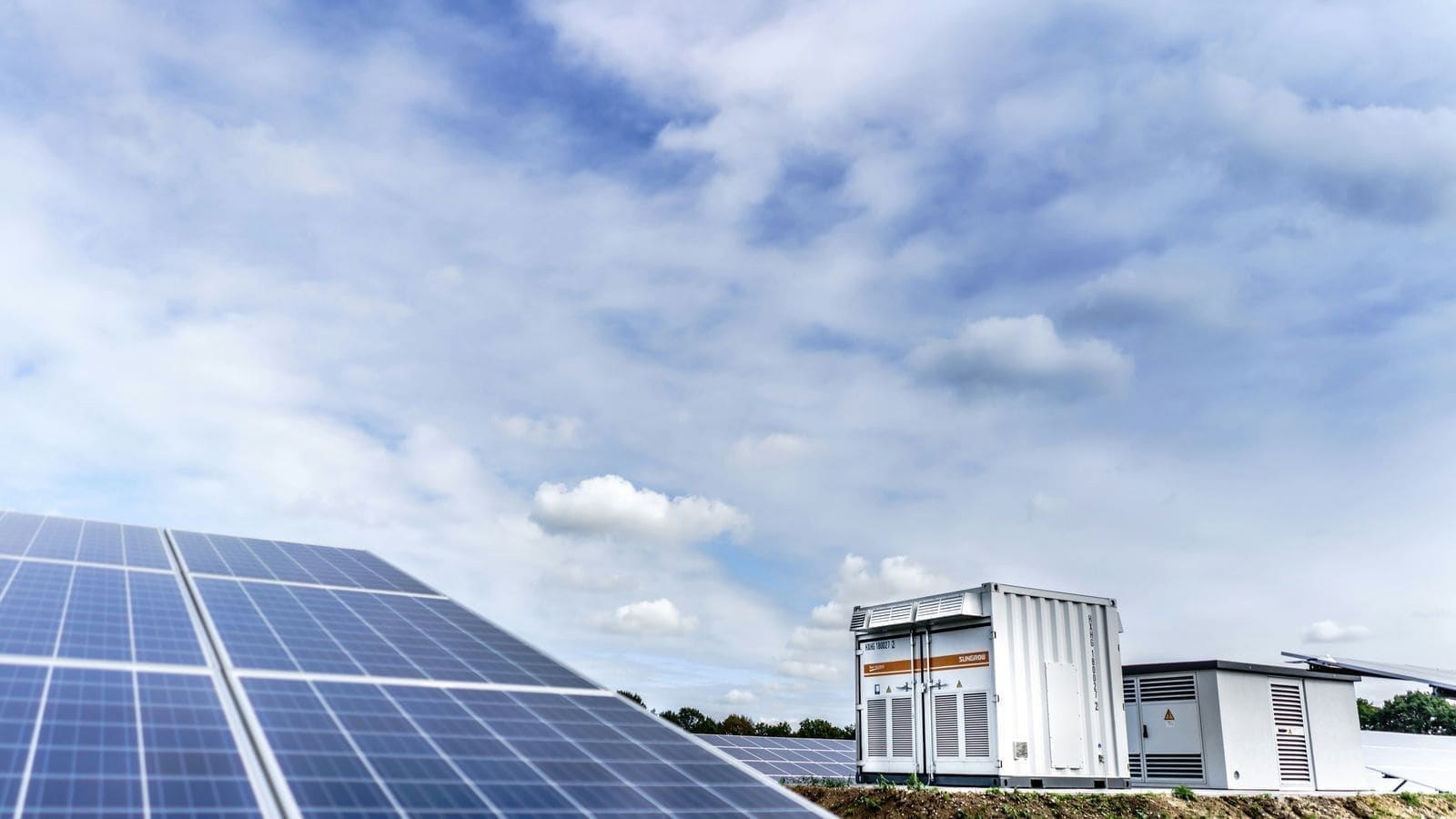
A solar system alone only saves money when the sun is shining. Adding a battery lets you store surplus electricity and use it in the evening or on cloudy days — which is when most UK households use most of their power. Popular options include the Tesla Powerwall and GivEnergy batteries.
Battery storage typically adds £3,000–£6,000 to the total installation cost, depending on capacity. A 10kWh battery is sufficient for most households. While the upfront cost is higher, battery storage can significantly improve your return on investment by reducing the amount of electricity you buy from the grid. You can also monitor your solar and battery performance in real time — see our guide to Home Assistant solar monitoring for how to tie this into a smart home setup.
The Smart Export Guarantee (SEG)
The Smart Export Guarantee is the UK government scheme that replaced the old Feed-in Tariff. Under SEG, energy suppliers with more than 150,000 customers are legally required to offer you a tariff for every unit of electricity you export to the grid. Rates currently range from 4p to 15p per kWh, depending on your supplier and tariff.
To qualify for SEG you must use an MCS-certified installer — this is non-negotiable. Once your system is registered, you apply to an eligible supplier for an export tariff. Octopus Energy, OVO, and British Gas Solar all offer competitive SEG rates. Check Ofgem's guidance for an up-to-date list of licensed SEG suppliers.
Payback Period
The typical payback period for a solar panel installation in the UK is 7–10 years, depending on your electricity usage, the export rate you receive, and how much of your solar generation you use directly. Homes with high daytime electricity demand (those with a heat pump, EV charger, or those working from home) tend to see the fastest payback.
A 4kWp south-facing system can generate around 3,400–3,800kWh per year in most parts of England, according to the Energy Saving Trust. With electricity at current rates, that can translate to savings of £800–£1,100 per year, plus SEG income on top. If you are also considering a heat pump, read our guide to heat pump installation cost UK — the two technologies work particularly well together.
Roof Requirements
Not every roof is equally suited to solar. The ideal setup is:
- Orientation: South-facing (SE to SW is acceptable)
- Pitch: 30–40° — this is the optimal angle for UK latitudes
- Shade: Minimal shading from trees, chimneys, or neighbouring buildings between 9am and 3pm
- Condition: Roof should be structurally sound with at least 20 years of life remaining
East–west split arrays are increasingly popular for homes where a south-facing slope is limited, as they spread generation across more of the day. Your installer should carry out a shading analysis as part of the survey.
Choosing an Installer
Always use an MCS-certified installer. MCS (Microgeneration Certification Scheme) accreditation is the industry standard for solar, heat pumps, and other microgeneration technologies. It is a prerequisite for SEG eligibility and gives you recourse if something goes wrong. You can find certified installers on the MCS website.
Major national installers include British Gas Solar, OVO Solar, and Octopus Energy Solar. Local and regional MCS-certified installers often offer more competitive pricing. Get at least three quotes and check reviews on Trustpilot or Which? Trusted Traders before committing.
Government Support and Incentives
There is currently no UK-wide grant for solar panels for most homeowners, though the situation changes regularly. The key financial incentives in 2026 are:
- Zero VAT on panels and installation (since April 2022)
- Smart Export Guarantee — paid per kWh exported
- ECO4 scheme — if you are on certain benefits or have a low EPC-rated home, you may qualify for funded upgrades via your energy supplier
Check gov.uk's Smart Export Guarantee overview for the latest eligibility rules and which suppliers must offer export tariffs.
Is Solar Worth It in the UK?
For most homeowners with a suitable south-facing roof and reasonable electricity usage, solar panels represent a sound long-term investment. The zero-VAT policy and SEG income improve the economics considerably compared to five years ago. Battery storage is increasingly cost-effective, especially if you charge an EV at home or run a heat pump.
The best way to get an accurate picture for your home is to request a full survey from two or three MCS-certified installers. A good installer will produce a detailed generation estimate based on your specific roof, not a generic calculator. You can also pair solar with a smart energy monitoring setup — our guide to Home Assistant energy monitoring UK shows how to track your consumption and generation in real time.