
Innr Smart Bulb Range
Innr's line-up spans four fittings — GU10, E27, E14 and B22 bayonet — with warm-white-only, tunable-white and full-colour options at different price points. Innr's own web shop lists 17 bulbs; the B22 range sits outside it, which is worth understanding before you buy.
| Fitting | Bulbs in range | Example | From (direct from Innr) |
|---|---|---|---|
| GU10 | 3 spots — White, Comfort, Colour | Smart Spot Colour GU10 | ~£17 |
| E27 | 9, including tunable filament styles | Smart Bulb Colour 1200lm | ~£17 |
| E14 | 5 — 3 candles, 2 golf-ball mini bulbs | Smart Candle Colour (RB 252 C) | ~£12 |
| B22 bayonet | 3 — BY 265, BY 278 T, BY 285 C | Smart Bulb Colour B22 (BY 285 C) | Amazon only — see below |
Those are Innr’s own direct prices, converted from euro at roughly €1 = £0.86 as of September 2026. UK retailers tend to carry previous-generation Innr models instead, often noticeably cheaper — which is where the per-bulb figures below come from — so it is worth checking both.
GU10 Spot Bulb (Warm White)
Best for downlights and spotlights. The GU10 warm white bulb delivers around 350 lumens at 4.8W, replacing a standard 50W halogen spot. At roughly £9.99 per bulb (prices vary by retailer), it undercuts Philips Hue's GU10 by a significant margin. Colour temperature sits at 2,700K — a warm, natural white that suits living rooms and bedrooms well.
E27 Bulb (Warm White and RGBW)
Versatile screw-cap bulb for table lamps and pendants. The E27 warm white produces around 806 lumens at 8.5W — bright enough for most room lighting tasks. RGBW versions, which add full colour alongside a dedicated warm-white channel, are available for around £14.99. The RGBW models deliver more natural-looking whites than standard RGB bulbs, because the white channel is separate from the colour LEDs.
E14 Candles and Mini Bulbs
Best for chandeliers, wall sconces and bedside lamps. The E14 range runs to five products: three candle shapes (white, tunable "Comfort" and full colour) and two golf-ball mini bulbs in tunable white and colour. The colour candle (RB 252 C) puts out 500 lumens at 4.9W, with the same 16 million colours and 1,000K–20,000K white range as the larger E27 models, at about £21 direct from Innr. The white-only candle starts at about £12 — the point in the range where Innr's price advantage over Hue is widest.
B22 Bayonet: Available, but Not from Innr Directly
Innr does make bayonet bulbs — the warm-white BY 265, the tunable-white BY 278 T and the full-colour BY 285 C, all Zigbee 3.0 certified and rated 806 lumens. That matters in the UK, where B22 remains common in older properties and ceiling pendants. The catch is finding them. They no longer appear anywhere in Innr's own web shop, which returns nothing at all for "B22" or "bayonet", and several UK retailers that once carried them now list them as discontinued. The warm-white two-pack is still sold on Amazon.co.uk by Innr Lighting directly; the colour and tunable versions are harder to track down. If bayonet is what you need, check availability before committing to Innr across a whole house.
If colour changing matters to you, we have a broader look at your options in our guide to the best colour changing smart bulbs in the UK.
Beyond Bulbs: Plugs, Strips and the Outdoor Range
Innr's Zigbee range extends well past bulbs, which matters when you're building out a mesh — every mains-powered Innr device acts as a router and strengthens the network for everything else on it.
Indoors that means smart plugs, ceiling lights, a Zigbee button and remote, and the Lightstrip Colour, which we've tested separately in our Innr FL 250 C LED strip review.
Outdoors, Innr runs a low-voltage 24V system along the same lines as Hue's outdoor range. The Outdoor Smart Spot Colour ships as a three-spot set with its control box and power supply for about £103, each spot rated 410 lumens at 4.7W, and expands to five or ten units. Alongside it sit a larger Spot XL, a Globe Light, a decorative light string, a 16A outdoor smart plug with power metering, a 48W power supply and 2-pin and 5-pin extension cables for longer runs. That is a more complete outdoor system than most Zigbee brands offer at this price.
Compatibility: Which Hubs Work?
This is where Innr earns its reputation. Because the bulbs are certified Zigbee 3.0, they work with any Zigbee coordinator — you do not need an Innr hub.
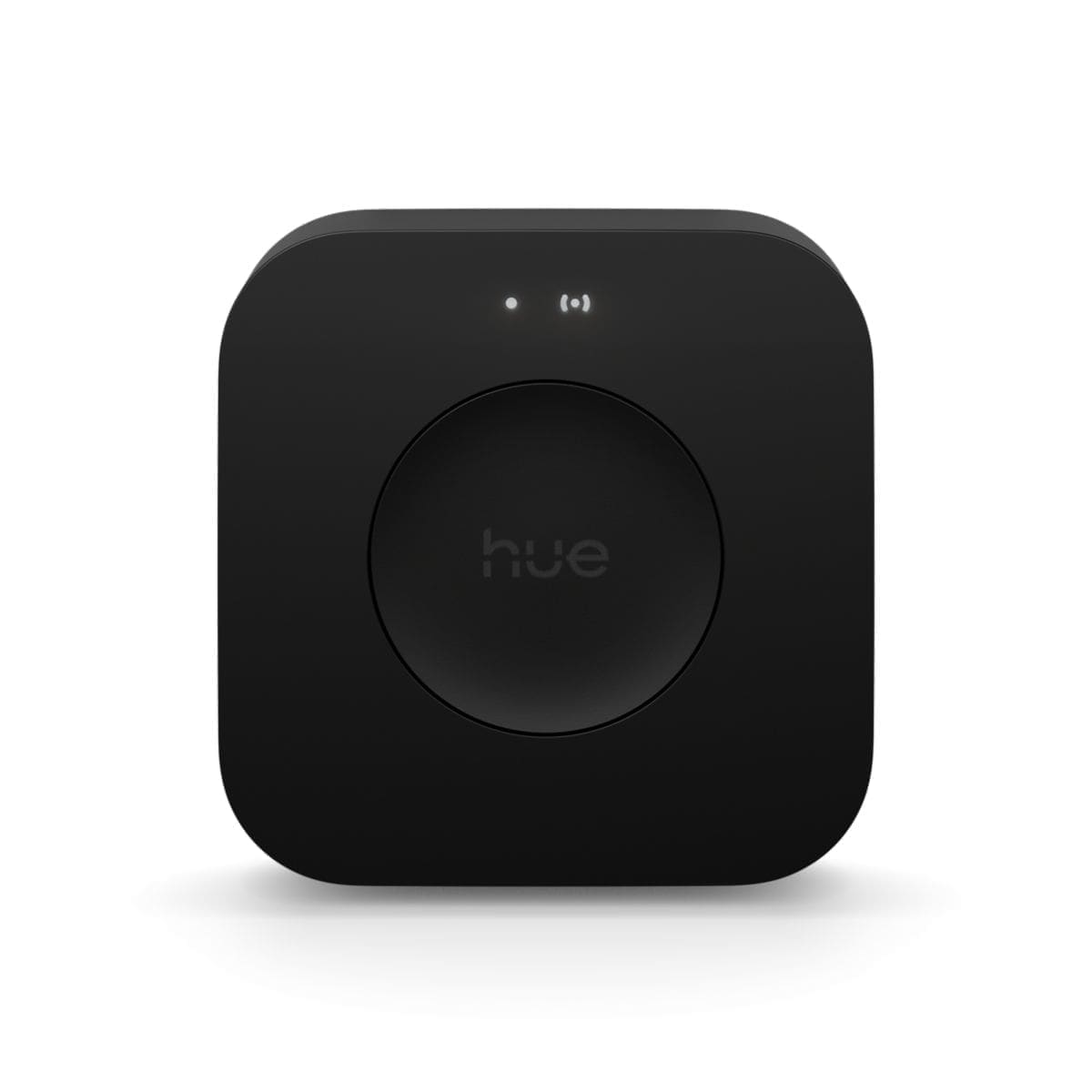
- Philips Hue Bridge — Innr bulbs pair instantly and appear as third-party lights. You get full on/off and dimming control via the Hue app; colour temperature and RGBW control also work. Scenes and automations function as expected.
- Home Assistant (via Zigbee2MQTT or ZHA) — full integration with all attributes exposed. If you are setting up a Home Assistant Zigbee network, Innr is one of the most widely tested brands in the community.
- Amazon Echo (4th gen and later) — the 4th-generation Echo has a built-in Zigbee hub, so Innr bulbs pair directly without any additional hardware.
- Samsung SmartThings — compatible as a standard Zigbee light.
- IKEA Dirigera and older TRADFRI hub — Innr bulbs pair reliably with IKEA hubs. For a comparison of the IKEA ecosystem, see our IKEA TRÅDFRI review.
The Innr app is available on iOS and Android and works as a standalone option if you have no existing hub. In practice, however, it offers fewer automation features than Home Assistant or even the Hue app. Most users with an existing smart home ecosystem will never open it.
Performance: Dimming, Brightness, and Reliability
Dimming is one of Innr's genuine strengths. The bulbs dim smoothly from full brightness down to around 1–2% without flicker or the sudden drop-off that cheaper Zigbee bulbs can suffer. Low-level dimming is particularly impressive — at 5% the warm white GU10 gives a good nightlight glow without any visible stutter.
Zigbee range and mesh performance are widely reported as solid, with multi-room installs described as reliable and free of drop-outs or delayed responses. Innr bulbs are known to act as good Zigbee repeaters, strengthening the mesh for other devices.
For RGBW models, colour accuracy is reasonable for consumer smart lighting. Reds and blues are vivid; greens are slightly less saturated than Hue's Colour Ambiance range at similar brightness levels. For most use cases — accent lighting, evening scenes, mood lighting — the difference is not meaningful.
Startup time after a power cut is fast: bulbs return to their last state within two to three seconds.
Energy Use and Running Costs
At 4.8W for the GU10 and 8.5W for the E27, Innr bulbs are efficient replacements for older halogens. A GU10 running eight hours a day uses roughly 14kWh per year — at current Ofgem price cap unit rates, that works out to around £3.50 per year per bulb. Replacing four 50W halogens in a downlight fitting could save around £50 a year in electricity alone.
Value vs Philips Hue
Philips Hue GU10 bulbs cost around £25–£30 each; Innr GU10s cost roughly £9.99. For a four-bulb downlight fitting, the saving is over £60. Given that both brands are Zigbee 3.0 and both work perfectly on a Hue Bridge, the main trade-offs are subtle colour accuracy differences and the Hue-exclusive features like Entertainment mode and out-of-home control via the Hue app (which requires the Hue Bridge regardless).
For a broader picture of where Innr sits in the market, see our roundup of the best smart bulbs in the UK.
If budget is the priority and you do not need Hue's premium features, Innr is the more sensible choice for bulb-for-bulb replacement. If you want deep Hue integration — sync with entertainment, precise Circadian Rhythm schedules, or the Hue gradient range — the Hue premium is more justified.
Verdict
Innr smart bulbs are the best-value Zigbee bulbs available in the UK for anyone who already owns a compatible hub. The Zigbee 3.0 standard means they slot into Hue, Home Assistant, SmartThings, and Amazon Echo setups without friction. Dimming performance is excellent, the mesh is reliable, and the price per bulb is hard to beat.
The Innr app is not a reason to buy; this is a brand for people already invested in a smart home ecosystem. If you are starting from scratch, a Philips Hue starter kit gives you the bridge, app, and bulbs in one package — but for anyone expanding an existing Zigbee network, Innr is the smarter buy.
Related: best smart bulbs UK, Zigbee2MQTT setup guide, Philips Hue vs LIFX comparison, and our Innr FL 250 C LED strip review.