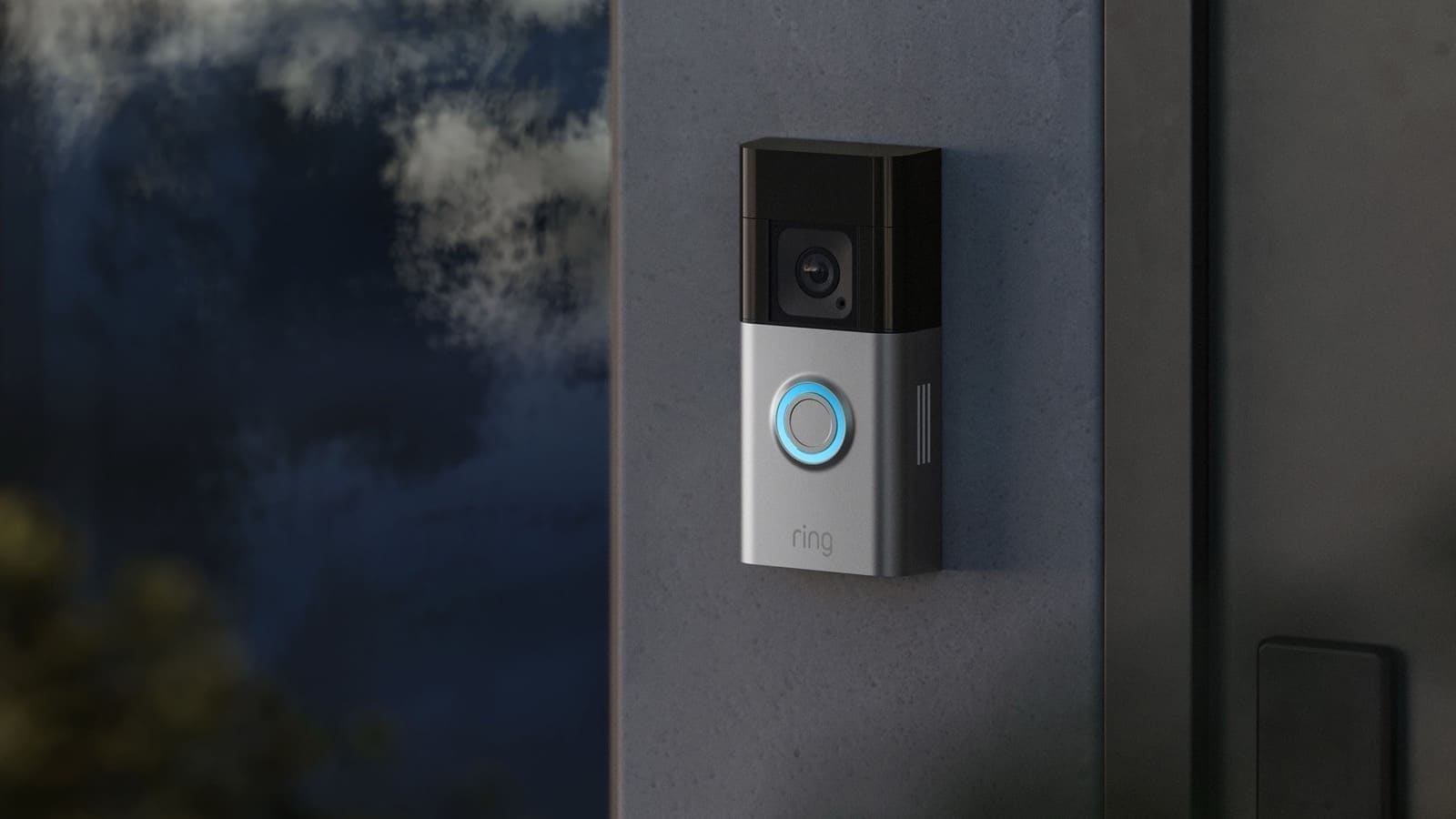
What the Ring Doorbell Range Looks Like in 2026
Ring sells several doorbell models in the UK, but three are most relevant for the average buyer:
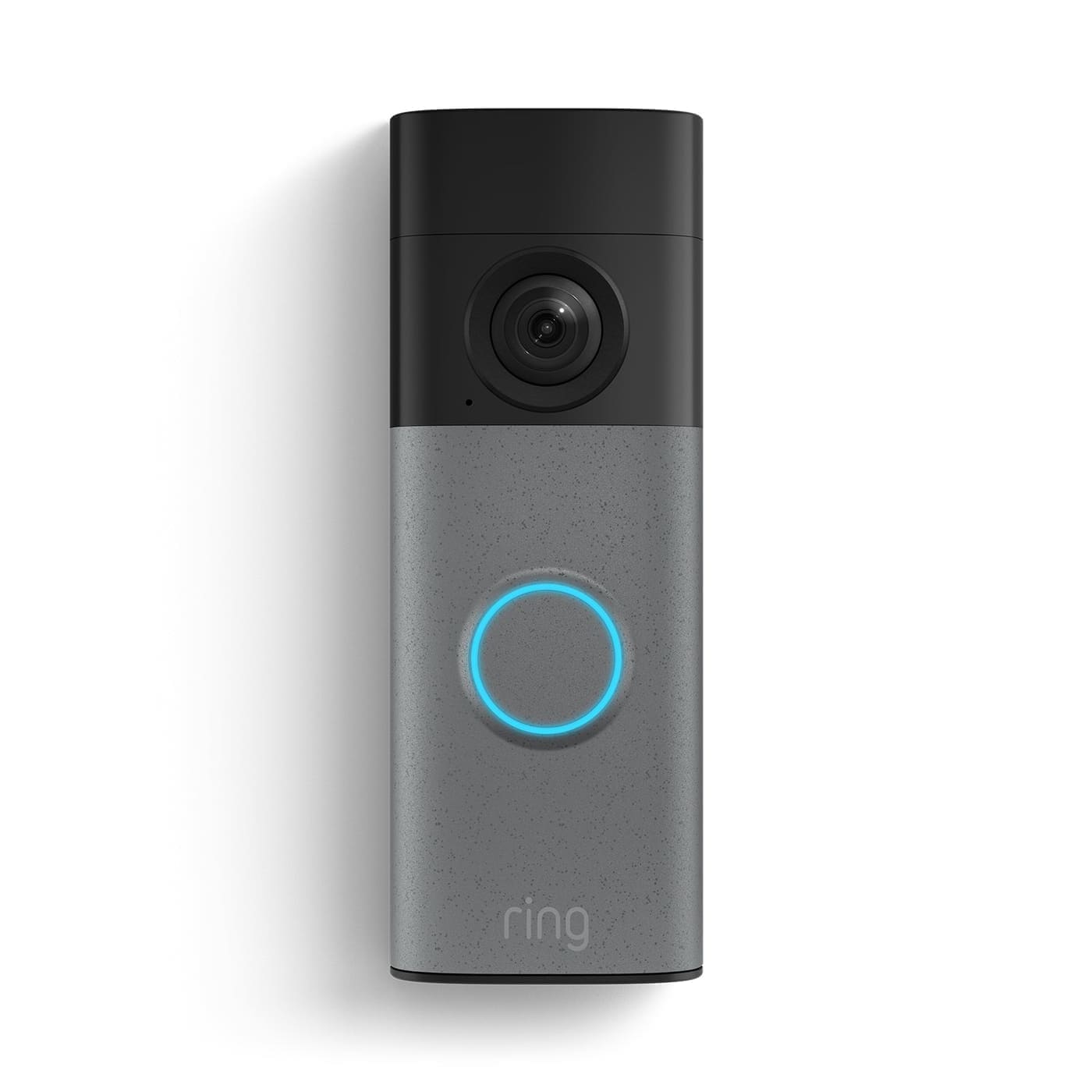
- Ring Video Doorbell Wired (£49.99). The entry point. Requires existing doorbell wiring or a plug-in adapter. Records in 1080p HD with a 155-degree field of view and two-way talk. No battery to charge, but installation is slightly more involved.
- Ring Battery Video Doorbell (£99.99). The best-selling wireless option. Records 1440p video with colour night vision and a head-to-toe field of view. Runs on a removable rechargeable battery or can be hardwired. Real-world battery life varies from around three to six months depending on how much motion it detects.
- Ring Battery Video Doorbell Pro (£219.99). Ring's flagship battery model. Shoots in Retinal 4K with up to 10x digital zoom, adaptive colour night vision (useful on lit porches), and radar-powered 3D motion detection that reduces false alerts. The price jump is significant, but the video clarity is a genuine step up.
The discontinued Ring Video Doorbell 4 (1080p, 160° × 84° field of view, dual-band Wi-Fi) still circulates on Amazon Warehouse and eBay at reduced prices — it remains supported with security updates for four years from purchase, so it can still represent decent value if you find one cheaply.
Renters who cannot drill into a door frame for a bracket have another option: the Ring Peephole Cam 2K clips over an existing door peephole rather than replacing it, so there is nothing to unscrew and nothing for a landlord to object to.
What You Actually Get Without a Subscription
This is the question most marketing material sidesteps. Without a Ring Protect plan, you can access live view from the Ring app at any time, receive motion and doorbell-press alerts, and use two-way talk. What you cannot do is review or download recorded clips after the fact. If someone rings the doorbell while you are on the bus and you miss the notification, you have no way to see who it was. There is no local storage option on any Ring model — everything is cloud-dependent.
If you want to save and review video history, you need a paid plan. Ring renamed its plans in 2026:
- Ring Solo — £4.99/month or £49.99/year. Covers one device at one address. Includes up to 180 days of video history, person/package/vehicle alerts, and extended live view.
- Ring Multi — £7.99/month or £79.99/year. Covers all devices at one address, adds multi-camera live view and video preview alerts in notifications.
- Ring Pro — £15.99/month or £159.99/year. Adds AI-generated video descriptions, familiar faces recognition, video search, and alarm cellular backup.
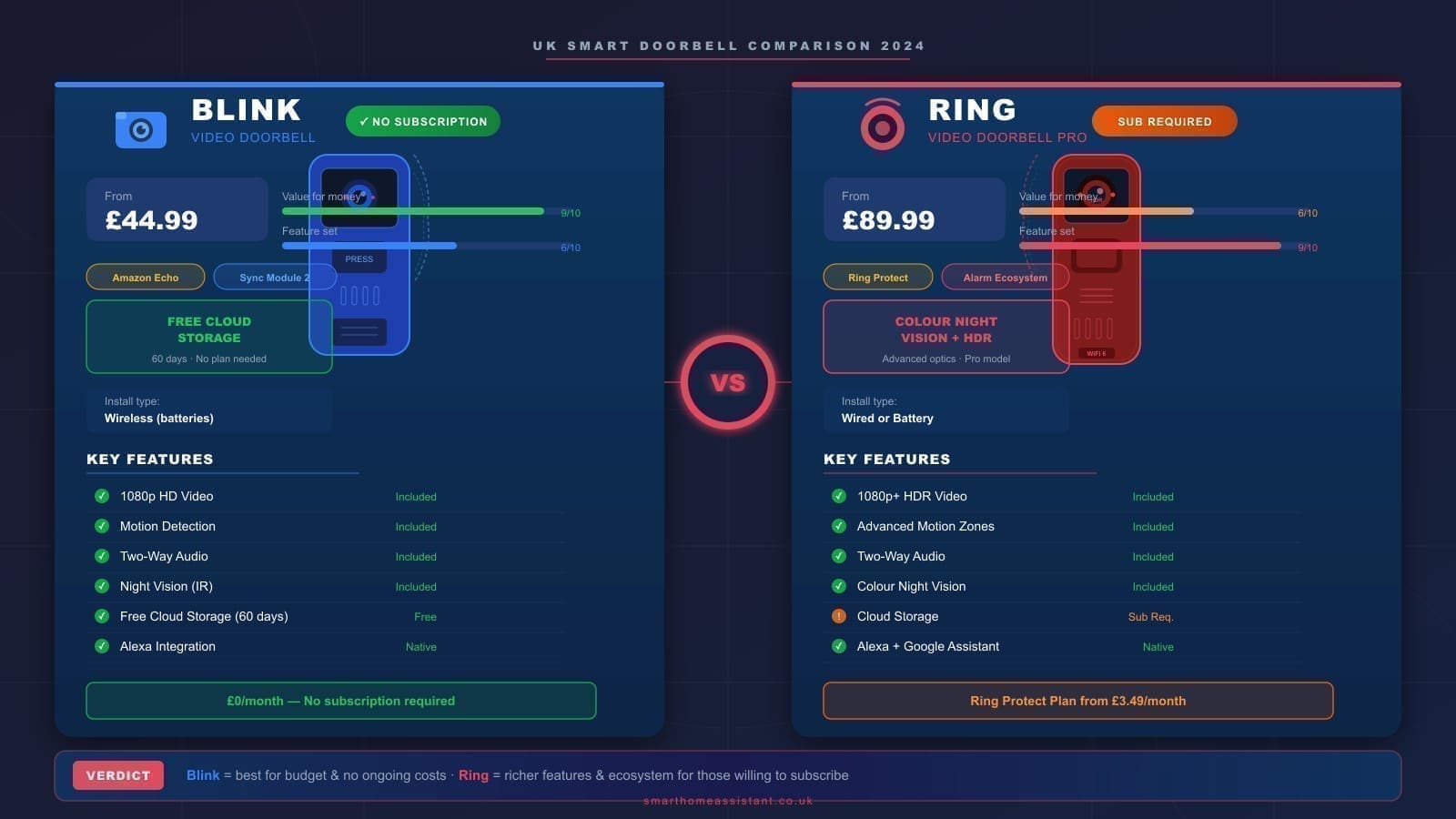
For most single-doorbell households, Ring Solo at £49.99 per year is the minimum meaningful spend. Over three years that is around £150 on top of the hardware, which changes the value calculation considerably. For a full breakdown of what each tier unlocks, see our guide to Ring doorbell full review.
Is the Ring Doorbell Worth It for UK Homes?
For most buyers the answer is: yes, with caveats. Ring doorbells are well-built, straightforward to install, and the app experience is polished. Alexa integration is seamless — if you already use Echo devices, a Ring doorbell will announce visitors on every speaker in the home. The video quality on the Battery Video Doorbell and above is genuinely good for the price point.
Where Ring earns its value clearly:
- You live in a house with existing doorbell wiring (the Wired model at £49.99 is hard to beat).
- You are already invested in Amazon Alexa devices and want tight ecosystem integration.
- You want a recognised deterrent brand — the Ring logo is well known to opportunistic burglars.
- You want a professional-looking device with strong app support and regular software updates.
Where Ring becomes poor value:
- You are unwilling to pay a subscription — the live-view-only experience is frustrating in practice.
- You use Google Home or Apple HomeKit as your primary smart home hub. Ring is Alexa-only; there is no Google Home integration and HomeKit support is absent.
- You have a slow or unreliable Wi-Fi signal near your front door — Ring requires a minimum 2 Mbps upload speed and around 37% of users report connectivity problems on 2.4 GHz networks.
- You want local video storage or Matter compatibility for future-proofing.
Privacy and GDPR: What UK Buyers Must Know
This is where Ring ownership in the UK carries genuine legal responsibilities. If your doorbell camera captures footage of a public pavement, your neighbour's driveway, or any area beyond your own curtilage, you become a data controller under the UK General Data Protection Regulation (UK GDPR) and Data Protection Act 2018. The Information Commissioner's Office (ICO) has made clear that homeowners can be liable for how that footage is stored and used.
In a notable 2021 Oxford County Court ruling, a homeowner whose Ring camera filmed a neighbour's property was found liable for harassment, nuisance, and data protection breaches — a precedent that affects over 100,000 Ring owners in the UK.
In October 2025, Amazon rolled out a Familiar Faces recognition feature via the Ring Pro plan. The ICO has confirmed it is examining the feature's compliance with UK data protection law, specifically because the facial recognition applies to all faces captured by the camera, not just the device owner.
The practical guidance: angle your doorbell so it captures only your own property, display a CCTV notice near your front door, and be aware that sharing footage with third parties (including via the Ring Neighbours app) may have legal implications.
How Ring Compares to the Main Alternatives
Ring is not the only option, and depending on your priorities, a competitor may serve you better. For a full comparison see our Ring vs Google Nest doorbell UK comparison.
- Google Nest Doorbell (Wired). Offers always-on 1080p streaming and free 3-hour event history with no subscription, plus full Google Home and Matter support. Subscription unlocks 60-day history. Better choice if your home runs on Google Home.
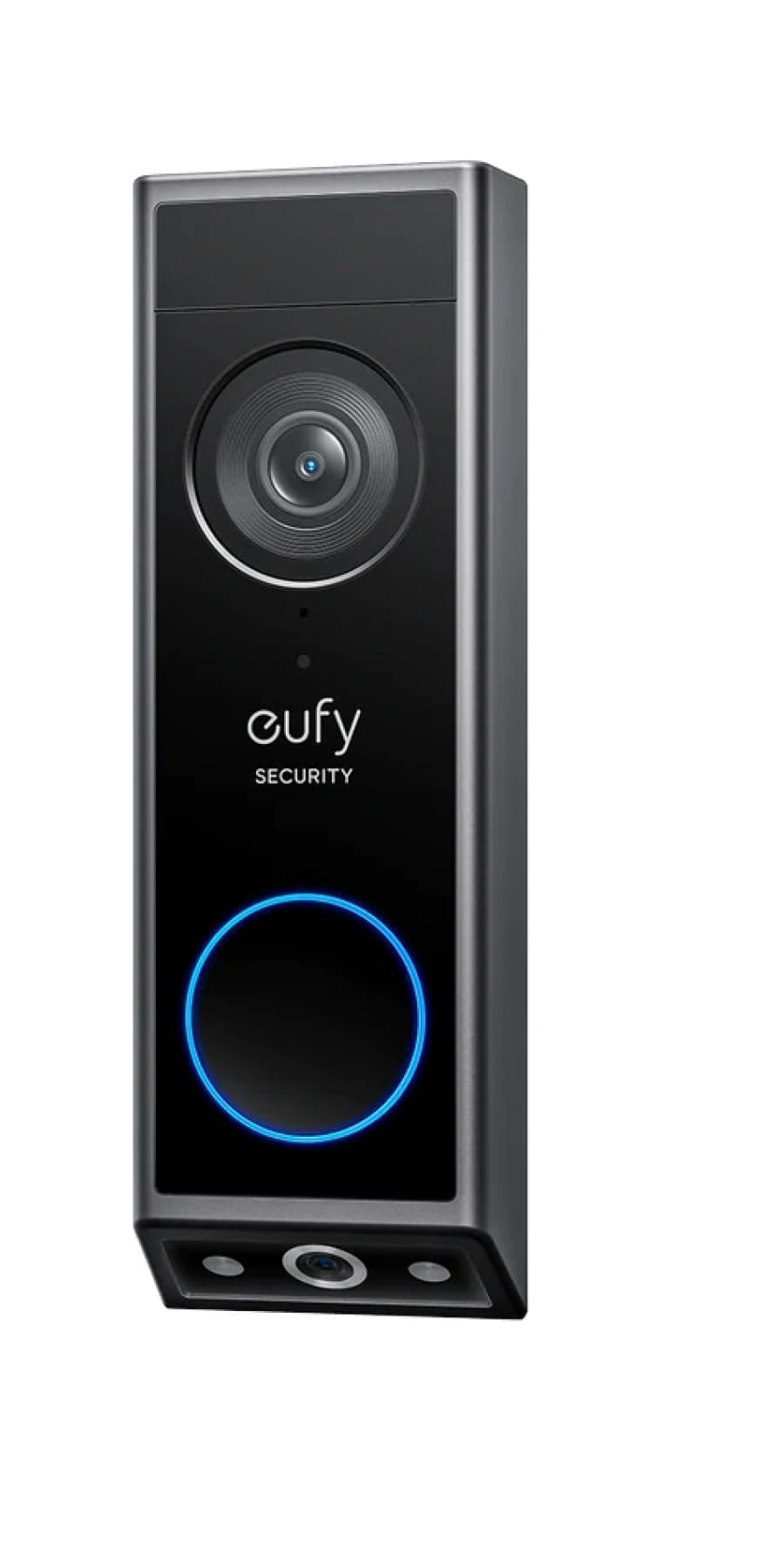
- Eufy Video Doorbell E340. Local storage via microSD or home base — no subscription required ever. 2K dual-lens video. HomeKit compatible. The upfront cost is higher, but there are no ongoing fees. One of our top picks in the best doorbells without subscription round-up.
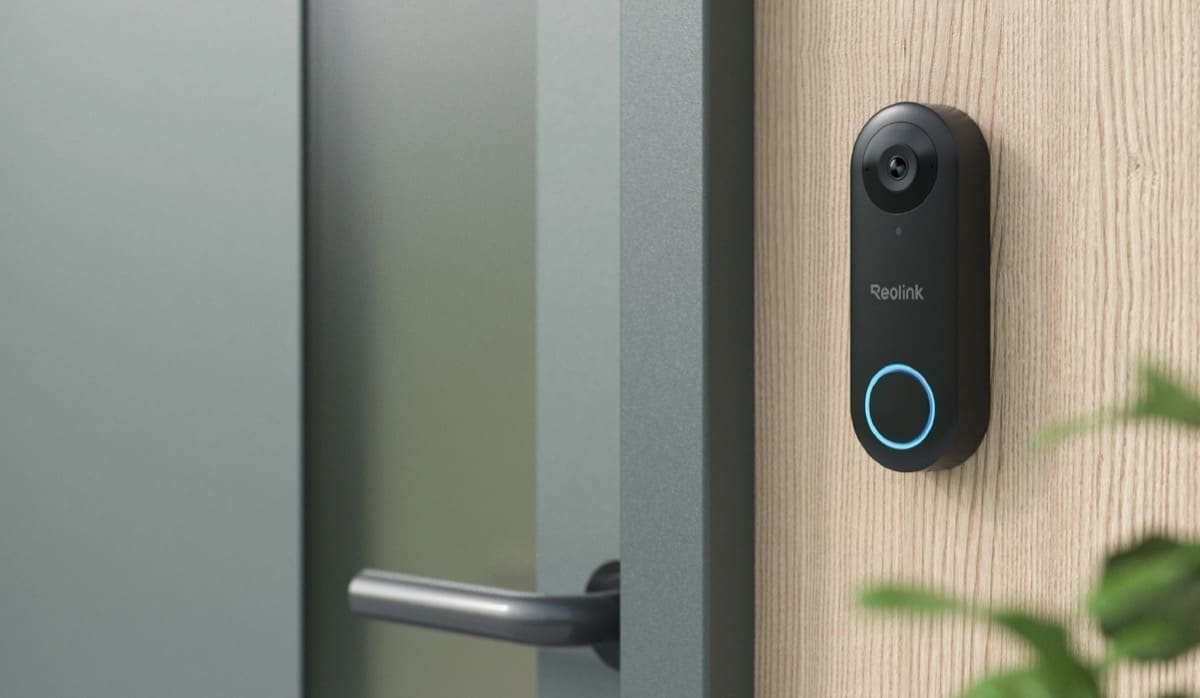
- Reolink Video Doorbell PoE. Powers and connects via a single Ethernet cable — ideal for homes with poor Wi-Fi at the front door. RTSP and ONVIF support means it integrates directly with Home Assistant, Frigate, or Blue Iris. No subscription at all.
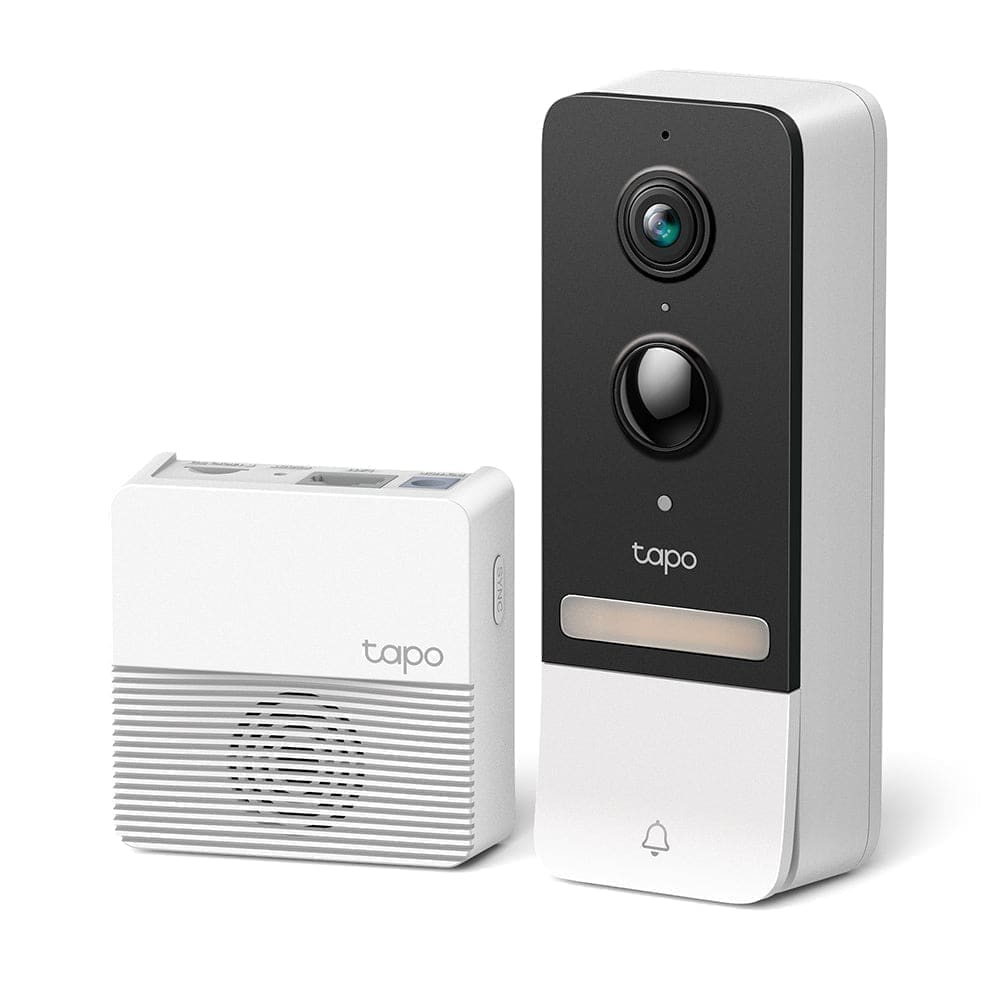
- Tapo D230S1 (TP-Link). Around £45 at UK retailers. 2K video, microSD local storage, and free cloud snapshot storage. Strong value for budget buyers who do not need brand recognition.
For the broadest view of what is available, our best video doorbells UK guide covers 10 models tested side by side.
The Honest Verdict
Ring doorbells are worth it for a specific type of UK buyer: someone who already uses Alexa, is comfortable with a subscription, and wants a mature, well-supported product with good app quality and installation support. The Ring Video Doorbell Wired at £49.99 plus Ring Solo at £49.99 per year — around £100 in year one — is a competitive package that is hard to fault on functionality.
For buyers who dislike subscriptions, prefer Google Home or HomeKit, or want local storage, Ring is the wrong choice. Eufy and Reolink both deliver comparable or better video quality at lower total cost over a three-year period because there is no compulsory recurring fee eating into the value.
The privacy dimension is not a dealbreaker, but it is a genuine responsibility that Ring's marketing does not draw attention to. Understand your obligations before you point a camera at your front path — and consider that Amazon's Familiar Faces AI feature adds a new layer of data processing to what sits above your doorbell.