Step 1 — Identify your door type
UK front doors fall into three broad categories, each with a different lock mechanism. Getting this right before you order anything will save you a wasted return.
uPVC and composite doors
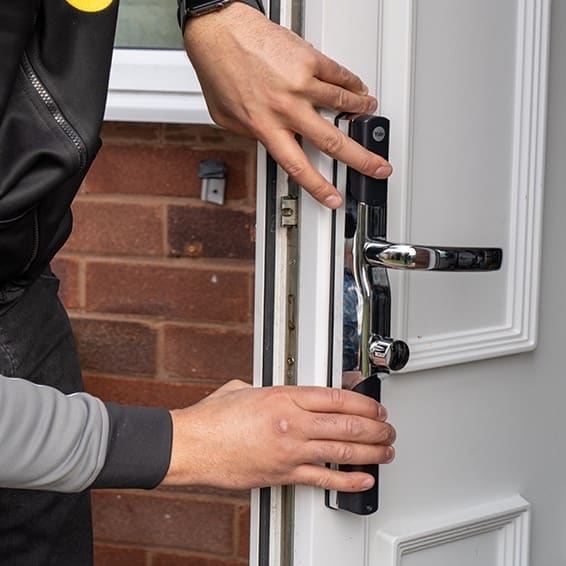
Most UK homes built after 1990 have a uPVC or composite door. These almost always use a euro profile cylinder — the oval barrel you insert your key into — combined with a multipoint locking system that shoots bolts into the frame at three or more points when you lift the handle and turn the key. This is the most common configuration for smart lock upgrades in the UK, because dozens of products simply slot in where your existing cylinder sits.
To confirm you have a euro cylinder: look for an oval, dumbbell-shaped keyhole on the edge of your door. The cylinder is held in by a single screw on the door face. Measure from the centre of the screw hole to each end of the cylinder — you will need this measurement (e.g. 35/45 mm) when ordering a replacement.
Timber doors with a mortice lock
Older timber doors — common in Victorian and Edwardian properties — typically use a five-lever mortice deadlock. This is a lock body recessed into the door itself, operated by a long-shanked key. A five-lever mortice deadlock rated to BS3621 is the gold standard for UK home insurance (see below). Smart lock options for mortice doors are more limited: you either convert the door to a euro cylinder (straightforward locksmith work, typically £60–£120) or use a retrofit device that mounts over the internal thumb-turn if one is fitted.
Timber doors with a night latch (rim lock)
Night latches — often called Yale locks — are surface-mounted on the inner face of the door. They auto-lock when the door closes, with a cylinder on the outside and a snib or lever on the inside. Many older flats and Victorian semis still rely on them as the primary lock. Retrofit smart locks that clamp onto the internal turn are the simplest upgrade here, though you may want to add a separate BS3621 mortice deadlock if your insurer requires one.
Step 2 — Understand BS3621 and your insurance
BS3621 is the British Standard for thief-resistant locks. Most UK home insurers require at least one BS3621-rated lock on every external door as a condition of cover — failing to meet this requirement can invalidate a claim even if the lock itself was not the point of entry.
Here is the key distinction that catches many smart lock buyers out:
- Retrofit over-the-thumb-turn devices (such as the Nuki Smart Lock 4) mount on the inside of your door and rotate your existing cylinder. Your original BS3621-rated cylinder stays in place, so you remain compliant. You simply need to remember to lift the handle to engage the multipoint bolts on a uPVC door before the smart lock can turn the mechanism.
- Cylinder-replacement smart locks (such as the Yale Conexis L2) replace your existing cylinder entirely. Check whether the replacement cylinder carries a TS007 3-Star or equivalent security rating, and confirm with your insurer that the product is accepted. The Yale Conexis L2 is Secured by Design approved and BSI IoT Kitemark certified, which most major UK insurers accept.
If in doubt, call your insurer before you fit anything. Asking takes five minutes; an invalid claim could cost thousands.
Step 3 — Choose your smart lock type
Retrofit over-the-thumb-turn (the easiest route)
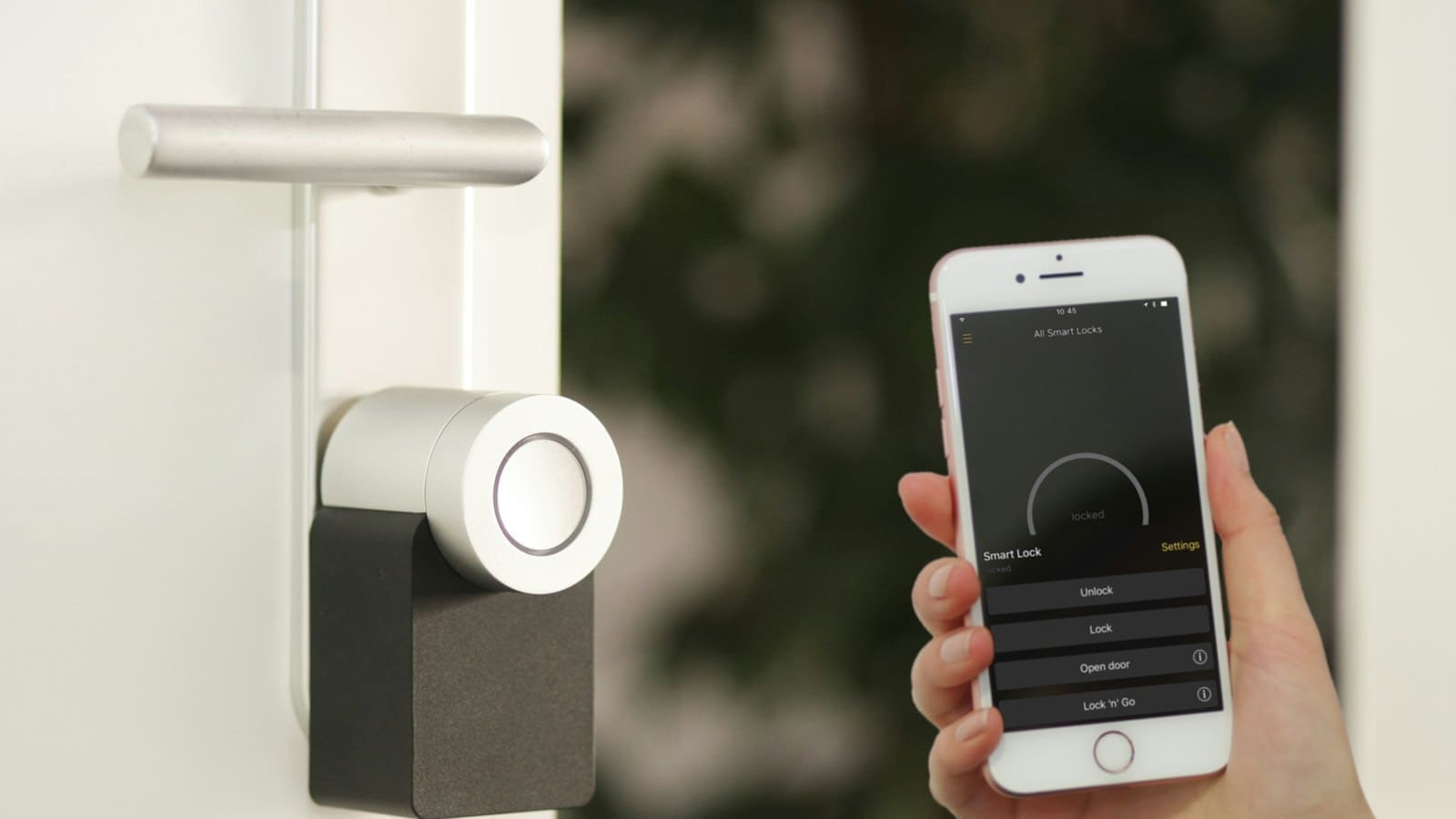
Retrofit locks clamp onto the internal thumb-turn of your existing cylinder and motorise it. No drilling, no cylinder removal, no locksmith needed. If you rent, or simply want reversibility, this is the clear choice. The Nuki Smart Lock 4 review covers the leading example in detail — it supports Bluetooth, Wi-Fi, Matter, and Thread, and pairs natively with Home Assistant via the Nuki Bridge or Matter integration.
Downsides: the device adds bulk to the inside of your door and relies on the existing cylinder for physical security. On uPVC multipoint doors, you still need to manually lift the handle to engage all the bolts; the motor only turns the cylinder after that step.
Smart euro cylinder replacement
A smart euro cylinder replaces your standard cylinder entirely. Products like the Tedee Pro or Danalock V3 look like a normal cylinder from the outside but contain a motor, battery, and Bluetooth/Zigbee radio inside. They offer a cleaner installation and are often more aesthetically discreet. Measure your existing cylinder carefully before ordering — a cylinder that is too long or too short will be a security risk.
Full smart lock replacement (handle + mechanism)
Products like the Yale Conexis L2 replace the entire handle-and-lock assembly, including the multipoint mechanism. This is the most integrated solution: lifting the handle engages the motor, which drives all the multipoint bolts. Our Yale Conexis L2 review goes into the full installation experience — expect around 45–60 minutes and a second pair of hands to be helpful. The lock is operated by key card, key fob, or smartphone, with no traditional key cylinder at all, which also means there is no external keyhole to pick or snap.
Gates, glass doors and rim doors: the exception
None of the above fit every door. Gates, frameless glass doors, and older surface-mounted rim locks can't take a retrofit thumb-turn or a euro cylinder swap, because there is no standard cylinder to work with in the first place. The Aqara U500 smart lock UK review covers the one mainstream range built specifically for these door types, running Matter over Thread so it still pairs with Home Assistant like the locks above.
Step 4 — Gather your tools
For a retrofit job you will need very little:
- A small flat-head and Phillips screwdriver
- The smart lock itself and its mounting adapter (usually included)
- A tape measure (for verifying thumb-turn protrusion)
- A fully charged phone to complete the app setup
For a cylinder-replacement job, add:
- The new euro cylinder (correctly sized — measure twice)
- A 5 mm or 6 mm Allen key (most euro cylinders use an M5 grub screw)
- A long flat-head screwdriver to remove the faceplate screw
For a full handle-and-mechanism replacement, follow the manufacturer's installation guide exactly — some products ship a template that you tape to the door to mark new fixing holes, though most replace an existing multipoint unit on the same fixing centres.
Step 5 — Installation walkthrough (retrofit)
The following steps apply to the most common retrofit scenario: a Nuki-style device on a uPVC door with a euro cylinder and thumb-turn.
- Check thumb-turn protrusion. The thumb-turn must protrude at least 3 mm from the backplate for the adapter to grip. Most Nuki adapters cover the common Yale, Winkhaus, and Mila-branded thumb-turns found on UK doors.
- Fit the mounting plate. Use the supplied adhesive pad or screws (into the door — not the frame) to attach the base plate at the correct height over the thumb-turn. Do not overtighten — the plate must be able to spin freely.
- Attach the motor body. Slide the smart lock body onto the mounting plate, ensuring the adapter engages the thumb-turn. Most units click into place and can be removed without tools.
- Calibrate via the app. Open the manufacturer's app and follow the calibration wizard. The motor will rotate to find the locked and unlocked positions — watch the thumb-turn move and verify the door bolt actually extends.
- Test manually first. Before trusting the app, lock and unlock several times using the manual override on the device body. Only then test via Bluetooth, and finally via remote (if you have a bridge or Wi-Fi).
- Add to your smart home. For Home Assistant users, the Nuki Bridge adds the lock as a
lockentity with lock, unlock, and unlatch services. The Home Assistant UK setup guide covers the initial HA configuration if you are new to the platform. If you want to go deeper — automating the lock with presence detection or creating a guest access schedule — see our roundup of the best smart locks UK for a comparison of Home Assistant compatibility across all the leading models.
Step 6 — Euro cylinder replacement walkthrough
If you are swapping in a smart euro cylinder (or converting a mortice door to euro), the process is as follows:
- Open the door and remove the faceplate screw. Look along the edge of the door for a single screw in the faceplate that runs through the door into the cylinder — usually M5 or M6. Remove it.
- Insert the old key and turn 10–15 degrees. This retracts the cam inside the cylinder, allowing it to slide out of the lock body. If the key does not turn at all, the cylinder may be anti-snap — you may need to break the snap-point deliberately with pliers (on the old, defective cylinder only).
- Slide the cylinder out. Pull from the outside while wiggling gently. Note the orientation of the cam lever in the middle.
- Slide the new cylinder in. Insert the new smart cylinder, ensuring the cam aligns with the lock body. Insert the supplied key (or calibration tool) to rotate the cam into the unlocked position so it seats flush.
- Refit the faceplate screw. Do not overtighten — snug is enough.
- Test the lock mechanically before closing the door. Lock, unlock, lock again. Only close the door once you are satisfied.
Should you hire a locksmith?
For a retrofit device, a competent DIYer should have no difficulty. For a cylinder replacement, it is still within most people's abilities — just buy the correct size cylinder and follow the steps above carefully. For a full handle-and-mechanism swap on a multipoint uPVC door, professional installation is worth considering if you are not confident with the faceplate removal and fixing realignment.
Professional installation costs in the UK typically run from £50 to £100 for a smart lock fitting, on top of the product cost. Some manufacturers — Yale, for example — offer an installation package at point of sale for around £100–£130 all-in.
Multipoint doors: one important caveat
On uPVC and composite doors with multipoint locks, the smart lock can only turn the euro cylinder — it cannot lift the handle. This means the multipoint bolts engage only when you lift the handle before the motor locks. If you walk out without lifting the handle, the door will be on the latch only (secured by the spring latch, not the multipoint bolts). Build the habit of always lifting the handle as you leave, or look for products like the Yale Conexis L2 that motorise the handle-lift as part of the locking sequence.