Everything Smart Technology
Everything Presence One
- Native integration
- Local control
- Wi-Fi
- Bluetooth
Prices verified September 2026
See more sensors picks on our Amazon storefront →Our verdict
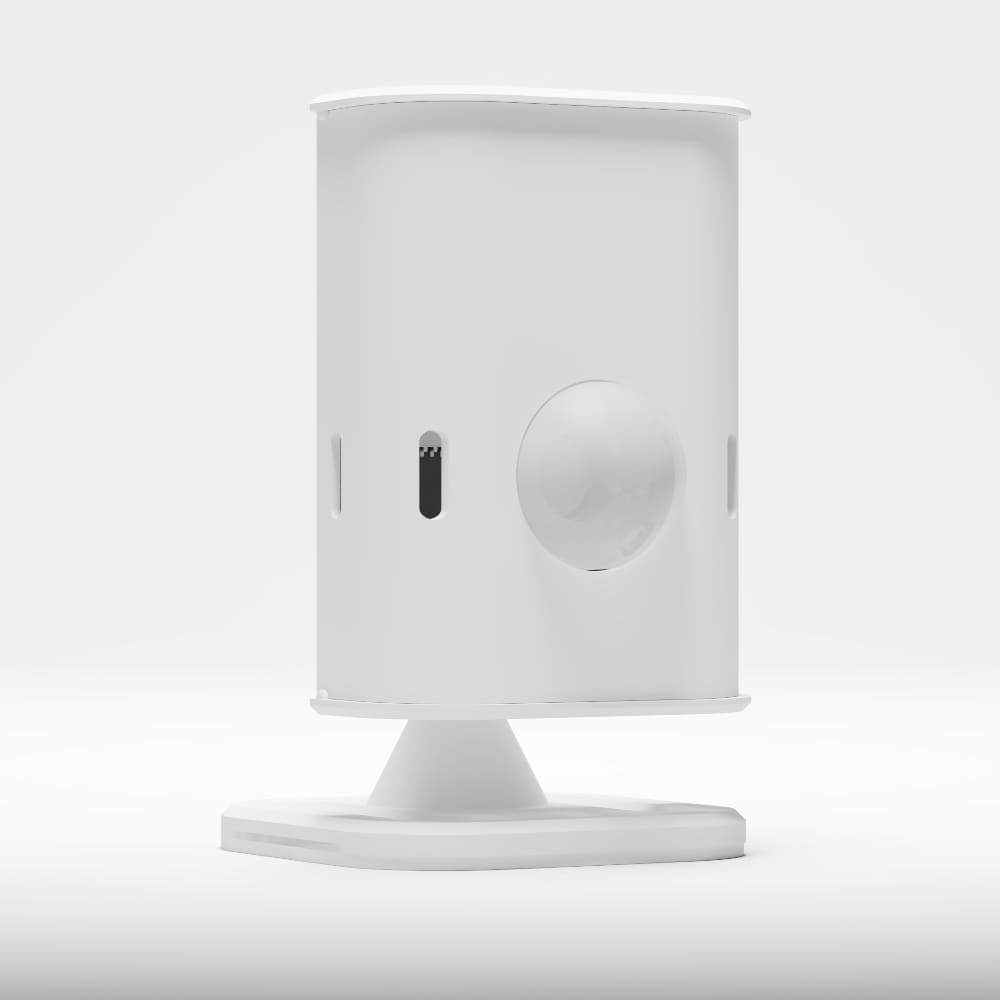
Built by the same UK team that runs the Everything Smart Home YouTube channel, and it shows: the board ships bare with two M3 mounting holes rather than a finished enclosure, so out of the box it's a shelf or wall unit — ceiling mounting means printing a community bracket first. At £47 it undercuts the Aqara FP1E by a few pounds while adding PIR, temperature, humidity and light sensors the FP1E doesn't have, plus fully open-source ESPHome firmware you can fork and re-flash. That openness is the real draw for tinkerers; if you just want a sensor that works, the FP1E's finished case is less fuss.
What can Home Assistant control on the Everything Presence One?
| Control | Type | What it does |
|---|---|---|
| mmWave | Binary sensor | Raw output of the mmWave radar — detects micro-movement through fabric/furniture but is the most prone to false triggers from moving curtains or fans. |
| Motion (PIR) | Binary sensor | PIR output, independent of the mmWave reading — a clean signal for gating automations that need to ignore mmWave's occasional false positives. |
| Occupancy | Binary sensor | Logical OR of mmWave and PIR; goes clear only once both underlying sensors are clear, giving the most conservative presence signal for lighting hold-on logic. |
| mmWave off latency | Number (ms) | Clear-state debounce — how long the mmWave sensor must see no movement before flipping to clear; the main lever for eliminating flicker-off during brief stillness. |
| mmWave sensitivity | Number | Controls how strongly the radar reacts to small movement — lowering it is the standard fix for curtain/fan-induced false positives. |
| Distance zones | Number (cm ranges, upgraded hardware only) | Independently enabled range pairs restricting where in the room the mmWave sensor is allowed to register motion. |
EP1 exposes three separate motion binary sensors rather than one blended value: mmWave and PIR report independently, and a third occupancy entity ORs them together (clear only when both are clear) — so automations needing the toughest anti-false-negative signal should watch occupancy, while automations needing to suppress curtain/fan false triggers should watch PIR alone. Later hardware revisions can run an upgraded mmWave module that adds up to four configurable distance zones alongside separate trigger and sustained sensitivity sliders — a real step up from the base module's single range/sensitivity pair. All of it is exposed as ESPHome number/switch entities with no cloud round-trip, so tuning is a local dashboard slider change rather than a re-flash.
Specs
| power | USB-C, 5V/500mA (or 5V header input); idle draw approx. 160mA |
|---|---|
| firmware | Ships pre-flashed with open-source ESPHome firmware; fully re-flashable, 4 GPIO pins exposed for expansion |
| mounting | Bare PCB with two M3 mounting holes; no enclosure or ceiling bracket in the box, so it's shelf/wall placement out of the box — ceiling mounting needs a third-party or community-printed bracket |
| dimensions | 65 x 49 x 50 mm, 45.3 g |
| sensor type | mmWave presence (24 GHz radar, SEN0609 module) + PIR + on-board temperature/humidity + ambient light |
| connectivity | Wi-Fi 2.4 GHz, Bluetooth 5.0 LE (Bluetooth proxy capable) |
| detection range | mmWave up to 25 m at 100 x 40 degree field of view; PIR up to 12 m (Panasonic EKMC1603111/3) |
How does the Everything Presence One compare?
| Product | From | Protocol | Local control | Integration |
|---|---|---|---|---|
| Everything Presence One (this product) | £47 | Wi-Fi, Bluetooth | Yes | Native |
| Aqara Door and Window Sensor P2 | £23.99 | Matter, Thread | Yes | Works with HA |
| Aqara Motion Sensor P1 | £18.99 | Zigbee | Yes | Zigbee2MQTT / ZHA |
| Aqara Multi-State Sensor P100 | £25.49 | Zigbee, Thread, Matter | Yes | Zigbee2MQTT / ZHA |
Frequently asked questions
- Does the Everything Presence One work with Home Assistant locally?
- Yes. The Everything Presence One is controlled locally in Home Assistant through a built-in Home Assistant core integration (esphome), so it keeps working if your internet connection or the Everything Smart Technology cloud goes down. Control and state updates stay on your own network.
- Which protocol does the Everything Presence One use, and do I need a hub?
- The Everything Presence One uses Wi-Fi and Bluetooth. To pair it with Home Assistant you need no hub — it joins your Wi-Fi network directly; or a Bluetooth adapter on your Home Assistant host or an ESPHome Bluetooth proxy. Everything Smart Technology's own hub is not required when you integrate through a built-in Home Assistant core integration (esphome).
- How much does the Everything Presence One cost in the UK?
- The lowest price we have listed for the Everything Presence One is £47 at Everything Smart Home. Prices were last checked in September 2026 and change often, so confirm on the retailer's page before buying.