How we chose these smart air purifiers
We started with two hard requirements: a genuine Wi-Fi connection with an app, and a documented route into Home Assistant, whether official or community-built. A purifier with only a remote and an app is fine to live with, but it cannot feed a dashboard or be scripted. Then we ranked on what decides whether a purifier is actually used: the manufacturer's clean air delivery rate (CADR) against the room it will sit in, noise on the quietest setting, warranty length, and whether the Home Assistant connection runs locally or through the maker's cloud. We left out Dyson, because Home Assistant's own Dyson integration page now says the integration has been removed, and we left out ozone or ioniser gadgets. Prices are UK list or single-retailer figures seen in September 2026 and move often, so treat them as bands. If you are also worried about damp, our guides to the best smart dehumidifiers and best humidifiers cover the other half of the air-quality kit.
How big an air purifier does your room need?
Match the purifier's CADR to your room, not to the biggest number on the box. CADR is the volume of cleaned air a unit delivers per hour, and makers publish a room size at a stated number of air changes per hour. Levoit, for example, lists the Core 300S as covering about 219 sq ft (roughly 20 m²) at 4.8 air changes an hour, and the Core 400S as covering about 358 sq ft (roughly 33 m²) at the same rate. Xiaomi's 4 Pro is quoted at 35-60 m² and Philips's 3000i at up to 135 m², but those figures assume fewer air changes an hour, so they flatter the result in a bedroom where you want the air turned over quickly. Read the air-changes figure before you compare.
Best smart air purifiers UK 2026: our four picks
These four cover a bedroom buy, a local-control buy, a big-room premium buy and an open-plan alternative. All use HEPA-class filtration with an activated carbon layer.
1. Levoit Core 300S — best overall
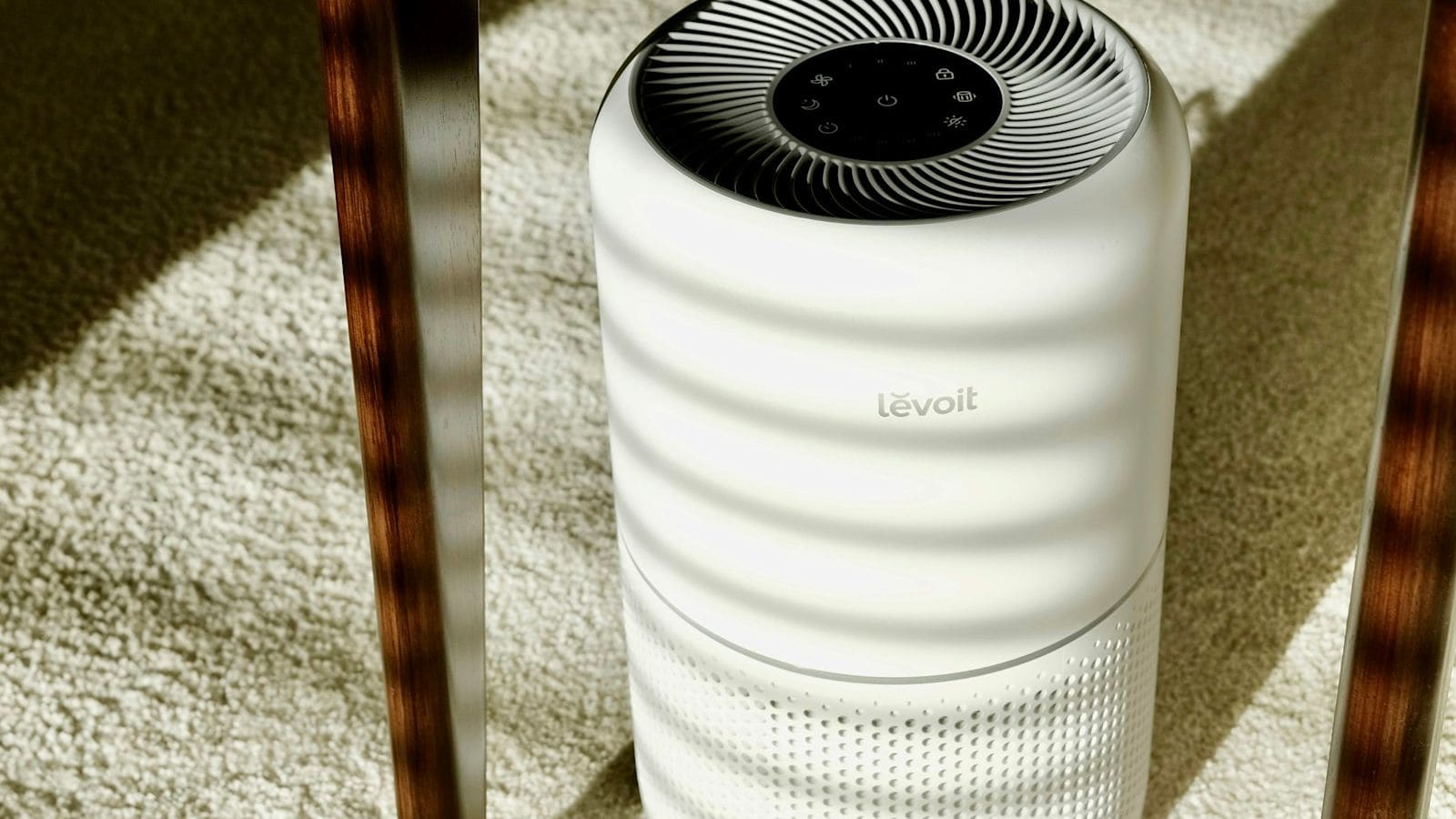
Who it's for: anyone cleaning the air in a bedroom, home office or small living room who wants a finished product that works with Alexa or Google Assistant and needs no tinkering. Levoit lists a CADR of 240 m³/h (141 CFM), a noise range of 22-50dB, three-stage filtration and a two-year warranty. Control is through the VeSync app, and the Core 300S sits on Home Assistant's list of supported VeSync air purifiers.
The catch: Home Assistant's documentation classes the VeSync integration as cloud polling, so control goes through Levoit's servers rather than staying on your network, and the purifier must be set up in the VeSync app first. It is a small-room machine too: use the 4.8 air-changes figure above and it covers about 20 m². Replacement filters are a running cost, and Levoit sells several variants.
2. Xiaomi Smart Air Purifier 4 Pro — best for local Home Assistant control
Who it's for: Home Assistant users with a big living space who want control that stays on the local network. Xiaomi quotes a CADR of 500 m³/h and coverage of 35-60 m², and the 4 Pro adds a PM10 reading that the cheaper 4 and 4 Lite lack. Home Assistant's Xiaomi Miio integration lists the Air Purifier 4 and 4 Pro and classes it as local polling; you sign in with your Xiaomi account during setup to fetch the access token, after which a community walkthrough reports control is entirely local.
The catch: reliability is patchier than the Levoit. A Home Assistant issue reported the 4 Pro adding successfully but showing every entity as unavailable, and it was closed as stale without a fix, so budget time for troubleshooting. Xiaomi's Mi Home app is also less polished for UK users than Levoit's, and voice support depends on your setup.
3. Philips 3000i AC3033 — best for very large rooms
Who it's for: big open-plan spaces and buyers who want a purifier that looks like furniture. Philips lists a 520 m³/h clean air rate, purification of rooms up to 135 m², a HEPA and active carbon filter, Alexa and Google Home voice control and a two-year warranty. Woman & Home measured it at 29cm wide by 29cm deep by 64.5cm tall, and noted that its filter cartridge lasts for years.
The catch: at £450 list it is by far the most expensive here, and the same review found it loud on its highest setting. The Home Assistant route is a community HACS integration that talks to the purifier locally over encrypted CoAP and lists the AC3033; its developers warn the connection may become unresponsive over time and need a power cycle. Treat it as a hobbyist option, not a set-and-forget one.
4. Levoit Core 400S — best for open-plan living rooms
Who it's for: a living room or kitchen-diner where the 300S is too small but the Philips is overkill. Levoit UK lists a CADR of 433 m³/h, a 24dB quiet setting, a laser PM2.5 sensor with auto mode, a £219.99 price and a two-year warranty; Levoit's US spec sheet puts coverage at about 358 sq ft (roughly 33 m²) at 4.8 air changes an hour, while the UK page's headline is 166 m² once an hour. It uses the same VeSync app and the same official Home Assistant integration as the 300S.
The catch: the same cloud dependency applies, and at £219.99 it costs noticeably more than the 300S. Levoit's own filter guidance is roughly every 12 months, so factor the replacement into the running cost.
Which air purifier works best with Home Assistant?
The Xiaomi 4 Pro is the best fit if you want local control, and the Levoit range is the best fit if you want the least hassle. Home Assistant lists both natively: the Xiaomi Miio integration is local polling, and the VeSync integration is cloud polling. Once connected, a purifier becomes a fan entity you can drive from the Home Assistant automations guide approach: raise the speed when a nearby particle sensor rises, drop it to sleep mode at night, or pause it when a window opens. If you want a trigger source, a dedicated monitor from our indoor air quality monitor roundup is a more trustworthy reading than a purifier's built-in sensor. New to the platform? Start with Home Assistant UK setup.
Who should skip a smart air purifier?
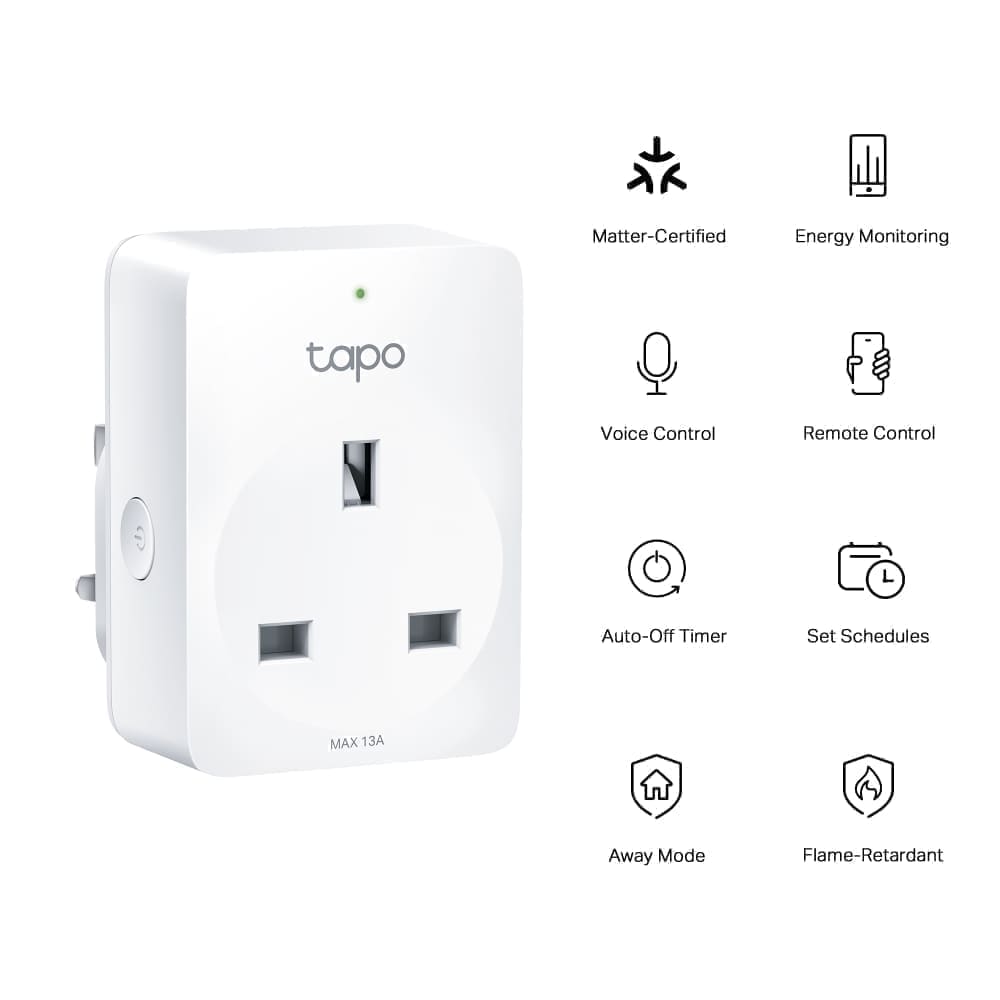
Not everyone needs one. If you only want a purifier running in one bedroom, a cheaper non-smart HEPA unit does the same job, and a basic model on a schedule from a smart plug is enough for many households. Skip a purifier entirely if the problem is damp or mould, since that needs ventilation or a dehumidifier, and skip one if you want cleaner air from a source such as cooking or a wood burner, where extraction at the source works better. Buy a smart one when you want data, remote control or automations. Filters are the hidden cost, so check the price of replacements before you commit, and see our budget smart home guide if spend matters.