
How we chose these smart dehumidifiers
We started with one requirement: a genuine Wi-Fi connection and app, not just a digital humidistat. A plain hygrostat can hold a target humidity, but it cannot report to a dashboard, run a schedule from your phone or be scripted from Home Assistant, which is what makes a dehumidifier part of a smart home rather than just a quiet appliance. Then we ranked on the things that decide whether a compressor dehumidifier actually gets used: the extraction rating for UK-typical conditions, tank size against drain-hose options, noise at night, and warranty length. Finally we checked how each one reaches Home Assistant, and whether that route is official, community-maintained or cloud-dependent. We excluded desiccant and Peltier mini units, which extract too little for a damp UK bedroom, and US-only models such as the GoveeLife and Frigidaire units that dominate American roundups but are not sold here. Prices below are list or single-retailer prices seen in September 2026 and move often, so treat them as bands.
Best smart dehumidifiers UK 2026: our four picks
These four cover an app-first buy, a Home Assistant-first buy, a quiet laundry-room unit and a drain-hose workhorse. All are 20-litre-class compressor models.
1. MeacoDry Arete Two 20L — best overall
Who it's for: anyone with a 3-5 bedroom house who wants a dehumidifier that behaves like a finished product. Meaco lists it as ideal for larger houses with three to five bedrooms, rates extraction at 3.35L/day at 10°C/60% RH, 8.5L/day at 20°C/60% RH and 13.9L/day at 30°C/60% RH, and quotes 207W at 20°C. It has a 4.8-litre tank, a free H13 HEPA filter, and a five-year warranty, the longest of the four. Noise is listed at 38, 40 and 50dB(A) across its speeds. It works with Alexa and Google through the Meaco app.
The catch: it is the most expensive here at £299.99 list, and the Home Assistant story is awkward. A community walkthrough integrates it by moving the unit from the Meaco app to the Tuya Smart app, then adding Tuya to Home Assistant, which exposes humidity and on/off entities. That process removes the device from the Meaco app and is done at your own risk. Home Assistant's Tuya integration is Cloud Push, so control depends on Tuya's servers. If you mostly want app and voice control, buy it happily; if local control is a must, look at pick 2.
2. Midea Cube 20 — best for Home Assistant
Who it's for: Home Assistant users who want local control without soldering. Home Assistant's Midea integration page covers dehumidifiers among its 39-plus device types, says all control and status updates happen locally, and rates its IoT class as Local Polling with a Bronze quality scale. The Cube 20 is rated at 20L per 24 hours, has a 12-litre tank (by far the biggest here), a drain hose, three fan speeds and 42-44dB noise, and is listed as Wi-Fi enabled with app control.
The catch: setup is fiddly and the warranty is short. Midea's V3 protocol devices need a token and key retrieved through Midea's cloud once, then talk locally. One user setting up a Midea-built Comfee dehumidifier reported needing a 2.4GHz-only network, a Wi-Fi password using letters and numbers only, and the official Midea app, plus a firmware update, before it worked. The popular community alternative, midea_ac_lan on HACS, lists an A1 Dehumidifier type but warns the appliance must be bound to a personal Midea or SmartHome account, and to back up the generated configuration in case Midea's token service changes. B&Q lists a one-year guarantee, and confirm your exact model is on the supported list before buying.
3. Duux Bora Smart 20L — best for quiet laundry drying
Who it's for: flats and terraced houses where the dehumidifier runs near a bedroom or a clothes airer. Duux quotes 36-42dB, a 4-litre tank, coverage of 40m², a dedicated laundry button with a four-hour timer, and up to seven app schedules, all at £279.99 list. The refrigerant is R290, and the warranty is 24 months.
The catch: Duux's own page lists Alexa and Google Assistant support as coming soon, and does not mention Home Assistant. The route there is community-built: an unofficial HACS integration for Duux devices lists the Bora dehumidifier, with target humidity from 30 to 80% and Auto or Continuous drying modes, and is explicitly not endorsed by Duux. The older Bora DXDH02 also has ESPHome and Tasmota device pages, but those are for the original model, so check which version you are buying before assuming you can reflash it.
4. Inventor EVA II PRO 20L — best for continuous drainage
Who it's for: a garage, utility room or cellar where you would rather run a hose to a drain than empty a tank. Inventor lists a continuous-drainage feature, a clothes-drying mode, R290 refrigerant, a 20L/24h rating, 260W power, noise of 37, 40 and 45dB, and a two-year warranty. The Wi-Fi app is Invmate II. Its page title carries a Which? Best Rated claim for dehumidifiers with R290.
The catch: the tank is only 3 litres, no voice assistants are mentioned, and Inventor's page shows no price, so shop around. It is Midea-based, and a long-running community custom component for the EVA II PRO exists on GitHub, alongside the wider Midea routes above. Community integrations for older hardware can lag firmware changes, so treat this as the pick where the drain hose matters more than smart-home polish. It is not on our Amazon affiliate list, so see Inventor's own page for retailers.
Do smart dehumidifiers work with Home Assistant?
Usually yes, but not through a clean official route the way a Hue bulb does. Home Assistant has an official Midea integration that lists dehumidifiers and works locally, which is the best case here. Meaco goes through Tuya, which is cloud-based and needs you to move the appliance out of its own app. Duux and Inventor rely on community integrations, which work until the manufacturer changes its firmware or cloud. If you buy on the strength of Home Assistant support, check the integration's current issues page for your exact model number before you pay.
Can a smart plug make any dehumidifier smart?
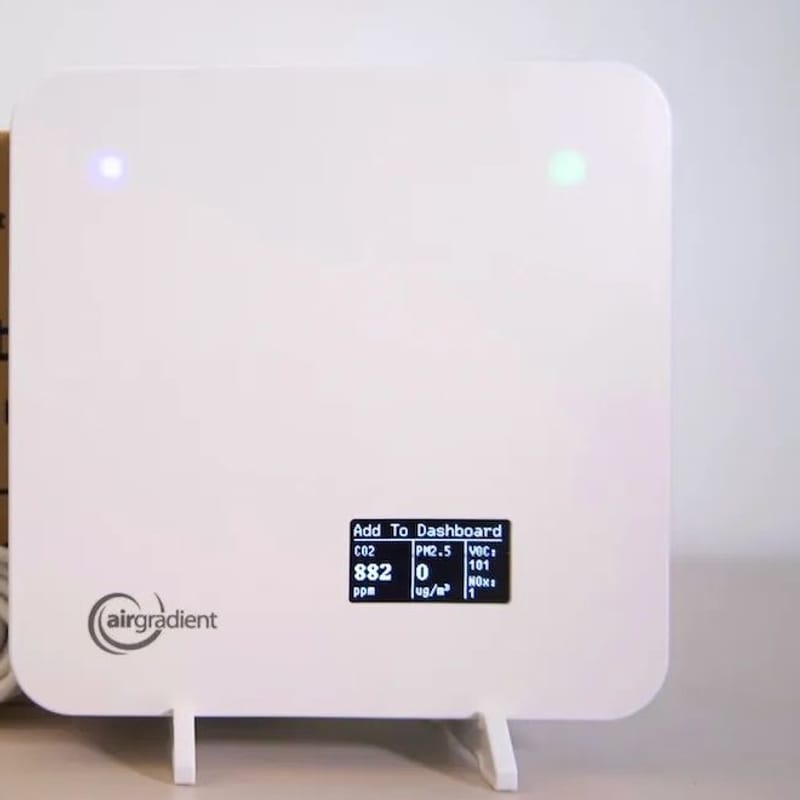
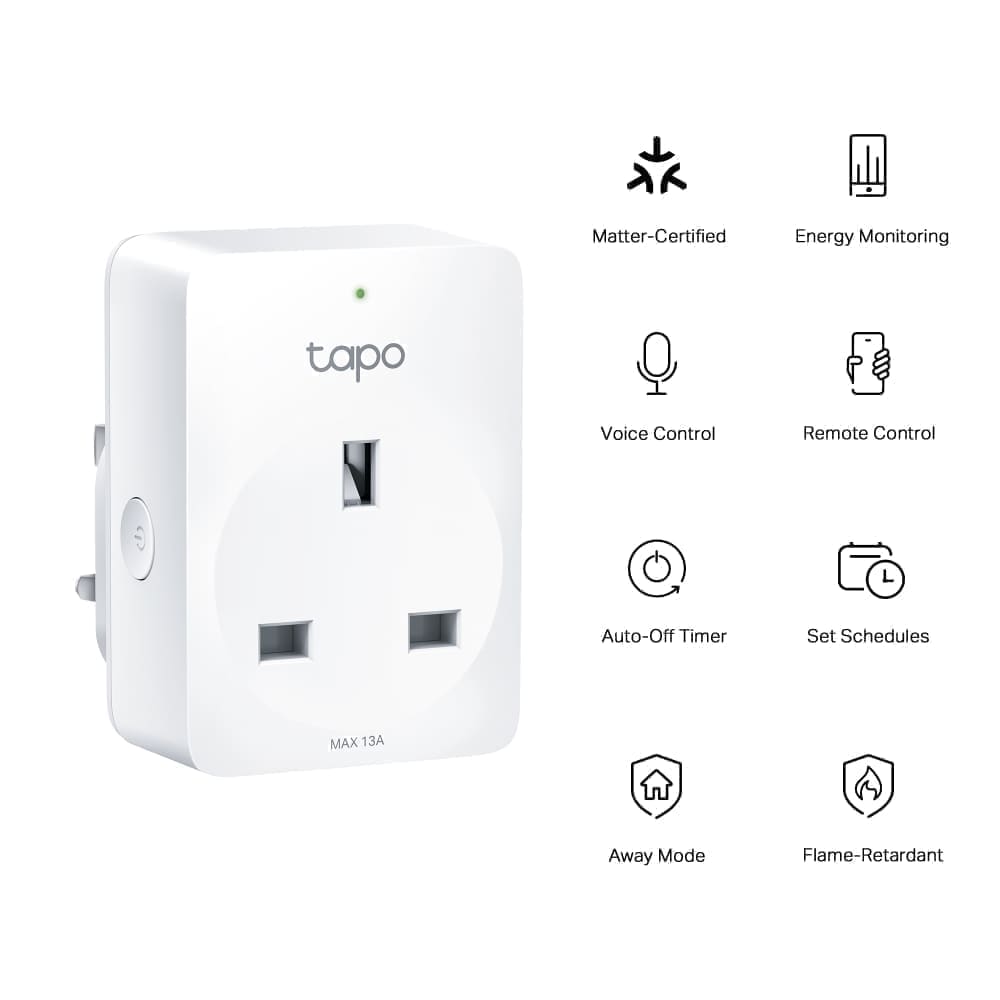
Sometimes, and it is the cheapest route if you already own a dehumidifier. Home Assistant's Generic hygrostat helper watches a humidity sensor and switches a plug on and off around a target, with a dehumidifier device class, wet and dry tolerances (both default to 3%) and a minimum cycle duration. Set that duration generously so the compressor is not being cycled every few minutes. The catch is that the dehumidifier must resume running when power returns; the Meaco listing calls out an auto restart function for exactly this reason, and many cheaper units lack it and sit on standby after the plug switches back on. Test yours before trusting it overnight. Pair it with a reliable sensor from our indoor air quality monitor guide and a metering plug from our best smart plug roundup.
What humidity should you set a dehumidifier to?
For most UK homes, aim for roughly 40-50% relative humidity. Rental-industry guidance commonly recommends that band, and it is low enough to discourage condensation without over-drying a room. Condensation is the most common form of damp, and the government's damp and mould guidance notes that showering, cooking and drying laundry put moisture into the air that builds up if it cannot be removed. A dehumidifier treats the symptom, so it does not replace ventilation, heating or repairing a leak. If you also run a humidifier in winter, our best humidifier UK guide covers the opposite problem, and the hygrostat trick above works for both.
A dehumidifier is only as smart as the humidity reading that triggers it, so pair it with a room sensor from our temperature and humidity sensor roundup and switch it on above a threshold.
Who should skip a smart dehumidifier?
Skip it if a plain dehumidifier or better ventilation would solve your problem. If you only need to dry the odd load of washing, a cheaper non-smart unit with a laundry mode does the same job, and the Wi-Fi adds a cloud dependency and an app to maintain. Also skip if your damp comes from rising damp, a leaking gutter or a failed roof, because a dehumidifier will fill its tank every day while the source keeps feeding it. And if you cannot tolerate a community integration breaking after an update, buy for the app and voice control alone, or choose the Midea route, whose integration is the only one here that Home Assistant itself documents.