How did we choose these air quality monitors?
We prioritised, in order: what pollutants the sensor actually measures (CO2 and PM2.5 are the two figures worth acting on day-to-day; VOC and radon are bonus signals for specific worries), whether Home Assistant or another smart home platform can read the data locally rather than only through a manufacturer app, sensor accuracy against the manufacturer's own published spec sheet, and UK price and availability. We excluded monitors with no UK retailer or import route, and discontinued models — the older Awair Element, for example, no longer ships new units, so we didn't rank it despite its smart-home support.
What are the best indoor air quality monitors for UK homes in 2026?
1. IKEA Vindstyrka — best overall
Who it's for: anyone who wants a cheap, hub-friendly sensor and doesn't need radon or full VOC breakdown data.
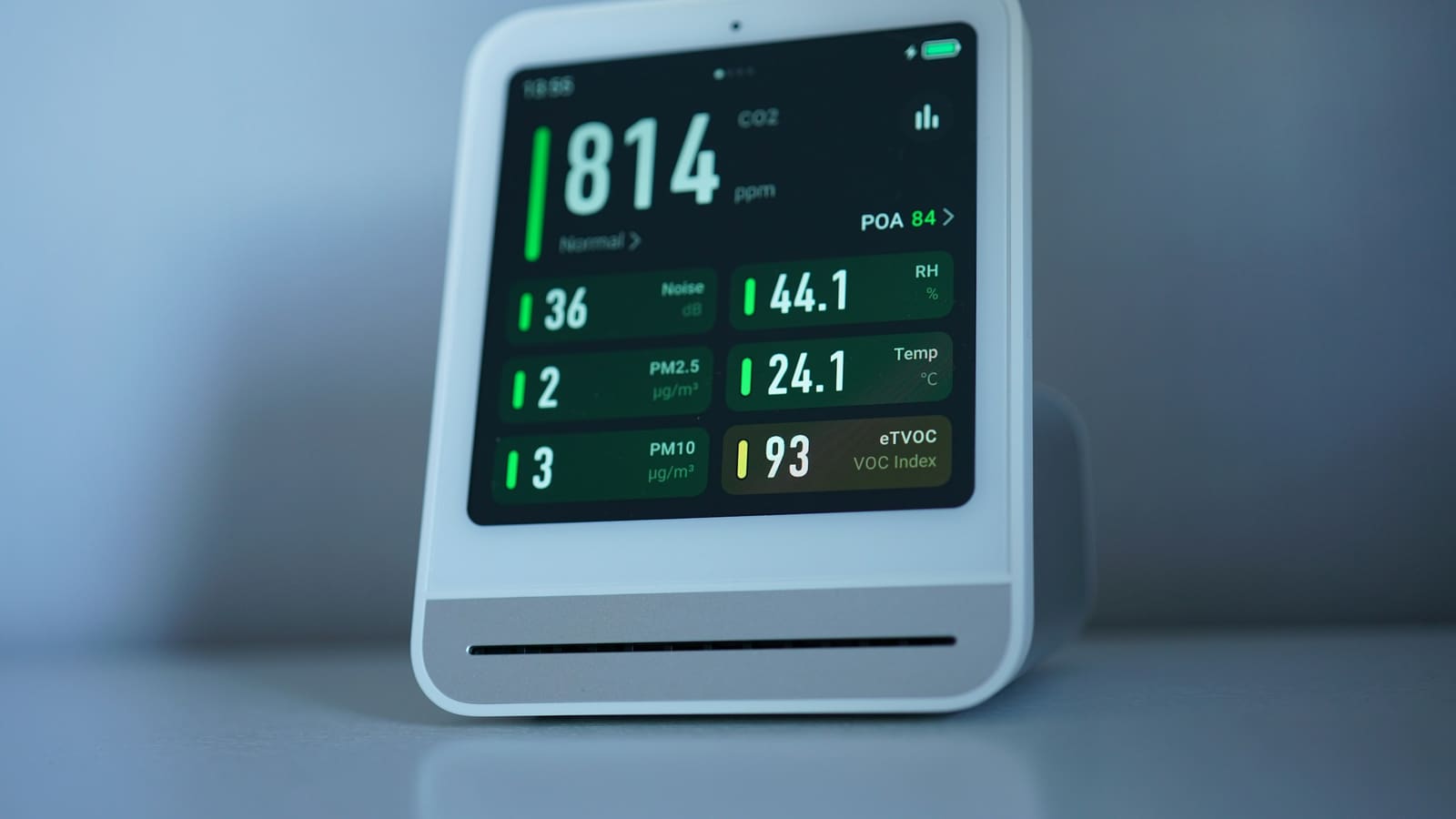
The Vindstyrka (product code E2112) is a Zigbee device that measures PM2.5, a Sensirion VOC index, temperature and humidity, and shows all four on its own small screen as well as over the network. It's natively supported by both Zigbee2MQTT and Home Assistant's built-in ZHA integration, so it joins an existing Zigbee mesh with no separate hub, cloud account or app needed once paired. The catch: Zigbee2MQTT's device page notes it only exposes whole-number readings with no decimal precision, and it has no CO2 sensor at all — for that you need the Aranet4 or AirGradient ONE below.
Buy from IKEA's own UK store — search for VINDSTYRKA.
2. Aranet4 Home — best for CO2 accuracy
Who it's for: anyone who wants one number — CO2 — measured as precisely as a consumer device gets, for stuffy bedrooms, ventilation checks or home-office use.
The Aranet4 uses a true NDIR (non-dispersive infrared) CO2 sensor rated to ±(30ppm + 3% of reading), noticeably tighter than the cheaper photoacoustic or electrochemical sensors found in budget monitors. It also reads temperature, humidity and pressure, all on a clear e-ink display that runs up to four years on two AA batteries. Home Assistant has supported Aranet natively via Bluetooth since version 2022.12 — you just need firmware 1.2.0 or later and the Smart Home integration option switched on in the Aranet Home app, then Home Assistant auto-discovers it over Bluetooth (no HACS or custom component required). Bluetooth range is limited, so keep it reasonably close to whichever device is running the Home Assistant Bluetooth adapter.
Priced around £139 direct from the Aranet4 Home product page or authorised UK resellers.
3. AirGradient ONE — best for Home Assistant and open-source data
Who it's for: Home Assistant households who want CO2, PM2.5 and VOC feeding real automations, with zero cloud dependency if they want it.
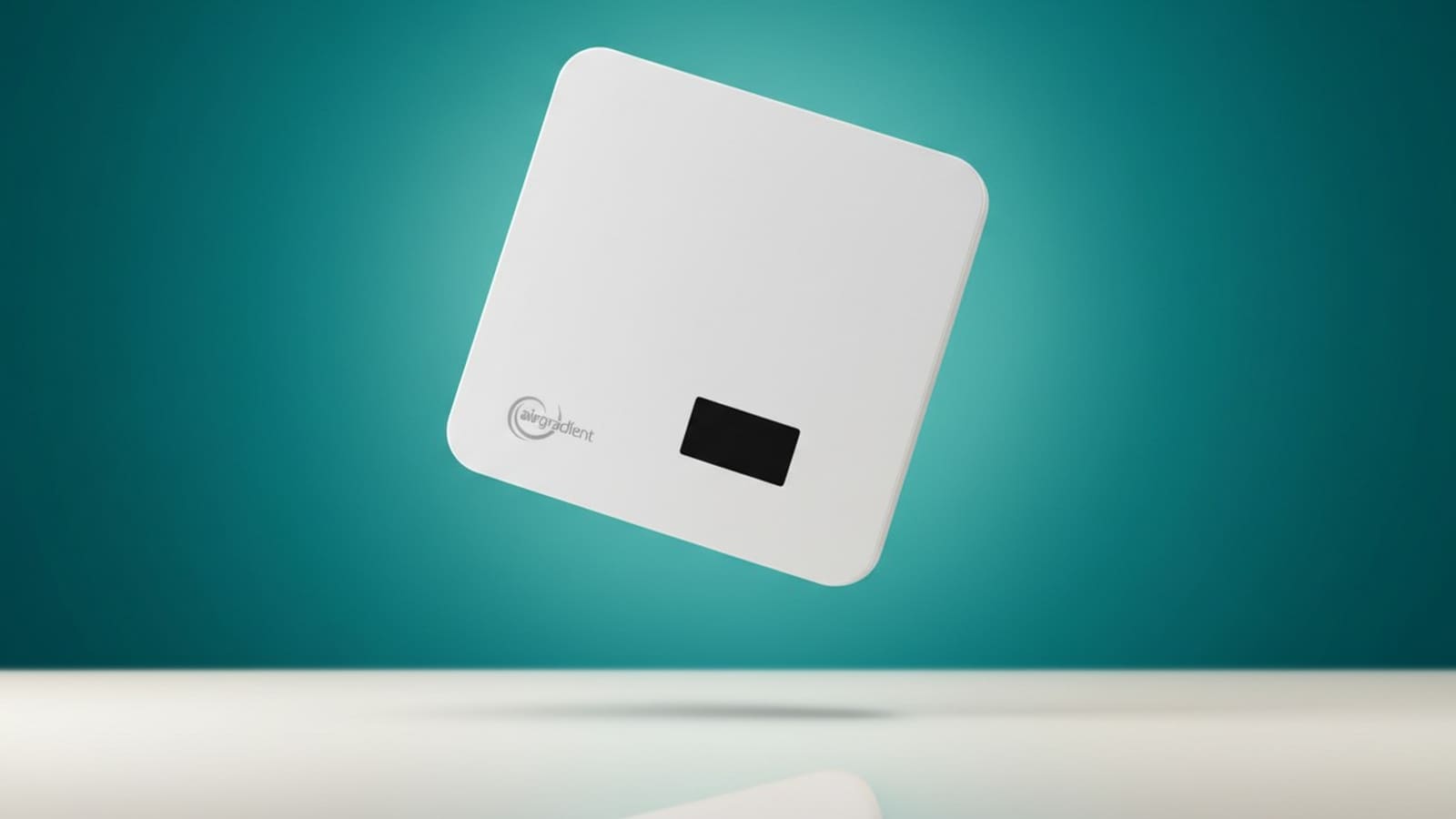
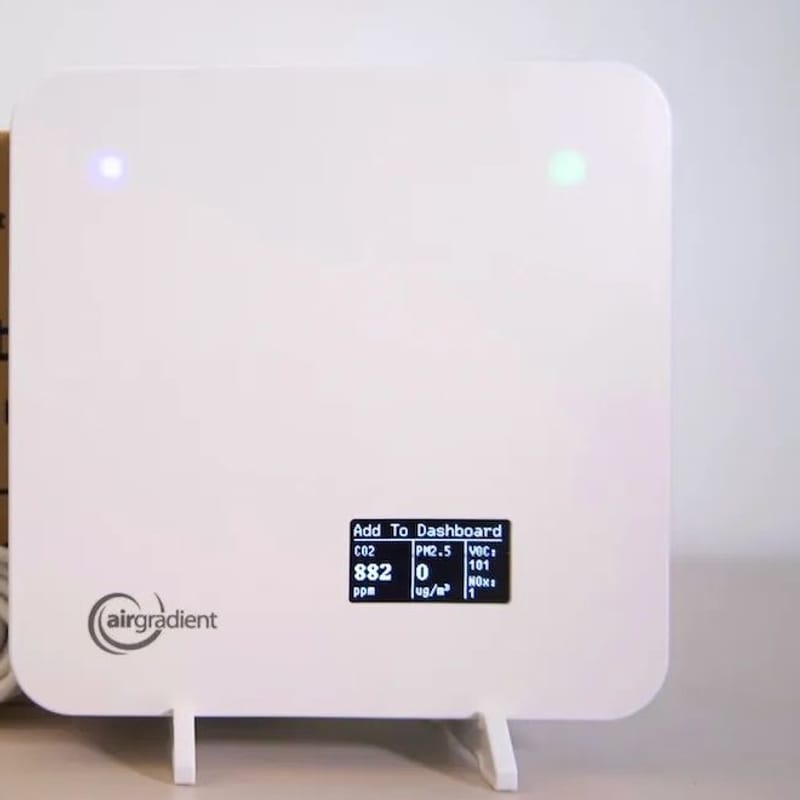
We've reviewed the AirGradient ONE in full in our AirGradient ONE review: it's the most Home Assistant-friendly monitor we've tested, auto-discovered on the network with every hardware setting exposed as a configuration entity, and a single toggle takes it fully offline with no cloud account at all. The trade-off is buying it: there's no UK retailer, so most buyers are importing it from AirGradient's own store at around £205 plus shipping — Aranet4 money for a device that measures more but asks more setup effort in return.
See our full AirGradient ONE review for the day-in-the-life testing notes.
4. Airthings View Plus — best for radon detection
Who it's for: homeowners in a radon-affected area, or anyone in an older or poorly ventilated house who wants the one consumer sensor type that actually measures it.
The View Plus is the only monitor on this list that measures radon alongside the usual six: PM2.5, PM1, CO2, VOCs, temperature and pressure. Its passive alpha radon sensor needs about seven days to settle to an initial reading, and the whole unit runs off six AA batteries for up to two years, showing four chosen readings at a time on a 2.9in always-on e-ink screen. Home Assistant has an official cloud-polling integration: generate an API client from the Airthings dashboard under Integrations, API, then Request API Client, with the read:device:current_values scope, and add the Airthings integration in Home Assistant using the resulting ID and secret. It's cloud-based rather than local, so it needs an internet connection to update Home Assistant, unlike the Vindstyrka or AirGradient ONE.
UK pricing varies by retailer, typically in the £170–£260 band depending on stock and promotions — check the Airthings View Plus product page for current UK pricing before buying.
5. Netatmo Healthy Home Coach — best for Apple Home / HomeKit
Who it's for: Apple Home households who want air quality alongside the rest of their HomeKit setup, with no separate hub.
The Healthy Home Coach measures CO2, temperature, humidity and noise level, and pairs natively with Apple HomeKit — Siri can read out an air quality summary directly. For Home Assistant users, the official Netatmo integration also supports it, but it's cloud-polling only (it talks to Netatmo's servers, not the device directly), so expect a short delay compared with the Bluetooth- or Zigbee-local options above. It has no PM2.5 or VOC sensor, which is the main reason it sits lower on this list than the Vindstyrka or AirGradient ONE for a Home Assistant-first household. If you're watching the humidity reading it reports rather than just CO2, our best humidifier UK roundup covers models that can bring a dry room back into the recommended 40-60% range.
Priced around £90 from the Netatmo UK store and mainstream electronics retailers.
Do air quality monitors actually work with Home Assistant?
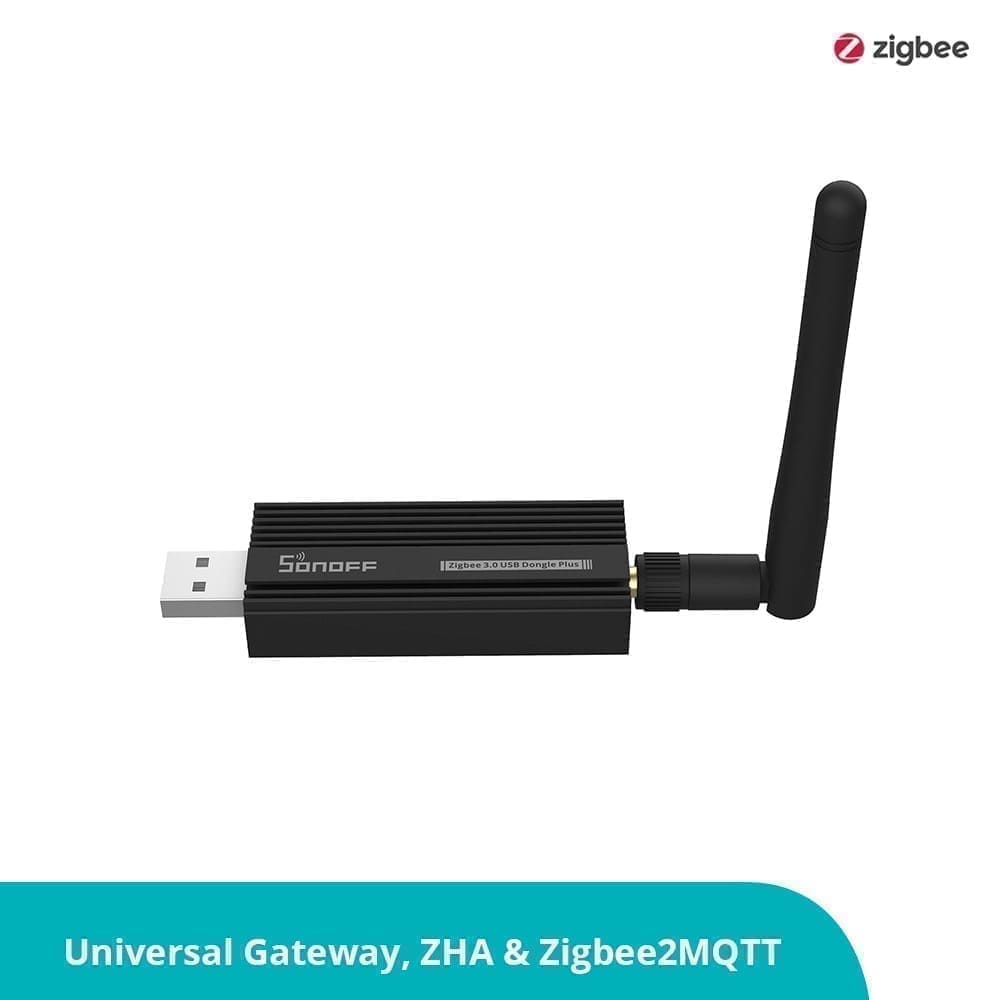
Yes, but the connection method changes what you get. The Vindstyrka (Zigbee2MQTT/ZHA) and Aranet4 (native Bluetooth) update locally with no internet dependency once paired, which is what most Home Assistant users actually want for automations like triggering an extractor fan. The Airthings View Plus and Netatmo Healthy Home Coach both rely on the manufacturer's cloud, via an official Home Assistant integration, so they need an internet connection and update on the cloud's polling schedule rather than instantly. Our Zigbee2MQTT setup guide covers pairing a device like the Vindstyrka from scratch if you don't already have a Zigbee coordinator running.
Which indoor air quality monitor should you skip?
Skip a dedicated monitor altogether if all you actually want is a CO2 nudge for stuffy rooms and you already own a smart thermostat or air purifier with a built-in sensor — several current models fold that reading into their own app, making a standalone device redundant. Also skip anything without a clear UK retailer or a documented Home Assistant/HomeKit integration; several budget monitors sold on marketplace sites only report through a manufacturer app with no local API, which defeats the point for a smart-home household and leaves you unable to verify the sensor's accuracy against a spec sheet.