Smart Home Assistant

NodOn SIN-4-1-21 Review: Zigbee Relay With Power Metering for Home Assistant

SepehrBy Sepehr· 7 September 2026· Updated 7 September 2026· 6 min read
✓ Independent — no paid placements✓ UK-tested in real homes✓ Cited sources
NodOn SIN-4-1-21 Review: Zigbee Relay With Power Metering for Home Assistant
On this page[tap to expand]
Buy the picks in this guide

Recommended for Home Automation

See all devices →

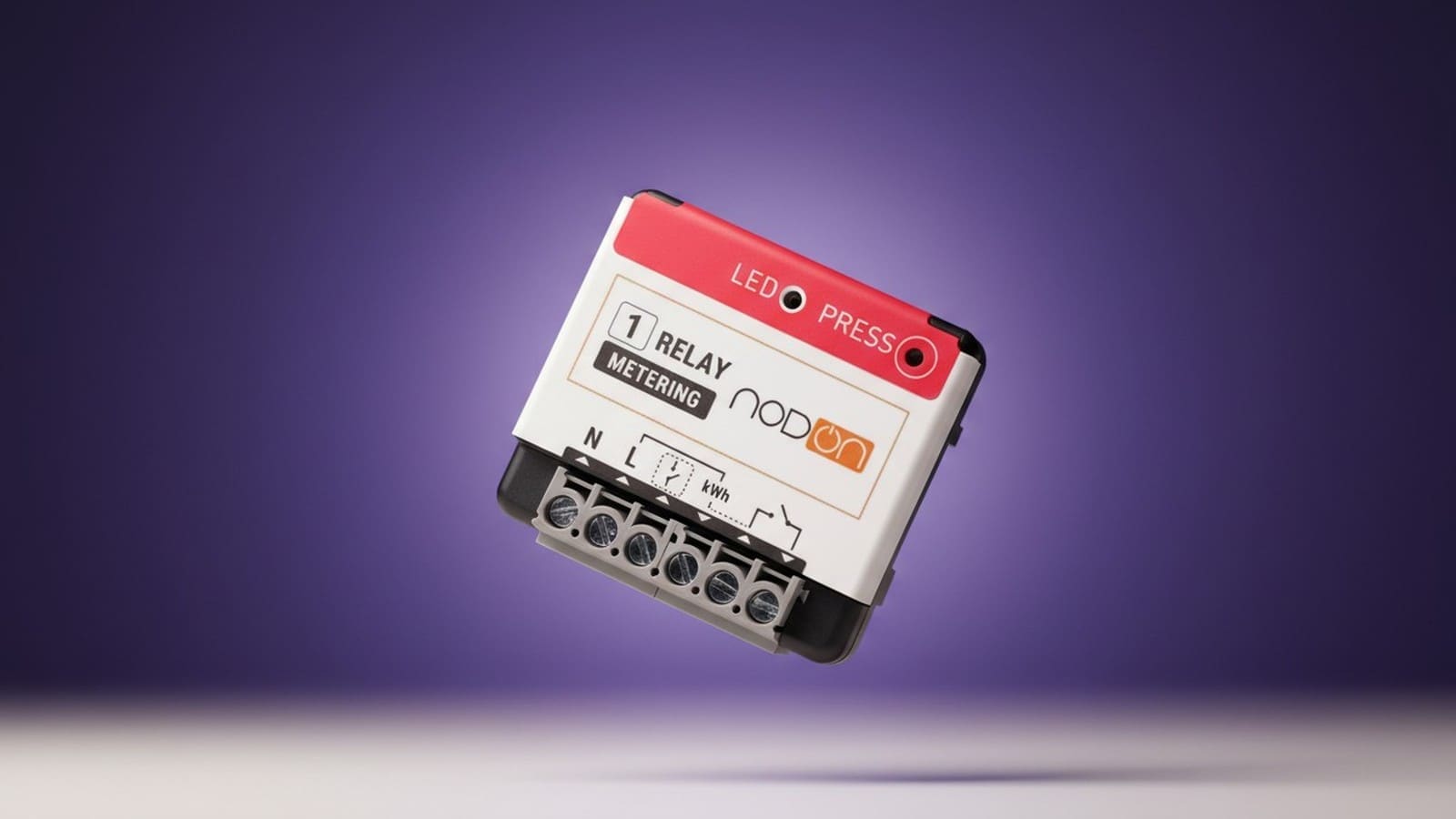
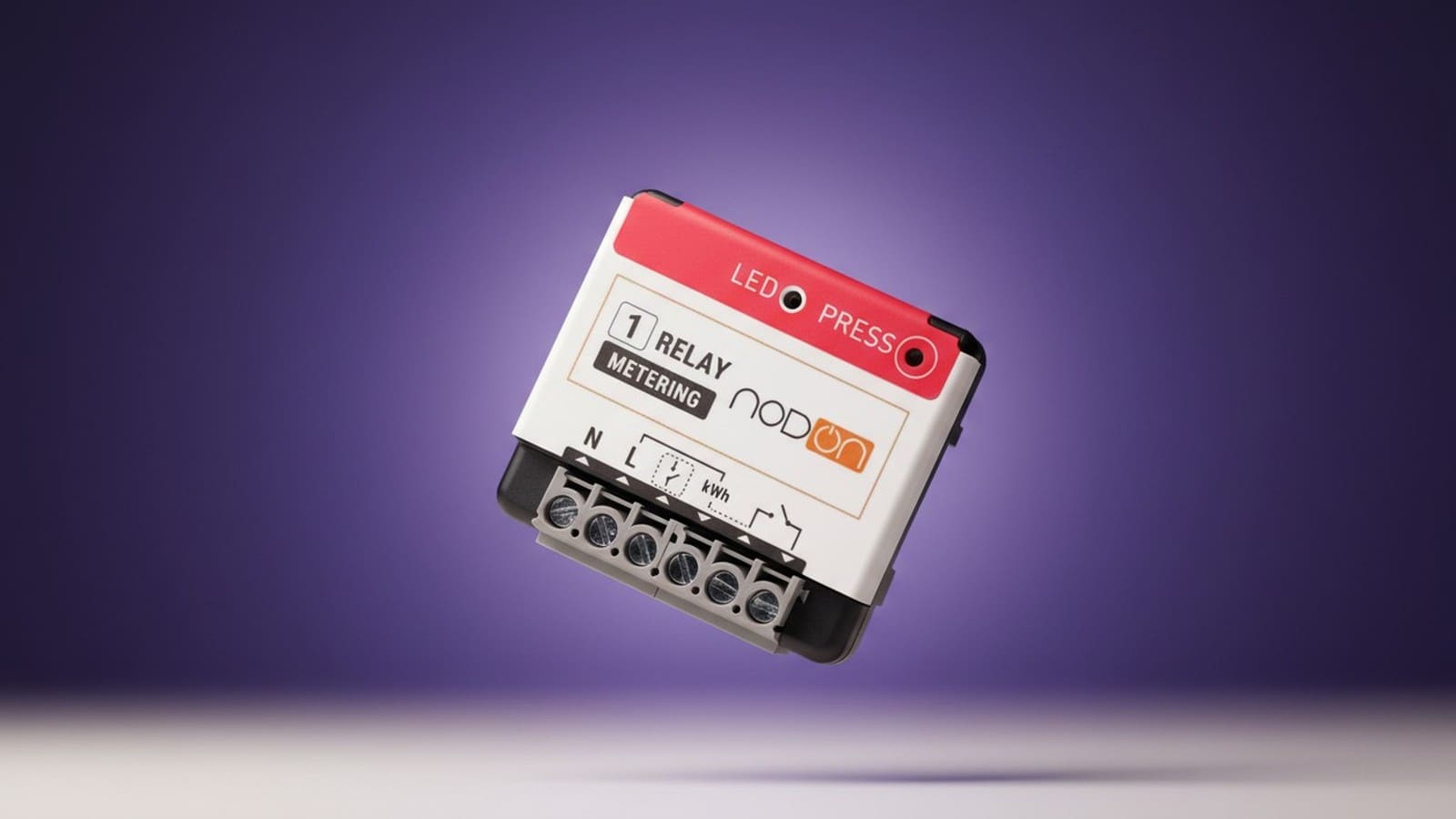
The NodOn SIN-4-1-21 is a flush-mount Zigbee 3.0 relay that switches a 230V load up to 3,000W while reporting live power and energy use back to Home Assistant. It hides behind a wall switch, socket or DIN rail enclosure, adding smart, metered control to fixed wiring.

Verdict: Recommended NodOn SIN-4-1-21 Zigbee relay with metering
NodOn NodOn SIN-4-1-21 ✓ Works via ZHA / Zigbee2MQTT
  • Native power and energy metering exposed as separate Home Assistant entities
  • 40mm x 44mm footprint fits behind most flush-mount switches and sockets

Pros

  • Reports both instantaneous power (W) and cumulative energy (Wh) natively over Zigbee, with no separate energy-monitoring plug needed
  • Compact 40 x 44 x 16.9mm body fits behind flush-mount boxes, DIN rail enclosures, or surface-mount accessories
  • Dry-contact / impulse mode covers garage doors, gates and electric latches that a plain on/off relay can't drive
  • Zigbee 3.0 with OTA firmware updates, and native support in both Home Assistant's ZHA integration and Zigbee2MQTT
  • Configurable power-on behaviour (off, on, toggle, or restore previous state) after a mains interruption

Cons

  • Requires a neutral wire at the installation point — not a fit for two-wire lighting circuits with no neutral
  • Rated to 3,000W / 14A, which covers most sockets and lighting circuits but rules out higher-draw fixed appliances like electric showers or storage heaters
  • No built-in temperature or humidity sensing, unlike some rival multi-sensor relays — it's metering and switching only
  • Installation is behind an existing accessory or in a DIN enclosure, so it's a job for anyone comfortable working with mains wiring, or an electrician
SpecNodOn SIN-4-1-21
ProtocolZigbee 3.0, 2.4GHz, +10dBm, up to 40m indoor range
Hub requiredAny Zigbee 3.0 coordinator (ZHA, Zigbee2MQTT, etc.)
Power supply230V AC ~50Hz mains, <1W standby consumption
Switching capacity3,000W max load, 14A at 230V AC, potential-free relay with integrated zero-crossing
MeteringInstant power (W) and cumulative energy (Wh), with calibration offset and adjustable decimal precision
Dimensions / weight40 x 44 x 16.9mm, 34g
MountingFlush-mount box (>30mm depth), optional NodOn DIN Rail Box, or surface-mount
Typical priceAround €38 / £45–£50 from specialist Zigbee retailers such as Vesternet — prices vary

What does the NodOn SIN-4-1-21 actually do?

At its core it's a single-channel relay: it switches a mains load on and off over Zigbee, the same job as dozens of other smart relays on the market. What sets it apart is that it also measures what's flowing through that load. NodOn built in a zero-crossing power meter that reports instantaneous power in watts and running energy totals in watt-hours, so a device wired behind the SIN-4-1-21 gets both remote control and consumption tracking from a single component — useful for anything from a boiler or immersion heater to a workshop socket you want to keep an eye on. The relay itself is potential-free, meaning it can switch loads at a different voltage than the one powering the module, which is what makes garage door and gate control possible alongside straightforward on/off switching.

It also supports a dry-contact / impulse mode aimed specifically at gates, garage doors and electric latches: five brief presses on the physical button switches the module into this mode, after which a single Zigbee command fires a short pulse rather than toggling a maintained state. That's a distinct wiring and control pattern from a lighting or socket circuit, and it's worth deciding which mode you need before installation, since NodOn's documentation treats it as a configuration step rather than something you switch between casually.

Is the NodOn SIN-4-1-21 easy to install?

Installation is straightforward for anyone comfortable working behind an existing accessory, but it does involve mains wiring, so it isn't a plug-and-play device in the way a smart plug is. NodOn specifies terminals accepting 1.5mm² to 4mm² cable stripped to 8mm, and the module is designed to sit inside a flush-mounting back box deeper than 30mm — behind a light switch, a socket faceplate, or a ceiling rose, for example — or inside NodOn's own optional DIN Rail Box at the consumer unit for a tidier, centralised install. At 40 x 44 x 16.9mm it's compact enough to share a standard UK back box with the accessory in front of it in most cases, though box depth is worth checking before buying, particularly in older properties with shallow boxes.

Because the module needs a neutral conductor to power itself, it won't work on a two-wire lighting circuit that has no neutral at the switch — the same limitation that rules out many no-neutral smart light switches. If that's your situation, our no-neutral smart light switch guide covers the alternatives designed specifically for that wiring. For sockets, boilers and most DIN-rail scenarios a neutral is normally already present, which is where this module is a more natural fit.

Does the NodOn SIN-4-1-21 work with Home Assistant?

Yes — it's natively supported by both of Home Assistant's mainstream Zigbee routes, ZHA and Zigbee2MQTT, with no custom quirk file required for basic switching and metering. Under Zigbee2MQTT it exposes a switch entity with configurable on-time and off-wait-time for timed shutoff, a read-only power sensor in watts, a read-only energy sensor in kilowatt-hours, and a power-on-behaviour setting so you can define what happens after a power cut — off, on, toggle, or restore the previous state. Power and energy readings can each be calibrated with a percentage offset and set to show anywhere from zero to three decimal places, which matters if you're feeding the readings into Home Assistant's Energy dashboard and want figures that line up with a separate meter. If you haven't set up Zigbee2MQTT or ZHA yet, our Zigbee2MQTT setup guide covers getting a coordinator running before you get to pairing individual devices like this one.

Once paired, the combination of a switch entity plus power and energy sensors on the same device is exactly what Home Assistant's Energy dashboard is built to consume — you can add the SIN-4-1-21 as an individual device under a circuit or appliance and track its consumption over time alongside your whole-home energy monitoring, rather than relying on a separate plug-in energy monitor for that one circuit.

How does it compare to other ways of metering a circuit in Home Assistant?

Against a plug-in energy-monitoring smart plug, the SIN-4-1-21's advantage is that it goes behind fixed wiring rather than sitting in a visible socket, and it can switch loads a plug simply can't reach — a hardwired boiler, an outdoor gate motor, or a ceiling light circuit. Against a dedicated whole-house energy monitor like those covered in our Home Assistant energy monitoring guide, it's a complementary rather than competing tool: a whole-house monitor gives you the big picture, while a metering relay like this one isolates consumption for a single circuit you also want to control remotely. If you're specifically looking at heating-related loads, our Home Assistant heating control guide covers boiler control more broadly, including where a relay like this one fits into that setup.

Who should buy the NodOn SIN-4-1-21?

It suits anyone who wants to add both remote switching and per-circuit energy tracking to a fixed load — a boiler, immersion heater, workshop socket, or gate motor — without installing a visible smart plug or replacing an existing switch or socket faceplate. It's a particularly good fit for anyone already running a Zigbee coordinator for other devices, since there's no separate app, account or hub to add. It's a poor fit for no-neutral lighting circuits, since the module needs a neutral to power itself, and it's not the right choice for loads above 3,000W, where a heavier-duty contactor with separate metering would be needed instead.

Verdict

The NodOn SIN-4-1-21 does two jobs that are usually split across two products — switching and metering — in a single compact relay that's happy hiding behind an existing accessory or living in a DIN rail enclosure. Native support in both ZHA and Zigbee2MQTT means it drops straight into an existing Home Assistant Energy dashboard setup without extra integration work, and the dry-contact mode extends it to gates and garage doors beyond simple on/off switching. The main caveat is the neutral-wire requirement, which rules it out for a chunk of UK lighting circuits — check your wiring before buying rather than after.
Frequently asked questions

Does the NodOn SIN-4-1-21 work with Home Assistant?
Yes. The NodOn SIN-4-1-21 is natively supported by both of Home Assistant's main Zigbee integrations, ZHA and Zigbee2MQTT, with no custom quirk file needed. Once paired it exposes a switch entity for on/off control, a read-only power sensor in watts, and a read-only energy sensor in kilowatt-hours, plus a configurable power-on-behaviour setting for what happens after a mains interruption. That combination of switch plus power and energy sensors is exactly what Home Assistant's Energy dashboard is designed to track, so it can be added under a specific circuit or appliance for per-device consumption monitoring. You'll need an existing Zigbee 3.0 coordinator, since the module has no Wi-Fi fallback for control.
Does the NodOn SIN-4-1-21 need a neutral wire?
Yes, the SIN-4-1-21 requires a neutral conductor at the installation point to power itself, in addition to the live and switched-load wires. That makes it a good fit for sockets, boilers, DIN-rail installs and most modern lighting circuits, where a neutral is normally already present at the back box. It rules the module out for older two-wire lighting circuits that have no neutral present at the switch, since there's nothing to power it from without rewiring the circuit first. If your only option is a no-neutral lighting circuit, a battery- or capacitor-powered no-neutral smart switch designed for that specific wiring situation is the better choice — our no-neutral smart light switch guide covers the alternatives available in the UK.
What can the NodOn SIN-4-1-21 control?
NodOn lists garage doors, gates, boilers, radiators and electrical sockets as typical uses, and the relay is rated to switch up to 3,000W (14A at 230V AC). For gates and garage doors specifically, five brief presses on the module's physical button switches it into a dry-contact impulse mode, where a single command fires a short pulse rather than toggling a maintained on/off state — matching how most gate and garage-door motors expect to be triggered rather than held open or closed. For sockets, boilers and lighting circuits, it stays in its default maintained switching mode, giving straightforward on/off control alongside live power and cumulative energy metering reported back over Zigbee to Home Assistant or any other compatible controller.

Sources

Sources verified 2026-09-07

  1. NodOn — Zigbee Multifunction Relay Switch with Metering — Product Page
  2. Zigbee2MQTT — NodOn SIN-4-1-21 device page — exposed entities and configuration
  3. Manuals+ — NodOn SIN-4-1-21 Zigbee Multifunction Relay Switch with Metering — User Guide
  4. Vesternet — NodOn Zigbee Multifunction Relay Switch 1-Channel 16A with Metering
  5. Home Assistant — Energy management documentation
How we researched this

Claims in this article are checked against primary sources — manufacturer specifications, official documentation, Which? research, Ofgem guidance, or gov.uk — rather than forum threads or video reviews. Where the author has direct hands-on experience with a product (most Home Assistant, Zigbee, and home-networking gear is running in his own homelab), that is stated explicitly in the text.

For categories outside that personal setup — such as boilers, heat pumps, and other areas that are traditionally a heating engineer's domain — verdicts are built from cross-referenced manufacturer data, published lab results, and vetted expert and owner reviews rather than a claim of personal hands-on testing. See the editorial policy for the full methodology.

Sepehr

Written by

Sepehr

10+ years hands-on with Home Assistant & networking · Research-backed elsewhere · No brand deals

Smart home specialist with 10+ years running a self-hosted Home Assistant setup — Zigbee2MQTT, Frigate NVR, and local-first automations. Independent coverage for UK homes, no brand deals.

LinkedIn →

Citing this page? Please use a dofollow link back to the original article — it helps us keep the data on this page accurate and up to date.

Related reading