
What Is the Home Assistant Yellow?
Home Assistant Yellow is a custom carrier board designed by Nabu Casa to host a Raspberry Pi Compute Module 4 (CM4). It runs Home Assistant OS (HAOS) out of the box and is built around a philosophy of openness and longevity: every hardware component can be replaced or upgraded, and the software receives all the same updates as any other HAOS installation.
Nabu Casa sell Yellow in two kit variants. The Standard Kit includes an international power supply (with UK, EU, US, and Australian adaptor heads) and is priced at around £120, prices vary by retailer. The PoE Kit forgoes the power supply in favour of 802.3at Power-over-Ethernet, drawing up to 15.4 W from a compatible switch or injector; this variant retails at around £130, prices vary by retailer. Neither kit includes a Compute Module — you need to source a CM4 separately, typically adding £35–£70 depending on RAM and eMMC configuration.
Key Specifications
Processor. Yellow accepts any CM4 variant. A CM4 with 2 GB RAM and Lite (no eMMC) storage is the recommended minimum. The CM4's quad-core Cortex-A72 running at 1.5 GHz gives substantially more headroom than the Amlogic S905X3 in the Home Assistant Green, making Yellow noticeably snappier under load.
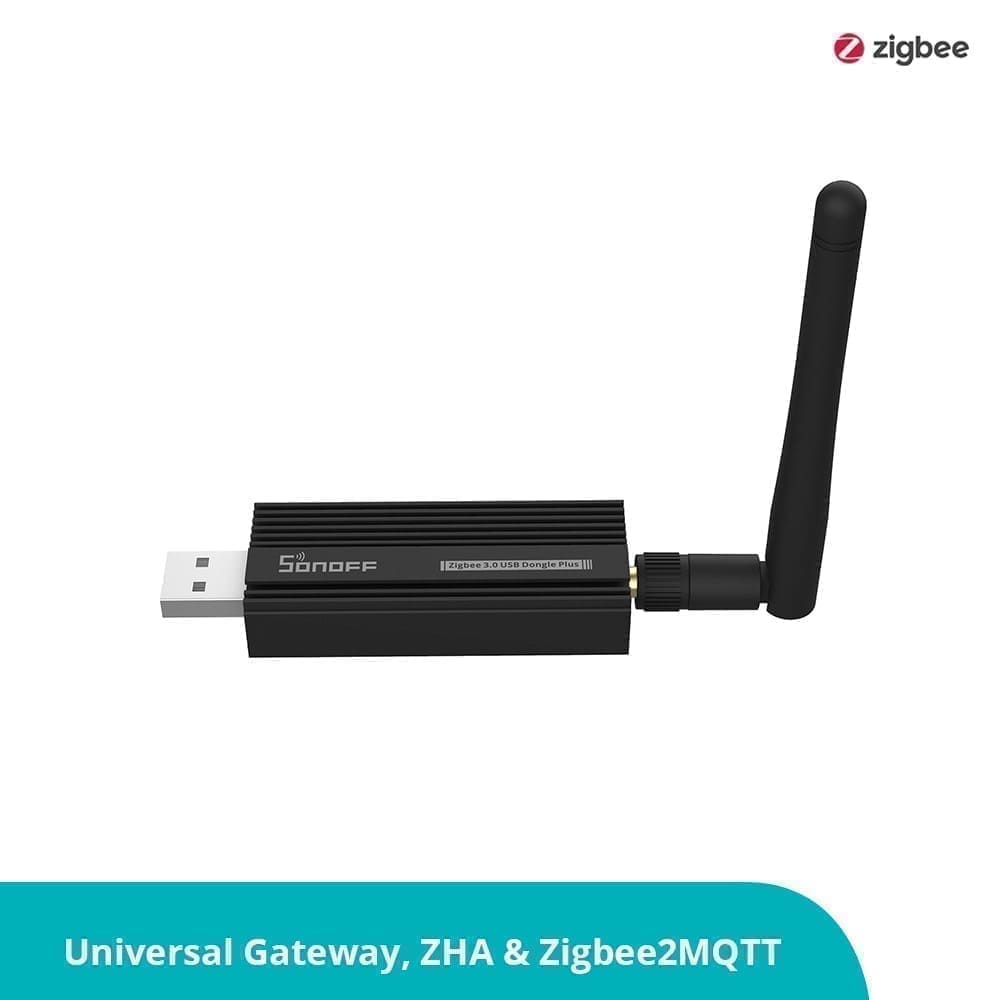
Built-in Zigbee and Thread. The board carries a Silicon Labs MGM210P radio module that handles Zigbee 3.0 and OpenThread (and therefore Matter over Thread). This eliminates the need for a separate USB dongle — an important advantage over the Green or a standard Raspberry Pi setup. The radio connects via an internal header and has a dedicated external antenna port, giving it better range than a compact USB stick. If you're already running a Zigbee2MQTT guide workflow, Yellow's radio works seamlessly as the coordinator.
Z-Wave. There is no Z-Wave radio built into Yellow. If you need Z-Wave, you can fit an Aeotec Z-Pi 7 expansion board inside the enclosure (it attaches to the 40-pin GPIO header), or use an external USB Z-Wave stick. See our best Zigbee hubs guide for how Yellow's integrated approach compares to standalone coordinators.
Storage. The board has an M.2 NVMe slot supporting 2230, 2242, 2260, and 2280 drives over PCIe x1. Running HAOS from NVMe rather than an SD card eliminates the single biggest reliability risk in a DIY Raspberry Pi setup and makes the system feel markedly more responsive. Note that not all NVMe drives are compatible — early users reported issues with Samsung 980 drives causing occasional crashes; Crucial P3 and WD SN770 modules are well-regarded in the community.
Connectivity. Yellow provides Gigabit Ethernet, two USB-A 2.0 ports, one USB-C 2.0 port (for recovery and flashing), and a 40-pin GPIO header. The enclosure measures 123 × 123 × 36 mm — roughly the footprint of a CD case and less than 40 mm tall.
Power consumption. Idle power draw is approximately 1.5 W with a typical CM4, making it economical to run continuously.
Setting Up Home Assistant Yellow
Assembly is straightforward for anyone comfortable handling PCBs. The kit includes a heatsink, mounting hardware, an Ethernet cable, and the enclosure. You seat the CM4 on the carrier board, attach the heatsink, slot in your NVMe drive, close the enclosure, and connect power. On first boot, HAOS downloads and installs automatically — there is no OS flashing required, and the process typically completes in five to ten minutes with a reasonable internet connection.
After that, the onboarding wizard walks you through creating an account and adding integrations. The built-in Zigbee radio appears as a detected device under Settings → Devices & Services, ready to pair via ZHA or Zigbee2MQTT. Unlike a generic Raspberry Pi build, you don't need to identify a USB path or install a coordinator firmware separately.
For those coming from a different platform, the backup and restore guide explains how to migrate an existing HAOS installation to Yellow without losing your configuration.
Home Assistant Yellow vs Green vs Raspberry Pi
Choosing between Yellow, Green, and a DIY Raspberry Pi setup comes down to how much expandability you need.
Home Assistant Green (around £95, prices vary by retailer) is a sealed, fully assembled appliance running on an Amlogic S905X3. It is simpler to buy and start, but it has fixed 4 GB RAM, fixed 32 GB internal storage, and no integrated radio — you would need a separate Zigbee USB stick. If you simply want the most painless path to running Home Assistant, Green is the safer choice in 2026.
Home Assistant Yellow costs more once you add a CM4, but gives you upgradeable RAM (1–8 GB), fast NVMe storage, and the built-in Silicon Labs radio. The modular compute module design also means that if a faster CM5-compatible revision emerges, you can swap the module without replacing the board or enclosure.
Raspberry Pi 4 or 5 remains a valid platform, especially if you already own one. A Raspberry Pi 5 running HAOS on NVMe (via a PCIe HAT) will outperform Yellow's CM4, but you lose the integrated Zigbee radio and the tidy, purpose-built enclosure. See our detailed guide on Home Assistant on Raspberry Pi 5 if that route appeals to you. For a purely software-based approach without dedicated hardware, our Docker setup guide covers running HAOS on an existing server or NAS.
UK Availability in 2026
Nabu Casa discontinued the pre-assembled Yellow (which included a CM4) in 2024. As of mid-2026, the kit variants are available from:
- The Pi Hut — both Standard Kit (around £120) and PoE Kit (around £130) are listed, though stock is intermittent given the product is end-of-life. Prices vary by retailer.
- Crowd Supply — the original crowdfunding platform still lists the PoE Kit with shipping to the UK, though lead times can be long.
- Seeed Studio — ships internationally and has historically stocked both kit variants.
The Raspberry Pi Compute Module 4 itself is available from The Pi Hut and approved Raspberry Pi resellers across the UK from around £35–£70 depending on RAM and storage, prices vary by retailer. If budget is a concern, a CM4 Lite (no eMMC, 2 GB RAM) is the minimum recommended specification and usually the most affordable option.
Who Should Buy Home Assistant Yellow?
Yellow is worth the assembly effort and the premium over Green if any of the following apply:
- You want a built-in Zigbee coordinator without USB dongles cluttering the setup.
- You need PoE to power the hub from a network switch, particularly useful in a networking cabinet.
- You want NVMe storage for maximum reliability and speed without workarounds.
- You expect your setup to grow significantly and want to upgrade the compute module down the line without replacing everything.
- You are comfortable with light hardware assembly and enjoy the control that a modular platform provides.
If you want the simplest possible start and don't need built-in Zigbee or PoE, the Home Assistant Green is the better choice for most UK buyers in 2026. But for power users who want the flexibility to expand, Yellow's hardware platform is still unique — and fully supported by the Home Assistant OS project.
Verdict
The Home Assistant Yellow delivers on its promise: a purpose-built, expandable smart home hub with an integrated Zigbee/Thread radio, fast NVMe storage, and the power of a CM4 in a compact, tidy package. The fact that Nabu Casa has moved on to newer hardware does not diminish what Yellow does well — existing units receive all HAOS updates, and the build quality and feature set remain competitive in 2026. If you can source a kit at or near the original retail price and are comfortable assembling it, Yellow remains one of the best-engineered local smart home hubs available.