Types of home energy monitor
Before buying anything, it helps to understand how the three main categories differ:
Smart meter IHDs (in-home displays)
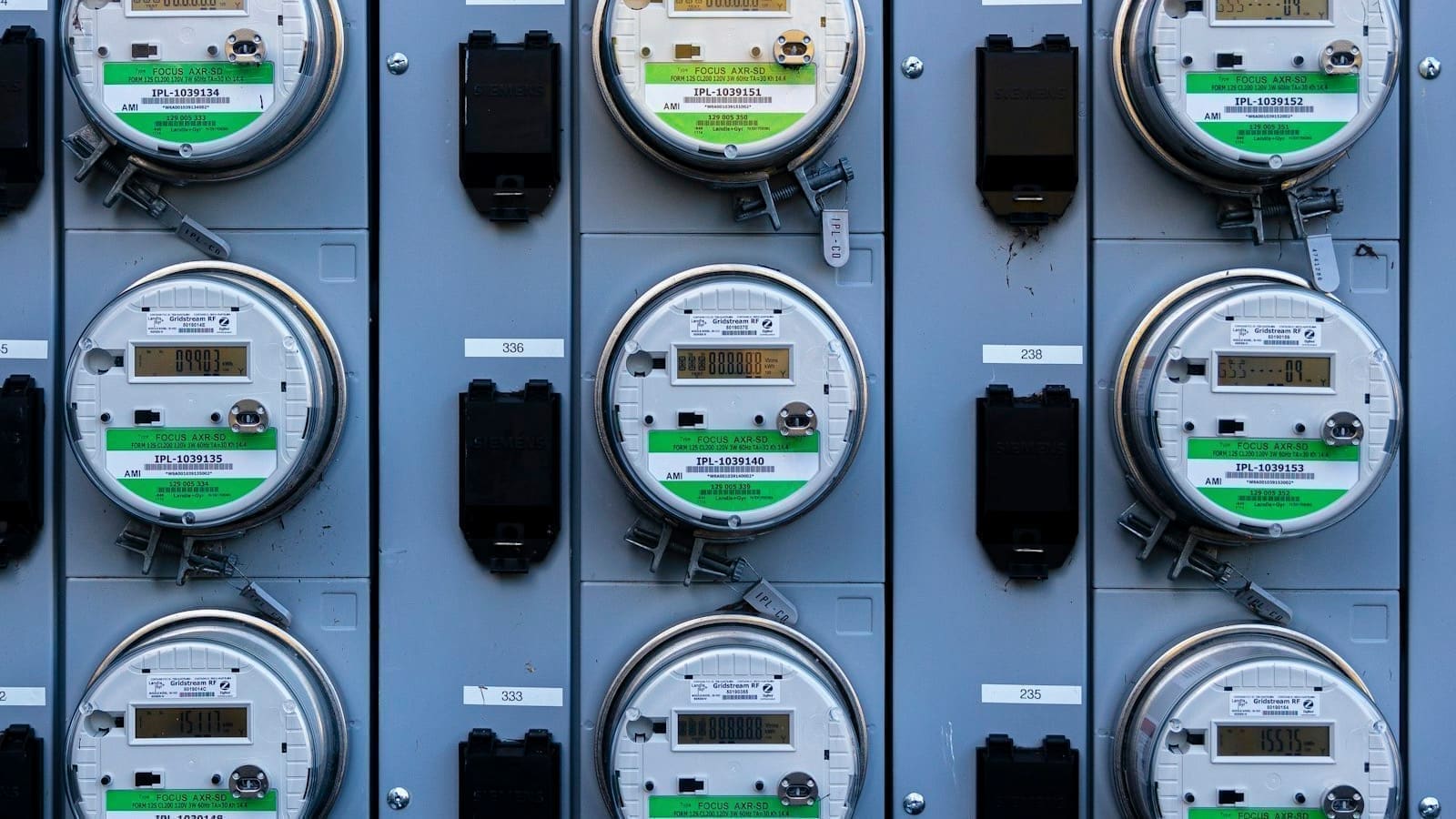
How they work. IHDs pair with your SMETS2 smart meter over Zigbee and display the same reading your energy supplier sees — no CT clamps, no consumer unit access required. They show live electricity and gas consumption, cost today, and weekly and monthly totals. Accuracy is meter-grade. The downside is they show whole-home totals only; they cannot tell you which appliance is drawing the power.
CT clamp monitors
How they work. A current transformer (CT) sensor wraps around the live cable entering your consumer unit. No wiring is broken; the clamp measures the magnetic field induced by alternating current and converts it to a consumption figure. Accuracy is typically ±1–2%. They require access to your meter tails or main incoming cable, which means the installation point is usually inside or immediately beside your consumer unit — a job for a confident DIYer or a Part P-aware electrician if you are unsure.
Smart plug and circuit monitors
How they work. Individual smart plugs — such as the Meross, Kasa, or Shelly Plug S — track power consumption per socket. Useful for identifying energy-hungry appliances but impractical as a whole-home solution. Circuit-level monitors like the Shelly Pro 3EM sit in the consumer unit and break consumption down by circuit.
How we chose these home energy monitors
We compared home energy monitors across three criteria that matter most for a UK household: whether the device works with your existing meter (SMETS2 smart meter vs no meter at all), whether it offers a genuine local Home Assistant integration versus a cloud-only app, and whether the ongoing cost is zero (free app, one-off hardware purchase) or hides a subscription. We excluded devices that require a proprietary hub with no local API and general-purpose smart plugs, which only measure a single socket rather than whole-home consumption.
Best home energy monitors UK 2026
| Monitor | Best for | Price | Meter required | Home Assistant |
|---|---|---|---|---|
| Hildebrand Glow IHD | SMETS2 households wanting rich data | £69.99 | SMETS2 smart meter | Local MQTT (Glowmarkt integration) |
| Loop Energy Saver app | Free tariff-optimisation, no hardware | Free | SMETS2 smart meter | No |
| Geo Trio II | Simple supplier-issued display | Free (if issued) | SMETS2 smart meter | No |
| OWL Intuition-e | Standalone CT clamp, no smart meter needed | ~£90–£110 | None | Community integration (cloud) |
| Shelly Pro 3EM | Home Assistant power users, per-circuit/3-phase | £149.99 | None | Official native integration (local) |
| Efergy Elite Classic | Budget CT clamp, no app needed | ~£30–£45 | None | No (third-party hub only) |
1. Hildebrand Glow IHD — Best for SMETS2 smart meter households
Price: £69.99 (no subscription)
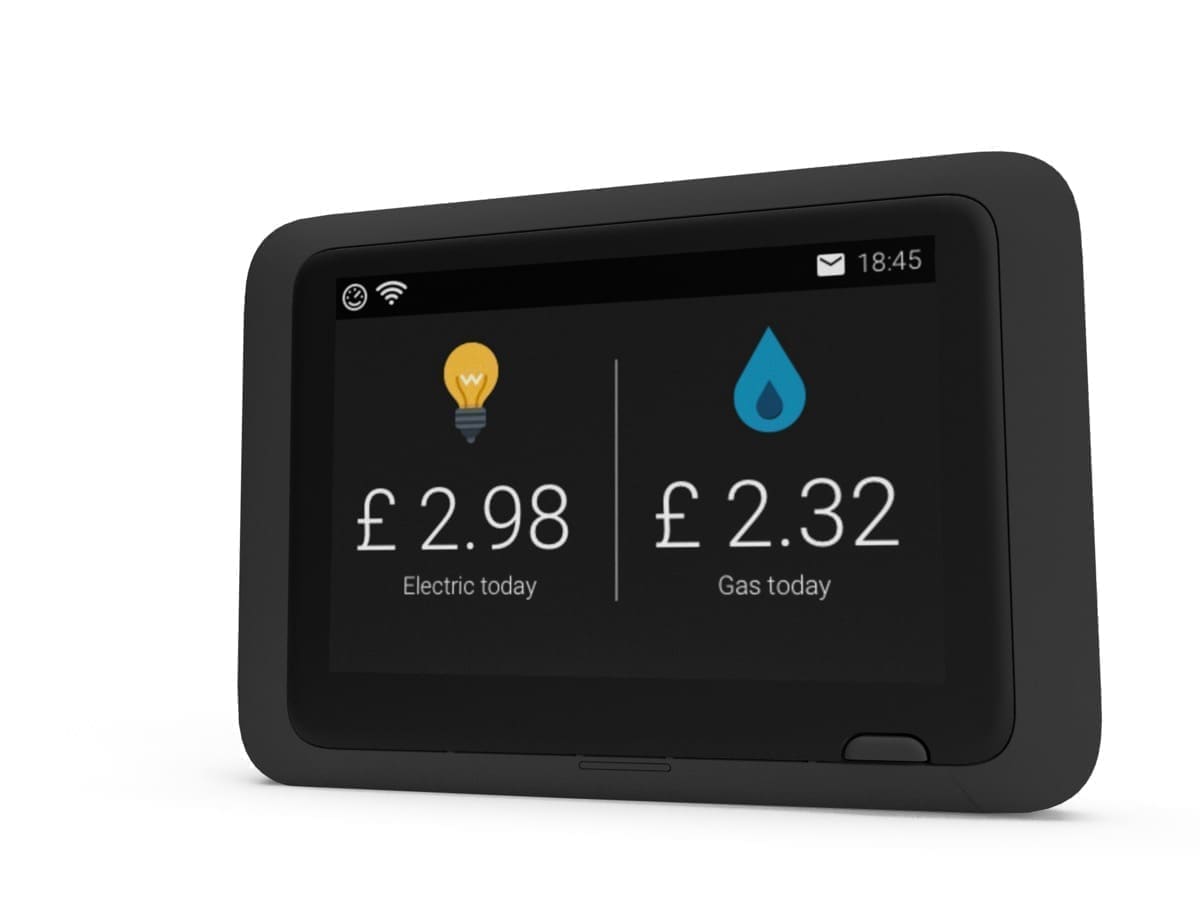
The Hildebrand Glow is the standout third-party IHD for UK consumers. Unlike the supplier-issued Geo Trio II or Chameleon IHD, the Glow connects to your SMETS2 meter via the official DCC (Data Communications Company) network rather than a proprietary supplier link — so it works with every UK energy supplier and does not need re-pairing if you switch. Setup takes under five minutes: plug the device in, scan the QR code, and your live electricity and gas readings appear on a 3.5-inch colour touchscreen within seconds.
Where the Glow pulls ahead of basic IHDs is data access. It pairs with the Bright app (iOS and Android), which shows tariff-aware spending, half-hourly exports for households with solar, and Agile pricing for Octopus customers — useful if you are trying to shift load to cheap overnight windows. Crucially, the Glow exposes a local MQTT broker, which means Home Assistant energy monitoring is straightforward via the Glowmarkt integration without any cloud dependency. Gas readings update every 30 minutes; electricity updates every 10 seconds. Currently on a waitlist with a £15 deposit to lock the price.
Best for: SMETS2 households wanting rich data, tariff-aware spend, and Home Assistant integration. Not suitable for: homes without a smart meter, or SMETS1 installs (a separate SMETS1 variant exists but data richness is reduced).
2. Loop Energy Saver — Best free smart-meter companion app
Price: Free
Loop is not a hardware device — it is a free smartphone app that pulls half-hourly data from your SMETS2 smart meter via the national DCC API. Once connected (which requires submitting your meter serial number and granting data access), Loop builds a consumption profile over three to four weeks, then begins comparing your actual spend against alternative tariffs. The company claims users save an average of £250 per year, largely by identifying the right tariff rather than changing behaviour. The app also flags which estimated appliances are running based on step-change analysis of your half-hourly data — a simplified version of disaggregation that is indicative rather than precise. If you already have a SMETS2 smart meter and want zero hardware spend, Loop is the obvious first stop.
3. Geo Trio II — The supplier-issued benchmark
Price: Free (issued by your energy supplier)
If your energy supplier installed a SMETS2 smart meter after 2019, there is a reasonable chance you already own a Geo Trio II. It is the most widely deployed consumer IHD in the UK, with a monochrome touchscreen showing today's electricity and gas spend, a colour-coded usage traffic light, and weekly and monthly totals. Data lives on the device only — there is no app, no API, and no Home Assistant integration. For households who want a simple, always-on bedside display without any setup, that is fine. For anyone building a smart home energy dashboard, the Hildebrand Glow or Loop is the better choice.
4. OWL Intuition-e — Best standalone CT clamp monitor
Price: around £90–£110 (retailer dependent)
The OWL Intuition-e is a Wi-Fi-connected CT clamp monitor designed for UK single-phase homes without a smart meter, or for households who want independent consumption data from the meter. A standard sensor clamp attaches to cables up to 15mm diameter (max 130A), while a large clamp handles cables up to 17mm (200A). The transmitter unit sends data to a network gateway that plugs into your broadband router; consumption data then syncs to the OWL cloud dashboard and app. It does not require an electrician if you are comfortable opening your meter enclosure to attach the clamp, but if in doubt, have a qualified person do it. Crucially, OWL Intuition-e is electricity-only — there is no gas monitoring. It integrates with Home Assistant via a community integration but lacks the native local API of newer devices.
5. Shelly Pro 3EM — Best for Home Assistant power users
Price: £149.99 (shellystore.co.uk)
The Shelly Pro 3EM is a DIN-rail-mounted three-phase energy meter that fits directly inside your consumer unit. It measures up to 120A per phase, stores 60 days of per-minute data locally, and supports MQTT, WebSocket, and Modbus — making it the most capable local-first energy monitor available at this price point. For UK single-phase homes (the vast majority), only one CT channel is used; the benefit of the three-phase model is future-proofing if you add a three-phase EV charger or heat pump later. Native Home Assistant integration is available via the official Shelly integration; entities for current, voltage, power, power factor, and cumulative energy appear automatically. If you are building a serious Home Assistant energy dashboard and want sub-second local polling without cloud dependency, this is the device to fit. Installation inside a consumer unit should be carried out by a qualified electrician.
6. Efergy Elite Classic — Best budget CT clamp
Price: around £30–£45
The Efergy Elite Classic is the entry-level CT clamp option for UK households who want hardware monitoring without the outlay of the OWL Intuition or Shelly Pro. It uses a 10mm clamp sensor (max 70A), a transmitter unit, and a handheld receiver display. There is no Wi-Fi gateway in the base model — data is shown on the receiver display in real time and can be logged to a computer via Efergy's Engage cloud platform with the optional hub. The display updates every six seconds, making it fast enough to see individual appliance switching events. Range between transmitter and display is around 30 metres (unobstructed). It does not integrate with Home Assistant without a third-party hub. Good for renters or those who want quick visibility without any app setup.
Which monitor should I choose?
The right device depends on your meter type and what you want to do with the data:
- SMETS2 smart meter, want free insights: Start with the Loop app — zero cost, zero hardware.
- SMETS2 smart meter, want Home Assistant or richer data: Hildebrand Glow IHD (£69.99) — connects to DCC, exposes MQTT locally.
- No smart meter, want simple whole-home monitoring: OWL Intuition-e (~£100) or Efergy Elite Classic (~£35).
- Home Assistant power user, want per-circuit or high-accuracy monitoring: Shelly Pro 3EM (£149.99) — fit by an electrician into the consumer unit.
- On an Octopus Agile or time-of-use tariff: Hildebrand Glow + Bright app is essential for tracking cheap windows. Pair with Octopus Energy smart tariff automations.
- Have solar panels or a battery: Shelly Pro 3EM handles import/export measurement; the Hildebrand Glow also shows half-hourly solar export if your supplier supports it. See our guide to solar battery storage UK for how monitoring fits into a wider energy setup.
Do I need a smart meter first?
No. CT clamp monitors — OWL Intuition-e, Shelly Pro 3EM, Efergy Elite — work independently of your meter type. They measure current directly on your incoming cable. Smart meter IHDs (Hildebrand Glow, Loop, Geo Trio II) require a SMETS2 smart meter to be installed. As of Q4 2025, 71% of all UK domestic meters were smart or advanced meters, so a majority of homes are already eligible. If yours is not, you can request a free upgrade from your energy supplier — they are obliged to offer installation.
Home Assistant energy dashboard integration
Home Assistant's built-in energy dashboard aggregates grid import, grid export, solar production, battery storage, and individual device consumption into a single view. The best UK-compatible feeds are:
- Hildebrand Glow / Glowmarkt MQTT — pulls SMETS2 meter data into HA via local MQTT; gas and electricity in a single integration.
- Shelly Pro 3EM — native HA integration; sub-second polling; local-only operation.
- Shelly EM — single-phase, two-channel version at around £35; installs in a DIN enclosure alongside your consumer unit.
- Emporia Vue 3 — primarily a US product but can be flashed with ESPHome for local MQTT operation; up to 16 circuits monitored simultaneously.
For a full walkthrough of setting up the energy dashboard, including how to wire in grid and solar sensors, see our dedicated Home Assistant energy monitoring guide.
Who should skip a home energy monitor?
If you already have a SMETS2 smart meter, your energy supplier's own app already shows daily and weekly usage at no extra cost — for casual bill-checking with no interest in Home Assistant, tariff switching, or per-circuit data, that may be enough, and buying a dedicated device would be redundant. Renters who cannot modify the consumer unit or fit a permanent CT clamp should rule out DIN-rail devices like the Shelly Pro 3EM and stick to a smart meter IHD or app, both of which are non-invasive. And if your goal is purely to spot one specific energy-hungry appliance rather than track whole-home usage, a single smart plug with energy monitoring — such as those covered in our smart plug guide — is cheaper and simpler than a whole-home monitor.