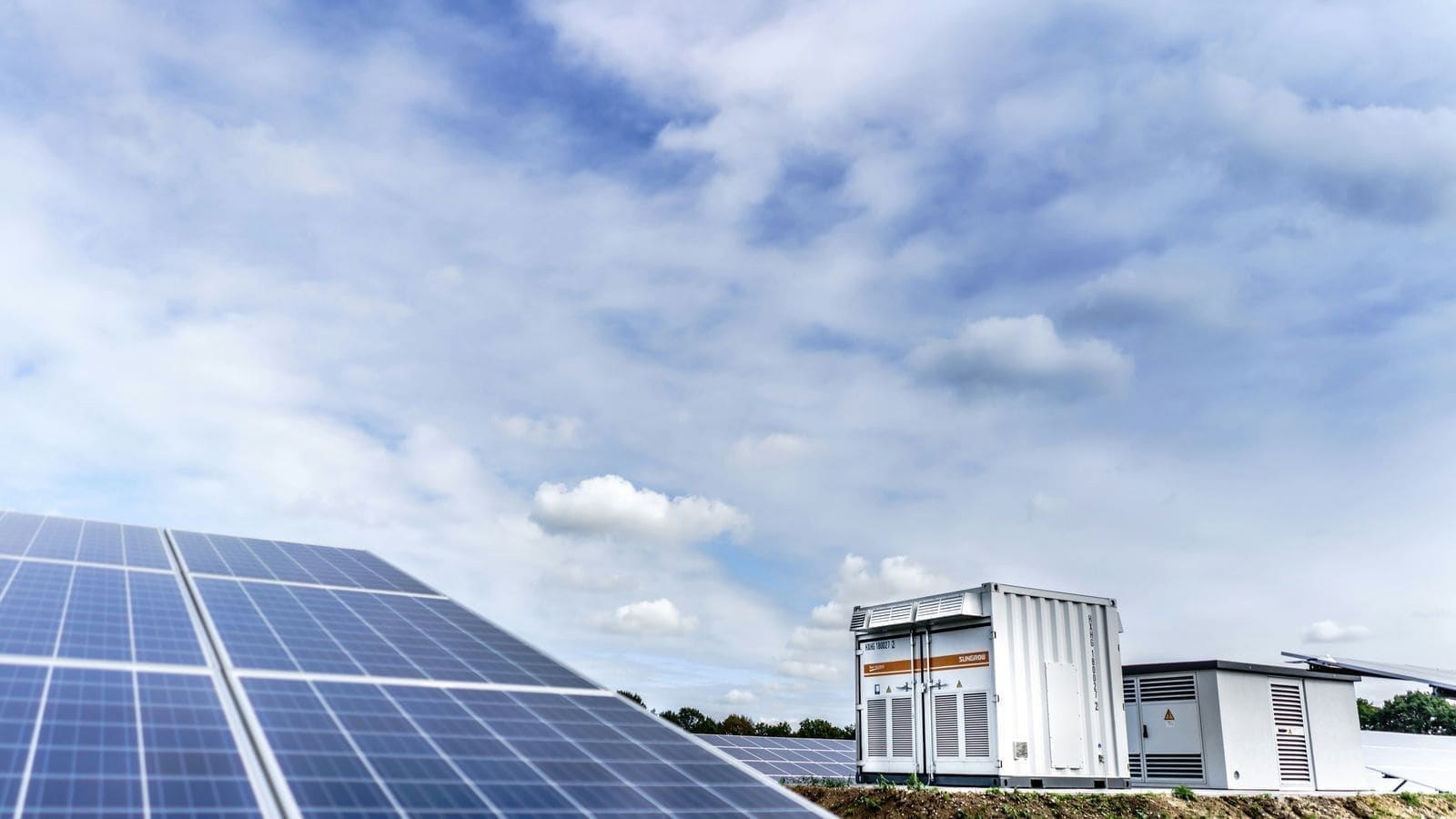
How Solar Battery Storage Works
Solar panels produce electricity whenever sunlight hits them, but a typical UK household uses most of its energy in the morning and evening — not the middle of the day when generation peaks. Without a battery, surplus daytime electricity flows back to the grid and you earn a small payment via the Smart Export Guarantee (SEG). With a battery, that surplus is stored and discharged when you need it, dramatically increasing what is called self-consumption.
A well-sized battery raises a typical household's self-consumption from around 30% (panels alone) to 60–80%, according to installer data. That translates to buying significantly less electricity from the grid each year — typically saving £400–£600 annually at current unit rates.
Most modern batteries use lithium iron phosphate (LFP) chemistry, which is more thermally stable than older lithium-ion chemistries and carries warranties of 10–12 years at around 80% capacity retention.
How Much Does Solar Battery Storage Cost in the UK?
Fully installed prices depend primarily on capacity:
- Small (3–5 kWh): £3,000–£5,500 — suitable for one- or two-person households with modest evening consumption.
- Medium (6–9 kWh): £5,000–£7,000 — the most popular size range for a three- or four-bedroom family home.
- Large (10–15 kWh): £6,500–£10,000 — provides near-overnight cover and suits larger properties or those with an EV or heat pump.
These prices include supply, installation, a hybrid inverter (if required), and commissioning. Prices vary by region and installer, so always obtain at least three quotes from MCS-certified installers.
0% VAT until March 2027. Since February 2024, standalone battery storage retrofitted to an existing solar PV system is eligible for the zero rate of VAT, under HMRC's energy-saving materials relief. The relief covers the battery, inverter, and installation labour in a single supply contract. It is due to revert to 5% VAT on 1 April 2027, so systems installed before that date benefit from the current relief. You do not need to claim this separately — a qualified installer handles it at point of sale.
Top Battery Brands Available in the UK
Tesla Powerwall 3. The market's most recognised name. The Powerwall 3 integrates a hybrid inverter and 13.5 kWh storage in a single wall-mounted unit, with a 10-year warranty. Fully installed costs run around £8,000–£9,500. It supports vehicle-to-home (V2H) scheduling and pairs well with the Tesla app. It is available through Tesla-certified installers.
SolarEdge Home Battery. Best suited to existing SolarEdge inverter owners. The 10 kWh BAT-10K can be retrofitted to a compatible SolarEdge HD-Wave inverter for around £6,800, or installed as part of a new system for closer to £9,500. SolarEdge's energy management software optimises self-consumption automatically.
Pylontech US5000. A popular choice for installers using third-party hybrid inverters (such as Solis or Growatt). The US5000 delivers 4.8 kWh of usable storage and can be stacked — two units give 9.6 kWh. A single-unit system with a Solis S6 hybrid inverter typically comes in around £4,800, making Pylontech one of the more cost-effective entry points.
Growatt. Growatt's ARK-LV series batteries pair with the company's own hybrid inverters. A 5 kWh system costs roughly £4,000–£4,500 installed. Growatt is a common choice for budget-conscious retrofits and has a growing presence in the UK residential market.
GivEnergy — important note. GivEnergy was a popular UK brand until it entered administration in April 2026. New GivEnergy battery purchases are not currently recommended; existing installations continue to work, but warranty support is uncertain. Alternatives in a similar price band include Fox ESS and Sunsynk.
EcoFlow Stream 5000. A newer, portable alternative to a fixed wall-mounted battery: EcoFlow's Stream 5000 launched in the UK in August 2026 with 5 kWh of storage in a plug-in unit from £1,499 early bird, no permanent wiring required. It suits renters or anyone wanting to try battery storage without committing to a full installation, though it lacks the higher capacity and export limits of a hard-wired system.
What Is the Smart Export Guarantee (SEG)?
The Smart Export Guarantee requires most licensed electricity suppliers to offer a tariff that pays you for electricity you export to the grid. SEG rates are set by suppliers rather than regulated by Ofgem, so they vary considerably. As of June 2026, rates range from around 5p/kWh on the lowest tariffs up to 25p/kWh on Good Energy's Solar Savings Exclusive tariff.
Batteries and SEG eligibility. A battery that can only store solar energy (not charge from the grid) is compatible with most SEG tariffs. A battery that is also grid-charged to take advantage of cheap overnight electricity typically cannot receive SEG payments for the electricity it exports, because suppliers cannot confirm it originated from solar generation. Check the terms of your chosen SEG tariff before configuring grid-charging schedules.
Adding a battery reduces your annual SEG income (often to £20–40 per year) because you export less surplus. However, the saving on import bills — typically £400–£600 per year — more than offsets this for most households.
Smart Tariffs That Work Well With Battery Storage
Pairing a battery with a time-of-use electricity tariff unlocks additional savings. The strategy is straightforward: charge the battery from the grid during cheap overnight periods (or from solar during the day) and discharge during expensive evening peak hours.
Octopus Agile offers half-hourly import prices that track the wholesale electricity market. Prices can fall to 1–2p/kWh overnight and rise above 35p/kWh during the 4–7 pm peak in winter. A battery that charges on cheap Agile slots and discharges at peak can generate significant savings beyond solar self-consumption alone. You can read more about this in our guide to the Octopus Energy smart tariff.
Octopus Flux was a dedicated tariff for solar-plus-battery households, offering a cheap overnight import rate, a standard daytime rate, and a premium export rate between 4 pm and 7 pm. As of March 2026, Octopus Flux was paused for new customers due to wholesale market volatility — check Octopus Energy's website for the latest availability.
Intelligent Octopus Go and similar overnight EV-focused tariffs (typically 6–8p/kWh between 11 pm and 5 am) also work well if you want cheap overnight battery charging without the complexity of half-hourly Agile pricing.
Integrating Battery Storage With Home Assistant
Home Assistant can monitor and control your solar and battery system, letting you build automations that respond to solar generation, battery state of charge, and live tariff prices. The Home Assistant solar monitoring guide walks through setting up an energy dashboard and connecting an inverter integration.
For Octopus customers, the unofficial Octopus Energy integration (available via HACS) exposes live Agile prices as sensors. You can create automations that charge the battery only when the import price drops below a defined threshold — for example, below 8p/kWh — and stop charging when it rises. Many inverter brands (Solis, Growatt, Sunsynk, SolarEdge) have community integrations that expose battery state of charge and allow charge/discharge mode switching through Home Assistant.
Is Solar Battery Storage Worth It in 2026?
The typical payback period for a standalone battery added to an existing solar system is 9–12 years at current energy prices. That leaves 3–6 years of pure savings within the warranty period, and potentially longer if the battery retains capacity beyond the warranty term.
Payback improves significantly if you:
- Install solar and battery together (combined installation costs less than two separate visits).
- Use a time-of-use tariff such as Octopus Agile to exploit cheap overnight charging.
- Have an EV or heat pump that creates large, flexible electricity loads. The battery can also help smooth the draw from these devices.
- Install before April 2027 to benefit from 0% VAT.
Battery storage is less compelling if you already use very little electricity in the evenings, if your panels are east- or west-facing and produce a flatter generation profile, or if you are on a fixed single-rate tariff with no cheap periods to exploit.
Check out our guides on solar panel installation cost and best solar panels UK if you are planning a combined solar-plus-battery installation from scratch.
For a more detailed payback analysis, including modelled savings by tariff and battery size, Smart Solar Homes has a full guide to whether solar batteries are worth it in the UK.
Getting Quotes and Next Steps
Always use an MCS-certified installer — it is a requirement for SEG eligibility and ensures the installation meets the BS 7671 wiring regulations. Get at least three quotes, check whether the price includes scaffolding and DNO (Distribution Network Operator) notification where required, and ask about the inverter warranty separately from the battery warranty.
Lead times vary from two to eight weeks depending on installer availability in your region. Battery installations are generally faster than a full solar-plus-battery project, which may require a structural survey and a DNO G98 or G99 application for larger systems.