Unit Rates: Electricity vs Gas in Q3 2026
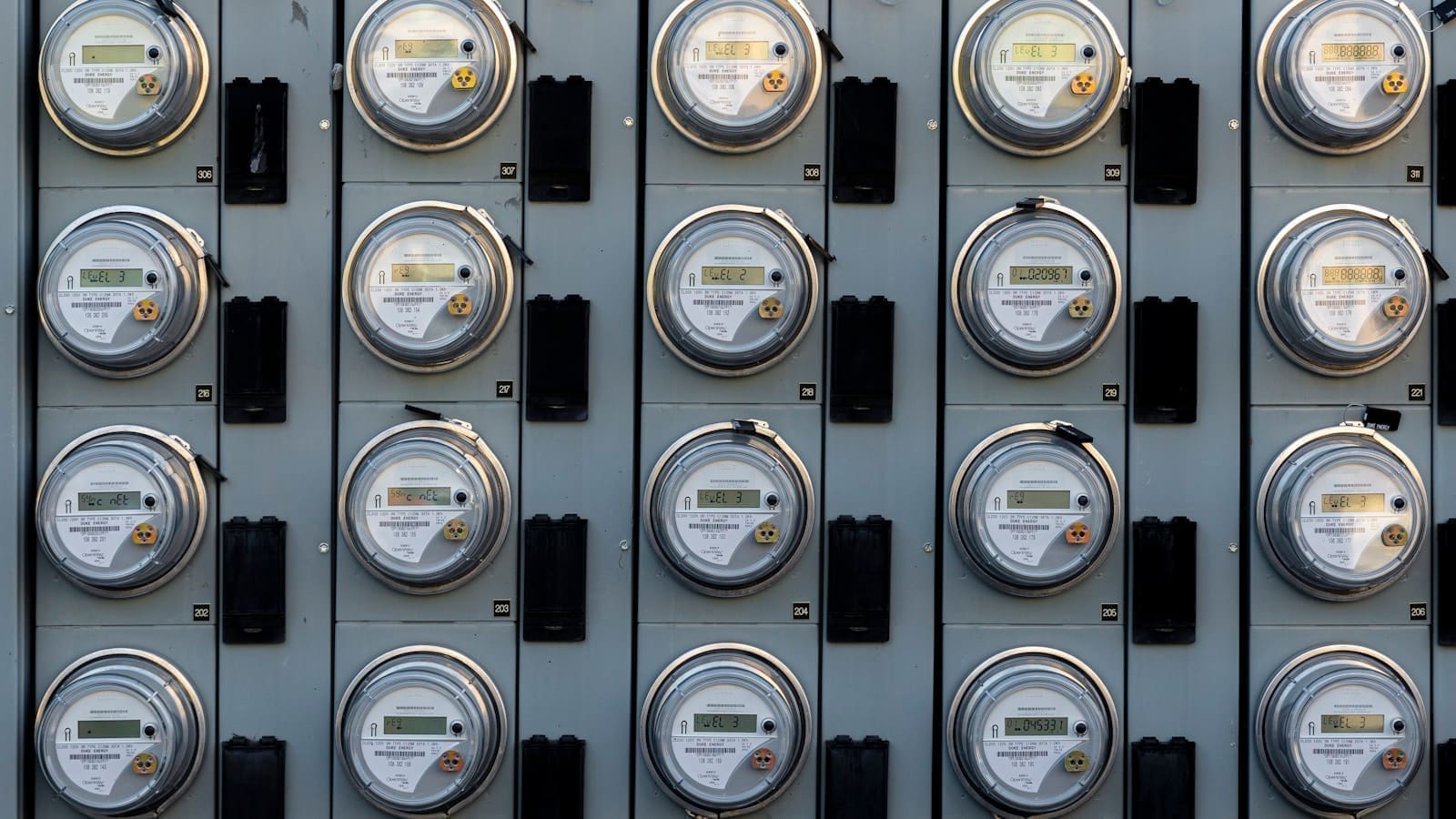
Ofgem sets a price cap on standard variable tariffs each quarter. For the period 1 July to 30 September 2026, the cap sets the following average rates for direct debit customers in England, Scotland and Wales (VAT at 5% included):
| Fuel | Unit Rate (Q3 2026) | Standing Charge |
|---|---|---|
| Electricity | ~26.11p/kWh | ~57.19p/day |
| Gas | ~7.33p/kWh | ~29.04p/day |
These are national averages — your actual rate depends on region and supplier. The Q3 2026 cap is 13% higher than the Q2 2026 cap (£1,641 to £1,862 for a typical household), so bills have risen for both fuels this summer.
Bottom line for direct electric heating: resistive heaters, panel heaters, and electric radiators convert electricity to heat at roughly 100% efficiency — one kWh of electricity produces one kWh of heat. At 26p per kWh, heating an average UK semi-detached home (roughly 12,000 kWh of annual heat demand) with direct electric heating would cost around £3,100–£3,400 per year, compared with roughly £880–£1,050 per year with a gas boiler.
How Heat Pumps Change the Equation
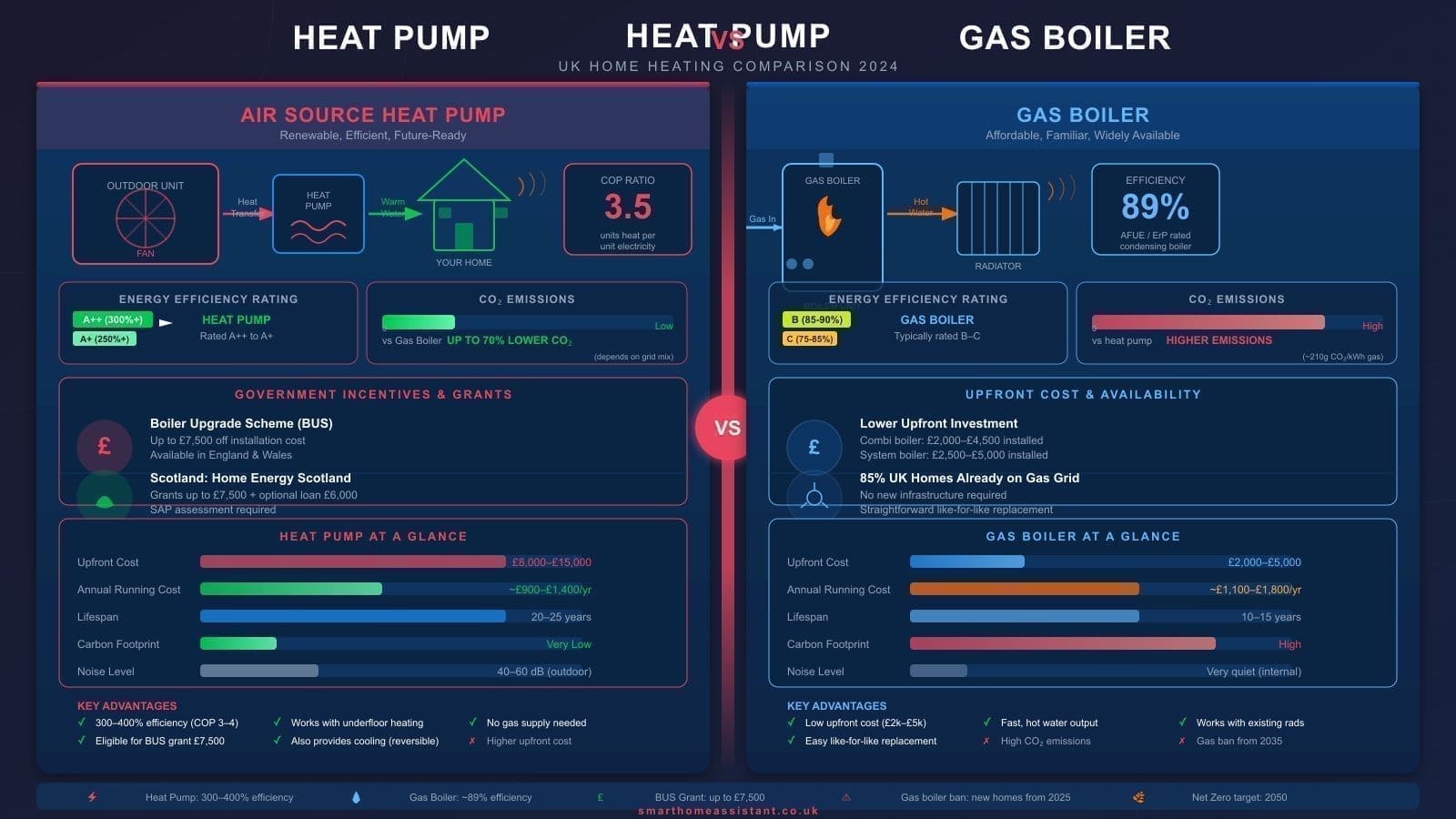
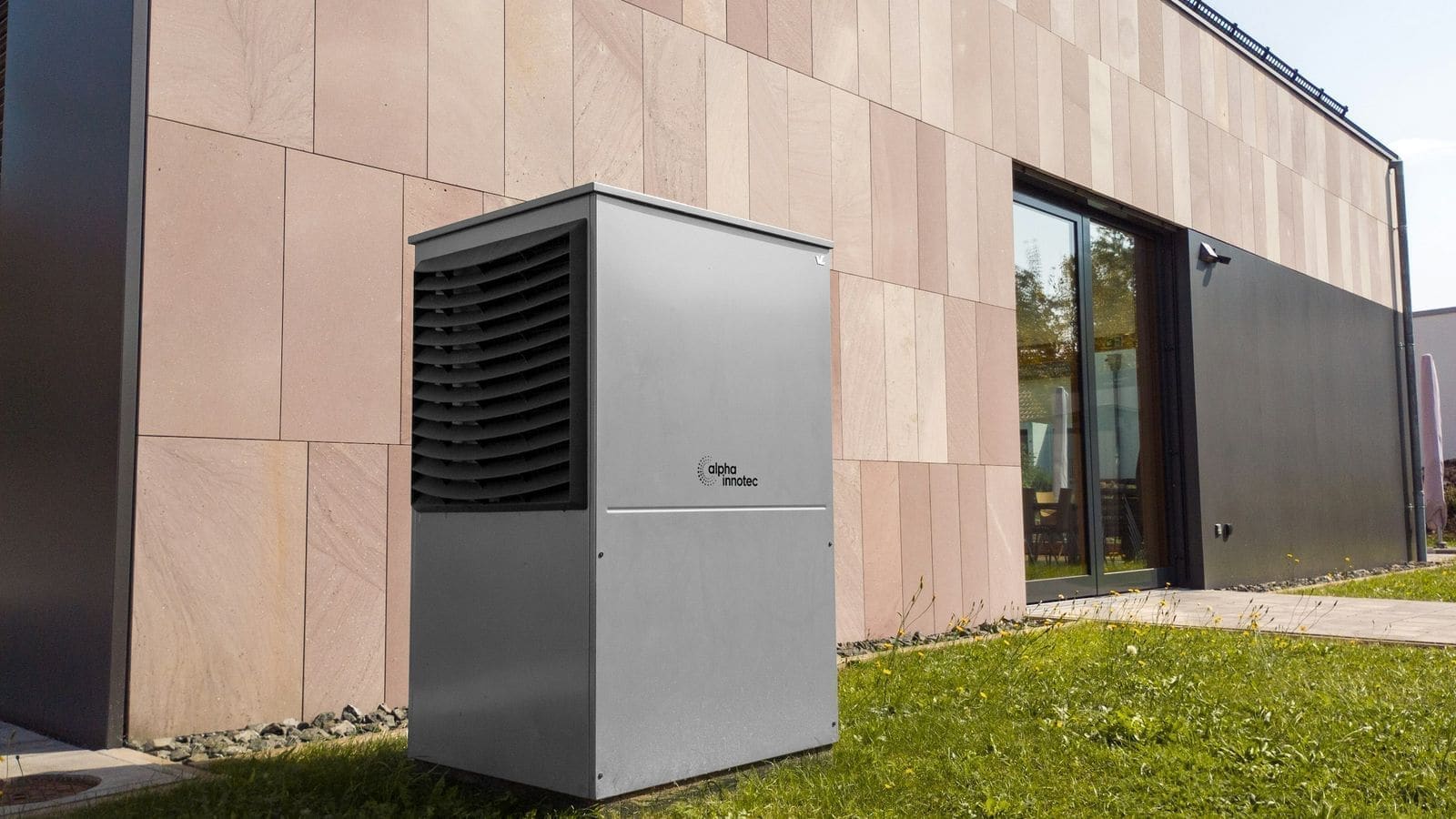
An heat pump vs gas boiler comparison looks very different once efficiency is factored in. Air source heat pumps (ASHPs) do not generate heat directly — they move thermal energy from outside air into your home. For every 1 kWh of electricity consumed, a well-installed heat pump delivers 2.5–4 kWh of usable heat. This ratio is called the Coefficient of Performance (COP); the seasonal average across all weather conditions is the SCOP.
UK field data shows that real-world ASHPs typically achieve SCOPs of around 2.8–3.2 in typical British conditions. At a SCOP of 3.0 and a standard electricity rate of 26.11p/kWh:
- Effective cost of heat from a heat pump: ~8.7p/kWh
- Effective cost of heat from a gas boiler (90% efficient): ~8.1p/kWh
The two technologies are now within a few pence per kWh of each other. Annual running costs for heat pump-heated homes are broadly comparable to modern condensing gas boilers at 2026 rates — the gap has narrowed dramatically over the past two years as gas prices rose.
Comparison Table: Heating Technologies in 2026
| System | Fuel cost per kWh heat | Typical annual cost* | Install cost |
|---|---|---|---|
| Direct electric heaters | ~26p | £3,100–£3,400 | £500–£2,000 |
| Gas boiler (A-rated) | ~8.1p | £900–£1,050 | £2,500–£4,500 |
| Air source heat pump (SCOP 3.0) | ~8.7p | £900–£1,100 | £8,000–£15,000 (before grant) |
| ASHP on Economy 7 (off-peak) | ~4.5–5.5p | £540–£660 | £8,000–£15,000 (before grant) |
| Smart storage heaters (E7) | ~4.5–5.5p | £540–£750 | £600–£2,500 |
*Based on a typical 3-bed semi-detached home with ~12,000 kWh annual heating demand. Costs are ranges; actual figures depend on home size, insulation, and regional rates. Prices vary by supplier and region.
Economy 7 and Off-Peak Tariffs
Economy 7 and Economy 10 tariffs offer significantly lower electricity rates during off-peak hours — typically overnight from around midnight to 7am. In June 2026, off-peak E7 rates range from roughly 12.5p to 16p per kWh depending on supplier and region, compared with the daytime rate of 26p+.
This has two important implications for electric heating:
- Smart storage heaters charge up overnight using cheap electricity and release heat gradually throughout the day. At 14p/kWh off-peak, the effective cost of heat (accounting for storage losses) is roughly 5–6p/kWh — competitive with gas. Modern best smart storage heaters connect to smart meters and tariff APIs to optimise charging windows automatically.
- Heat pumps on smart tariffs can be scheduled to run predominantly off-peak, especially when paired with a hot water cylinder that acts as thermal storage. On the Octopus Energy smart tariff or similar time-of-use products, running costs fall well below gas boiler parity.
Electric Radiators: The Direct-Electric Case
Direct electric heating — panel heaters, oil-filled radiators, and best electric radiators UK — remains expensive on a standard tariff. At 26p/kWh, even the most efficient infrared panels and ceramic heaters cannot compete with gas on running cost alone.
Where electric radiators make sense:
- Off-grid properties without mains gas access (LPG is typically more expensive than electric heating on Economy 7)
- Flats and conversions where installing wet central heating is impractical
- Supplementary heating in single rooms not covered by the main system
- Economy 7 homes with adequate overnight storage capacity
For most gas-connected homes, electric radiators on a standard tariff are not a cost-effective primary heating solution at 2026 electricity prices.
The Long-Term Policy Picture
The UK government had originally planned to ban new gas boiler installations by 2035. That strict deadline has since been dropped in favour of a Warm Homes Plan that uses incentives rather than mandates. The £7,500 Boiler Upgrade Scheme grant for heat pumps remains in place, and the £15bn Warm Homes Plan prioritises insulation, solar, and electrification.
What this means practically:
- No hard deadline on buying a new gas boiler — if you need to replace your boiler today, you can still fit a gas model
- Heat pump grants remain available — the £7,500 Boiler Upgrade Scheme grant reduces a typical ASHP installation from £10,000–£15,000 to a net cost of £2,500–£7,500. See our guide to heat pump grants UK for current eligibility.
- Gas prices are not guaranteed to fall — geopolitical factors and ageing North Sea infrastructure mean the current 7.33p/kWh gas rate could rise, while electricity from renewables is structurally expected to get cheaper relative to gas over the 2030s
Which Is Cheaper Right Now?
At current Q3 2026 Ofgem rates, the honest answer is: it depends entirely on your heating system.
- Gas boiler wins comfortably against direct electric heaters on running cost alone
- Heat pump reaches near-parity with gas at a SCOP of 3.0 on a standard tariff, and becomes cheaper on a time-of-use tariff
- Smart storage heaters on Economy 7 can beat gas on running costs if the home is well insulated and the tariff is optimised
If you already have a working gas boiler, there is no financial case for switching to direct electric heating at 2026 prices. But if you are replacing a boiler, a heat pump combined with a smart tariff is now competitive — and will likely become more so as the electricity-to-gas price ratio gradually narrows through the 2030s.
Carbon Emissions: A Different Comparison
Running costs are only half the picture. The UK electricity grid's carbon intensity has fallen sharply as coal generation has ended and offshore wind capacity has grown. In 2025–26, grid electricity emits roughly 180–220 gCO2/kWh on average (varying significantly by time of day), compared with approximately 204 gCO2/kWh for gas combustion (direct, not accounting for boiler losses).
A heat pump using current UK grid electricity at SCOP 3.0 produces roughly 60–75 gCO2 per kWh of heat delivered — around a third of the emissions from a gas boiler. As the grid decarbonises further, the carbon advantage of electric heating grows automatically without any changes to your home system.