What Is a Smart Motion Sensor?
A smart motion sensor is a battery- or mains-powered device that uses passive infrared (PIR) technology to detect body heat and movement. When triggered, it sends a command over a wireless protocol — typically Zigbee, Z-Wave, or Wi-Fi — to connected smart bulbs or smart switches, turning them on. Most also include a daylight sensor, so they will not fire during bright daylight hours when the light is not needed.
Unlike a traditional motion-activated light fitting, a smart sensor is a standalone accessory. It pairs with bulbs or switches you already own, which means you can add automation to a room without replacing light fittings or running new wiring.
How we chose these motion sensors
We compared protocol (Zigbee, Z-Wave or Wi-Fi), battery life, weatherproofing for outdoor use, sensitivity adjustment, and ecosystem compatibility with Home Assistant, HomeKit and SmartThings, then picked one sensor per use case rather than ranking on price alone. We excluded sensors without UK retail availability or without a stated IP rating for outdoor models.
The Best Smart Motion Sensors for UK Homes
1. Philips Hue Motion Sensor (Indoor) — best overall
Price: around £32–£35 | Protocol: Zigbee
The Philips Hue Motion Sensor is the benchmark for indoor smart motion sensors. It detects movement, ambient light level, and temperature, giving the Hue app three separate data points to make smarter automation decisions. For example, you can set it to trigger lights only when the room is below a certain lux threshold — preventing unnecessary activation on sunny afternoons.
Setup is quick if you have a Hue Bridge, but the sensor also works in standalone Bluetooth mode without the bridge — a useful option for smaller setups. Battery life is rated at approximately two years on two AAA batteries under typical use.
Pros: polished app, multi-sensor data, adjustable detection angle, works standalone or with bridge.
Cons: indoor only, requires Hue ecosystem for full features, relatively expensive for a single sensor.
2. Philips Hue Outdoor Motion Sensor — best for gardens and porches
Price: around £44–£48 | Protocol: Zigbee | IP54 weatherproof
The outdoor variant of the Hue sensor adds IP54 weatherproofing so it can survive rain and frost, making it suitable for UK conditions year-round. Like its indoor sibling, it measures both motion and daylight, avoiding false triggers in the middle of the day.
It pairs with outdoor smart lights and garden lighting to create automatic dusk-to-dawn security lighting without a subscription or camera. Mounting is straightforward: a compact bracket lets you angle the sensor toward a path or driveway.
Pros: weather-resistant, daylight sensor, pairs with any Hue or Zigbee light, long battery life.
Cons: pricier than outdoor motion-sensor floodlights that bundle sensor and light together; outdoor placement can drain batteries faster in cold weather.
3. Aqara Motion Sensor P1 — best value with long battery life
Price: around £17–£20 | Protocol: Zigbee | HomeKit / Home Assistant / SmartThings compatible
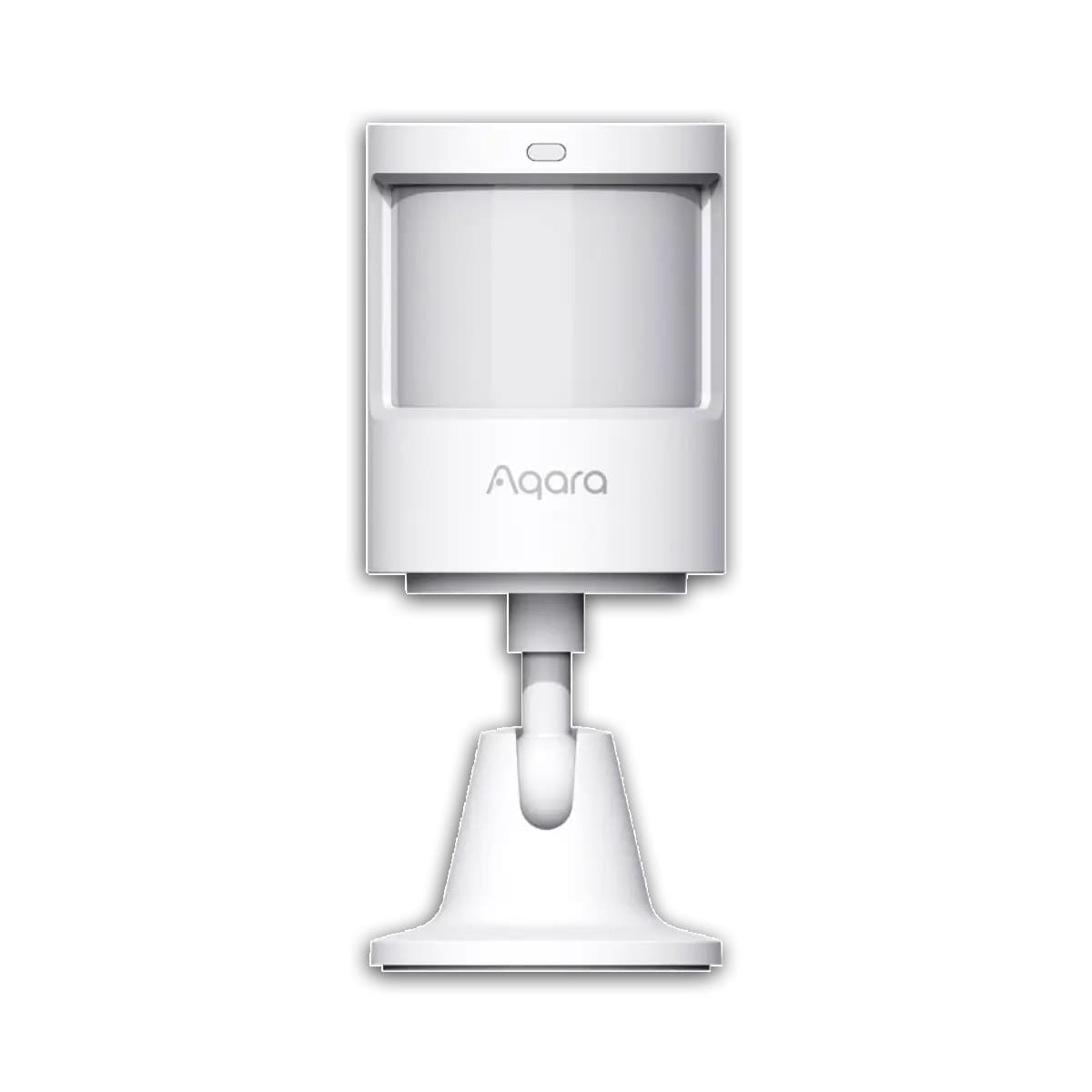
The Aqara Motion Sensor P1 punches well above its price. Aqara rates its battery life at up to seven years on a single CR2450 cell under typical home conditions — a significant advantage over sensors that need changing every year or two. Sensitivity and detection distance are both adjustable, which is helpful in hallways or rooms with pets.
The P1 integrates natively with Apple HomeKit, Samsung SmartThings, and — via the Zigbee integration — with Home Assistant, making it one of the most versatile sensors on this list. It works with any Zigbee coordinator (Aqara hub, Hue Bridge, ConBee II, or similar).
Pros: exceptional battery life, adjustable sensitivity, broad ecosystem support, competitive price.
Cons: no temperature sensor, plastic build feels budget, no daylight bypass built into hardware (must be configured in the hub).
Buy from Amazon UK.
4. IKEA TRÅDFRI Motion Sensor — best budget pick
Price: around £9–£12 | Protocol: Zigbee
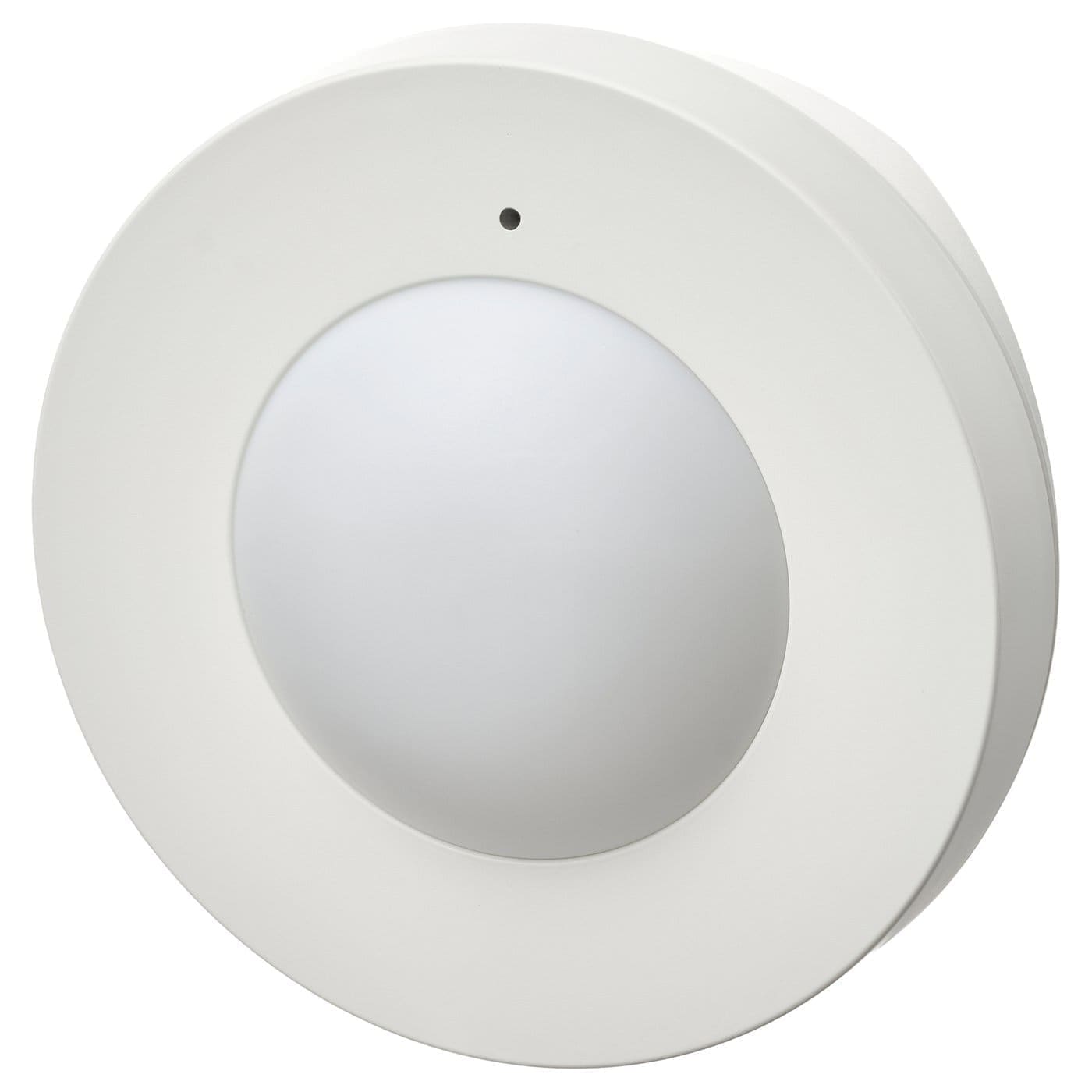
If you want basic motion-triggered lighting at the lowest possible cost, the IKEA TRÅDFRI sensor delivers. It operates over Zigbee and can control TRÅDFRI bulbs directly in pairing mode — no hub required. For more advanced automations, it also pairs with an IKEA Dirigera hub or a Philips Hue Bridge.
There is one trade-off: the sensor offers simple on/off triggering with a fixed timeout (around 3 or 10 minutes), and sensitivity is not adjustable. That is fine for a utility cupboard or bathroom, but limiting for a living room where you might want more nuanced control.
Our full IKEA TRÅDFRI review covers the wider ecosystem in detail.
Pros: very affordable, works without a hub in direct-pairing mode, compact design.
Cons: fixed timeout, no sensitivity adjustment, no daylight sensing, limited to on/off (no dimming triggers).
Available in IKEA stores and online at IKEA UK.
Who should skip a standalone motion sensor?
If you only need one or two rooms automated and already have a smart floodlight or motion-sensor light fitting with the sensor built in, adding a separate accessory sensor is unnecessary — a bundled product covers the same job in one purchase. Standalone sensors earn their keep once you want to trigger existing bulbs or switches in several rooms without replacing fittings.
How to Choose a Smart Motion Sensor Light
Indoor or Outdoor?
Indoor sensors are smaller and lower cost, but they have no weatherproofing. For a porch, garden path, or driveway you need at minimum IP44 splash resistance; IP54 (the Hue Outdoor sensor standard) handles direct rainfall and is the minimum for UK outdoor use. If you also want the light fitting included, look at a dedicated smart floodlight that bundles both sensor and lamp.
Protocol: Zigbee, Z-Wave, or Wi-Fi?
Zigbee is the dominant protocol for smart sensors and is supported by Philips Hue, Aqara, IKEA, and many others. It is low-power, mesh-forming, and responsive — ideal for a device that needs to react in under a second. Wi-Fi sensors exist but use more battery power and add load to your router. Z-Wave is reliable but less common in UK retail. For the most open and flexible setup, Zigbee with a Zigbee hub or coordinator gives you the most choice of compatible devices.
Battery Life vs Mains Power
All four sensors on this list are battery-powered, which makes them easy to install anywhere without an electrician. Most last one to three years; the Aqara P1's seven-year claim is exceptional. If you want to avoid batteries entirely, a smart light switch with a built-in PIR sensor is an alternative — these require mains wiring but eliminate battery changes. See our smart light switches guide for options.
Detection Range and Angle
Most PIR sensors cover a 120° to 180° horizontal angle and detect motion up to five to eight metres away. For a narrow hallway, wide coverage is less important than sensitivity. For a large room or an outdoor area, check the rated range carefully. Some sensors, including the Aqara P1, allow sensitivity adjustment so you can reduce false triggers from pets.
Ecosystem Compatibility
The sensor you choose should work with the bulbs and hub you already own. If you have a Philips Hue Bridge, both official Hue sensors and many third-party Zigbee sensors will pair with it. If you run Home Assistant, almost any Zigbee sensor can be integrated directly. Check compatibility before purchasing, especially for Wi-Fi sensors that may be locked to a proprietary app.
Quick Comparison
Philips Hue Motion Sensor (Indoor) — £32–35 | Zigbee | motion + lux + temp | ~2-year battery | indoor only
Philips Hue Outdoor Motion Sensor — £44–48 | Zigbee | IP54 | motion + lux | outdoor
Aqara Motion Sensor P1 — £17–20 | Zigbee | adjustable sensitivity | ~7-year battery | HomeKit/HA/SmartThings
IKEA TRÅDFRI Motion Sensor — £9–12 | Zigbee | fixed timeout | basic on/off | budget pick
Related: best PIR motion sensors UK, best smart floodlights UK, and best outdoor smart lights UK.