Quick Comparison
| Sensor | Price (approx.) | Protocol | Works with HA? | Best for |
|---|---|---|---|---|
| IKEA PARASOLL | ~£7.99 | Zigbee | Yes (Zigbee2MQTT) | Tightest budget |
| Sonoff SNZB-04P | ~£8.99 | Zigbee | Yes (Zigbee2MQTT) | Budget + temperature |
| Aqara P2 | ~£19.99 | Zigbee / Thread | Yes (native + Matter) | Best all-rounder |
| Samsung SmartThings | ~£19.99 | Zigbee (SmartThings) | Yes (SmartThings integration) | Vibration + temperature |
| Eve Door & Window | ~£39.99 | Thread | Yes (Matter/Thread) | HomeKit + local-first |
Our Top Picks Reviewed
1. IKEA PARASOLL — Best Budget Pick
Around £7.99 from IKEA. The PARASOLL is IKEA's own-brand Zigbee door and window sensor, and at this price it is genuinely hard to fault. It pairs natively with the IKEA Dirigera hub but also works seamlessly via Zigbee2MQTT in Home Assistant without any hub at all — making it the cheapest route into sensor-driven automations.
Pros: Lowest price on the list; compact design; Zigbee pairing is reliable; no subscription ever required.
Cons: No temperature or vibration sensing; only available in a small number of colourways; relies on IKEA's app if you want a simple non-HA setup.
2. Sonoff SNZB-04P — Best Budget with Extras
Around £8.99 from Amazon. The Sonoff SNZB-04P sits just one pound above the PARASOLL but adds a built-in temperature and humidity sensor — a meaningful upgrade for anyone who wants to monitor a cold conservatory or unheated utility room. It pairs directly via Zigbee2MQTT or the eWeLink hub and shows up cleanly in Home Assistant with full entity support.
Pros: Temperature and humidity reporting at a budget price; USB-C rechargeable (no disposable batteries to replace); excellent Zigbee2MQTT support; compact form factor.
Cons: eWeLink cloud dependency if you skip a Zigbee coordinator; build quality feels slightly plasticky compared to pricier rivals.
3. Aqara Door and Window Sensor P2 — Best All-Rounder
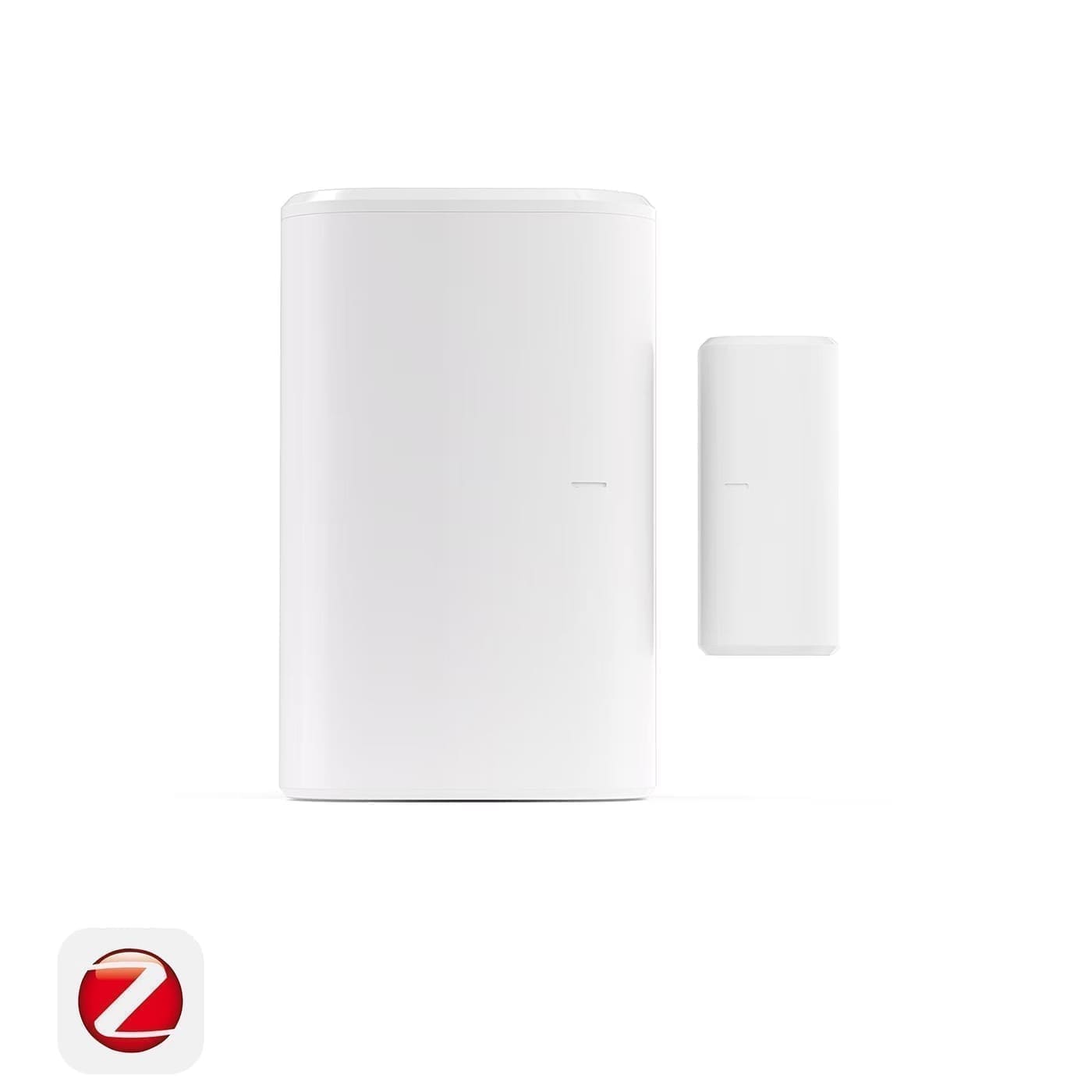
Around £19.99 from Amazon. The Aqara P2 supports both Zigbee and Thread, meaning it can run over the Matter standard and integrate with Apple HomeKit, Google Home, Amazon Alexa, and Home Assistant from a single device. Range is noticeably better than budget Zigbee sensors thanks to Thread's mesh networking, and the magnetic contact is rated to detect a gap as small as 10 mm — useful for casement windows that never fully close.
Pros: Dual Zigbee/Thread support future-proofs your investment; works locally without cloud dependency when using Matter; HomeKit compatible out of the box; sub-10-second response time in practice.
Cons: Requires an Aqara hub for full feature access (Thread border router function); slightly bulkier than the Eve or IKEA options.
4. Samsung SmartThings Multipurpose Sensor — Best for Vibration Detection
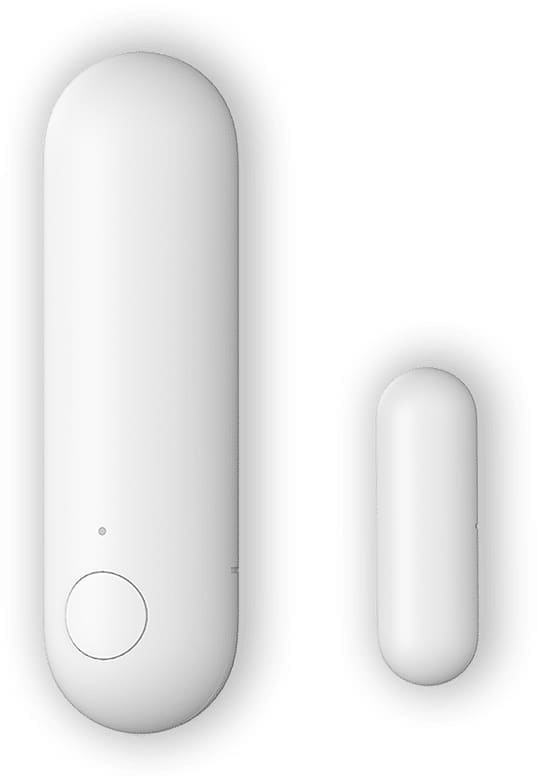
Around £19.99 from Amazon. The SmartThings Multipurpose Sensor does more than open/close detection: it also measures temperature and detects vibration, so you can set up automations that trigger when a washing machine finishes its cycle (detected by the drum stopping) or when a door is knocked on. It integrates with Home Assistant via the SmartThings integration.
Pros: Three sensors in one (open/close, temperature, vibration/acceleration); solid build quality; long battery life on a CR2450 cell; works without the SmartThings hub via Zigbee coordinator.
Cons: Larger than most door sensors; SmartThings platform requires a cloud account for full functionality; pricier than single-function alternatives.
5. Eve Door & Window — Best for Apple HomeKit
Around £39.99 from Amazon. The Eve Door & Window is the premium pick for households already invested in Apple HomeKit. It runs over Thread, which means all processing happens locally on your network — there is no Eve cloud server relaying your data, and response times are typically under two seconds. Since Thread uses the Matter standard, it also works in Home Assistant via the Matter integration.
Pros: Fully local (no cloud); Thread/Matter means cross-platform compatibility; premium build with a slim, minimalist design; no subscription; up to two years battery life.
Cons: Most expensive option here; Thread requires a border router (Apple TV 4K, HomePod mini, or similar); limited value if you are not in the Apple ecosystem.
What to Look for When Buying a Smart Door Sensor
Wireless Protocol
Zigbee is the dominant standard for budget sensors and has excellent Home Assistant support via Zigbee2MQTT. It requires a Zigbee coordinator (a USB stick such as the SONOFF Zigbee 3.0 dongle, typically £15–20) but is then entirely local and cloud-free. Thread is the newer mesh protocol underpinning Matter — it offers better range, lower latency, and direct IP-based communication, making it the better long-term choice if you have a Thread border router already. If you are just starting out, Zigbee is cheaper to get going with; if you have Apple TV 4K or a HomePod mini, Thread devices will work without extra hardware.
Battery Life
Most door sensors use CR2032 or CR2450 coin cells and quote one to two years of battery life under typical use (around 20 open/close events per day). The Sonoff SNZB-04P is unusual in using a rechargeable battery, which removes the ongoing cell-replacement cost. Check whether your sensor reports battery percentage in Home Assistant — it saves unpleasant surprises.
Home Assistant Compatibility
All five sensors above work with Home Assistant, but via different routes. Zigbee sensors need a coordinator and Zigbee2MQTT (or the ZHA integration). Thread/Matter devices pair via the Matter integration in HA 2023.2 or later. SmartThings devices use the SmartThings cloud integration. For the most reliable and privacy-respecting setup, Zigbee or Thread sensors with a local coordinator are the clear choice. See the full Home Assistant automations guide for examples of door-sensor-triggered routines.
Form Factor and Adhesive
All the sensors here use a two-part magnetic design — one body on the frame, one magnet on the door or window. Check the gap tolerance: most work up to around 20–25 mm, but the Aqara P2 is rated for gaps down to 10 mm, making it better for lightweight sash windows. Most include 3M adhesive tape, so no drilling is required.
Smart Use Cases
Energy Saving: Stop Heating Open Windows
One of the most immediately useful automations you can build is a window-open heating pause. If you use a tado° or Hive thermostat, both support open-window detection via their own temperature sensors, but a dedicated door/window sensor gives you a faster, more reliable trigger. In Home Assistant, a simple automation can call the climate entity's turn_off service the moment a window opens, and resume heating once it closes — preventing the boiler from running against an open window. Over a winter, this kind of automation can meaningfully reduce energy bills for households that regularly open windows to air rooms.
Security Alerts
A sensor on the front door, back gate, or any ground-floor window gives you an instant push notification whenever an entry point is opened. Paired with a home security setup, this forms the first layer of an alarm system — far cheaper than a monitored sensor subscription, and with zero monthly fees. Home Assistant's mobile companion app handles notifications natively, so you get an alert on your phone within seconds of a door opening.
Welcome and Goodbye Automations
A front-door sensor paired with presence detection lets you build reliable entry/exit automations without relying on GPS geofencing (which can be slow or imprecise). When the front door opens and your presence is detected as home, turn the hallway lights on. When it closes and everyone has left, run a goodbye scene that turns off all lights and drops the heating to eco mode. These kinds of reliable, low-latency automations are exactly what makes a smart home feel genuinely useful rather than a novelty.
Combining with Smart Security
If you are building a more comprehensive setup, door sensors work well alongside smart locks and cameras. Our guide to the best smart locks in the UK covers compatible hardware that can log entry events and auto-lock after the door closes — a natural complement to a sensor-based alert system.
For gates, sheds and detached garages specifically, keep an eye on Abode’s new Outdoor Contact Sensor and Garage Tilt Sensor, launched for Apple Home, Alexa and Google Assistant in August 2026 — currently US-only, but worth tracking for UK availability.
Our Recommendation
For most households, the Aqara Door and Window Sensor P2 offers the best balance of features, compatibility, and price. Its dual Zigbee/Thread support means it will work with your current setup and remain relevant as Matter adoption grows. If budget is the primary concern, the Sonoff SNZB-04P is exceptional value — particularly given its rechargeable battery and built-in temperature sensor. For Apple-only households, the Eve Door & Window is the most polished local-first option money can buy.
Related: best smart window sensors UK, best home security systems UK, and best PIR motion sensors UK.