How Each Platform Works
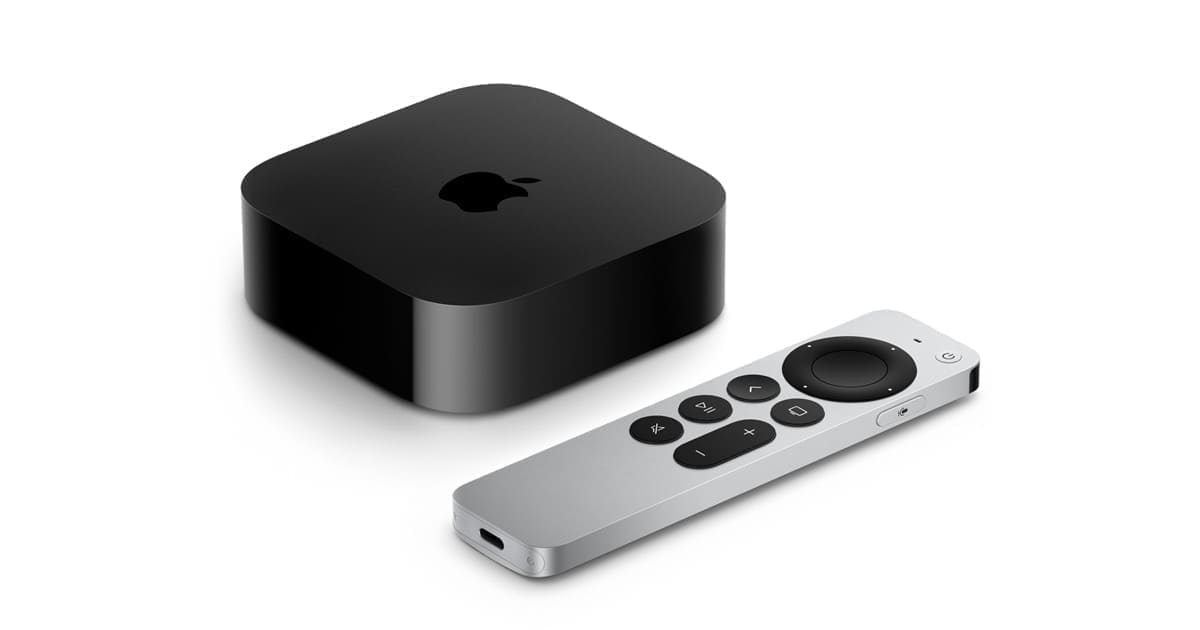
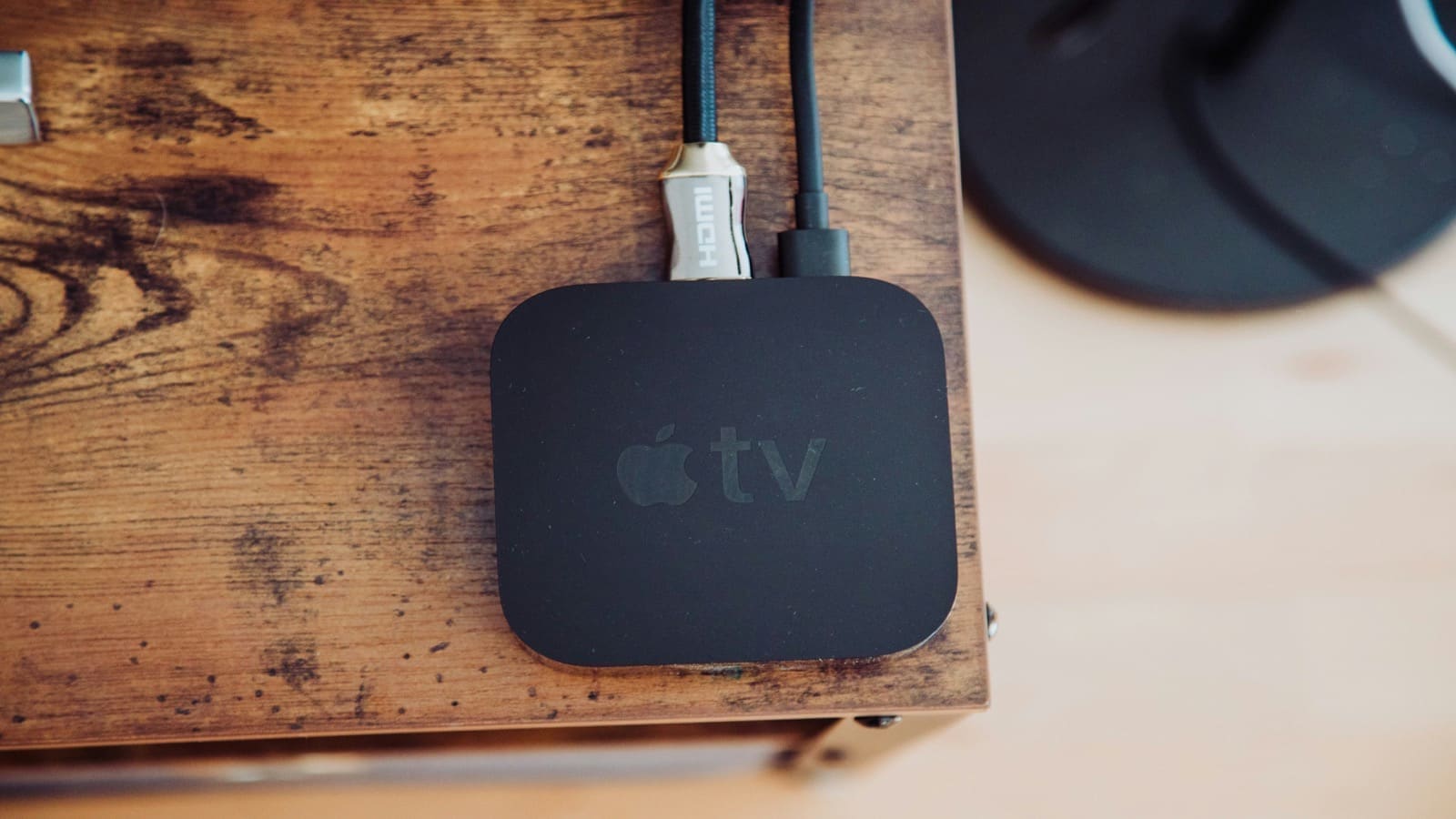
Apple HomeKit is built around privacy and local processing. Automations and device commands run on your home hub rather than being routed through Apple’s servers, which means they still work during an internet outage. HomeKit requires a hub — either a HomePod (from around £299), a HomePod mini (from around £99), or an Apple TV 4K (from around £149) — to enable remote access and automation. Without one you can still control devices manually from your iPhone, but you lose the features most people buy a smart home system for.
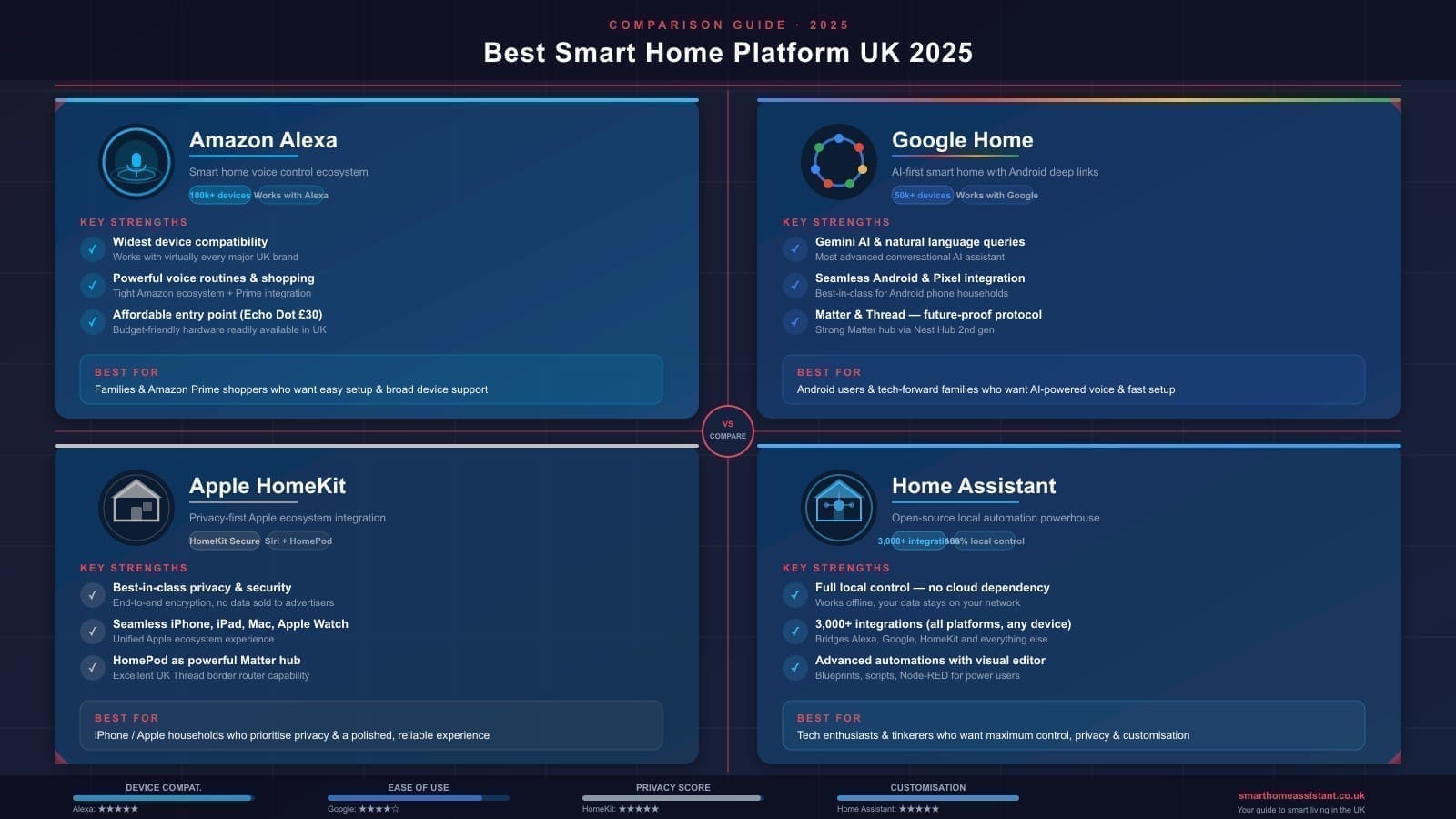
Google Home operates primarily through the cloud. When you tap a light switch in the Google Home app, the command travels to Google’s servers and back to your device. This works seamlessly in normal conditions and gives Google Home access to a vastly larger device catalogue — over 50,000 products carry the Works with Google badge, compared with roughly 1,000 HomeKit-certified devices. The trade-off is that a broadband outage can leave your automations unresponsive.
UK Device Compatibility
Google Home’s catalogue is far broader. Almost every major smart home brand — from Philips Hue and LIFX to Tado, Netatmo, and Ring — supports Works with Google. Budget brands sold on Amazon UK often add Google Home support first, if they support a platform at all. If you want maximum choice, Google Home wins without contest.
HomeKit’s ~1,000-device library is curated. Apple requires manufacturers to pass MFi certification before listing a product as HomeKit-compatible, which keeps quality high but limits selection. You will find excellent support from Philips Hue, Eve, Aqara, Nanoleaf, Tado, and Meross, but many budget brands skip certification entirely. Newer Matter-certified devices work with HomeKit natively, gradually widening the gap.
For a broader comparison of how these platforms fit within the wider smart home landscape, see our guide to the best smart home platforms for UK homes.
Thread Border Routers and Local Networking
Thread is an IP-based mesh protocol designed to give smart home devices fast, local communication without a proprietary bridge. Both platforms now compete on Thread support, but through different hardware.
Apple’s Thread border routers: HomePod mini (all versions), Apple TV 4K (2022 and later). These are built into hardware most Apple households already own.
Google’s Thread border routers: Google Nest WiFi Pro (Wi-Fi 6E). The original Nest WiFi and Nest Hub Max do not act as Thread border routers.
Nanoleaf devices — including the Shapes and Lines ranges — also act as Thread border routers and work across both ecosystems via Matter. For a deeper look at how Thread compares to older protocols, read our guide to Thread in UK smart homes.
Privacy and Data
HomeKit has the stronger privacy story. Device data stays on-device and on your home hub by default. Apple’s HomeKit Secure Video streams footage from compatible cameras directly to your iCloud storage without Apple being able to view it. Siri requests from HomePod are processed with anonymised identifiers.
Google Home is more data-hungry by design. Google’s business model depends on advertising, so it processes more household data in the cloud. Google does publish transparency reports and gives users control via the My Activity dashboard, but if data minimisation is a priority, HomeKit is the clear winner.
Voice Assistants: Siri vs Google Assistant
Google Assistant is the stronger voice AI for smart home control. It handles natural language better, understands follow-up questions in context, and integrates tightly with Google Search, Calendar, and Maps. For UK users with Google Workspace accounts or Android phones, the ecosystem benefits are significant.
Siri has improved considerably with Apple Intelligence features rolling out from iOS 18 onwards, but it still lags Google Assistant on complex multi-step queries. Where Siri excels is in tight integration with Apple devices — shortcuts, Focus modes, and on-device processing mean Siri commands often feel more responsive for basic home control.
UK Pricing and Hub Costs
HomeKit has an unavoidable entry cost: you need Apple hardware to unlock the full feature set. Current UK retail prices (correct at time of writing; prices vary by retailer):
- HomePod mini — around £99 (also a Thread border router and room speaker)
- HomePod (2nd gen) — around £299 (premium speaker + hub)
- Apple TV 4K — around £149 (streaming player + HomeKit hub + Thread border router)
Google Home has no mandatory hub cost. A Google Nest Mini (from around £49) or Google Nest Hub (from around £79) gives you a voice interface, though neither is required if you are happy controlling everything from your phone. The Nest WiFi Pro (from around £199 for a single unit) adds Thread border routing if you need it.
If you are still deciding between hubs, our best smart home hubs for UK homes covers the full range of options across both platforms.
Matter Support
Matter is the new cross-platform smart home standard backed by Apple, Google, Amazon, and Samsung. Both HomeKit and Google Home support Matter devices, which means a single Matter-certified bulb or lock can be added to both platforms simultaneously. Over time, Matter will reduce the compatibility gap that has historically favoured Google Home.
For more on how Matter fits alongside existing protocols, see our Matter vs Zigbee vs Z-Wave comparison.
Reliability and Stability
HomeKit is generally more reliable for day-to-day automations. Because processing happens locally on the hub, automations trigger faster and are unaffected by cloud outages. Google Home users occasionally report automations failing during Google service disruptions — a frustration that is hard to avoid in a cloud-first architecture.
Both platforms have improved significantly over the past two years, and for most households the difference in day-to-day reliability is modest. HomeKit’s local processing advantage matters most for time-critical automations — door locks, alarms, and lighting scenes that need to fire instantly.
Which Should You Choose?
Choose Apple HomeKit if:
- Your household is primarily on iPhones and iPads
- Privacy and local processing are priorities
- You already own a HomePod, HomePod mini, or Apple TV 4K
- You prefer a curated, quality-controlled device catalogue over sheer variety
Choose Google Home if:
- You use Android phones or a mix of Android and iOS
- You want the widest possible device compatibility, including budget UK brands
- You rely heavily on Google services — Calendar, Workspace, Maps
- You want the best voice AI for natural language queries
Many UK households run both — using HomeKit for security and automation reliability, and Google Home for voice queries and broader device support. Both platforms now support Matter, so devices purchased today are increasingly usable across either ecosystem.
Apple is also reportedly preparing its biggest HomeKit hardware push in years — see our breakdown of the Apple smart home roadmap, including a new HomePad display hub and Siri AI-ready HomePod mini. Leaked code has since revealed the HomePad will ship with a Widget Gallery for iPhone widgets.
Related: our complete Google Home guide, Amazon Echo vs Google Nest UK, best smart home platform UK, and Matter devices UK guide.