What Economy 7 actually is
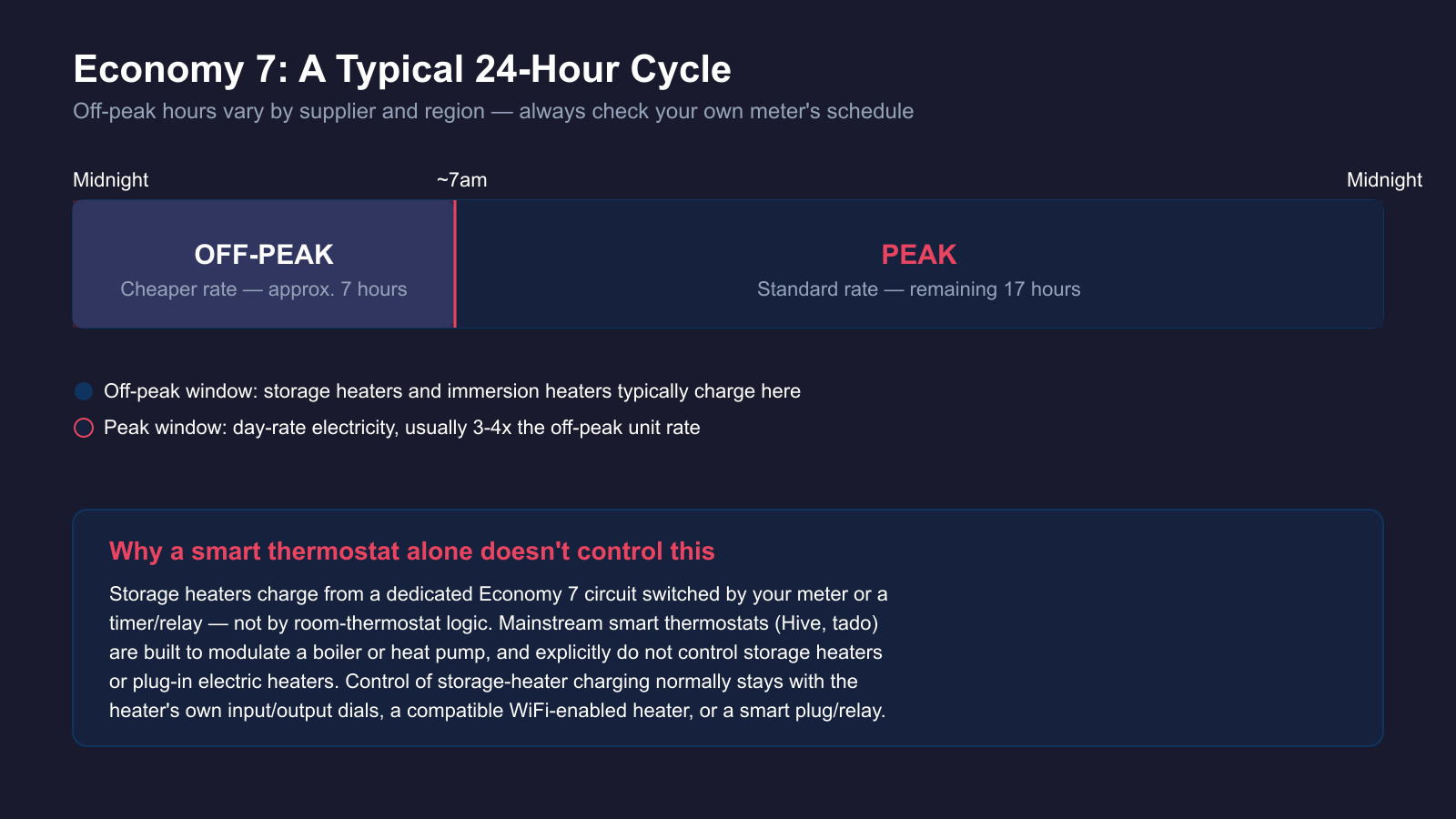
Economy 7 gives you one rate for electricity used during a specified off-peak period, and a higher rate the rest of the day. According to Ofgem's consumer guidance, the off-peak window is typically seven hours, usually running from around midnight to 7am, though the exact timing depends on your region and supplier. The tariff suits households that shift a meaningful share of their usage into that window — classically for charging electric storage heaters or an EV overnight. To be billed on Economy 7 you need a meter that records peak and off-peak consumption separately: either an older dual-rate meter or a smart meter configured for time-of-use rates.
Ofgem also flags a practical issue worth knowing about: older Radio Teleswitch (RTS) meters, which many long-standing Economy 7 households still have, are being phased out, and some smart meter upgrades have inadvertently lost customers their two-rate tariff. If you're on Economy 7 and due a smart meter installation, it's worth telling your supplier explicitly that you want to stay on a time-of-use tariff before the engineer arrives.
Why most smart thermostats can't control a storage heater
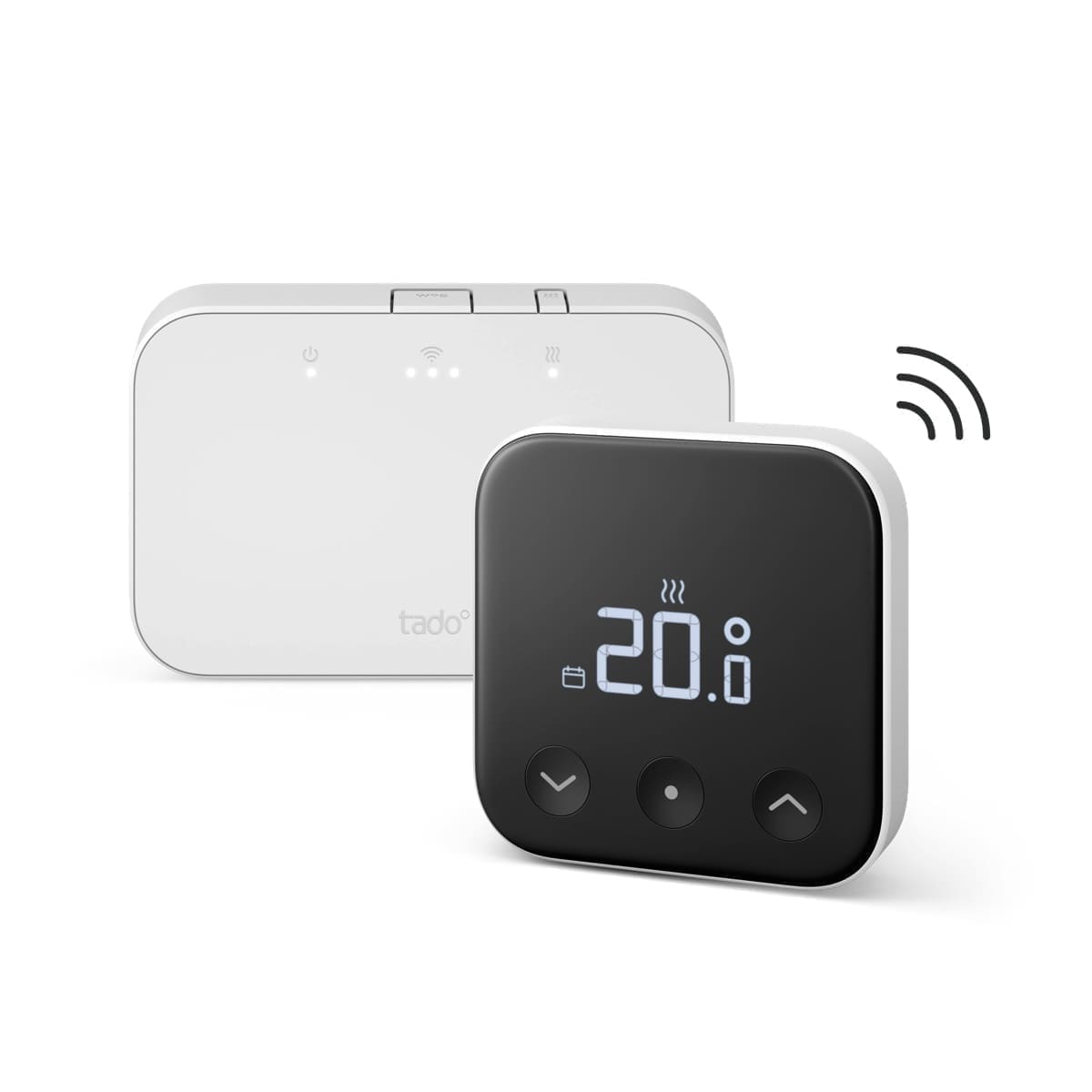
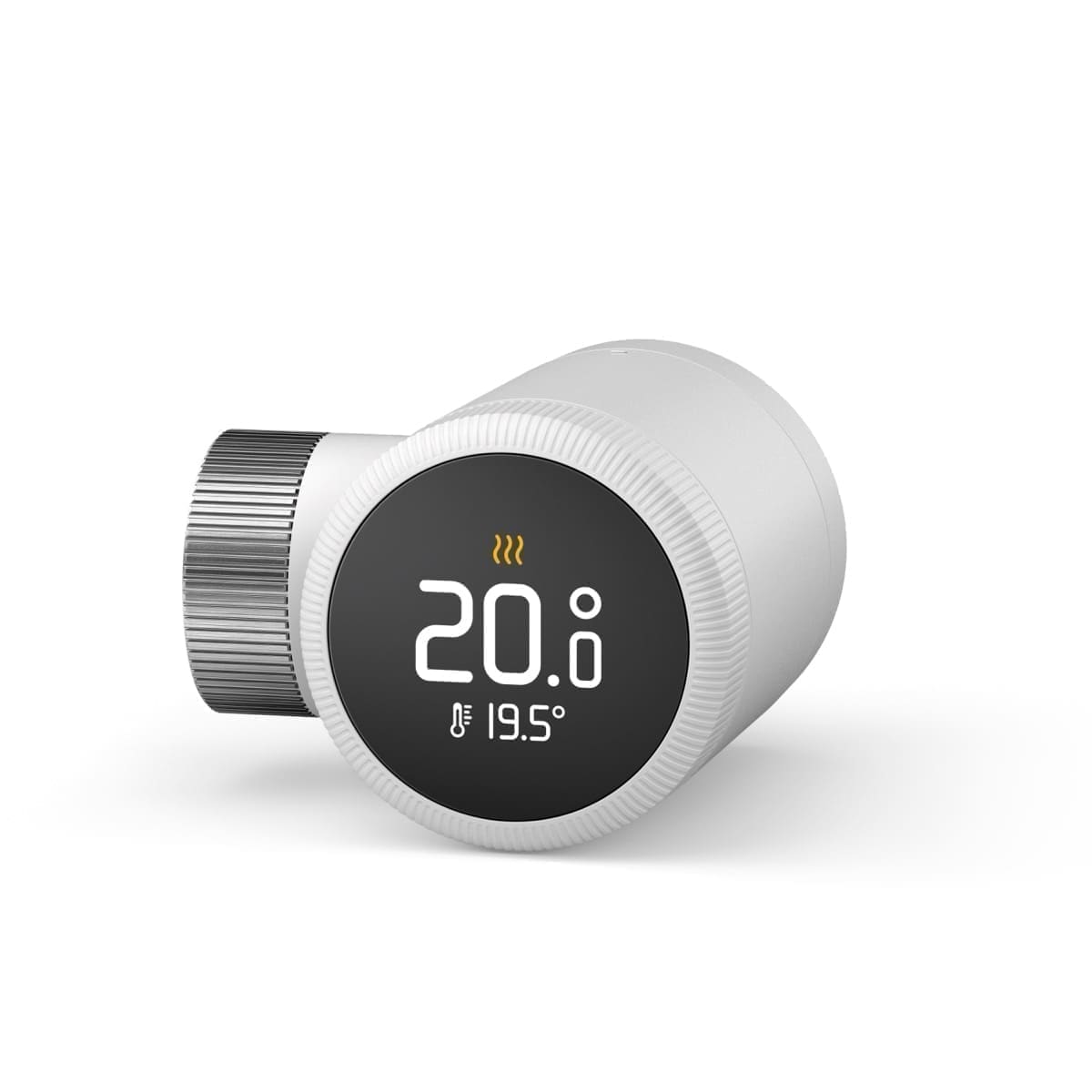
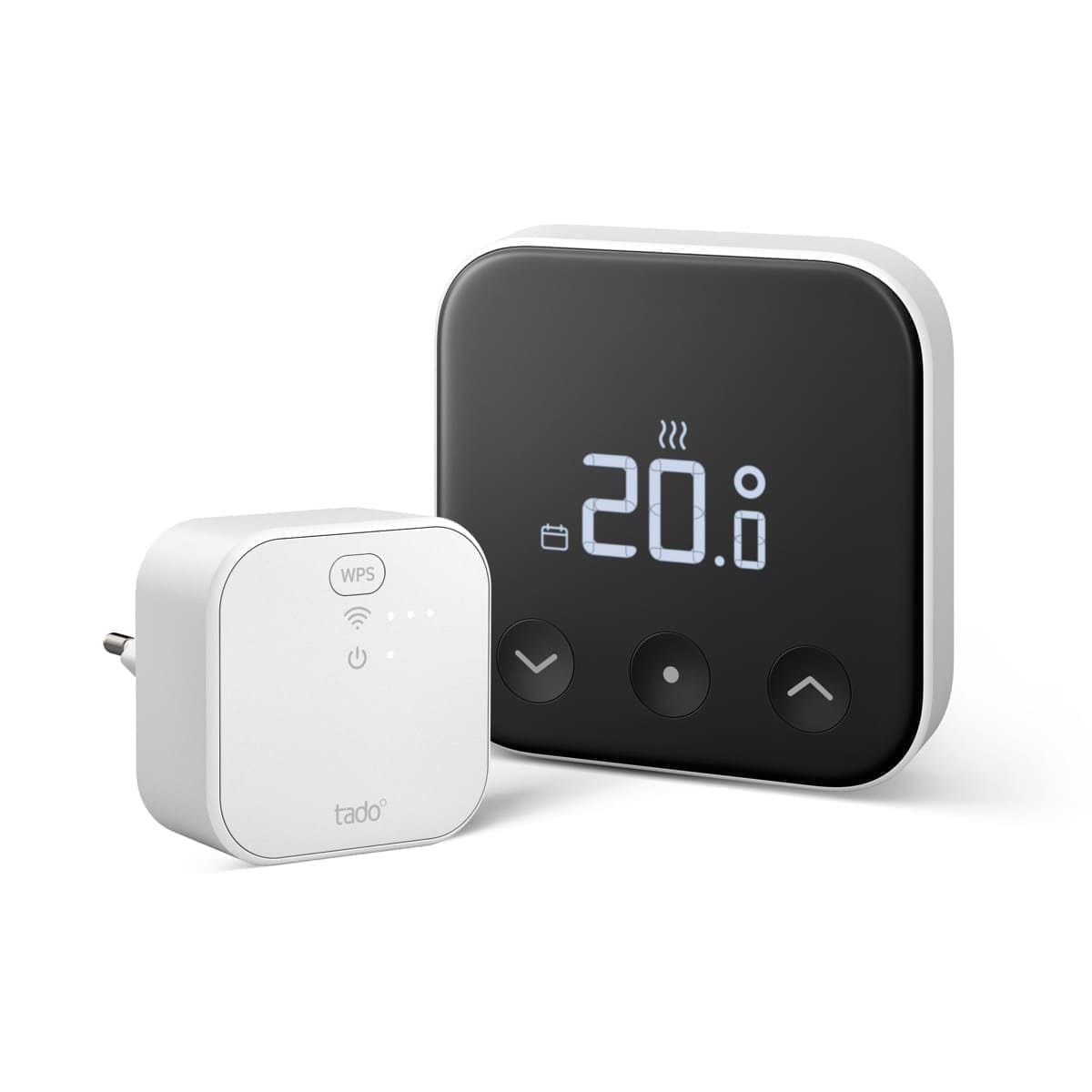
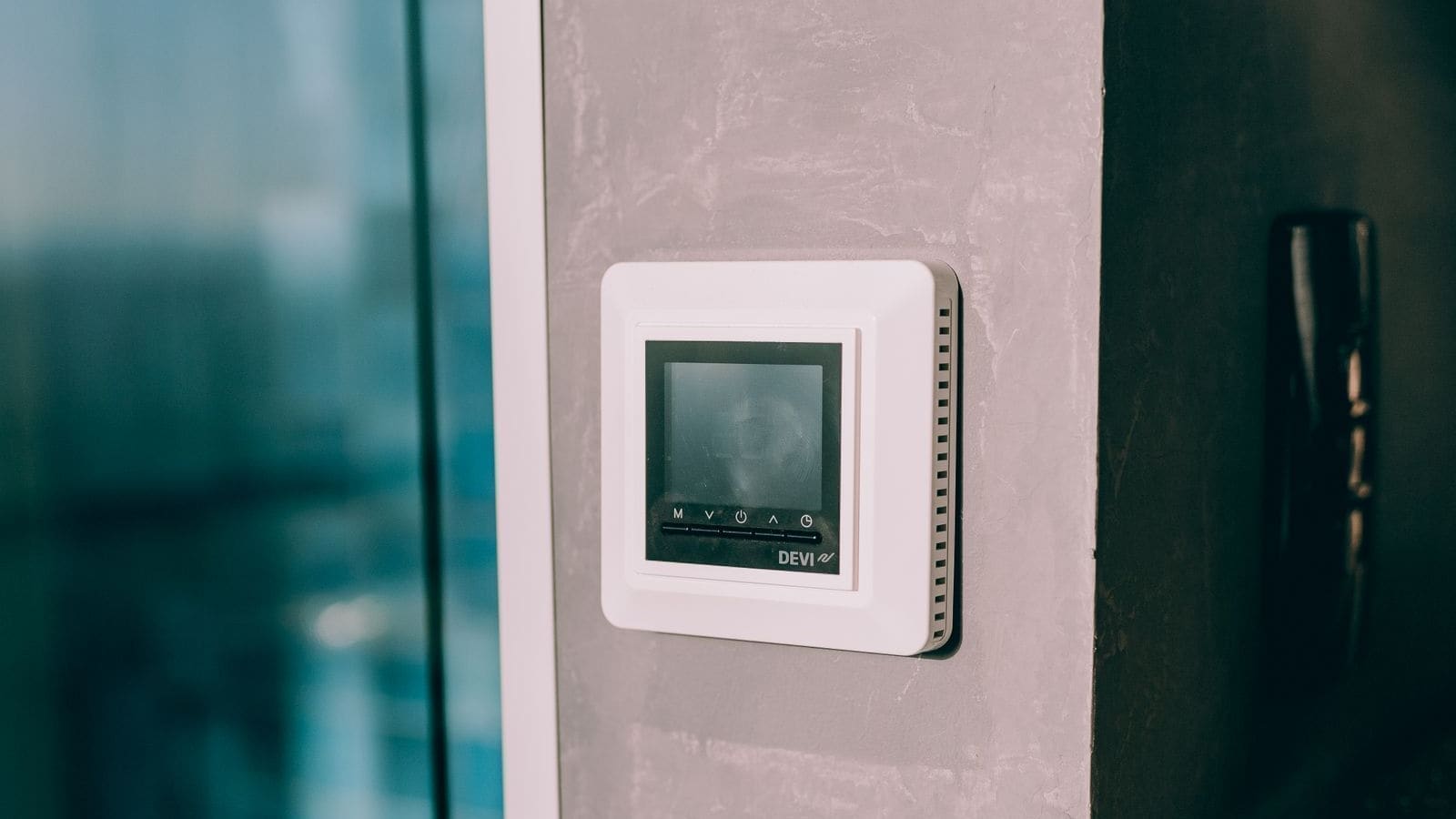
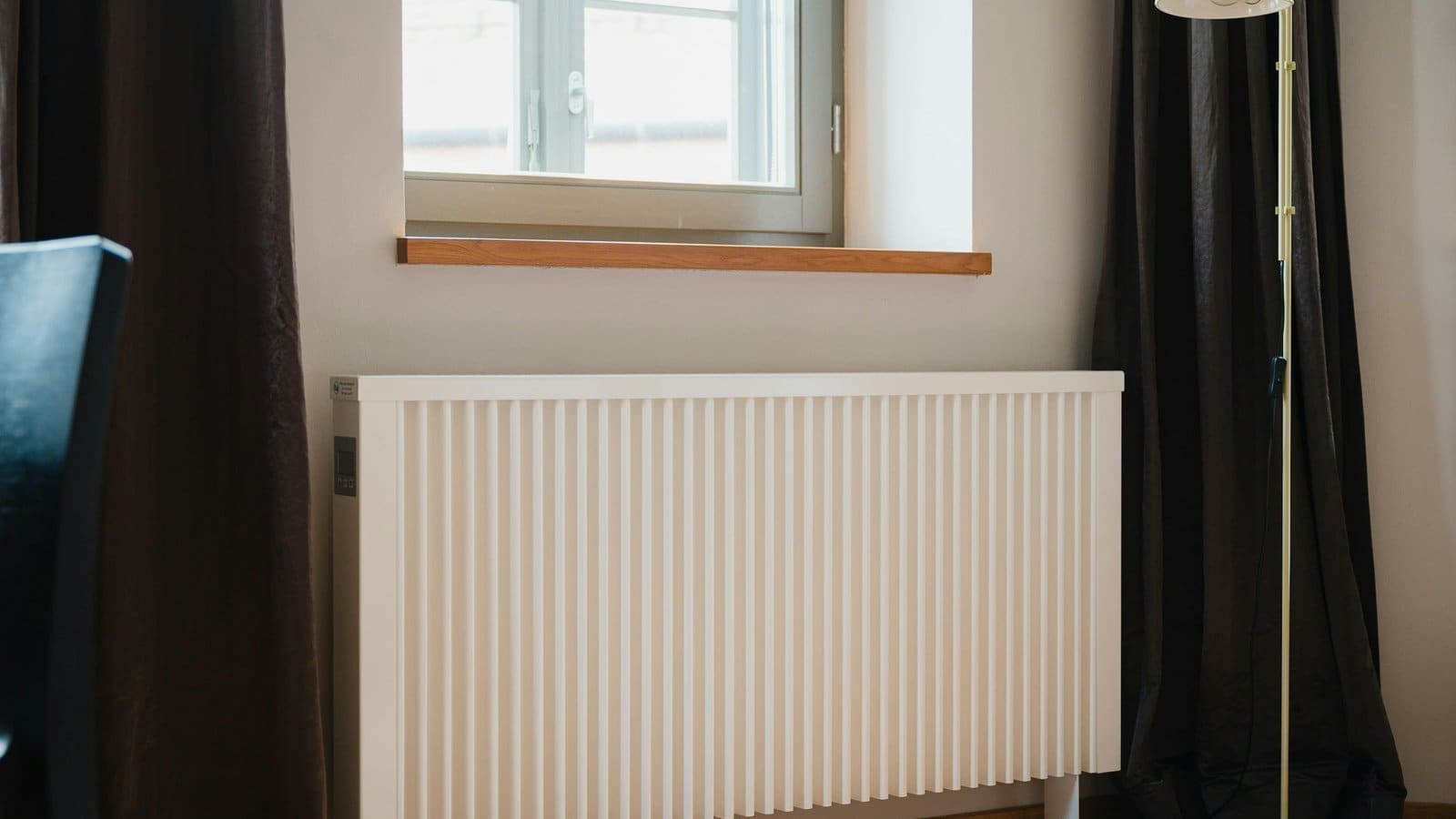
This is the part that trips people up. A smart thermostat like Hive or tado° is designed to modulate a wet central heating system — turning a boiler or heat pump's water flow on and off, or opening and closing smart radiator valves, in response to a target room temperature. A storage heater works completely differently: it has its own internal heating elements, ceramic bricks that store heat, and a set of input/output dials (or an electronic controller) that decide how much heat to charge overnight and how much to release the next day. Charging is normally triggered by the Economy 7 circuit itself — switched by the meter or a dedicated time switch/relay in the consumer unit — not by a room thermostat reading a temperature.
Hive is explicit about this limitation: its own support content states that "our smart thermostat can't control storage heaters or individual plug-in electric room heaters." tado° is similarly clear that its thermostats are not compatible with electric radiators, electric underfloor heating, or immersion heaters, noting that its receiver can only switch low currents (up to 3 Amps) — nowhere near enough for a storage heater's charging circuit. If you already own a Hive, tado° or Drayton Wiser system for a gas boiler or heat pump elsewhere in the house, don't expect it to also manage your storage heaters — it won't, and no firmware update changes that; it's a hardware and wiring limitation.
What genuinely does work in an Economy 7 home
None of this means smart heating is pointless if you're on Economy 7 — it just needs pointing at the right part of the house.
Newer WiFi-enabled storage heaters. Some current storage heater ranges now include their own app-connected controllers, letting you adjust charge levels and boost settings remotely rather than via the manual dials on the unit. This is control of the heater itself, not a separate smart thermostat retrofitted onto it — see our guide to the best smart storage heaters in the UK for models that support this.
A smart thermostat for the rest of the house. Many Economy 7 homes are mixed systems — storage heaters in some rooms, a gas boiler or electric panel heaters elsewhere, or an immersion heater for hot water. A conventional smart thermostat still earns its keep on whichever part of the system it's actually built for; see our roundup of the best smart thermostats in the UK if you're choosing one for a boiler-based system running alongside storage heaters.
Smart plugs for panel heaters. Plug-in electric panel heaters and oil-filled radiators can, with care, be scheduled using a smart plug that supports the heater's wattage — this at least lets you shift some discretionary electric heating into the off-peak window. Always check the plug's maximum load rating against the heater's power draw before relying on it, and note this is a scheduling workaround rather than an official or thermostatically-controlled solution — see our guide to electric radiators for wattage guidance.
Smart hot water control. If your immersion heater or hot water cylinder runs on the same Economy 7 circuit, a smart water heating controller (rather than a room thermostat) can help you time hot water heating into the cheap window without touching your space heating setup at all.
Getting more from your off-peak hours
Even without a thermostat in the loop, there's a straightforward way to get better value from Economy 7: use the appliances you already schedule automatically — storage heater charge, immersion heater, washing machine, tumble dryer, EV charging — as much as possible inside the off-peak window, and keep discretionary use (the storage heater's daytime "boost" function, for example) to a minimum, since boost draws at the more expensive day rate. The Energy Saving Trust's guidance on running storage heaters recommends leaving heaters on for as long as you actually need the warmth and treating boost as an occasional top-up rather than a routine setting.
It's also worth checking whether Economy 7 is still the best tariff shape for your household. Newer time-of-use tariffs — Octopus Energy's Cosy tariff is one example — offer multiple shorter off-peak windows spread across the day rather than a single overnight block, which can suit homes with heat pumps or more flexible daytime usage better than a traditional Economy 7 split. See our guide to Octopus Energy's smart tariffs for how those compare. Whichever tariff you're on, the underlying rule is the same: on a two-rate tariff, most of the savings come from what's plugged into the Economy 7 circuit and when it runs — not from adding a room thermostat that was never built to talk to it.