Wet vs Electric Underfloor Heating: Which Costs More?
There are two fundamentally different underfloor heating systems, and the upfront vs running cost trade-off differs substantially between them.
Wet (Hydronic) UFH
Wet systems circulate warm water through pipes embedded in the floor screed, connected to your boiler or heat pump. Installation is more complex — pipework, manifolds, and a screed pour are all required — which pushes the supply-and-install cost to £70–120/m² of heated floor area. A typical 60 m² ground floor would therefore cost £6,000–9,000 fully installed. However, because wet systems operate at lower flow temperatures (35–45°C rather than 70°C for radiators), they pair exceptionally well with heat pumps and can deliver cheaper running costs per kWh over the system's lifetime.
Dry Electric UFH
Electric systems use resistance heating mats or cables laid directly under tiles or flooring. They are far simpler to retrofit — a competent DIYer can lay a bathroom mat in a day — which brings the installed cost down to £50–100/m². A typical 5 m² bathroom fitted with electric UFH, including supply and installation, typically costs £500–700. The trade-off is running cost: electricity (currently around 24–25p/kWh in the UK) is more expensive per unit than gas, so electric UFH is best suited to smaller areas or occasional use rather than whole-home heating.
Cost Breakdown by Project Size
The table below gives realistic budgets for common project sizes. Costs assume professional installation and include supply, labour, screed or adhesive, and thermostat — but exclude any structural alterations or floor removal.
Bathroom (approx. 5 m²)
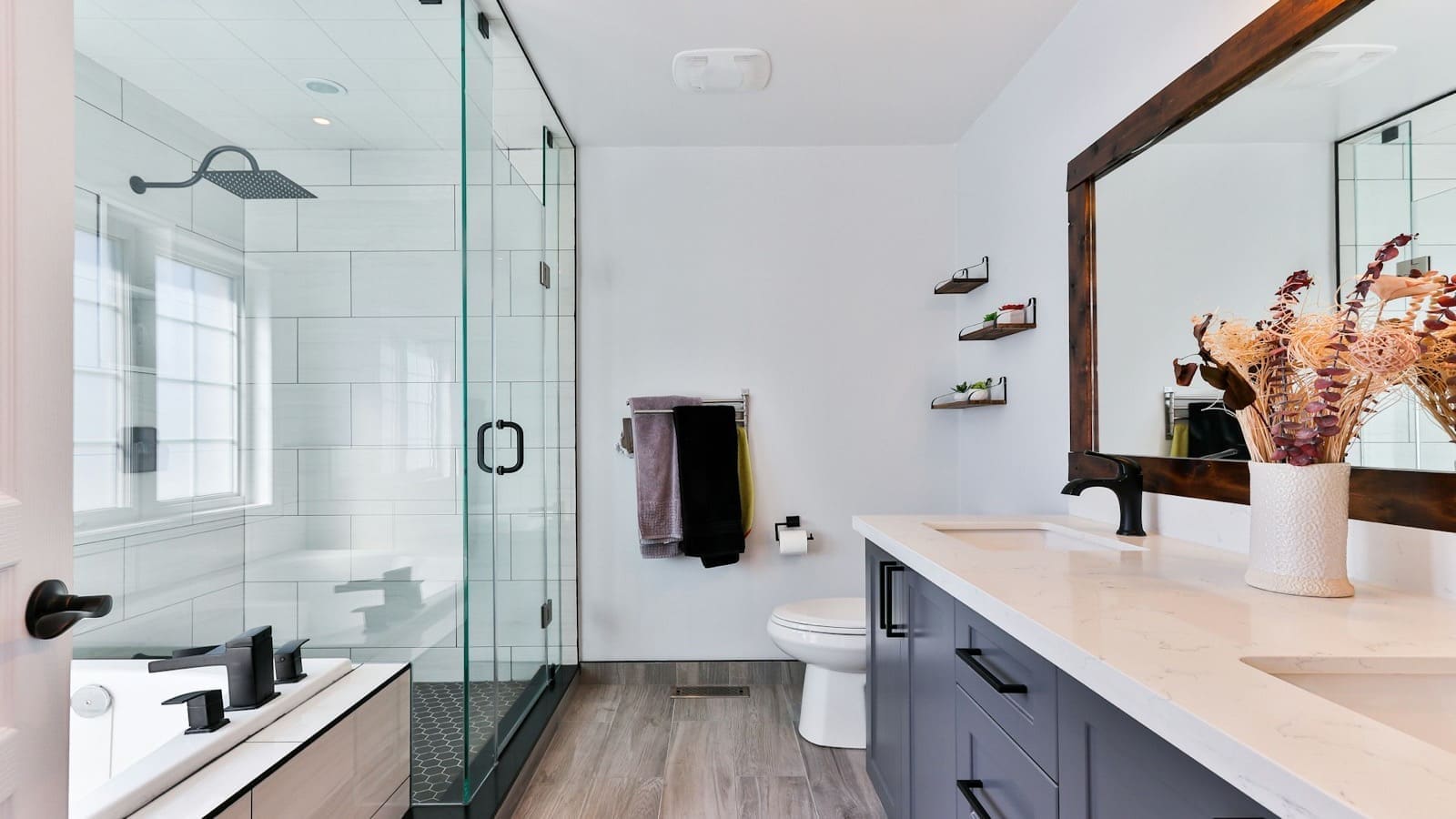
Electric UFH is overwhelmingly the first choice for a single bathroom. Expect to pay £500–700 in total for a quality mat, adhesive, thermostat, and a half-day of a tradesperson's time. Wet systems are rarely worthwhile for a bathroom alone given the cost of connecting to a manifold.
Kitchen or Large Room (approx. 20 m²)
At this scale both system types are viable. Electric: £1,000–2,000; wet: £1,400–2,400, all installed. If you already have a wet UFH manifold serving adjacent rooms, extending it to a kitchen is usually cheaper than adding a second electric circuit.
Whole Ground Floor (approx. 60 m²)
This is where wet systems pay back. Budget £6,000–9,000 for wet UFH covering a typical UK semi-detached downstairs, versus £3,000–6,000 for electric — but bear in mind the significantly higher annual running costs for electric at this scale (see below).
Underfloor Heating Running Costs
Running costs depend on the system type, floor area, insulation standard, thermostat behaviour, and local energy tariff. The following estimates assume average UK energy prices and a reasonably well-insulated home.
Electric UFH Running Costs
Electric underfloor heating typically costs around £5–8 per m² per year for a moderately used room at current UK electricity rates. A 5 m² bathroom running for a few hours each morning would cost roughly £25–40 per year. Scaled to a 60 m² ground floor used as primary heating, the annual electricity bill for the UFH circuit alone could reach £300–480 at current rates — which is why whole-home electric UFH is rarely the economical choice unless you have solar PV or an off-peak tariff such as Octopus Go.
Wet UFH Running Costs
Wet systems connected to a modern gas boiler cost somewhat less per kWh than electric, and those connected to a heat pump are considerably cheaper again — heat pumps deliver 3–4 units of heat for every unit of electricity consumed. This makes wet UFH the natural partner for heat pump installations, a combination strongly recommended by the Energy Saving Trust. If you are planning a heat pump, specifying wet UFH at the same time maximises your return on the heat pump investment. For more on pairing these systems, see our guide to smart thermostats for heat pumps.
How a Smart Thermostat Reduces UFH Running Costs
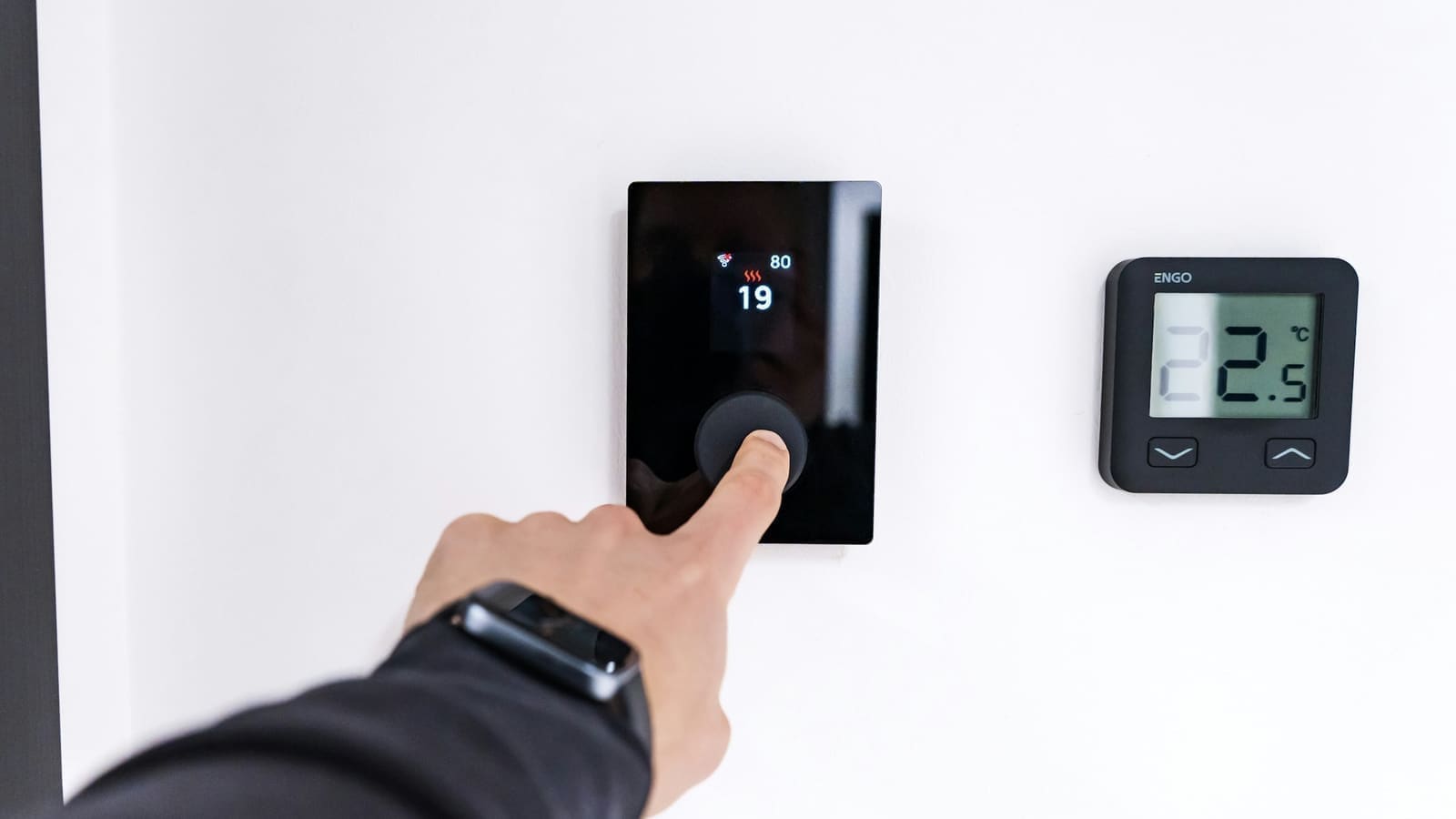
Underfloor heating has more thermal mass than radiators — it takes longer to heat up and longer to cool down. This makes smart scheduling even more valuable: a good UFH-compatible smart thermostat can reduce heating bills by 10–20% by learning your schedule, pre-heating the floor before you wake up, and not wasting energy heating an empty home.
Look for thermostats with features such as adaptive start (which calculates when to begin heating so the floor reaches temperature at the right time), open-window detection, and multi-zone control if you have more than one manifold circuit. Our dedicated roundup of the best underfloor heating thermostats in the UK compares the leading models for both wet and electric systems, including options that integrate with Home Assistant and other smart home platforms.
If your home already has a smart thermostat managing radiators, check whether it supports UFH — many do via add-on receiver units. Our best smart thermostat UK guide covers compatibility in detail.
Additional Cost Factors
Insulation
UFH insulation boards placed beneath the heating element are not optional if you want the system to perform efficiently — without them, heat conducts downward into the subfloor rather than upward into the room. Budget an extra £5–15/m² for insulation boards; this cost is usually included in installer quotes for new builds but may be additional on retrofits.
Screeding (Wet Systems)
Wet UFH requires the pipework to be encased in a screed — typically a liquid anhydrite screed, which self-levels and is popular for UFH. Screeding typically adds £15–30/m² to the project cost and must cure for several weeks before the floor covering can be laid. This is the main reason wet UFH suits new builds and major renovations far better than simple retrofits.
Floor Covering Compatibility
Not all floor coverings work equally well with UFH. Tiles and stone have excellent thermal conductivity and are the most efficient choice. Engineered timber and vinyl are generally compatible, but solid timber and thick carpet significantly reduce heat output. Your UFH installer should confirm compatibility before any flooring is specified.
Multi-Zone Control
A larger wet UFH installation will have several circuits connected to a central manifold, each controlled by its own thermostat. Multi-zone setups add cost — allow £150–300 per additional zone for actuators, wiring, and a zone controller — but they deliver far better comfort and efficiency than a single thermostat controlling the whole ground floor. For comparison, see how smart boiler controls handle zone management in our best smart boiler controls guide.
Is Underfloor Heating Worth the Cost?
Whether UFH is worth it financially depends heavily on your situation. For a new build or major renovation with a heat pump, wet UFH almost certainly stacks up — it works at lower temperatures, improves comfort, and eliminates radiators. For a bathroom retrofit, electric UFH is a low-risk upgrade with a modest payback period. For a whole existing house, the disruption and cost of retrofitting wet UFH into a lived-in home rarely makes sense unless the floors are already being replaced.
The Energy Saving Trust's guidance is broadly that UFH performs best as part of a wider low-carbon heating upgrade — heat pump, good insulation, and smart controls together. If you are weighing UFH against other upgrades, our explainer on whether smart heating is worth it in the UK puts the numbers in context.
Getting Quotes
Always get at least three quotes from qualified installers. For wet UFH, look for members of the Heating and Hotwater Industry Council (HHIC) or the Chartered Institute of Plumbing and Heating Engineering (CIPHE). BEAMA, the Building Engineering Services Association, publishes guidance on specifying heating systems and can help you ask the right questions of any installer. Electric UFH installation involving new circuits must be carried out or certified by a Part P-registered electrician.
Related: best underfloor heating thermostats, best flooring for underfloor heating, and heat pump installation costs UK.