Do you need a UPS for Home Assistant?
You need one if Home Assistant runs on anything with storage that can corrupt, and most do. A Raspberry Pi, a mini PC and a NAS all write to disk constantly, so a hard power loss mid-write is the classic way an install ends up needing a restore from backup. A UPS turns that abrupt cut into a controlled shutdown.
It matters less if your instance is a disposable test box or you already keep fresh off-device backups and accept a rebuild now and then. Even then, a UPS on the router is worth having: Home Assistant can only message you about a power cut if the network and the box are still alive. Our Home Assistant backup and restore guide covers the safety net; a UPS reduces how often you need it.
How we chose these UPS units
We started with Home Assistant compatibility, because a UPS that cannot report its battery state is just a noisy extension lead. Each pick is listed in the Network UPS Tools hardware compatibility list against the usbhid-ups driver, which is what the Home Assistant community add-on uses. After that we weighed output waveform, how many outlets suit a typical hub, router and server stack, manufacturer-quoted runtime at half load, and whether the battery is replaceable.
We left out online (double-conversion) units and rack-mount models: they cost far more and are overkill for a home. We also dropped any unit we could not confirm is sold with UK-compatible sockets, since several popular CyberPower model codes ship with European Schuko outlets.
The best UPS units for a Home Assistant setup
1. CyberPower CP900EPFCLCD-UK — best overall
Who it's for: anyone running Home Assistant on a mini PC, a NAS or a Pi alongside a router. CyberPower's UK page lists 900VA / 540W, six battery-backed outlets (four IEC C13 and two UK sockets), an LCD status display and automatic voltage regulation.
The deciding spec is the pure sine wave output. CyberPower describes the unit as active PFC compatible, which matters because many modern mini PCs and NAS power supplies use active power factor correction, and cheaper simulated-sine-wave units can make those supplies misbehave on battery. Half-load runtime is quoted at 7 minutes and full load at 1 minute, which is plenty for a clean shutdown of a home server. The battery (replacement model RBP0007) is covered by the same two-year warranty as the unit.
The catch: it is the priciest of the compact options, with UK retailers listing it at roughly £150 to £200 depending on VAT treatment and stock. If your load is just a Pi and a router, you are paying for headroom you will not use.
See the CyberPower CP900EPFCLCD-UK
2. APC Back-UPS BX750MI — best budget
Who it's for: a Raspberry Pi, a Home Assistant Green or a small mini PC plus the broadband router. Schneider Electric's UK page lists 750VA / 410W, four IEC C13 outlets, automatic voltage regulation, data line protection and a user-replaceable battery cartridge. UK retailers have sold it for roughly £85 to £90.
It appears in the Network UPS Tools compatibility list on the usbhid-ups driver, so the Home Assistant NUT add-on handles it. Retailer listings quote about 8.5 minutes at half load from a 9Ah sealed lead-acid battery, ample for a low-draw hub and router.
The catch: Schneider's own page says it is to be discontinued on 31 December 2026, and no successor is named there. It will stay on shelves for a while, but replacement cartridges and stock may thin out. The standard warranty is one year, against two for the CyberPowers, and the page does not advertise pure sine wave output, so check your device's power supply before plugging in a PFC-powered PC.
3. CyberPower CP1500EPFCLCD-UK — best for a server stack
Who it's for: a Home Assistant box that shares a UPS with a NAS, a Frigate machine and a switch. It is rated 1500VA / 900W with the same six outlets (four IEC, two UK) and pure sine wave output, and CyberPower quotes 10 minutes at half load and 3 minutes at full load.
Extra capacity means a bigger buffer, so a camera recording box and a NAS can both finish writing before shutdown. Like its smaller sibling it carries a two-year product and battery warranty, plus a Connected Equipment Guarantee, and it has two USB charging ports. If you run a heavier stack, our home server setup guide and the Frigate NVR guide show what that kind of rig draws and why it needs protecting.
The catch: it is larger, heavier and the most expensive here, and a UPS sized for a Pi is far cheaper. Buy it only if the total wattage of what you plug in genuinely warrants 900W of headroom.
How do you connect a UPS to Home Assistant?
You connect it with a USB cable to the machine running Home Assistant, then use the Network UPS Tools (NUT) integration. The integration cannot talk to a UPS directly: it needs a NUT server, which is a small service that reads the USB device and shares its status over the network on port 3493.
On Home Assistant OS the simplest route is the community Network UPS Tools add-on from the hassio-addons project. You add a user, define the UPS as a usbhid-ups device with the port set to auto, start the add-on, and note the hostname shown on its Info tab. Then add the NUT integration under Settings, Devices & Services using that hostname, port 3493 and your credentials. The integration is local polling, so no cloud account is involved. If your Home Assistant is on a Pi, our Raspberry Pi 5 guide covers the hardware side.
Standard sensors include battery charge, input and output voltage, load and status, with many more diagnostic sensors disabled by default. Use the status to trigger a mobile notification when mains power drops, and a battery-level threshold to trigger a clean Home Assistant shutdown.
How long will a UPS keep Home Assistant running?
Longer than the manufacturer figures suggest for a small setup, shorter for a big one. Quoted runtimes are measured at half load, so a Pi and a router drawing a few tens of watts will usually outlast the 7 to 10 minutes on the box, while a loaded server will fall toward the full-load figure of 1 to 3 minutes.
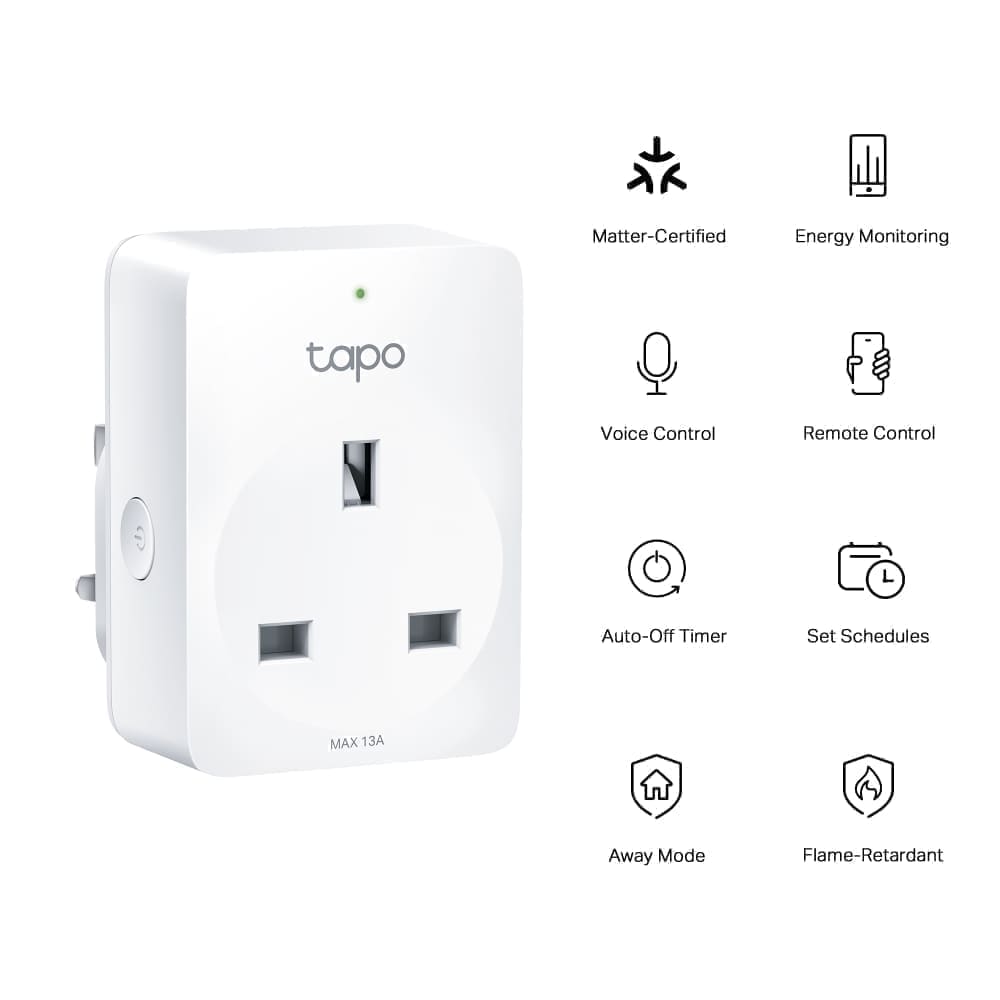
Measure rather than guess. A smart plug that reports power draw will show what your stack really pulls, and you can then compare it to the unit's wattage rating. Aim to stay well under the rated watts and treat the minutes as a shutdown window, not a way to ride out an outage. If you want hours of runtime for a router and hub, a mains UPS is the wrong tool; look at a DC mini UPS or a larger battery system instead.
Who should skip a mains UPS?
Skip it if your Home Assistant runs on a device with its own battery, such as a laptop, or if you already have an inverter or home battery that covers the same circuit. Also skip it for devices a UPS is a poor fit for: heaters, kettles and laser printers draw far more than these units are rated for. And remember that a UPS only protects what you plug into it. If your ISP's cabinet or your fibre ONT loses power, Home Assistant keeps running locally but remote access and cloud integrations drop regardless.