Smart Home Assistant

New Integrations in Home Assistant 2026.11: All 38 Explained

SepehrBy Sepehr· 9 November 2026· Updated 9 November 2026· 4 min read
✓ Independent — no paid placements✓ UK-tested in real homes✓ Cited sources
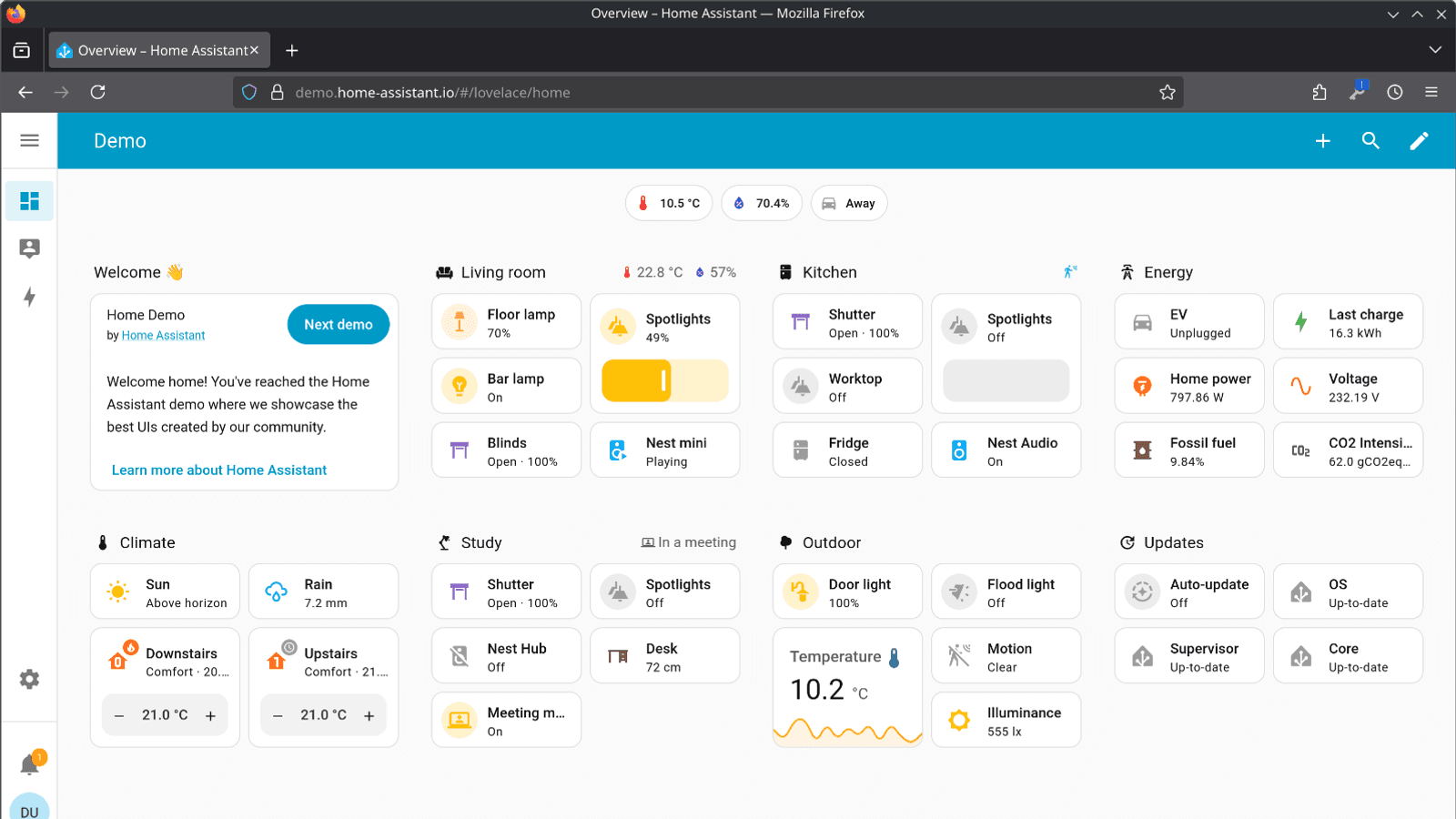
Default Home Assistant dashboard on a desktop browser showing cards for lights, climate and sensors

Key takeaways

  • Home Assistant 2026.11, released 4 November 2026, adds 38 new integrations, more than double the 15 in 2026.10.
  • LoRaWAN arrives via ChirpStack and The Things Network, with SenseCAP as the first device integration; you still need a gateway.
  • BLUETTI Modbus and KACO RS485 read power stations and solar inverters locally, so data keeps flowing without internet.
  • Five launched rated: OKOK Scale at Platinum, and ENGIE Belgium, HAVEN IAQ, KACO RS485 and SteamVR Base Station at Silver.
  • Several target other regions, including ecosmart, ENGIE Belgium, Hydro-Québec and Xiaomi Weather, so most UK readers can skip them.
On this page[tap to expand]

The new integrations in Home Assistant 2026.11 number 38, released on 4 November 2026. Headlines are the Marketplace and LoRaWAN support (ChirpStack, The Things Network, SenseCAP), plus local energy kit such as BLUETTI Modbus. Most run locally; a handful need a vendor cloud account.

What has changed: which integrations are new in 2026.11?

Home Assistant's 2026.11 release notes list 38 new integrations, the largest batch in recent releases (2026.10 added 15). Five launched with an official Integration Quality Scale rating: OKOK Scale at Platinum, and ENGIE Belgium, HAVEN IAQ, KACO RS485 and SteamVR Base Station at Silver. Unrated simply means newer or less audited. For the rest of the release, including the Marketplace, exclude targets and the entity-naming change, see our Home Assistant 2026.11 release guide.

GroupNew integrationsConnection
LoRaWANLoRaWAN, ChirpStack, The Things Network, SenseCAPYour own network server or TTN
Energy and solarBLUETTI Modbus, KACO RS485, Solyx Energy Cloud, Nature Remo, ecosmart, ENGIE Belgium, Hydro-Québec Peak EventsMostly local; Solyx, Nature Remo, ecosmart and ENGIE need an account or public data
Heating and ventilationaerosmart, Helty Flow Cloud, Hase iQaerosmart and Hase iQ local; Helty cloud
Air quality and plantsHAVEN IAQ, SmartyPlantsHAVEN IAQ local
Infrared controlAlpha Bidet Infrared, Philips Infrared, SilverCrest InfraredLocal, via an IR emitter you already run
Bluetooth devicesFlic, OKOK Scale, Spin EV Charger, SteamVR Base StationLocal Bluetooth
Cars and EVŠkoda, A Better RouteplannerCloud, read-only
Cameras and accessBosch Smart Camera, Grandstream HomeBosch cloud account; Grandstream local
AV and networkMarantz RS-232, LibreSync, HP Printer, SeafileLocal
Everything elseAnyList, Foreca, Xiaomi Weather, Mijn Farmad Apotheek, RainbowMiner, Debug console, MarketplaceMixed

Does Home Assistant 2026.11 support LoRaWAN sensors?

Yes, through a two-layer design. A network-server integration brings your gateway's data in, and a device integration turns it into entities. ChirpStack connects your own ChirpStack LoRaWAN network server, where you pick a tenant and its applications. The Things Network connects TTN or a self-hosted The Things Stack using an application API key, while the older integration remains as The Things Network (Cloud Storage). The umbrella LoRaWAN integration joins them to device integrations, and the first is SenseCAP, which exposes Seeed Studio sensors with temperature, humidity, illuminance, CO2, soil and weather readings plus battery level, depending on the model. LoRaWAN suits long-range, low-power outdoor sensors, but you still need a gateway and a network server.

Which energy and solar integrations are new?

The local ones are the most useful. BLUETTI Modbus reads a BLUETTI power station over its built-in Modbus TCP interface with no account or cloud, so readings continue if your internet drops. KACO RS485 reads Powador xi solar inverters over a serial bus (they have no network port) and feeds the Energy dashboard; it launched at Silver. Solyx Energy Cloud monitors and controls the Nymo, which heats an electric boiler with surplus solar power, but it goes through the vendor cloud. Nature Remo reports room temperature and humidity, and a Remo E adds grid import and export. The price integrations (ecosmart for New Zealand, ENGIE Belgium, Hydro-Québec) are region-specific. UK readers should start with our solar monitoring guide and energy monitoring guide.

What can the infrared and Bluetooth integrations control?

Three infrared integrations control kit that has no network connection through an IR emitter already set up in Home Assistant: Alpha Bidet Infrared (washing, dryer, water pressure), Philips Infrared (power, volume and channels on a Philips TV) and SilverCrest Infrared (fans and air coolers). Infrared is one-way, so none can confirm the device's real state. If you need an emitter, see our best IR blasters for Home Assistant. Four integrations talk Bluetooth directly: Flic pairs Flic 2, Duo and Twist buttons without an account and reports each press as an event, OKOK Scale reads Bluetooth scales (Platinum), Spin EV Charger connects an Exicom charger, and SteamVR Base Station switches Valve Index base stations on and off. Range matters, so a Bluetooth proxy usually helps.

Are there new cloud-only integrations to watch?

Yes. Helty Flow Cloud (newer ventilation panels), Nature Remo, Solyx Energy Cloud, A Better Routeplanner and Škoda all rely on a vendor account, and Bosch Smart Camera currently only sets up the account connection, with the cameras following in a later release. The two vehicle integrations are read-only: Škoda shows mileage, charge or fuel level and range, and ABRP shows state of charge, battery temperature and charging state. By contrast HP Printer reads status, ink or toner levels and page counts locally, and Hase iQ and aerosmart monitor a wood stove and a ventilation and heat-pump installation locally without a vendor app.

Which of the 38 are not for UK homes?

Several target other regions: ecosmart (New Zealand), ENGIE Belgium, Hydro-Québec Peak Events, Mijn Farmad Apotheek (Flemish pharmacies) and Xiaomi Weather (mainland China). The Debug console is for developers and must be enabled in configuration.yaml, and the Marketplace is the built-in successor to HACS; our Marketplace explainer covers it.

Should you update for these integrations?

Only if you own the hardware, or you want LoRaWAN. Since this is a large release with a backward-incompatible entity-naming change, take a backup before updating and read the breaking changes first; our backup and restore guide explains how. A newly added integration is not a reason to rush on its own.
Buy the picks in this guide

Recommended for Home Automation

See all devices →

Frequently asked questions

How many new integrations are in Home Assistant 2026.11?
Home Assistant 2026.11, released on 4 November 2026, adds 38 new integrations, according to the official release notes. That is far more than the 15 in 2026.10 and includes the new Marketplace itself and the Debug console alongside device and service integrations. The largest themes are LoRaWAN (LoRaWAN, ChirpStack, The Things Network and SenseCAP), energy and solar (BLUETTI Modbus, KACO RS485, Solyx Energy Cloud), infrared control and Bluetooth devices such as Flic. Only a few launched with a quality rating: OKOK Scale at Platinum and four others at Silver. The caveat is that a long list is not a long to-do list, because each integration is only useful if you own the matching hardware or service, and several are aimed at other countries.
Does Home Assistant 2026.11 support LoRaWAN?
Yes. Home Assistant 2026.11 adds a LoRaWAN integration that links network-server integrations to device integrations. ChirpStack connects your own ChirpStack LoRaWAN network server, where you choose a tenant and its applications, and The Things Network connects TTN or a self-hosted The Things Stack with an application API key. SenseCAP is the first device integration, exposing Seeed Studio sensors with readings such as temperature, humidity, illuminance, carbon dioxide, soil and weather, plus battery level, depending on the model. LoRaWAN is designed for long-range, low-power sensors, which suits gardens, outbuildings and farms. The caveat is that you still need a LoRaWAN gateway and a network server, so it is not a plug-and-play replacement for Zigbee.
Which new 2026.11 integrations work without the cloud?
Most of the hardware integrations in 2026.11 run locally. BLUETTI Modbus reads a power station over Modbus TCP with no account or API key, KACO RS485 reads solar inverters over a serial bus, and HP Printer, Hase iQ, aerosmart, HAVEN IAQ, Marantz RS-232 and LibreSync all work on your own network. Flic, OKOK Scale, Spin EV Charger and SteamVR Base Station use Bluetooth directly, and the three infrared integrations send commands through an emitter you already run. The cloud-dependent ones include Helty Flow Cloud, Nature Remo, Solyx Energy Cloud, Škoda and A Better Routeplanner. The caveat is that local does not mean effortless: Modbus must be enabled on the device first.
Are the new Home Assistant 2026.11 integrations useful in the UK?
Some are, many are not. UK users can make use of BLUETTI Modbus, KACO RS485 if they own those products, Flic buttons, OKOK Bluetooth scales, HP Printer, Marantz RS-232, the three infrared integrations, Škoda, AnyList and the LoRaWAN set. Several others are clearly regional: ecosmart covers New Zealand, ENGIE Belgium and Mijn Farmad Apotheek cover Belgium, Hydro-Québec Peak Events covers Québec and Xiaomi Weather covers mainland China. None of the release notes describe UK-specific tariff or smart meter support in this batch. The caveat is that availability of the underlying hardware in the UK varies, so check the integration documentation and a UK retailer before buying anything new just for Home Assistant.

Sources

Sources verified 2026-11-09

  1. Home Assistant — 2026.11: A lot in store!
  2. Home Assistant — Integration Quality Scale
  3. Wikimedia Commons — Home Assistant Dashboard.png by Louis Léculier (Apache License 2.0)
›How we researched this

Claims in this article are checked against primary sources — manufacturer specifications, official documentation, Which? research, Ofgem guidance, or gov.uk — rather than forum threads or video reviews. Where the author has direct hands-on experience with a product (most Home Assistant, Zigbee, and home-networking gear is running in his own homelab), that is stated explicitly in the text.

For categories outside that personal setup — such as boilers, heat pumps, and other areas that are traditionally a heating engineer's domain — verdicts are built from cross-referenced manufacturer data, published lab results, and vetted expert and owner reviews rather than a claim of personal hands-on testing. See the editorial policy for the full methodology.

Sepehr

Written by

Sepehr

10+ years hands-on with Home Assistant & networking · Research-backed elsewhere · No brand deals

Smart home specialist with 10+ years running a self-hosted Home Assistant setup — Zigbee2MQTT, Frigate NVR, and local-first automations. Independent coverage for UK homes, no brand deals.

LinkedIn →

Citing this page? Please use a dofollow link back to the original article — it helps us keep the data on this page accurate and up to date.

Related reading