What Are Home Assistant Add-ons?
Add-ons are additional software packages that run alongside Home Assistant in isolated containers. They are managed entirely through the HA web interface — no terminal required for installation. Each add-on gets its own configuration panel, log view, and start/stop controls.
Important: Add-ons are only available on Home Assistant OS (the recommended installation method). As of late 2025, the Supervised installation method has been deprecated by the Home Assistant project. If you are running Home Assistant Container or Home Assistant Core, you will need to run equivalent software as separate Docker containers rather than through the add-on store. If you haven't set up HA yet, our Home Assistant UK setup guide walks you through installing HA OS from scratch.
How to Install Add-ons
Installing an add-on takes under a minute:
- Open Home Assistant and navigate to Settings → Add-ons.
- Click Add-on Store in the bottom-right corner.
- Browse or search for the add-on you want.
- Click the add-on, then click Install.
- Once installed, toggle Start on boot and click Start.
Some add-ons (such as Zigbee2MQTT) come from third-party repositories. To add an external repository, click the three-dot menu in the Add-on Store and paste the repository URL.
The 10 Best Home Assistant Add-ons
1. Node-RED — Visual Automation Builder
Why install it: Home Assistant's built-in automations are excellent for simple rules, but Node-RED takes things to another level. It provides a drag-and-drop visual editor where you connect nodes — triggers, conditions, actions — to build complex flows without writing code. You can introduce delays, loop logic, call external APIs, and create multi-step sequences that would be unwieldy in the standard YAML automation editor. It is especially popular for presence detection routines and multi-room lighting scenes. Pair Node-RED with the official Home Assistant companion nodes to read entity states and fire services directly from within a flow.
2. Mosquitto MQTT Broker
Why install it: MQTT (Message Queuing Telemetry Transport) is the lightweight messaging protocol that underpins the vast majority of DIY IoT devices, ESPHome sensors, Tasmota firmware, and Zigbee bridges. Mosquitto is the gold-standard open-source MQTT broker. Once running, it acts as a central message bus: devices publish data to topics, and Home Assistant subscribes to those topics to receive updates in real time. Without a local broker, you either rely on cloud connectivity or cannot use MQTT-based devices at all. The Mosquitto add-on auto-generates credentials and configures the Home Assistant MQTT integration with a single click.
3. File Editor
Why install it: Home Assistant is heavily configuration-file driven — configuration.yaml, automations.yaml, scripts.yaml, and more. The File Editor add-on gives you a browser-based file manager and syntax-aware editor for these files, so you never need to SSH into your server or mount a Samba share just to tweak a setting. It highlights YAML errors, lets you browse the full file system, and saves changes instantly. For users who are comfortable with YAML but do not want a full code editor, this is the fastest way to make quick edits.
4. AdGuard Home — Network-Level Ad Blocking
Why install it: AdGuard Home turns your Home Assistant server into a DNS-based ad and tracker blocker for every device on your network — phones, smart TVs, tablets, and laptops — without installing anything on each device. It intercepts DNS queries and blocks requests to known ad and tracking domains before they reach your browser. Unlike browser extensions, it works on apps, streaming services, and devices that don't support extensions. Configuration is done through a polished web interface, and you can whitelist domains, view query logs, and add custom block lists. It is a popular alternative to Pi-hole and integrates natively with Home Assistant for statistics sensors.
5. Samba Share
Why install it: The Samba Share add-on exposes your Home Assistant config directory as a Windows network share, making it accessible from any PC or Mac on your local network using File Explorer or Finder. This is handy when you want to bulk-edit configuration files, copy snippets, or back up your config using a familiar drag-and-drop interface. It works alongside the File Editor and Studio Code Server rather than replacing them — many users keep all three installed depending on the task at hand.
6. Studio Code Server — VS Code in the Browser
Why install it: Studio Code Server embeds a nearly full Visual Studio Code instance in your browser, served directly from your Home Assistant machine. It includes the official Home Assistant configuration extension, which provides real-time YAML validation, entity autocomplete, and inline documentation for every Home Assistant domain. For power users who maintain large configuration files or work with custom components, this is the most productive editing environment available. The add-on replaces the need for a separate laptop-based VS Code connection and works entirely over your local network (or remotely via Cloudflared — see below).
7. Zigbee2MQTT
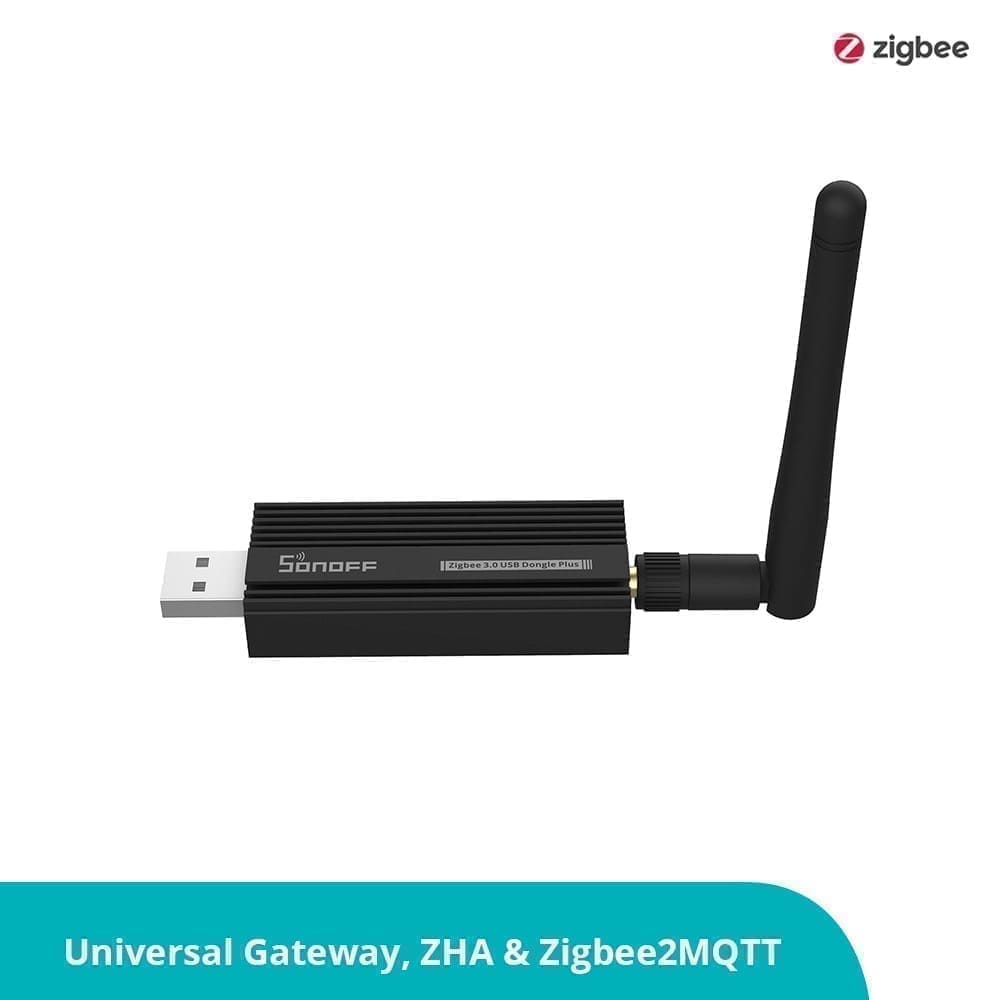
Why install it: Zigbee2MQTT is a bridge that converts Zigbee device messages into MQTT topics, giving you vendor-agnostic Zigbee support with over 3,000 supported devices from brands including IKEA TRÅDFRI, Philips Hue, Aqara, Sonoff, and many others. Unlike the built-in Zigbee Home Automation (ZHA) integration, Zigbee2MQTT exposes deeper device control — binding, OTA firmware updates, device groups, and reporting interval configuration — through its own web frontend. It requires a USB Zigbee coordinator (such as a Sonoff Zigbee 3.0 USB Dongle Plus, available on Amazon.co.uk) and the Mosquitto add-on. Our Home Assistant dashboard guide shows how to display Zigbee device data on your Lovelace UI.
8. Frigate — Local NVR with Object Detection
Why install it: Frigate is a full network video recorder (NVR) built specifically for Home Assistant. It processes camera streams locally and uses AI object detection to identify people, vehicles, animals, and packages in real time — all without sending footage to the cloud. Frigate integrates with Home Assistant via MQTT, creating binary sensors, camera entities, and event clips that can trigger automations (such as flashing a light when a person is detected at the front door). From version 0.16 onwards, face recognition and licence plate recognition are available at no extra cost. A Google Coral USB accelerator or a modern Intel/NVIDIA GPU significantly boosts detection performance, though it runs on CPU alone on lower-powered hardware.
9. Grafana — Advanced Dashboards and Metrics
Why install it: Home Assistant's built-in history graphs are useful but limited. Grafana is a best-in-class open-source dashboarding tool that can visualise any time-series data — energy consumption, temperature trends, MQTT sensor readings — with rich, interactive charts. It is typically used alongside the InfluxDB add-on, which stores long-term historical data from Home Assistant. Together they form a powerful observability stack: InfluxDB stores every sensor reading at high resolution, and Grafana visualises it in configurable panels. If you are monitoring solar generation, EV charging, or heating consumption (relevant for UK users with smart energy tariffs), this combination is invaluable.
10. Cloudflared — Secure Remote Access
Why install it: Accessing your Home Assistant from outside your home network without opening firewall ports is a genuine security challenge. Cloudflared solves this elegantly by creating an encrypted outbound tunnel from your HA server to Cloudflare's edge network, assigning a public HTTPS URL (such as yourhome.example.com) that works from anywhere in the world. No port forwarding, no dynamic DNS, no VPN client required. Traffic is encrypted end-to-end and Cloudflare can optionally enforce access controls. This is widely considered the safest way to expose Home Assistant remotely and is significantly simpler to configure than setting up a WireGuard or OpenVPN server yourself.
Hardware Tip: Home Assistant Green
If you want a plug-and-play device that runs Home Assistant OS out of the box — with full add-on support — the Home Assistant Green is the official low-power hub designed for exactly this purpose. It ships with HA OS pre-installed and is available on Amazon.co.uk. Pair it with a Zigbee USB dongle and you have a capable, add-on-ready smart home hub for well under £100.
Getting the Most from Add-ons
A few tips for managing add-ons effectively:
- Enable Watchdog for critical add-ons (Mosquitto, Zigbee2MQTT) so they restart automatically after a crash.
- Schedule backups via Settings → System → Backups before installing or updating add-ons.
- Check the logs first whenever an add-on misbehaves — most issues are visible within 30 seconds of start-up.
- Only install what you need. Each running add-on consumes RAM and CPU. On lower-powered hardware such as a Raspberry Pi 4, running Frigate, Grafana, and Node-RED simultaneously may require tuning.
Related: ESPConfig Designer (visual ESPHome builder), Home Assistant Node-RED guide, Home Assistant custom components, and Home Assistant Lovelace dashboard.