What Is ZHA?
ZHA is Home Assistant's hardware-independent Zigbee gateway implementation, built on top of the open-source zigpy library. It translates Zigbee radio traffic from your USB coordinator into Home Assistant entities — switches, sensors, lights, locks, and more — and manages the Zigbee mesh network on your behalf.
The integration supports all standard Zigbee 3.0 device types as defined by the Connectivity Standards Alliance (CSA), and an unofficial compatibility database at zigbee.blakadder.com documents thousands of confirmed working devices. For most UK users with a handful of smart bulbs, plugs, or sensors from mainstream brands, ZHA covers everything without the complexity of a dedicated MQTT bridge.
For a broader look at Zigbee and competing wireless protocols, see our Matter vs Zigbee vs Z-Wave comparison.
Supported Zigbee Coordinators for UK Users
ZHA requires a USB Zigbee coordinator — a radio adapter that forms the heart of your Zigbee network. Only one coordinator can run on your Home Assistant host at a time. Below are the options most readily available in the UK.
Home Assistant Connect ZBT-2
The Home Assistant Connect ZBT-2 is the official coordinator from Nabu Casa, released in November 2025. It costs approximately $49 (around £40) and is available in the UK from The Pi Hut (thepihut.com) and Pimoroni (shop.pimoroni.com). Based on the Silicon Labs MG24 chipset, the ZBT-2 supports Zigbee 3.0 and Thread simultaneously — meaning it can also act as a Thread/Matter border router — and communicates at 460,800 baud (four times faster than its predecessor). It is the recommended coordinator for new ZHA installations.
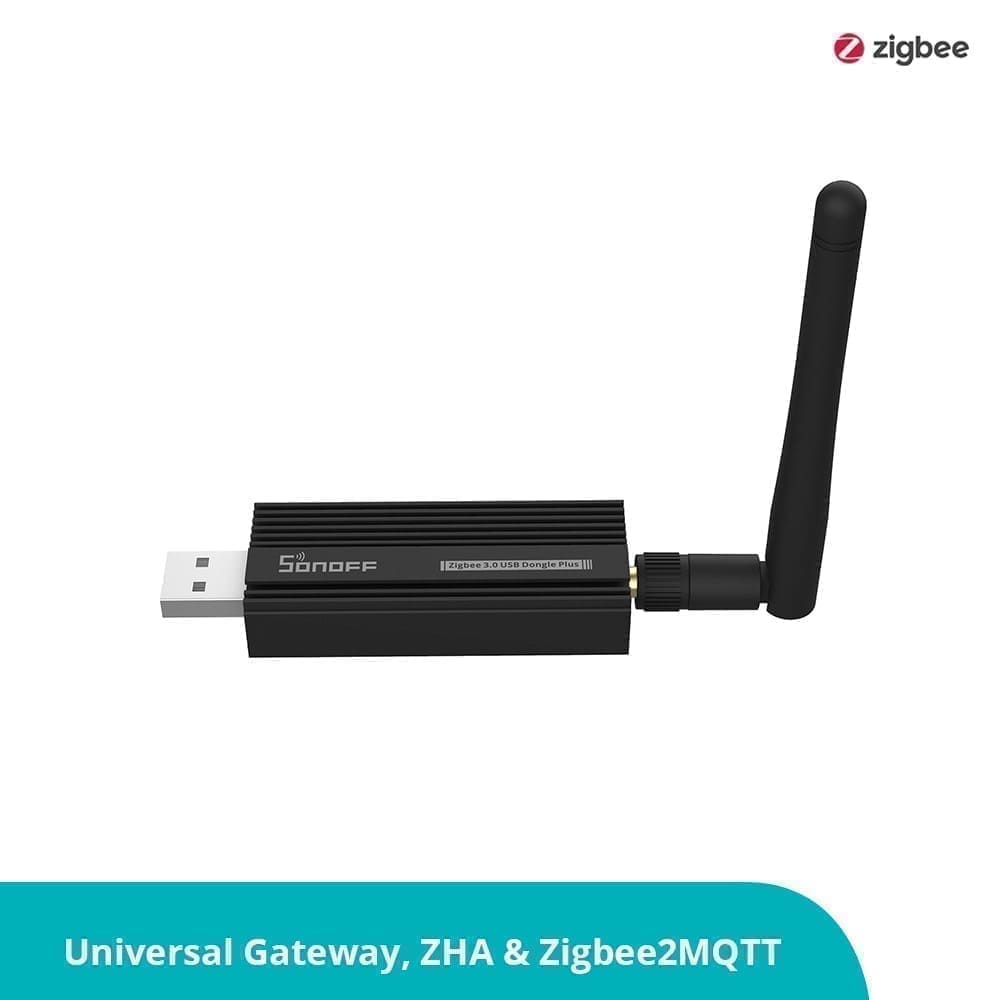
SONOFF Zigbee 3.0 USB Dongle Plus
The SONOFF Dongle Plus (CC2652P chipset) is the most popular entry-level coordinator in the UK, typically costing £12–£18 on Amazon. It is fully supported by ZHA through the Texas Instruments ZNP protocol and offers good range for most home deployments.
ConBee III
The ConBee III from dresden elektronik is a well-established USB coordinator supported by ZHA via the deCONZ/deConz zigpy library. It costs around £25–£35 and is sold by several UK electronics retailers. The ConBee III has a strong reputation for range and reliability.
HUSBZB-1 (Legacy)
The HUSBZB-1 is a combined Zigbee and Z-Wave USB stick supported by ZHA via the Silicon Labs EmberZNet (EZSP) protocol. It is a legacy option — no longer in active production — but functions reliably if you already own one. A USB extension cable is strongly recommended to minimise radio interference from USB 3.0 ports.
Installing ZHA in Home Assistant
ZHA is built into Home Assistant OS, Supervised, and Container installs. You do not need to install any add-on from the store. The steps below apply to Home Assistant OS 2024.x and later.
- Connect your coordinator. Plug the USB coordinator into your Home Assistant host. Use a short USB 2.0 extension cable if possible — placing the dongle 30–50 cm away from the host significantly reduces USB 3.0 radio interference.
- Open Settings → Devices & Services. Click + Add Integration in the bottom-right corner.
- Search for Zigbee Home Automation and select it from the list.
- Select your serial device. ZHA will attempt to detect your coordinator automatically. If it finds a port, confirm the selection. If not, choose your device path manually (typically
/dev/ttyUSB0or/dev/ttyACM0). - Choose a Zigbee channel. When prompted, the default is fine for most users. If you want to minimise Wi-Fi interference, select channel 15, 20, or 25 — these sit between the most-used Wi-Fi channels (1, 6, and 11) and experience the least co-channel interference.
- Click Submit. ZHA will initialise the coordinator. This takes a few seconds. Once complete, you will see the ZHA integration card in Devices & Services.
You are now ready to pair Zigbee devices.
Pairing Your First Zigbee Device
Pairing in ZHA is a simple permit-join flow:
- In Home Assistant, go to Settings → Devices & Services → Zigbee Home Automation and click Configure.
- Click Add device. ZHA will open a 60-second pairing window (permit join mode).
- Put your Zigbee device into pairing mode. For most devices this means holding a button for 5–10 seconds until a light flashes rapidly or a pairing indicator appears. Check your device manual for the exact method.
- The device appears in the ZHA device list once paired, usually within 10–30 seconds.
- Give it a friendly name and assign it to a room (area) in Home Assistant.
Tip: To re-pair a device that has been used before, you must first reset it to factory defaults. Many devices require three quick resets in succession to clear existing network credentials.
ZHA vs Zigbee2MQTT — Which Should You Use?
Both ZHA and Zigbee2MQTT (Z2M) run a Zigbee network on the same hardware, but they differ in complexity and capability.
| Feature | ZHA | Zigbee2MQTT |
|---|---|---|
| Setup complexity | Low — built in, no extras | Medium — needs MQTT broker + add-on |
| Device support | Broad (thousands of devices) | Widest (5,400+ devices as of 2026) |
| Debugging tools | Basic logs + network map | Full web UI, raw MQTT messages |
| MQTT dependency | None | Required |
| OTA firmware updates | Supported for some devices | Supported for more devices |
| Groups & binding | Supported (native Zigbee groups) | Supported (with more options) |
| Best for | Beginners, mainstream devices | Power users, niche/budget devices |
Choose ZHA if you are new to Home Assistant, using mainstream brands (Philips Hue, IKEA TRÅDFRI, SONOFF, Innr), and want the simplest possible setup. Choose Zigbee2MQTT if you have many devices from less common brands, need granular device control, or want to expose Zigbee data to other systems via MQTT.
Building a Strong Zigbee Mesh
Zigbee is a mesh protocol — mains-powered devices (smart plugs, in-wall switches, always-on bulbs) act as Zigbee routers and relay messages to battery-powered end devices such as door sensors and motion detectors. The strength of your network depends on router density.
Key mesh principles
- Battery-powered devices do not extend the mesh. A Zigbee motion sensor or door contact is always an end device. Only mains-powered devices route traffic.
- Aim for at least one router device per room. A single IKEA or SONOFF smart plug in each room dramatically improves reliability.
- Keep the coordinator away from Wi-Fi routers. Place your USB dongle at least 1–2 metres from your router or access point, and use a USB extension cable to position it higher or further away.
- Use a USB 2.0 extension cable. USB 3.0 ports generate radio frequency interference in the 2.4 GHz band. A 1-metre USB 2.0 extension cable between the host and the dongle is one of the most impactful single improvements you can make.
- Avoid channel 11. Wi-Fi channel 1 overlaps heavily with Zigbee channel 11. Stick to Zigbee channels 15, 20, or 25 where Wi-Fi interference is minimal.
Viewing your network topology
In ZHA, navigate to Settings → Devices & Services → Zigbee Home Automation → Configure → Network Visualisation. This map shows every device, its connections to neighbours, and link quality indicators (LQI values). A healthy router device should show LQI values above 150 on its primary links. Devices showing only weak links or connecting solely through the coordinator indicate dead zones — add a router device between them and the coordinator.
ZHA Groups and Scenes
ZHA supports native Zigbee groups, which are distinct from Home Assistant groups. A Zigbee group sends a single broadcast command to multiple devices simultaneously at the radio level — meaning all lights in the group react at the same time with no automation lag. To create a ZHA group:
- Go to Settings → Devices & Services → Zigbee Home Automation → Configure.
- Scroll to Zigbee Groups and click Create Group.
- Name the group and add devices to it. Only same-type devices (e.g. all lights, or all switches) can join the same group.
- The group appears in Home Assistant as a single light or switch entity you can control in automations and dashboards.
ZHA also supports device binding, which allows a Zigbee switch or remote to control a light directly at the radio level — bypassing Home Assistant entirely and enabling control even when the hub is offline.
Troubleshooting Common ZHA Issues
Coordinator not detected after plugging in: Go to Settings → System → Hardware and check for the USB device. If it does not appear, try a different USB port. On Raspberry Pi, prefer a USB 2.0 port (typically the black ones) rather than USB 3.0 (blue).
Device paired but unresponsive: The device may be out of range or have joined as an end device without a nearby router. Add a mains-powered Zigbee device (smart plug) between it and the coordinator to extend the mesh.
ZHA integration missing from add integration list: ZHA is only available in Home Assistant OS, Supervised, or Container installs. If you are running Home Assistant Core (Python install), you must manually add the ZHA integration to your configuration.yaml.
Interference with Wi-Fi: If you notice unreliable behaviour after adding a new Wi-Fi device or changing your router's channel, open the ZHA network visualisation map and run a network heal from Manage Zigbee Device → Heal Network.
Devices dropping off after a HA restart: This is usually a mesh stability issue rather than a ZHA bug. Increase router device density and ensure the coordinator firmware is up to date. The ZBT-2 and SONOFF Dongle Plus ship with recent firmware, but older coordinators may need a manual update via the ZHA device settings page.
Compatible Zigbee Device Brands
ZHA works with the vast majority of mainstream Zigbee brands available in the UK, including:
- Philips Hue — bulbs, strips, switches, motion sensors (best supported with the Hue Bridge, but direct pairing to ZHA works well)
- IKEA TRÅDFRI — bulbs, plugs, remotes, blinds
- SONOFF — Zigbee plugs, temperature sensors, door contacts, motion sensors
- Innr — UK-stocked Zigbee bulbs and plugs with full ZHA support
- Aqara — sensors, buttons, vibration detectors
- Tuya-based devices — many white-label Zigbee devices from Amazon work but may require ZHA device quirks (custom device handlers) to expose all features
For a detailed comparison of Zigbee hubs and coordinators available in the UK, see our best Zigbee hubs UK guide. If you are considering whether ZHA or a dedicated hub like Philips Hue Bridge is better for your setup, that article covers the trade-offs in full.
ZHA Changes in Home Assistant 2026.7
Home Assistant 2026.7 (released 1 July 2026) reworked how ZHA device management looks: each device now gets a dedicated full-page view with a summary card and tabbed clusters, bindings, signature and neighbour information, instead of the old cramped pop-up dialog. See our breakdown of everything new in 2026.7 for the full release, including the Matter server rewrite and the new Activity timeline.