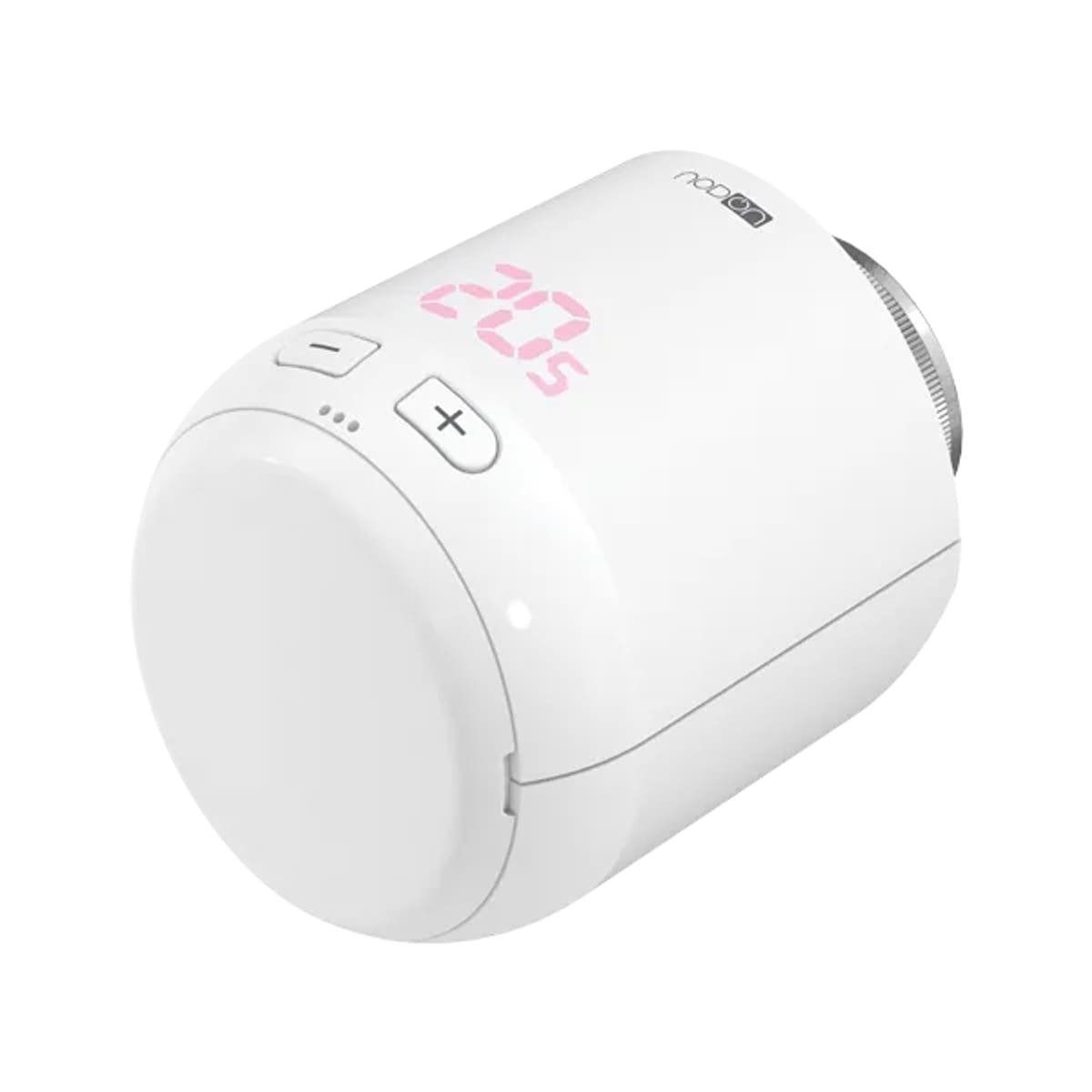
NodOn TRV-4-1-00 at a glance
| Setup factor | Verdict |
|---|---|
| Physical installation | Easy — under 5 minutes per radiator, no plumber needed |
| Home Assistant integration | Easy — paired via ZHA in under a minute |
| Workarounds needed | None — recognised natively by ZHA with no manual quirks, custom quirks file, or third-party component required |
| Overall verdict | Buy — if you want a no-subscription, hub-free Zigbee TRV and don't mind a basic display |
What's in the box?
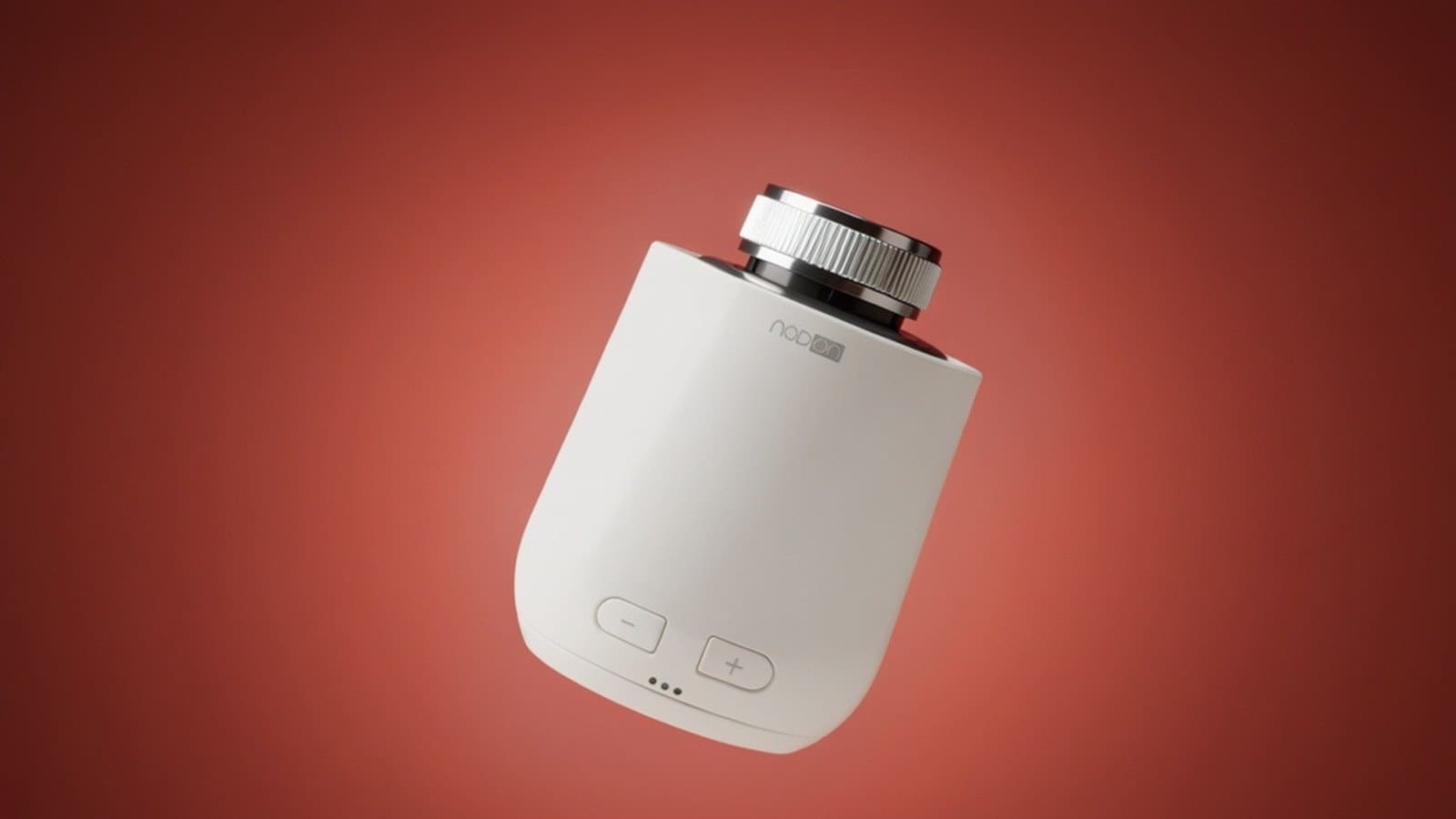
The NodOn TRV-4-1-00 comes with everything needed to fit it to a standard UK radiator: the valve head itself, three Danfoss-style valve adapters (RA, RAV, and RAVL, plus the separate RAV pin) covering the common European and UK thread and connector types, two AA/LR6 batteries already included, a fixing nut, and a printed quick-start guide. There's no separate hub, bridge, or power adapter in the box — because the valve pairs directly to an existing Zigbee 3.0 coordinator, that's the only extra hardware you need, and most Home Assistant users will already have one.
Is the NodOn TRV-4-1-00 compatible with Home Assistant?
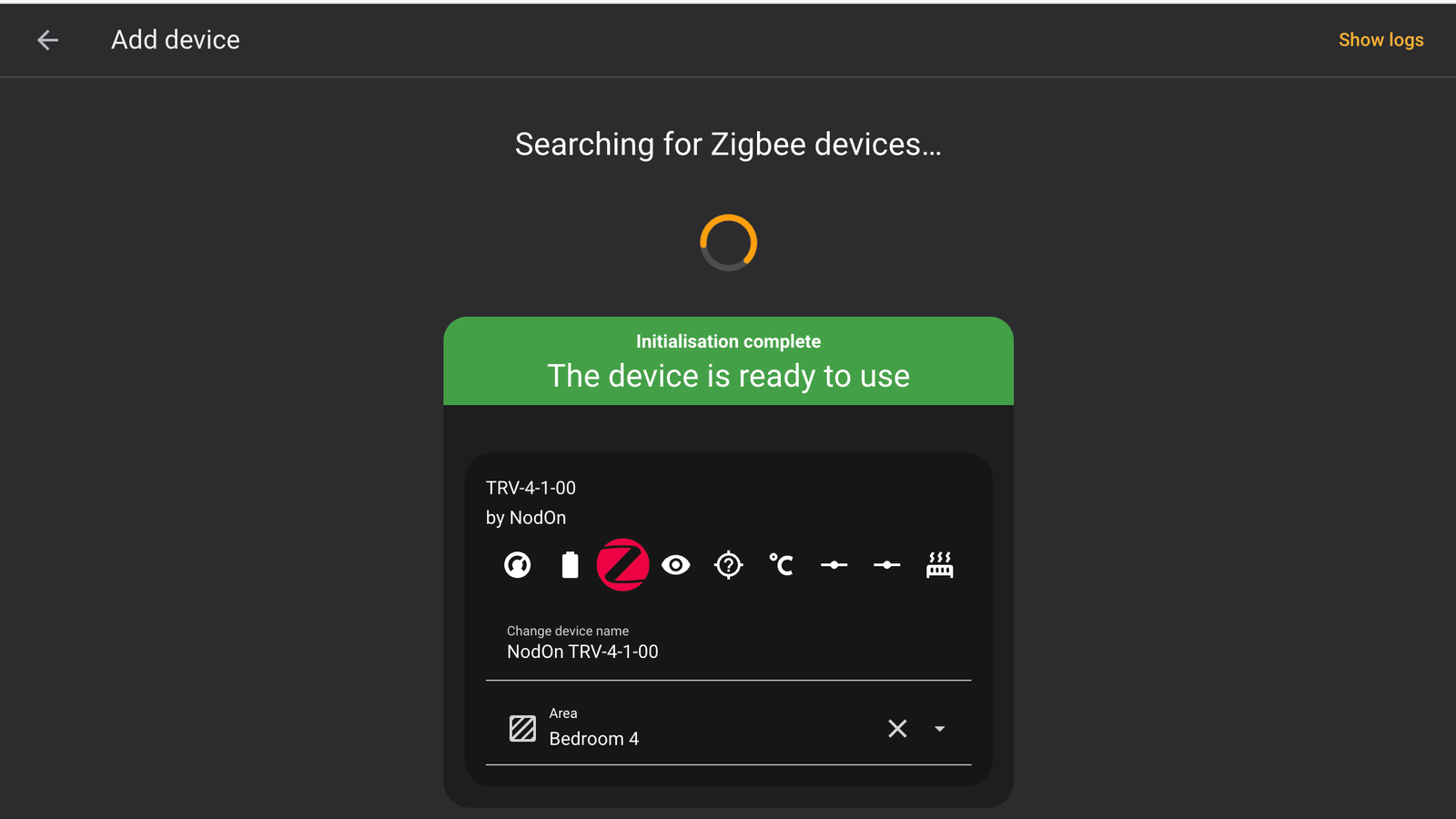
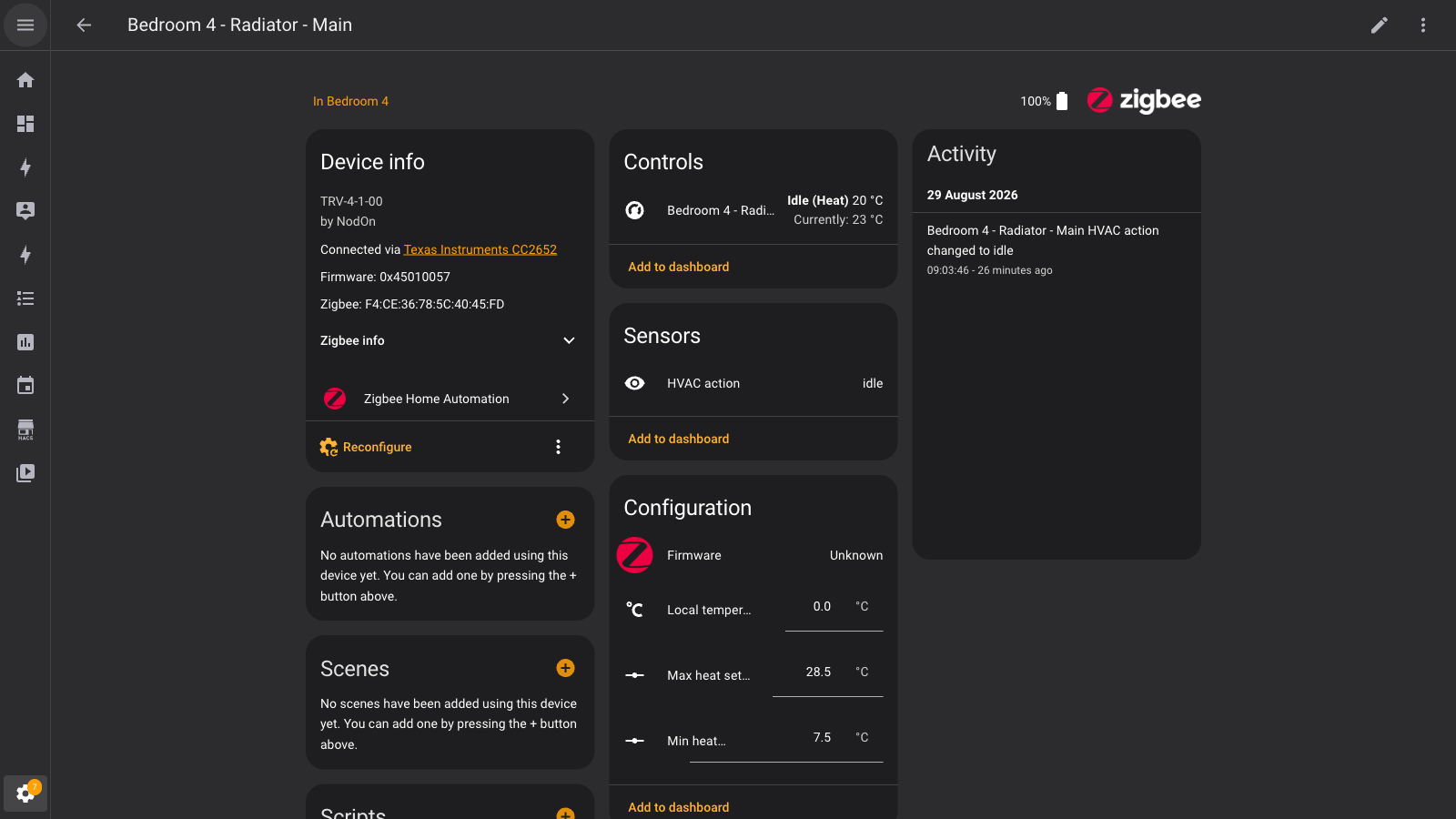
Yes — the TRV-4-1-00 is a native Zigbee 3.0 device, so it pairs with Home Assistant through either the built-in ZHA integration or a Zigbee2MQTT bridge, with no cloud account or NodOn app required. NodOn's own instructions have you pair the valve to a Zigbee network before fitting it to a radiator: once batteries are inserted, the valve's small display shows a pairing icon until a coordinator picks it up. On our test setup, ZHA found it within seconds and reported "Initialisation complete — the device is ready to use", after which it appeared as a climate entity alongside a battery sensor, a heating-demand sensor, an HVAC-action sensor, and three configurable number entities for the minimum setpoint, maximum setpoint, and local temperature offset. If you're deciding between the two Zigbee integration options for a device like this, our Home Assistant ZHA guide covers the setup and trade-offs against Zigbee2MQTT in more detail.
How do you install the NodOn TRV-4-1-00?
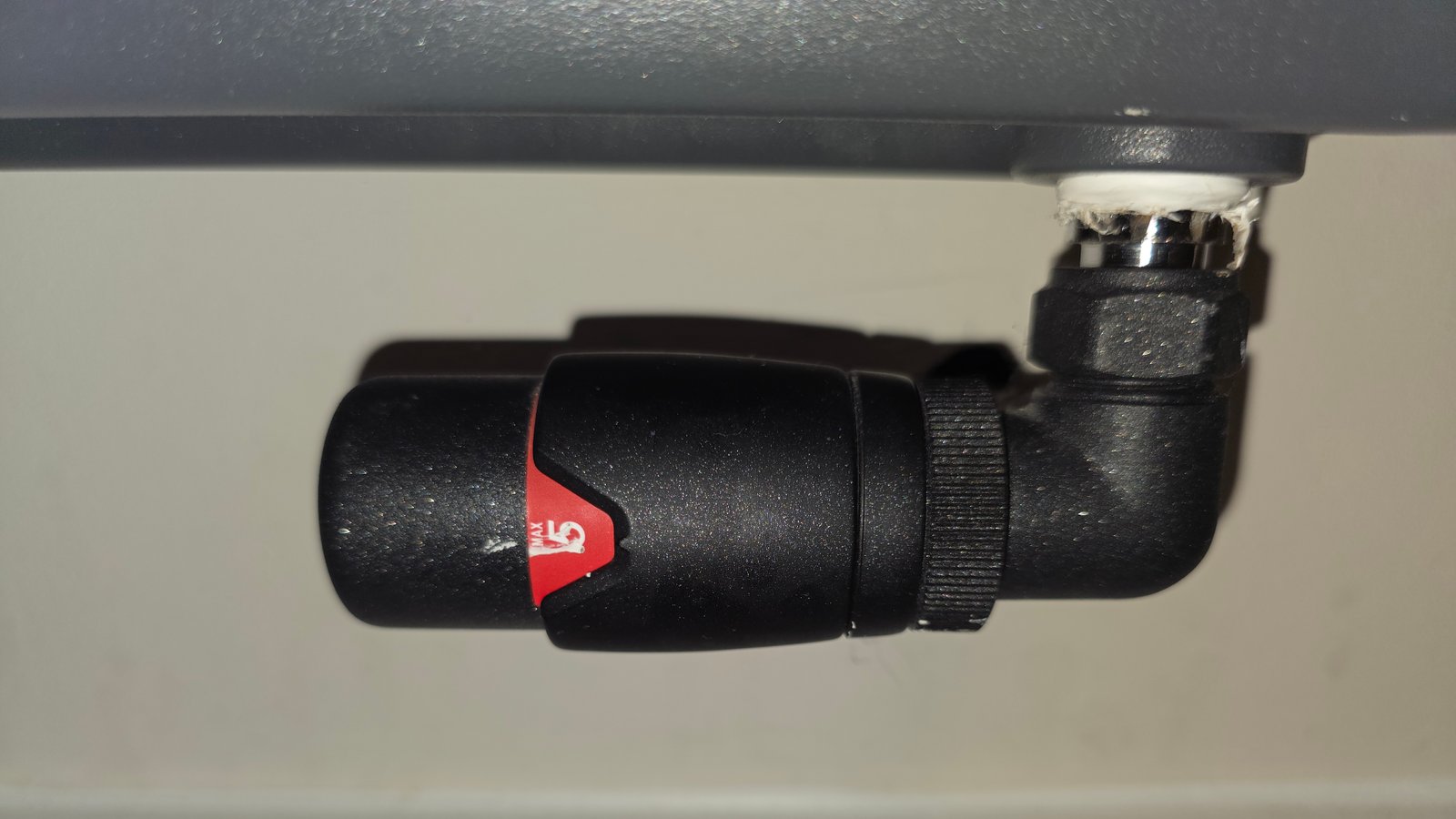
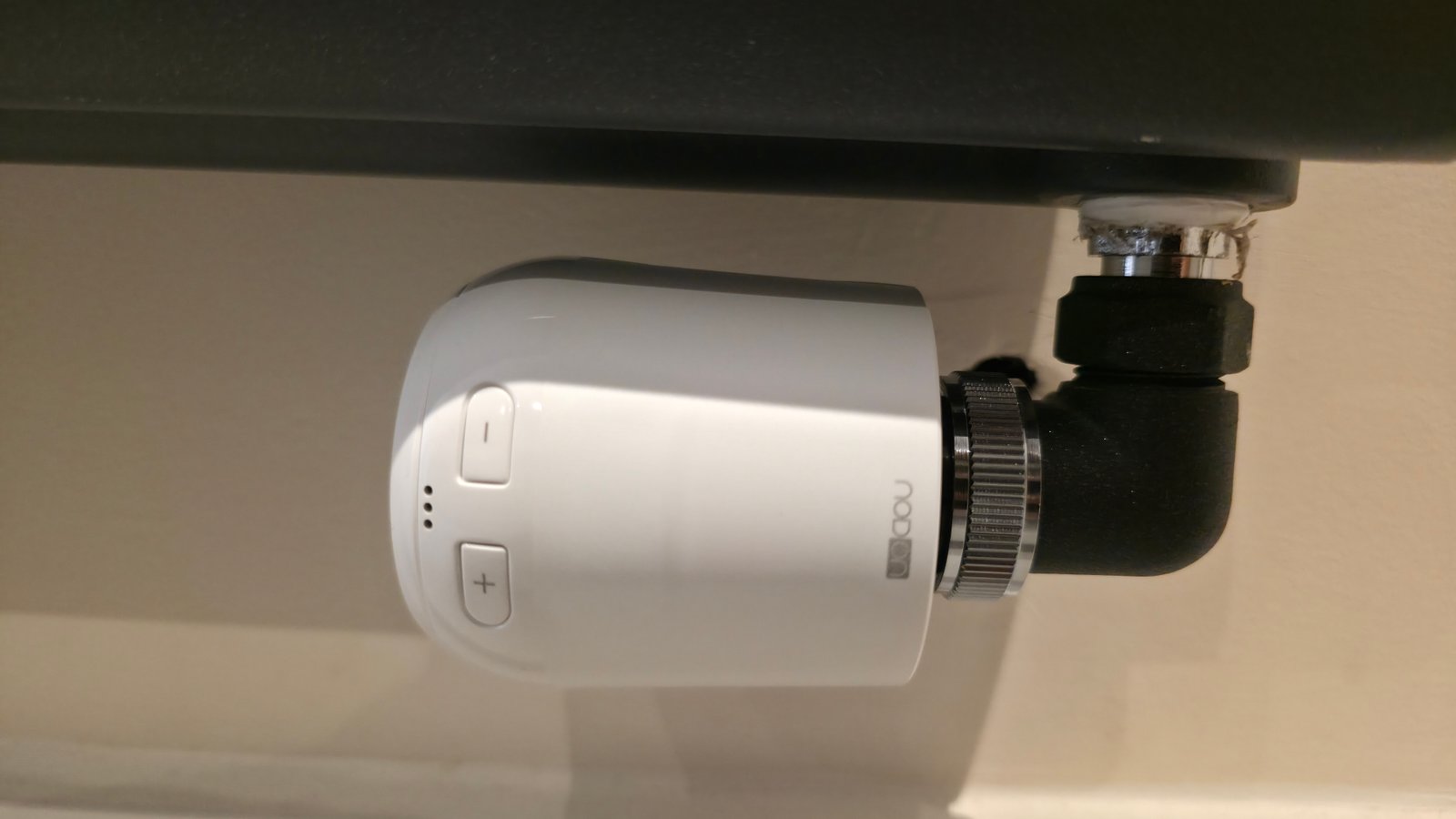
Installation is a DIY job with no plumber needed, provided your existing valve body doesn't need replacing. With the valve already paired, we removed the old manual valve head, checked the thread type, fitted the matching Danfoss-style adapter, and threaded the NodOn valve on by hand, turning the retaining nut clockwise — the whole physical swap took under 5 minutes per radiator, in line with NodOn's own installation guidance.
Once fitted, the valve still needs calibrating: when its display shows the calibration icon, holding the + and - buttons together for about 3 seconds starts an adaptation cycle that opens and closes the valve fully several times to learn the travel of the pin inside the radiator body. NodOn says a successful calibration automatically sets the valve to 21°C, and the same process has to be repeated any time the batteries are changed. After that it runs normally, controllable either from the physical +/- buttons (0.5°C per press) or from Home Assistant.
What does the NodOn TRV-4-1-00 expose in Home Assistant?
Once paired, the climate entity supports both the off and heat HVAC modes, a settable target temperature, and a reported pi_heating_demand value showing the valve's current opening percentage — 0% fully closed, 100% fully open — which is useful for building automations that react to how hard a radiator is actually working rather than just the setpoint. The device also exposes separate min and max heat setpoint limit numbers (configurable within its 7.5–28.5°C range) and a local temperature offset (±2.5°C) to correct for a valve reading warmer or cooler than the room actually is, which matters on a device mounted low down and close to the radiator body. Battery is reported as a percentage from its two AA cells, and NodOn rates the valve for over-the-air firmware updates through a compatible Zigbee coordinator.
| Spec | NodOn TRV-4-1-00 |
|---|---|
| Protocol | Zigbee 3.0, 2.4 GHz |
| Hub required | None — pairs to any Zigbee 3.0 coordinator (ZHA, Zigbee2MQTT, etc.) |
| Valve thread | M30 × 1.5 mm, with Danfoss RA/RAV/RAVL adapters included |
| Temperature range | 8–28°C (device); 7.5–28.5°C setpoint limits exposed in HA |
| Power | 2 × AA/LR6 batteries, NodOn-rated for around 2 years |
| Dimensions | 62 × 68 × 83 mm, 230 g with batteries |
| App/subscription | None required for local Zigbee control |
| Typical price | Around £35–£45 depending on retailer — prices vary |
How does it compare to tado and Hive?
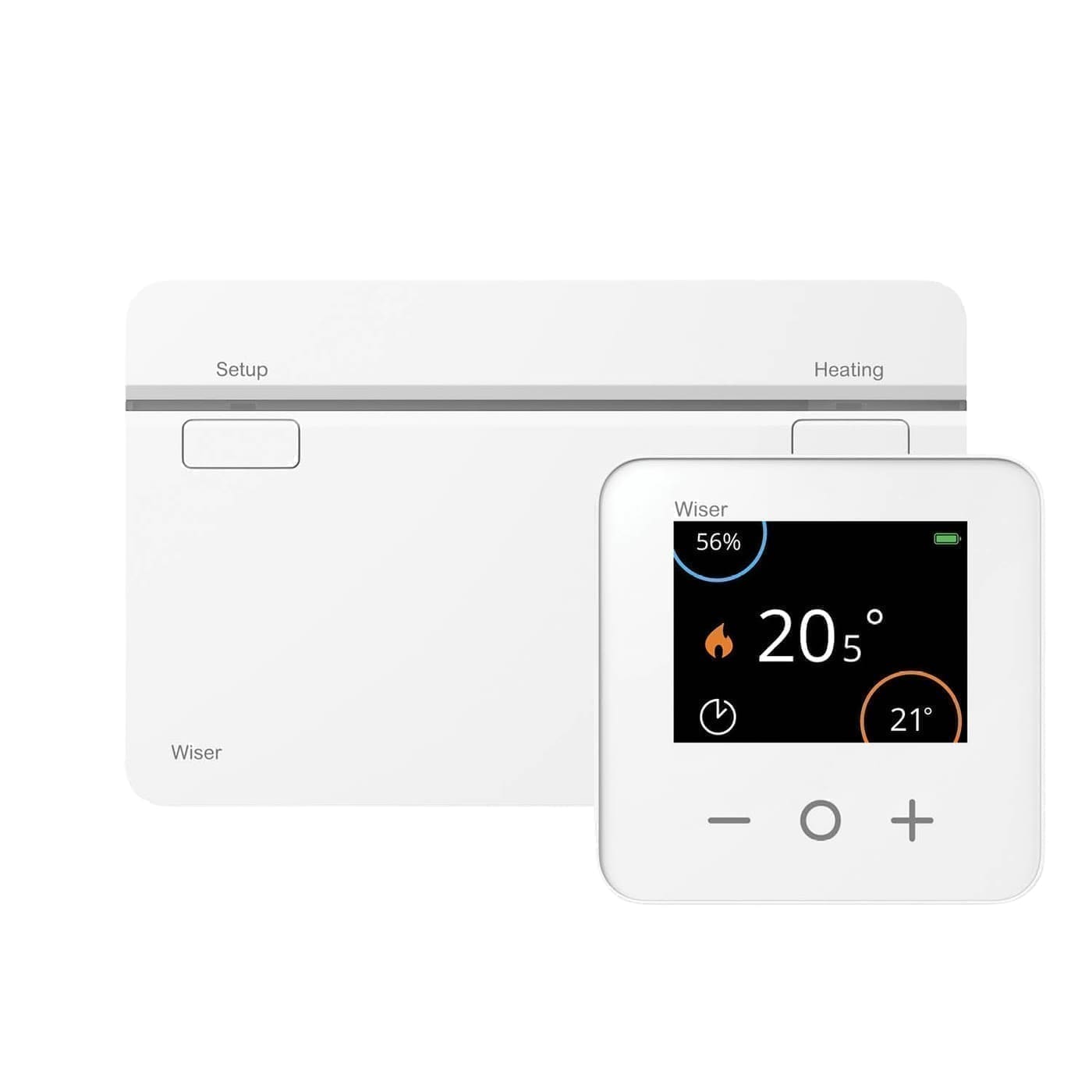
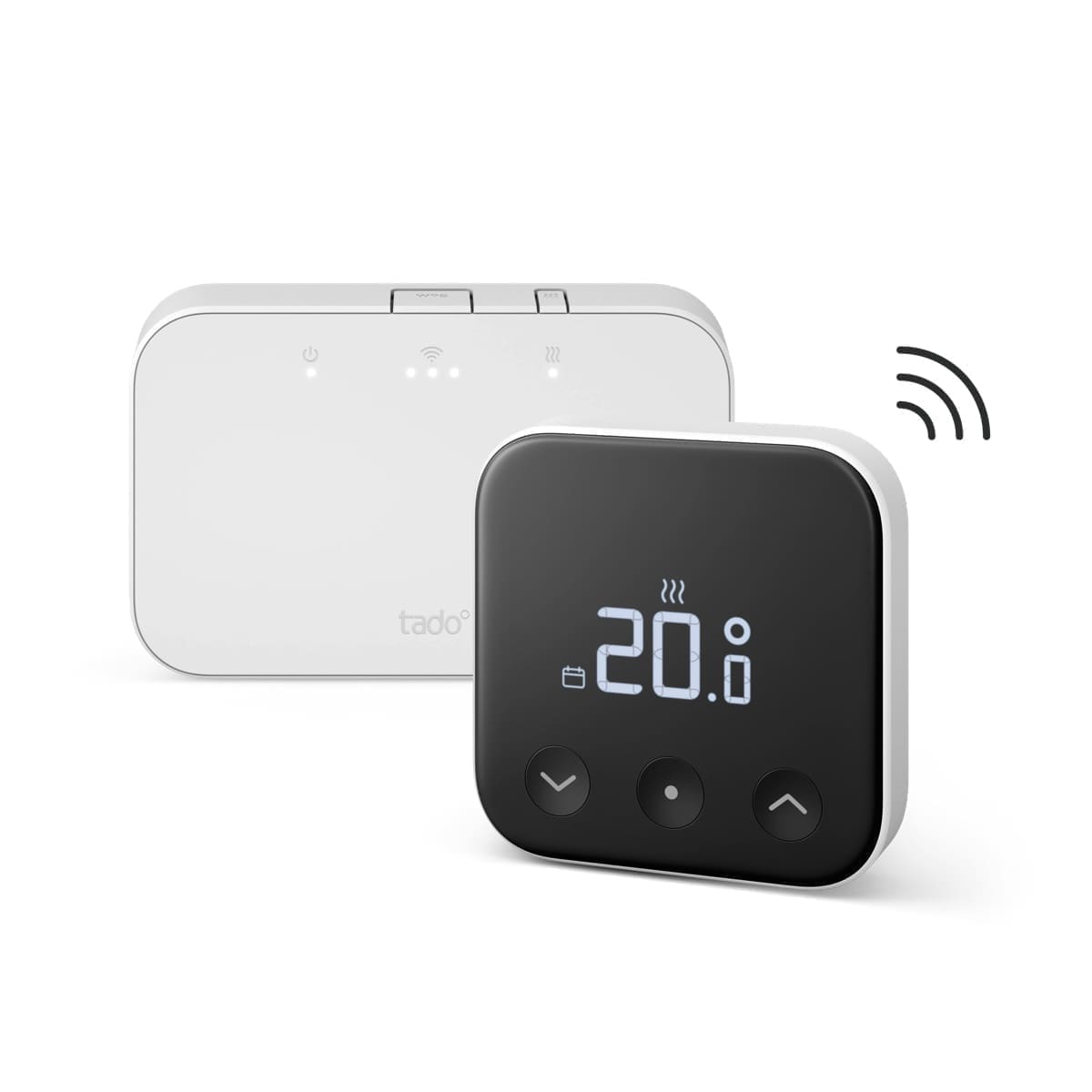
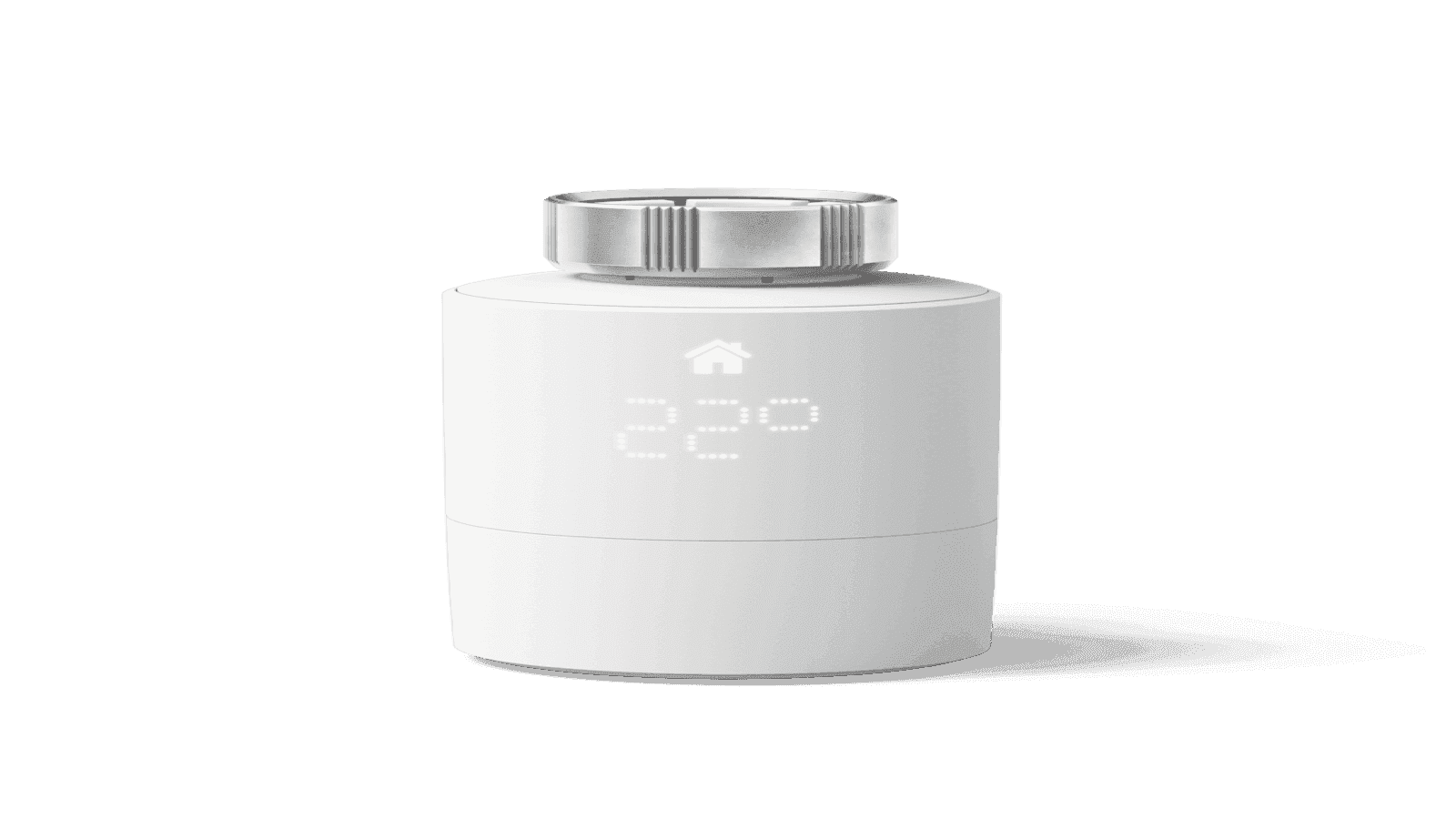
The NodOn undercuts tado and Hive on price and, unlike either, needs no subscription and no proprietary hub — it's a plain Zigbee device that any Zigbee 3.0 coordinator can control, which makes it a natural fit if you're already running Home Assistant with a Zigbee stick or another Zigbee hub. What you give up is polish: there's no companion app, no phone scheduling UI outside of Home Assistant automations, and the on-device display is a small icon-and-digit segment display used mainly for pairing, calibration and error codes, rather than tado's dot-matrix or touchscreen readout. For a broader field of no-subscription and subscription options, our best smart radiator valve for Home Assistant roundup compares the NodOn against Sonoff, Aqara and Hive alternatives, and our radiator valves explained guide covers how manual, thermostatic and smart valves differ if you're upgrading for the first time. If you're also looking to bring an infrared-controlled air conditioner into the same Zigbee network, our NodOn IRB-4-1-00 review covers the same manufacturer's Zigbee AC infrared controller.
Verdict
The NodOn TRV-4-1-00 does exactly what a smart TRV needs to for a Home Assistant setup: it pairs cleanly over ZHA, exposes a genuinely useful set of entities — including heating demand and configurable setpoint limits — and never asks for a subscription or a cloud account. It's a sensible pick if you already have a Zigbee coordinator running and want to add per-room control on a budget. If you want a slicker app experience or a touchscreen display and don't mind an optional subscription, tado's V3+ remains the more polished all-rounder — but for a local-first, no-frills Zigbee valve, the NodOn is hard to beat on price.