How we chose these smart watering controllers
We looked for a controller that reaches Home Assistant without a cloud account, has a way to shut itself off if something goes wrong, and can run its own schedule when the network is down. That ruled out cloud-only sprinkler brands that are not sold in the UK and battery timers with no radio at all. The one exception is the Aiper IrriSense 2, which has no official Home Assistant integration but earns a place because it does a job none of the others can: it sprays and maps a whole lawn from a single unit. Each pick is matched to a different garden: a single hose tap, a Zigbee network, an Apple Home setup, a set of pots, a buried multi-zone system, or an open lawn.
Prices are UK figures seen in September 2026 from single retailers and move often, so treat them as bands. Every claim about a specification comes from the maker's page, a published review or the integration docs listed in the sources, not from lab testing of our own.
The best smart irrigation controllers for UK gardens
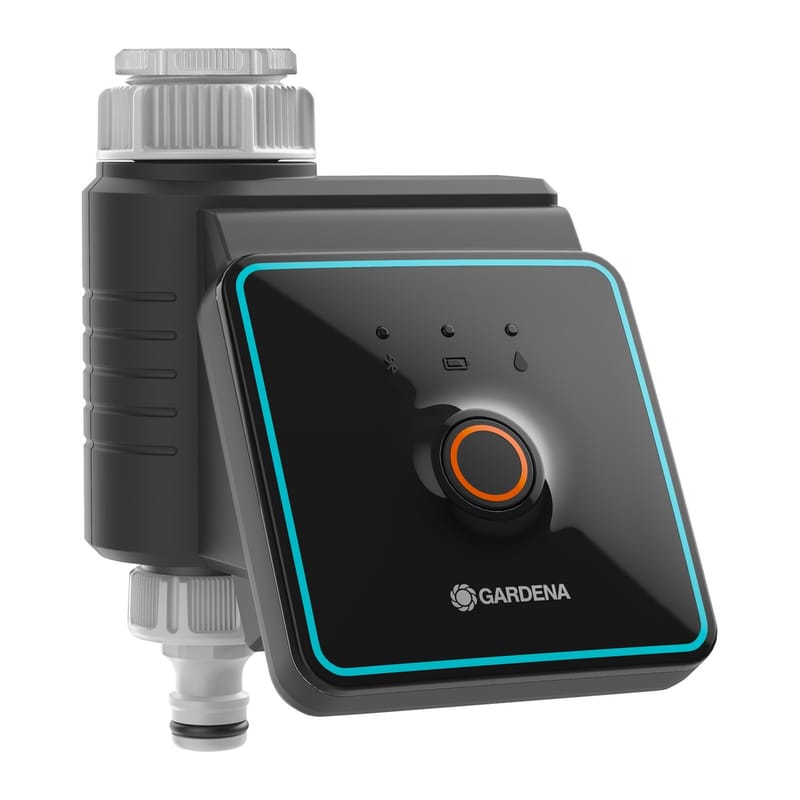
1. Gardena Water Control Bluetooth — best overall
Who it's for: anyone with a garden tap and a hose or sprinkler who wants a schedule that Home Assistant can trigger. Gardena's UK page lists a 0.5 to 12 bar working pressure, fittings for 26.5 mm (G3/4) and 33.3 mm (G1) taps, up to three watering cycles a day and durations from one minute to 7 hours 59 minutes. It runs on a single 9 V battery that Gardena says lasts roughly a year, and it works with Gardena's separate soil moisture sensor.
Home Assistant's Gardena Bluetooth integration lists the Water Control Bluetooth and the Gardena soil moisture sensor as supported, and exposes valve entities you can automate. The catch: the docs say control of the offline scheduling settings is not supported, the device only accepts connections from previously paired adapters, and pairing sometimes needs a factory reset. Bluetooth range is about 10 metres, so the Home Assistant host (or a Bluetooth proxy) has to sit reasonably close to the tap.
Gardena also sells a "smart" version that adds a Gateway for 36 cycles a day and Apple Home, Alexa and Google Home support, but the Gateway is sold separately.
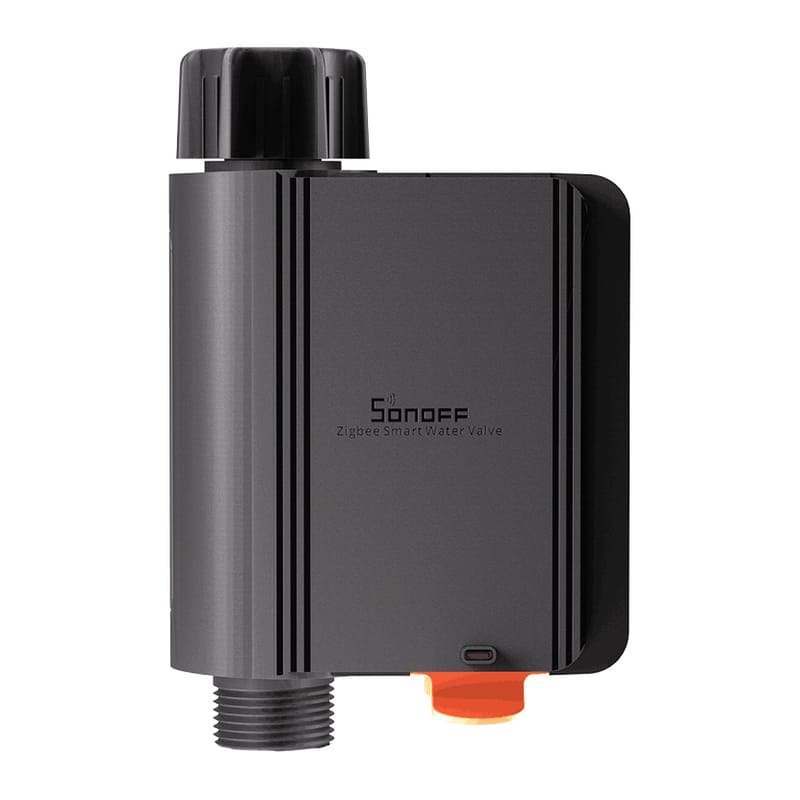
2. SONOFF SWV-BSP — best budget Zigbee valve
Who it's for: a Home Assistant owner with a Zigbee coordinator who wants flow metering for about the price of a takeaway. The SWV-BSP is the British Standard Pipe (G3/4) version for the UK and Europe, priced from around £22 at UK retailers, with a 0.06 to 0.8 MPa (0.6 to 8 bar) working range, IP55 rating and four AA batteries.
In Zigbee2MQTT it exposes valve control, flow rate, battery level and two irrigation modes: timed (a duration and interval) and quantitative (a volume per cycle). The Zigbee2MQTT device page also lists an automatic shut-off if a water shortage lasts more than 30 minutes, which needs firmware 1.0.4 or later. SmartHomeScene's review found Zigbee2MQTT gives fuller control than ZHA and measured about one litre of overshoot per cycle.
The catch: the same review relays a report of failures with high-resistance hoses such as soaker and drip lines, so this is a better fit for open hoses and sprinklers than fine drip irrigation. It also needs a Zigbee network with a strong signal at the tap; our Zigbee2MQTT guide and Zigbee hub roundup cover the setup.
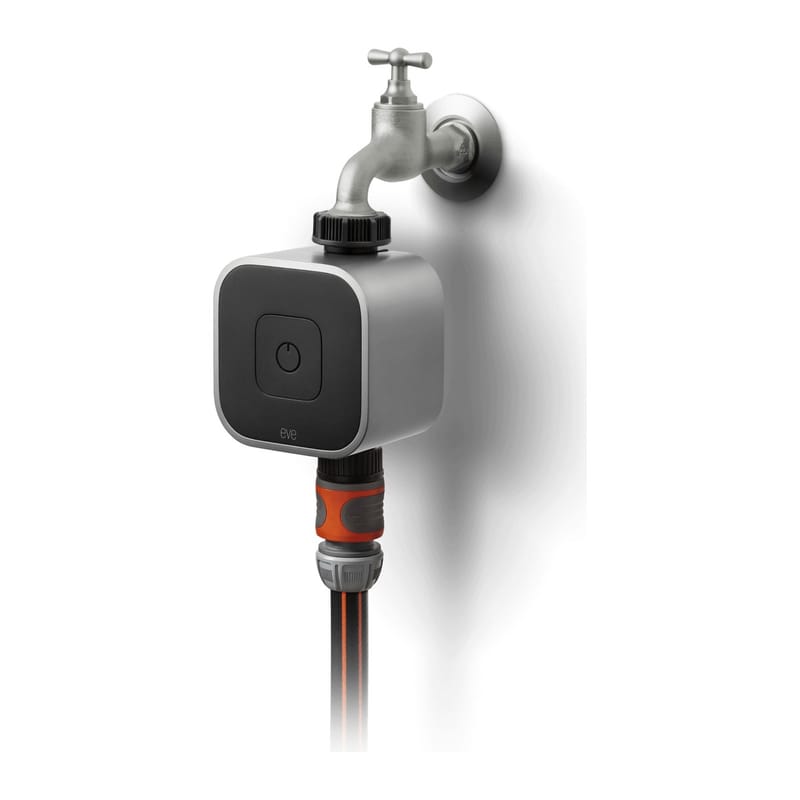
3. Eve Aqua — best for Apple Home
Who it's for: households already on HomeKit who want the tap to behave like any other Apple Home accessory. Eve lists Thread and Bluetooth, a 26.5 mm (G3/4) thread, a 1 to 5 bar working range, IPX4 protection with UV resistance and two AA batteries. It stores up to seven watering periods a day on the device, so schedules keep running with no internet. Smart & Secure lists it at £129.95.
Remote control and automations need a HomePod or an Apple TV (4th generation or later) as a home hub, and setup needs an iPhone or iPad. Home Assistant can also use it through the HomeKit Device integration, which supports Thread accessories when a Thread border router is available and the device is first joined over Bluetooth. Our Thread explainer covers border routers.
The catch: Eve's own product page says the Aqua does not currently support Matter, and it costs several times the SONOFF's price. It only makes sense if Apple Home is already central to your setup.
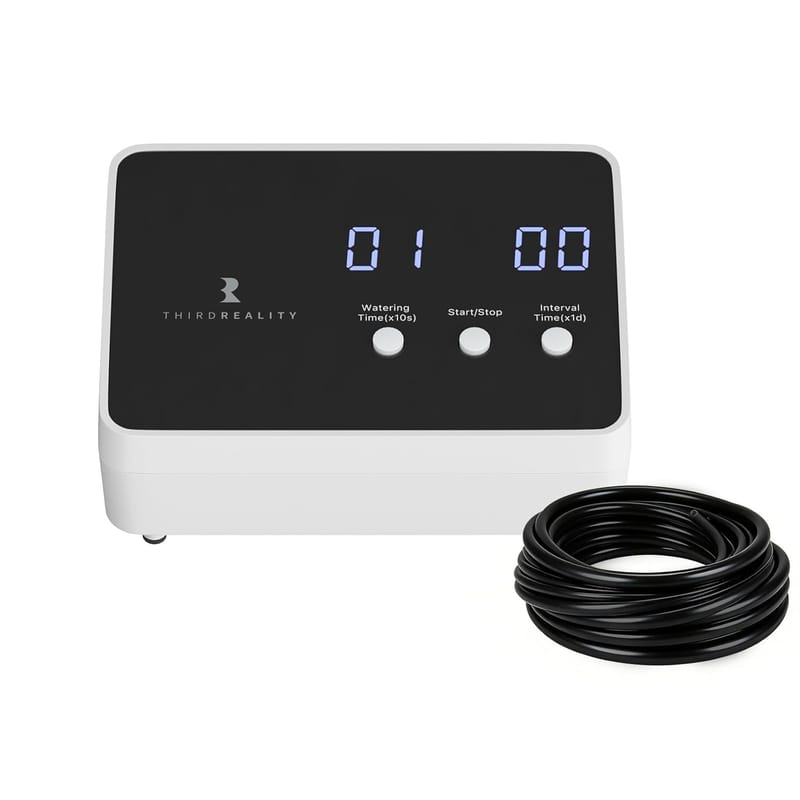
4. Third Reality Smart Watering Kit Pro — best for pots and planters
Who it's for: balconies, patios, greenhouses and indoor plants rather than a garden hose. The kit (model 3RWK0148Z) is a Zigbee valve that doses potted plants, runs on four AA batteries or USB-C and exposes a switch, two number helpers and a moisture binary sensor to Home Assistant. In our hands-on review it worked locally over ZHA, and its anti-backflow valve plus a Home Assistant shut-off gave two layers of protection against a stuck-open valve.
The catch: the built-in probe only reports wet or dry, so proportional watering needs a separate sensor such as the Third Reality Soil Moisture Sensor Gen2, and the onboard timer can double-water a plant if a Home Assistant automation runs at the same time. Check the current price on the retailer's page before buying.
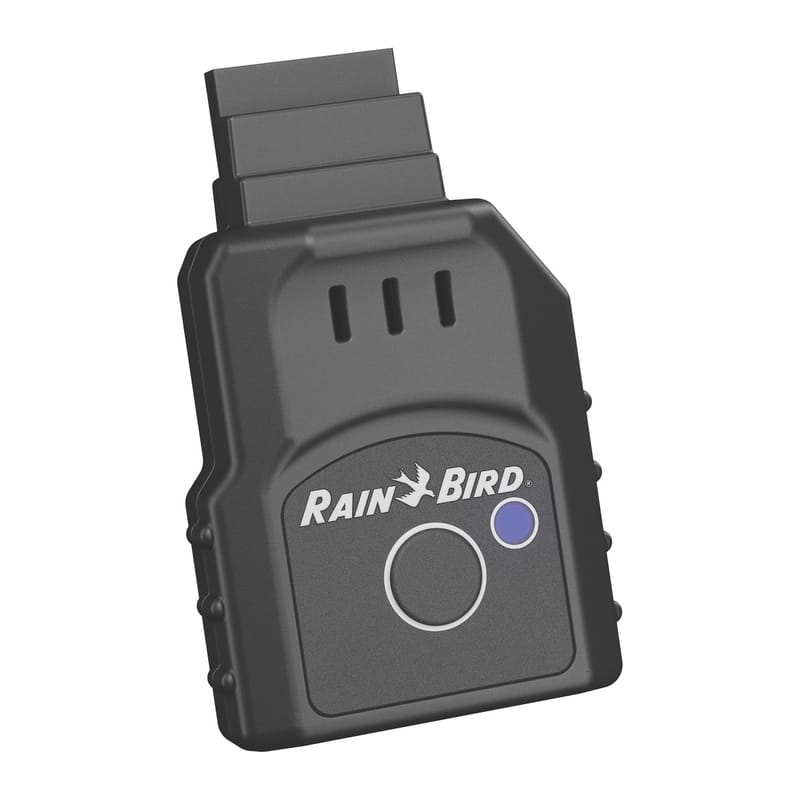
5. Rain Bird with the LNK2 Wi-Fi module — best for buried multi-zone systems
Who it's for: gardens that already have buried sprinkler lines fed by a multi-station controller. Rain Bird's LNK2 module works with the ESP-ME, ESP-ME3, ESP-TM2, ESP-2Wire and RZXe controllers plus the LXME2 and ESP-LXIVM series, and needs a 2.4 GHz-only Wi-Fi network. Home Assistant's Rain Bird integration is local rather than cloud-based and provides zone switches, a rain sensor, rain-delay numbers and a schedule calendar.
The catch: Rain Bird's page says Alexa and Google Assistant support is North America only, so Home Assistant is the main way to bring it into a UK smart home. The docs name the "LNK WiFi Module", so confirm your module and controller are supported before buying. They also warn that Home Assistant may not be able to send commands while the Rain Bird app is in use, and that schedules on the calendar refresh only every 15 minutes. This is a job for an irrigation installer, not a weekend tap timer.
See the LNK2 module at Rain Bird
6. Aiper IrriSense 2 — best all-in-one lawn sprinkler (unofficial Home Assistant only)
Who it's for: anyone who wants a lawn watered properly without laying pipes or fitting sprinkler heads. The IrriSense 2 is a single unit that combines the sprinkler, controller and valve. It connects to a garden hose (Aiper says 5/8 inch or 3/4 inch) and, according to Aiper, covers up to 445 m² (4,800 sq ft) with a spray range of up to 12 m and up to 10 separate zones. You map the lawn in the Aiper app and give each zone its own schedule and water amount; Aiper says setup takes about 15 minutes. It is mains-powered through a waterproof power supply rather than running on batteries, so it needs an outdoor socket within reach.
The smarts are about weather rather than automation. PC-WELT's review describes forecast-based skipping of runs before rain or strong wind, makes up cycles that were skipped when the rain never arrived, and a built-in rain sensor that stops a running cycle. The app, over Wi-Fi (2.4 GHz) and Bluetooth, also shows water use per zone. Aiper says the system can cut water use by up to 40%, though it notes savings vary. We have an IrriSense 2 here but we have not reviewed it yet, so this entry is based on Aiper's specifications and PC-WELT's published review, not our own testing.
The catch: there is no official Home Assistant integration, and PC-WELT reports no Alexa, Apple Home or Google Home support either, so Aiper's own offering is a closed system managed from the Aiper app. Community developers have filled the gap with two unofficial custom integrations installed through HACS. knobunc/aiper talks to the sprinkler over Bluetooth Low Energy with no cloud and exposes zone control, schedules, rain-sensor settings and sensors; Merlz/ha-aiper-irrisense-2 goes through Aiper's cloud, the same route as the phone app, and adds per-zone start and stop, run history and a zone-map image. Both are reverse-engineered and not affiliated with Aiper, and we have not tested either, so an app update could break them. The same review says water pressure matters a great deal: a 3/4 inch hose at the tap gets close to the claimed range, while a 1/2 inch hose or weak supply noticeably shortens it. It also sprays straight ahead, so awkward, obstacle-filled gardens suit it less than open lawns. It is the most expensive pick here after the Rain Bird kit, with EU list pricing around €599, and we have not confirmed a UK price, so check the current figure before buying.
See the IrriSense 2 at Aiper UK
Do smart irrigation controllers work with Home Assistant?
Yes, five of our six picks reach Home Assistant, but by different routes: Gardena over Bluetooth, the SONOFF and Third Reality valves over Zigbee (through ZHA or Zigbee2MQTT), the Eve Aqua through HomeKit Device over Thread, and Rain Bird over the local network. The exception is the Aiper IrriSense 2, which has no official integration; it is controlled from its own app, or through unofficial HACS integrations if you accept the risk. Whichever route you use, the valve appears as a switch or valve entity you can trigger from an automation, such as skipping a cycle when rain is forecast.
A leak or stuck valve matters more outdoors than in, so add a safety net: a Home Assistant automation that closes the valve after a maximum runtime. Our water leak sensor roundup covers alerting if a hose bursts.
Do you need a hub or bridge for a smart hose timer?
It depends on the radio. The Gardena Water Control Bluetooth needs no hub for its own app but needs a Bluetooth adapter in range for Home Assistant, the SONOFF and Third Reality need a Zigbee coordinator (see our Zigbee stick guide), and the Eve Aqua needs a HomePod or Apple TV for remote control. Rain Bird needs only Wi-Fi, and the Aiper needs a 2.4 GHz Wi-Fi network and a mains socket outdoors, with no hub.
Because outdoor taps are often far from the house, a weak Zigbee or Bluetooth signal is the most common failure. Test signal strength at the tap before fixing anything in place.
Who should skip a smart irrigation controller?
If you only water a small lawn on a fixed routine, a non-smart timer is enough. If you want a supported, officially documented Home Assistant integration for every cycle, skip the Aiper and pick one of the first five. Hozelock's Sensor Controller uses a daylight sensor to water at sunrise and sunset with no programming, but it is battery-powered and has no Wi-Fi, so Home Assistant cannot see or override it. If you want to power a garden pump or other mains kit, use a properly rated outdoor device: our outdoor smart plug guide covers the options.
To skip watering after real rainfall at your own plot, a garden station helps: see our best smart weather stations for Home Assistant.
Watering the lawn and mowing it are best kept apart in Home Assistant: skip a mow when the grass is wet and run the sprinklers when the mower is docked. Our guide to the best robot lawn mower for UK gardens covers which models, including the Gardena SILENO that shares this controller's app, expose their state to Home Assistant.